
Notas
Transformation of the Cold War
Conteúdo das notas (4)
Página 1
The Berlin Wall 1961
Background:
When Berlin was first divided up into four zones there was support for communism in East Germany under the control of the Soviets
Complaints from people were made about the Stasi (secret police) and corruption in the government
East Germany had a low standard of living in comparison to West Germany
In the 1950s, many East Germans travelled to West Berlin to access West Germany and never returned upon arriving
The many Germans leaving Berlin boosted US propaganda
Changing environment:
January 1961 - new president of the US John F. Kennedy was elected
Kennedy backed a failed attempt to overthrow communist president in Cuba, Fidel Castro, in April 1961
Khrushchev used Kennedy's failure as an opportunity to request US troops removal from Berlin
Vienna, 1961 - Khrushchev and Kennedy meet
Kennedy refused Khrushchev's demands again and ordered 150,000 US reservist troops to be called for action in Germany
Khrushchev claimed Kennedy was promoting conflict, using Berlin as a base for spies
Within this tension, on the night of the 13 August, East German soldiers erected a barbed-wire fence along the border of East and West Berlin
All crossing points were sealed up apart from Checkpoint Charlie
The main reason for the wall was to stem the flow of people out of East Germany
What happened next?
West Berliners feared Soviet invasion and US withdrawal
17 August 1961 - West Berlin staged a demonstration; Kennedy sent more troops
Soviets and East Germans continued to strengthen the wall
27 October - US and Soviet tanks faced off at Checkpoint Charlie, withdrawing the next day
Impact of the crisis:
Khrushchev ordered East German leader Walter Ulbricht to avoid any further tensions
The wall remained in place and became a symbol of division
Kennedy stood up to Khrushchev and made good propaganda of the situation
Página 2
The Cuban Missile Crisis 1962
Background:
1959 - Cuba was practically considered a US colony, under the leadership of anti-communist General Fulgenico Batista
Batista was overthrown in a revolution led by communist Fidel Castro in 1959
Thousands of Cubans fled to the US and pressured the US to help get rid of Castro
US President at the time, Dwight D. Eisenhower, ordered the CIA to investigate overthrowing Castro
US refused to trade with Cuba and began a propaganda campaign against Castro
Crisis develops:
Castro, fearing invasion from the US, turned to USSR for help
Khrushchev agreed to a $100 million package of economic aid, military equipment and technical advisers to Cuba
April 1961 - US president John F. Kennedy authorised a CIA-backed plan to help 1,400 Cuban exiles
These exiles were to land in the Bay of Pigs in Cuba and overthrow Castro
This attempt failed dramatically and strengthened relations between Castro and Khrushchev
May 1962 - Soviet Union announced it was supplying Cuba with arms
Kennedy's main concern over the arms was that the Soviet Union would locate nuclear arms in Cuba
October 1962 - a US spy plane took detailed photographs that demonstrated there were nuclear missile sites in Cuba
US spy planes reported that 20 Soviet ships were carrying missiles to Cuba
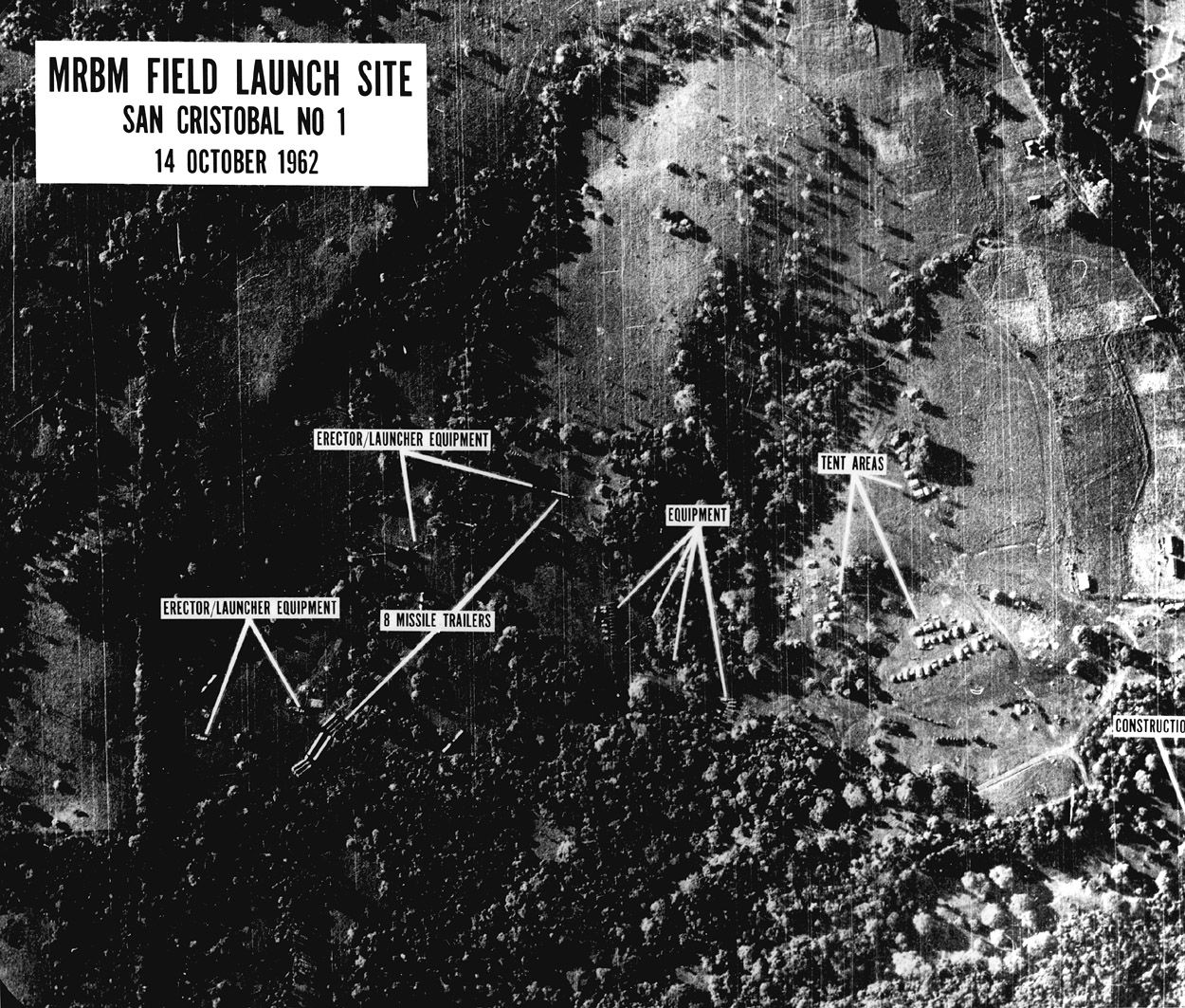
Why locate nuclear missiles in Cuba? There are a few suggestions as to why Khrushchev did this:
To bargain with the USA - the US had missiles in Turkey and Khrushchev may have wanted to make a deal about them
To close the missile gap - with a gap in the amount of weapons, locating missiles on Cuba would make the US less likely to launch a 'first strike'
To defend Cuba - with an advantageous location, and also communist state Cuba would be an effective military base
Strengthen his own position - success here would heighten his popularity
To test the USA - the missiles were a test to see how strong the US really was
The most intense period of the crisis occurred from 16 October - 28 October.
On 28th October, Khrushchev wrote a letter to Kennedy agreeing to remove the missiles that he claimed were for defensive purposes.
Impacts:
Khrushchev kept Cuba communist and received a promise from the US they would not invade
Castro was upset with the deal, but remained in power and nationalised American companies in time
Kennedy appeared a strong figure afterwards, standing up to Khrushchev and own government
However, he failed to oust Castro and removed US missiles from Turkey
Improved relations occurred between the US and USSR:
'hotline' telephone link was established between the White House and Kremlin
1963 - Nuclear Test Ban Treaty signed (limited the testing of nuclear weapons)
However, from here the US and USSR became involved in other conflicts around the globe (indirect fighting) i.e. proxy wars
Página 3
Czechoslovakia - Prague Spring
Background and Developments:
During 1967, students and writers were complaining about the lack of freedom and poor economic performance in Czechoslovakia
Antonin Novotny (Czechoslovak president) asked Leonid Brezhnev, the Soviet leader, for assistance, which he refused
5 January 1968 - Novotny fell from power
Alexandr Dubcek took over as leader of the Communist Party
April 1968 - Dubcek’s government pursued an Action Plan for new model of socialism (it removed state controls over industry and allowed freedom of speech)
For four months (The Prague Spring), there was freedom in Czechoslovakia
Revolution turned into chaos and other political parties were established
Czechoslovakia would remain in the Warsaw Pact, according to Dubcek
3 August 1968 - In Bratislava, Brezhnev announces the Brezhnev Doctrine (the USSR would not allow any Eastern European country to reject Communism)
20 August 1968 - 500,000 Warsaw Pact troops invaded Czechoslovakia
Dubcek was arrested and sent to Moscow
Brezhnev established Gustav Husak as the new leader (supporter of the USSR)
Causes:
The policy of détente encouraged the uprising. Romania had also broken free of Russian control, and was improving relations with the West
The Czechs hated Soviet control of the economy and censorship
Some Czechs thought the US would help them
Effects of the invasion:
Czechslovakia returned to communist control
Brezhnev Doctrine stated that the Iron Curtain would not be allowed to abandon communism
Increased Cold War tensions - people in the West, as well as communist countries were horrified
Página 4
Tension Eases
Easing of tensions led to agreements and treaties
Test Ban Treaty 1963 ended above ground nuclear testing
Nuclear Non-Proliferation Treaty 1968 limited the spread of nuclear arms
Strategic Arms Limitation Talks (SALT) began 1969, this led to an agreement to restrict numbers of arms on both sides
Richard Nixon’s new approach to policy of containment - US would try and improve relations with China and Russia (less spending on arms)
Brezhnev was in dispute with China and wanted to reduce tension with the US
Nixon’s secretary of State, Henry Kissinger, argued that the Soviets were not a threat and the US could weaken them by taking advantage of their problems with China
Informações
- Descrição
- O usuário eliminou as informações de disciplina Notas sobre Transformation of the Cold War , criado por Usuário eliminado em 01-09-2017.
- Criado por
- Usuário eliminado · set 2017
- Atualizado
- 1 set 2017
- Visualizações
- 28
- Histórico
-
- Criado por Andrew Burke · 29 jun 2017
- Copiado por Andrew Burke · 3 jul 2017
- Copiado por Andrew Burke · 1 set 2017
- Avaliação