
Flashcards
Group 7 - the Halogens
Flashcards do conjunto (39)
- 1Name the colour and physical state (at rtp) of F₂Pale yellow
Gas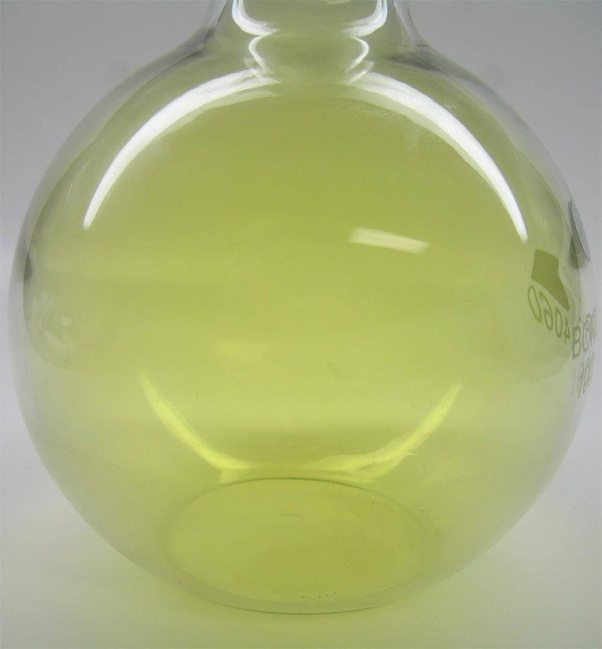
- 2Name the colour and physical state (at rtp) of Cl₂Green
Gas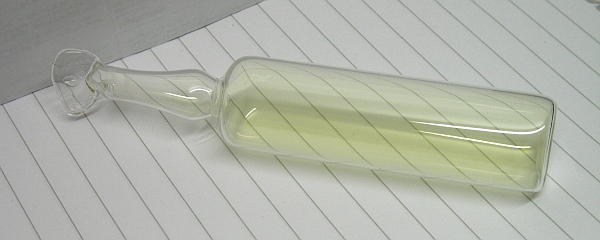
- 3Name the colour and physical state (at rtp) of Br₂Red-brown
Liquid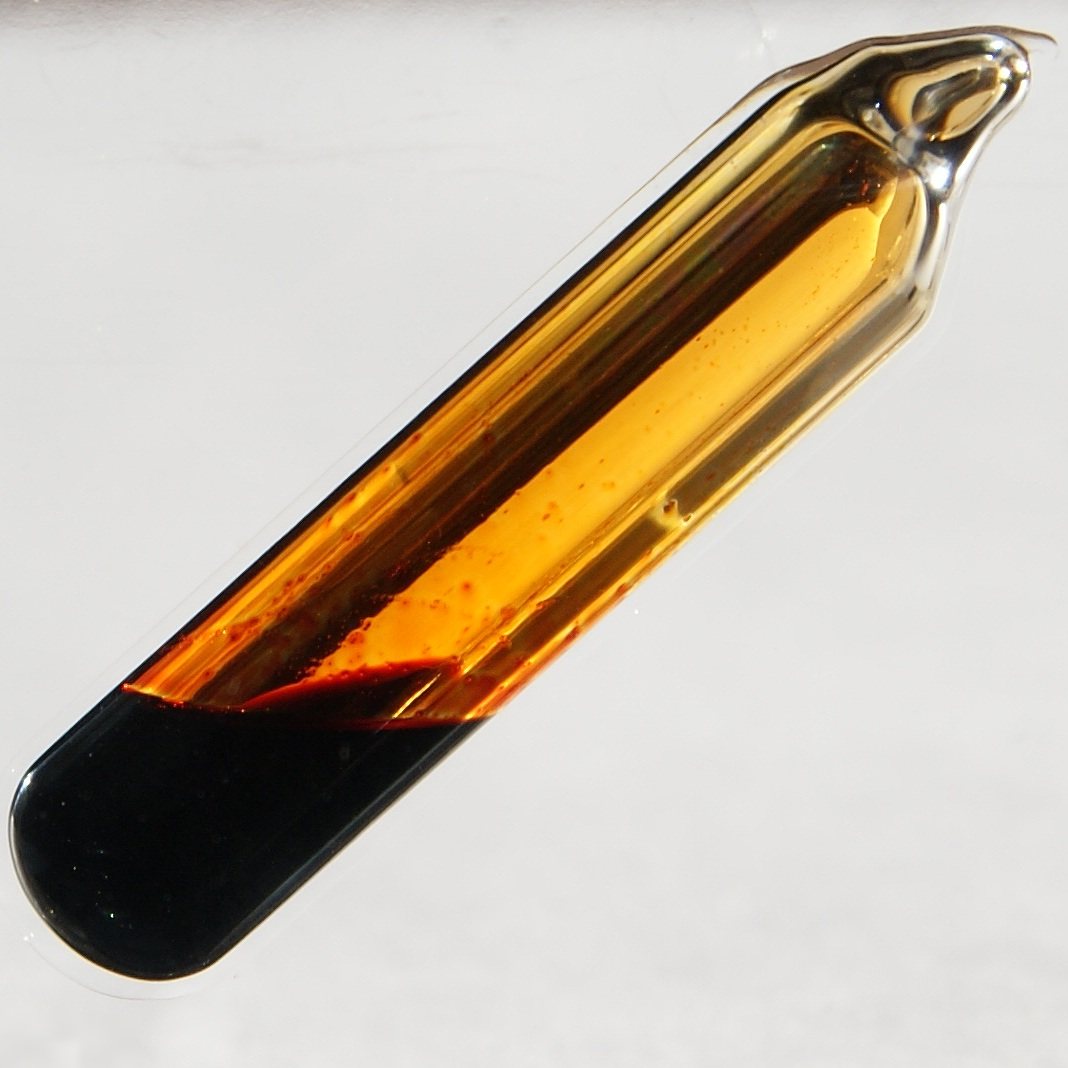
- 4Name the colour and physical state (at rtp) of I₂Grey
Solid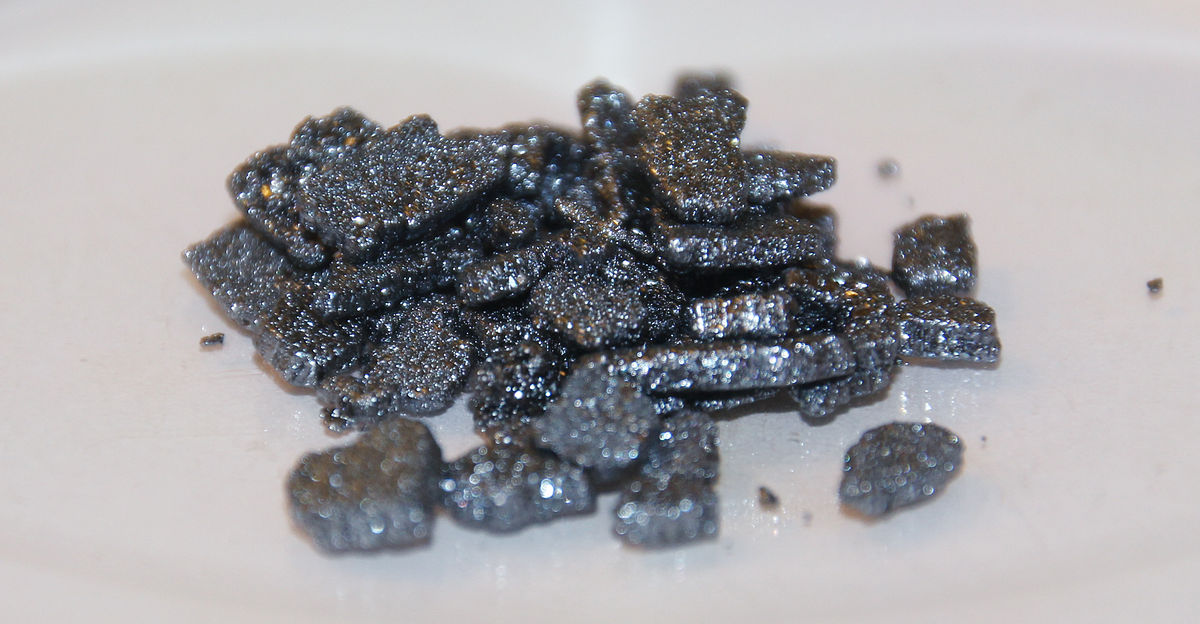
- 5Describe and explain the trend in boiling points as you go down Group 7The boiling/melting points of the halogens increase down the group. This is due to the increasing strength of the London forces as the number of electrons increases when the size and relative mass of the atoms increases
- 6Complete the sentences: A substance is said to be ___________ if it has a low boiling points. So you could say that ___________ decreases down the groupA substance is said to be VOLATILE if it has a low boiling points. So you could say that VOLATILITY decreases down the group
- 7In terms of electron transfer, what happens when halogen atoms react?Halogen atoms react by gaining an electron in their outer shell. This means they're reduced, forming halide ions
- 8Give the general formula for the reduction of halogen atomsX + e⁻ --> X⁻
- 9TRUE OR FALSE: Halogens are oxidising agentsTRUE
As halogens get reduced, they oxidise another substance (redox reaction) - so they're oxidising agents. - 10Describe and explain the trend in reactivity down Group 7Halogens get less reactive down the group (they become less oxidising) because as you go down the group:
Atomic radius increases
Shielding increases
Nuclear charge increase (effect is overridden)
This makes it harder for larger atoms to attract the electron needed to form an ion, so larger atoms are less reactive. - 11Complete the sentences: More reactive halogens will oxidise and _________ the halide ions of less reactive halogens. Reactivity ____________ down the group and so a halogen will displace a halide from solution if the halide is _______ it in the periodic tableMore reactive halogens will oxidise and DISPLACE the halide ions of less reactive halogens. Reactivity DECREASES down the group and so a halogen will displace a halide from solution if the halide is BELOW it in the periodic table
- 12Which of the halide ions (Br⁻ and/or I⁻) does chlorine displace?Bromide (Br⁻) and iodide (I⁻)
- 13Which of the halide ions (Cl⁻ and/or I⁻) does bromine displace?Iodide (I⁻)
- 14Which of the halide ions (Br⁻ and/or Cl⁻) does iodine displace?Neither
- 15Chlorine displaces bromide (Br⁻). Give the ionic equation for this displacement reactionCl₂ + 2Br⁻ --> 2Cl⁻ + Br₂
- 16Chlorine displaces iodide (I⁻). Give the ionic equation for this displacement reactionCl₂ + 2I⁻ --> 2Cl⁻ + I₂
- 17Bromine displaces iodide (I⁻). Give the ionic equation for this displacement reactionBr₂ + 2I⁻ --> 2Br⁻ + I₂
- 18What is the colour of iodine water (I₂)?Brown
- 19What is the colour of bromine water (Br₂)?Orange
- 20What is the colour of chlorine water (Cl₂)?Colourless
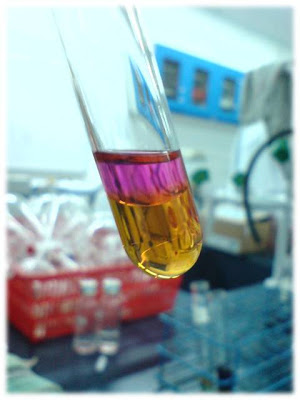
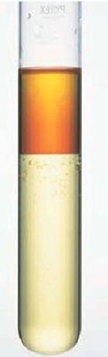
- 21When displacement reactions happen, there are colour changes. However, orange and brown can sometimes look similar. What can be done to make the changes easier to see?Shake the reaction mixture with an organic solvent (e.g. hexane). The halogen that's present will dissolve readily in the organic solvent, which settles out as a distinct layer (solvent layer) above the aqueous solution.
Iodine = violet/pink
Bromine = orange/red
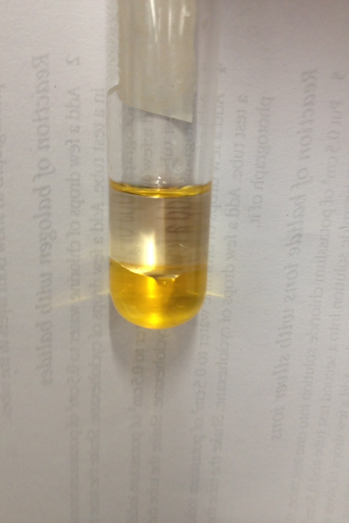
Chlorine = pale yellow/green - 22What is the colour of the solvent layer when iodine is dissolved in an organic solvent (e.g. hexane)?Violet/pink
- 23What is the colour of the solvent layer when bromine is dissolved in an organic solvent (e.g. hexane)?Orange/red
- 24What is the colour of the solvent layer when chlorine is dissolved in an organic solvent (e.g. hexane)?Pale yellow/green
- 25Describe the observations made when chlorine water reacts with potassium bromide solutionOrange/red solution formed with organic solvent
- 26Describe the observations made when chlorine water reacts with potassium iodide solutionViolet/pink solution formed with organic solvent
- 27Describe the observations made when bromine water reacts with potassium chloride solutionNo reaction
(solvent layer is orange/red) - 28Describe the observations made when bromine water reacts with potassium iodide solutionViolet/pink solution formed with organic solvent
- 29Describe the observations made when iodine water reacts with potassium chloride solutionNo reaction
(solvent layer is purple/pink) - 30Describe the observations made when iodine water reacts with potassium bromide solutionNo reaction
(solvent layer is purple/pink) - 31Apart from using displacement reactions, what test could be used to identify halides?Silver nitrate test
- 32Outline the method for the silver nitrate test, including the product formed (and the general ionic equation) if the test is positive1. If you are testing solid substances, dissolve each of them separately in distilled water to make solutions
2. Using a pipette, add a few drops of dilute nitric acid (HNO₃) to each test tube
3. Using a pipette, add a few drops of aqueous silver nitrate (AgNO₃) to each test tube
If there are chloride, bromide or iodide ions present, a precipitate of the silver halide will be formed:
Ag⁺ + X⁻ --> AgX - 33What are the different colours of the precipitate formed when a silver nitrate test is done on chloride, bromide and iodide ions?CHLORIDE = white
BROMIDE = cream
IODIDE = yellow - 34It isn't always easy to tell the difference between the precipitates. What can be added to tell the halides apart?Dilute or concentrated ammonia
- 35In the silver nitrate test, why is dilute nitric acid added to the solutions?The dilute nitric acid gets rid of any unwanted ions that might otherwise mess up the test results
- 36Outline the method of adding dilute/concentrated ammonia to the precipitates formed by the silver nitrate test1. Using a pipette, add dilute ammonia (NH₃) to each of the silver halide precipitate suspensions
2. If any precipitates haven't dissolved, add concentrated ammonia to the solution - 37Dilute ammonia is added to Cl⁻, Br⁻ and I⁻ solutions. What observations are made?CHLORIDE = dissolves
BROMIDE = insoluble
IODIDE = insoluble - 38Concentrated ammonia is added to Br⁻ and I⁻ solutions. What observations are made?BROMIDE = dissolves
IODIDE = insoluble - 39TRUE OR FALSE: The larger the ion is, the more difficult it is to dissolve in ammoniaTRUE
Informações
- Descrição
- O usuário eliminou as informações de disciplina FlashCards sobre Group 7 - the Halogens, criado por Usuário eliminado em 05-03-2018.
- Criado por
- Usuário eliminado · mar 2018
- Atualizado
- 5 mar 2018
- Visualizações
- 13
- Histórico
-
- Criado por Yinka F · 3 mar 2018
- Copiado por Yinka F · 5 mar 2018
- Avaliação