
Hot Desert Climates
Slides do conjunto (9)
-
-
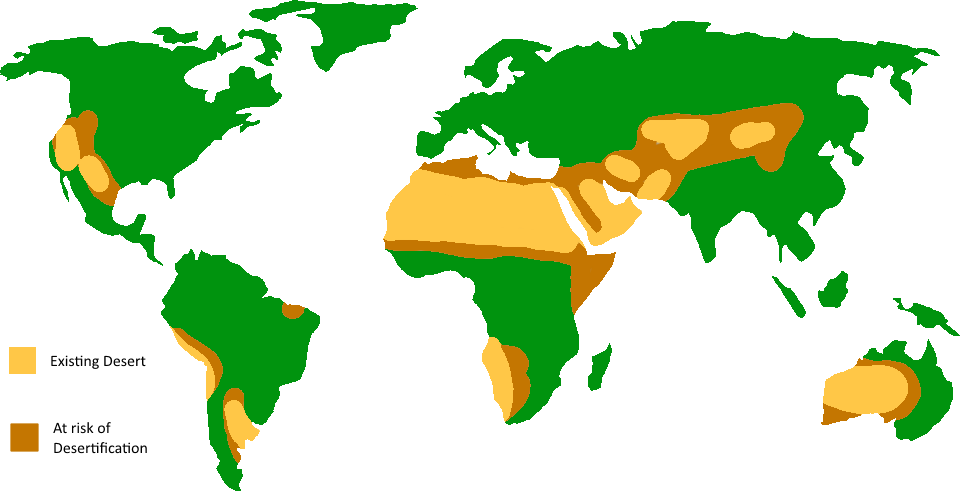
- Hot desert regions are found near the Tropics of Cancer and Capricorn.
- They occur where there is a hot climate and very little rainfall.
- The largest desert in the world is the Sahara Desert, located in Northern Africa.
-
- Deserts have a hot climate with temperatures ranging from 20 to 25 degrees year round.
- Rainfall is sparse and unpredictable. Most desert regions receive 100-200mm per year.
- The lack of clouds means that there is a large diurnal (overnight) temperature range with temperatures sometimes dropping below freezing at night.
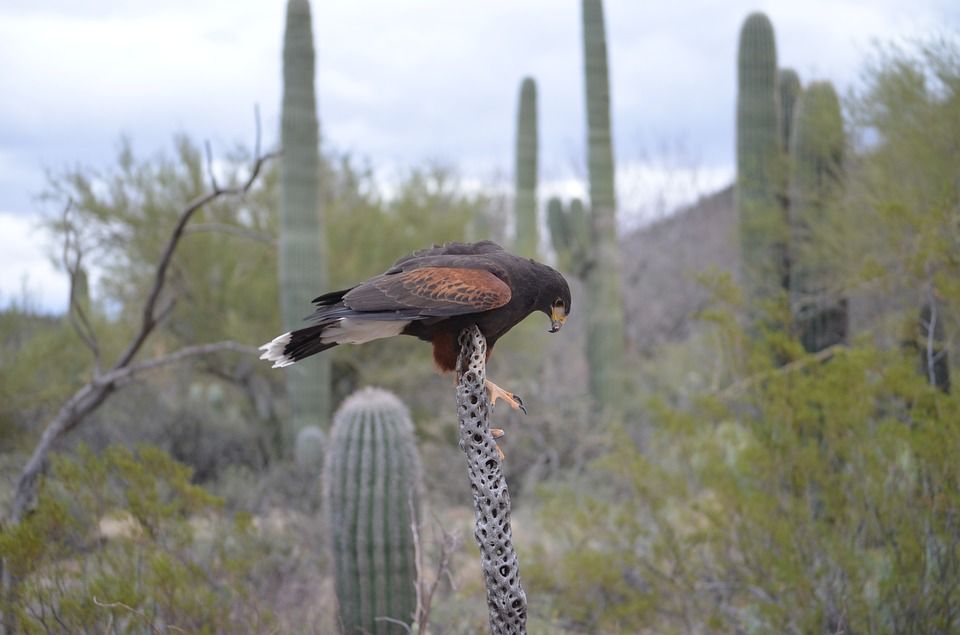
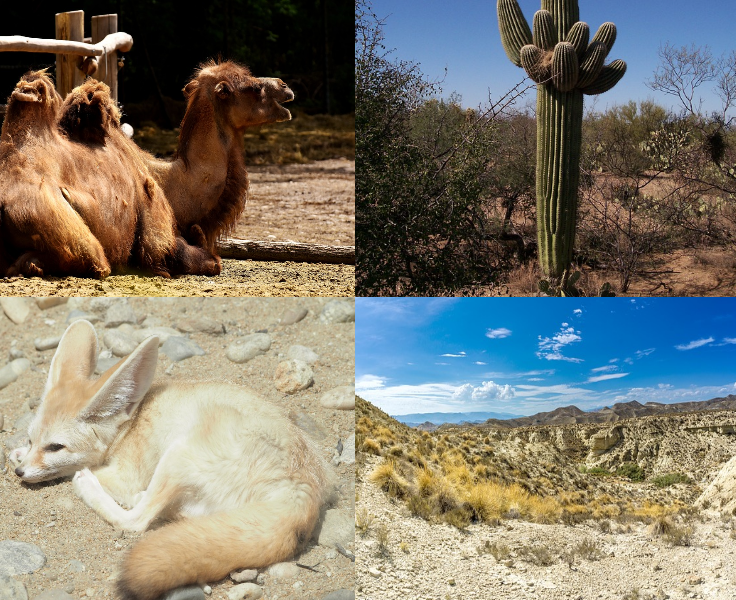
- Vegetation is sparse and is mostly made up of cacti, shrubs, and lichen.
- Soils are limited by the lack of water, though there are few shallow sandy soils.
- The ground is mostly covered by loose sediment in the form of sand. This sand builds up into sand dunes.
- Desert soils have the potential to be fertile with the addition of irrigation as the minerals have not been leached by rainfall.
-
- Plants that can survive in desert conditions are called xerophytes.
- Many of the trees in deserts are drought and fire resistant, such as the acacia tree.
- Cacti can store water in their tissues. Their waxy skin prevents transpiration and their spikes protect them.
- Lichen survive by breaking down rocks using their own acids. They do not need soil to survive.
- Desert flowers have seeds that can lay dormant for years and only germinate when there is significant rainfall. Their bright colours invite insects and they have short life cycles.
- The lack of water means that few animals survive in the desert. Areas with more water have greater biodiversity as plants can act as the basis of larger food webs.
- Desert foxes have light-coloured fur to reflect light and fur on their paws to protect their feet from heat.
- Kangaroo rats do not perspire and retrieve all of their water from food.
- Camels can store large amounts of water in their humps.
-
-
Interdependence in Hot Deserts
- There is interdependence between biotic and abiotic parts of hot deserts:
- The food web depends on plants that can store water and nutrients.
- Vegetation roots stabilise soil to stop the process of desertification.
-
- The food web in hot climates is very fragile due to the lack of biodiversity.
-
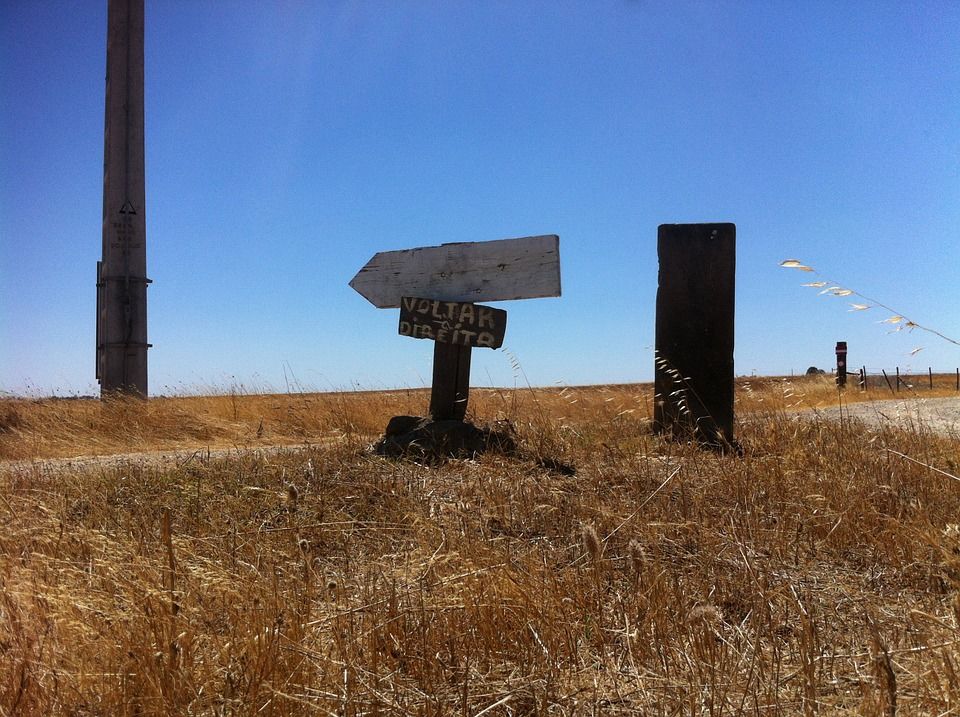
- The fringes of deserts are very fragile environments.
- Desertification is the turning of fertile land into a desert landscape.
- Up to 20% of the Earth's land is at risk of desertification.
- The Sahel region in Africa is in particular danger.
-
- Desertification is primarily caused by a change in climate conditions that limits rainfall and increases temperature.
- Areas at risk of desertification are mostly inhabited by a rapidly growing, low-income population.
- These areas are prone to migration and high birth rates.
- The population pressure means that more food must be produced, this means that already weak land is overcultivated and overgrazed to sustain the population.
- Overcultivation exhausts the soil's fertility and drains aquifers of any remaining water.
- Commercial agriculture promotes the growth of water-hungry cash crops.
- Overgrazing removes vegetation, promoting soil erosion. Hooves compact the soil, preventing the regrowth of vegetation.
- Exposed topsoil can become baked in the heat, making it susceptible to being washed away by rainfall.
-
- Planting trees:
- Tree roots help to stabilise soil.
- Leaf litter helps to add fertility to the soil.
- Aids with climate change.
- Changing cooking methods:
- Removing trees for firewood is common in desert fringe areas.
- New cooking technologies can be introduced to reduce the dependence on fires for cooking. One example is the Toyola stove in Ghana.
- Some stove designs incorporate thermocouple, which can generate energy from stove heat.
- There have been recent shifts towards solar power in these regions also.

Informações
- Descrição
- O usuário eliminou as informações de disciplina Slides sobre Hot Desert Climates, criado por Usuário eliminado em 28-08-2018.
- Criado por
- Usuário eliminado · ago 2018
- Atualizado
- 28 ago 2018
- Visualizações
- 58
- Histórico
-
- Criado por Antonia Blankenberg · 21 jun 2017
- Copiado por Antonia Blankenberg · 28 ago 2018
- Avaliação