
Notas
Coastal Processes
Conteúdo das notas (6)
Página 1
Concordant and discordant coastlines
Geological structures at the coast play a large role in the type of landforms present.
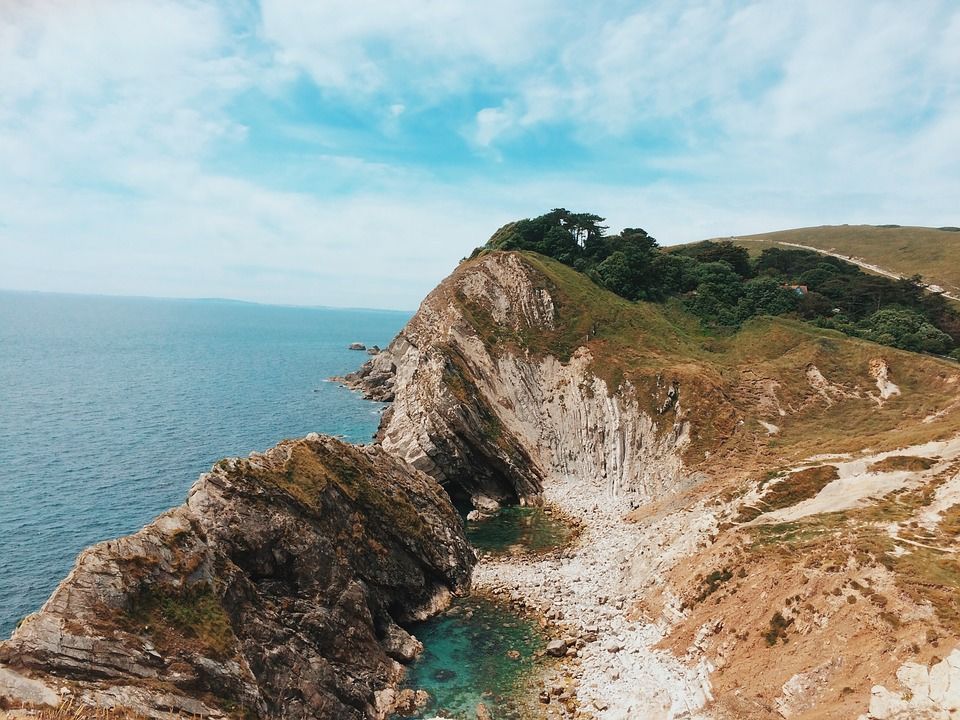
Concordant coastlines have rocks that lie parallel to the coastline.
They typically have alternative bands of hard and soft rock running parallel to the coastline, with the hard rock acting as a barrier to erosion.
When the hard rock is eroded, the soft rock is then quickly eroded, posing danger to local infrastructure. This is the case with Lulworth Cove, Dorset.
Discordant coastlines have bands of rocks that lie perpendicular to the coast.
Alternating layers of hard and soft rock that run perpendicular to the coastline typically form headlands and bays.
Página 2
Transportation
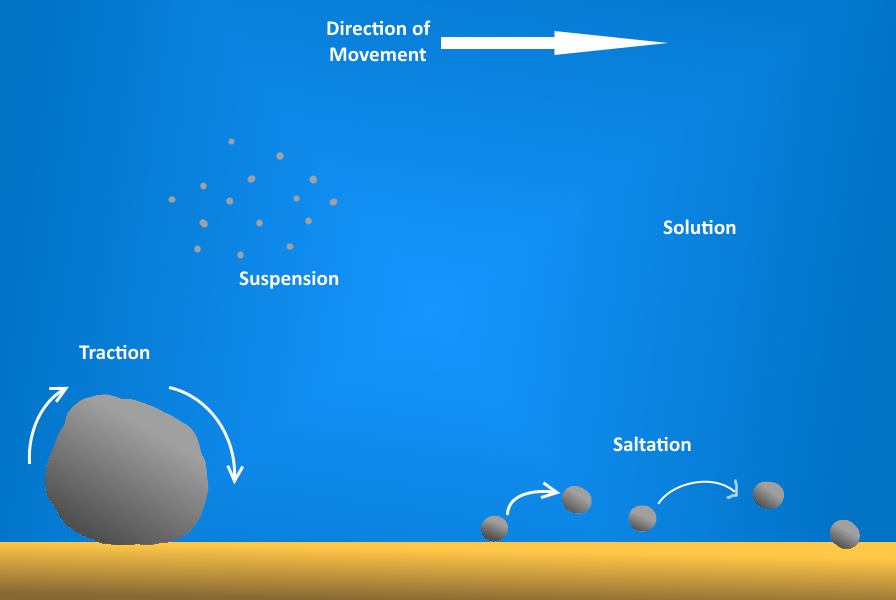
There are four types of transportation in the sea, as shown on the above diagram.
Traction is the rolling of larger rocks along the sea floor.
Saltation is the hopping/bouncing of smaller rocks and pebbles across the sea floor.
Very small pieces of sediment are carried through suspension.
Solution carries dissolved minerals in the sea water.
Página 3
Longshore Drift
Longshore drift is the process by which sediment is moved along the coastline.
The angle and direction of this movement is determined by the direction of local prevailing winds. Prevailing winds control the swash of a wave.
The backwash will always take the quickest route back to the sea and will move perpendicular to the coastline.
The strength of the swash and backwash in this process will determine the type of wave, and the type of landform present.

Página 4
Types of waves
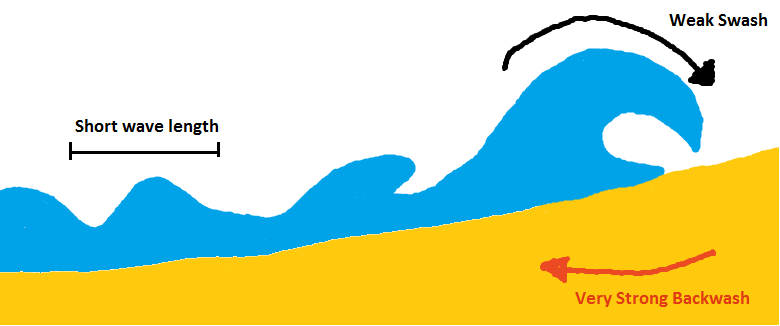
Destructive waves:
Stronger backwash and weaker swash
Break frequently - 10-15 per minute
Are high in proportion to their length
Generally found on steep beaches
Agent in coastal erosion
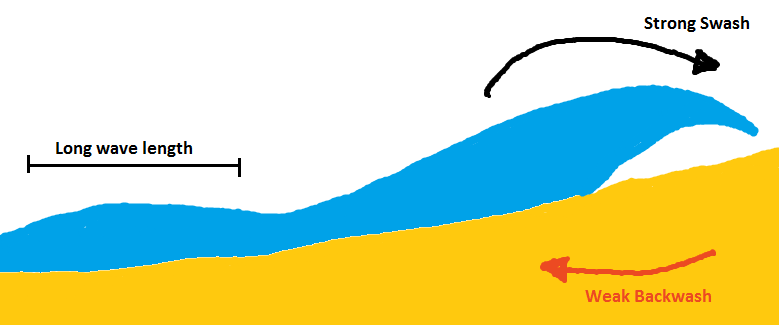
Constructive waves:
Stronger swash and weaker backwash
Break infrequently - fewer than 10 per minute
Are long in proportion to their height
Generally found on gently sloping beaches
Agent in coastal deposition
Página 5
Coastal Erosion:
There are four types of erosion that take place at coastal regions:
Abrasion - the force of sand and pebbles being thrown by the sea scraping away at rock
Attrition - the wearing away of rocks in the sea by hitting off one another
Hydraulic action - the wearing away of rocks by the force of the water, this can also occur through the compression of air in small gaps by water
Solution - the chemical breakdown of rock by seawater
Rocks can also be broken down by physical and chemical weathering processes
Página 6
How the UK climate affects erosion:
Seasonality
Affects the rate of erosion
In Winter, diurnal temperature fluctuations bring freeze-thaw weathering
Storms
The UK is susceptible to regular storms
Storm waves have higher energies and are powerful agents of erosion
This means constant repair of sea defenses is necessary
Prevailing winds
The prevailing wind for the UK is from the southwest
Areas such as Cornwall and Devon in particular are subject to winds that have traveled far across the Atlantic ocean
This leads to waves having a longer fetch, and thus, more power to erode the landscape
Informações
- Descrição
- O usuário eliminou as informações de disciplina Notas sobre Coastal Processes , criado por Usuário eliminado em 28-08-2018.
- Criado por
- Usuário eliminado · ago 2018
- Atualizado
- 28 ago 2018
- Visualizações
- 164
- Histórico
-
- Criado por Antonia Blankenberg · 15 jun 2017
- Copiado por Antonia Blankenberg · 28 ago 2018
- Avaliação