
Coastal Landforms
Slides do conjunto (8)
-
- Landforms of Erosion:
- Bays and headlands
- Wave cut platforms
- Caves arches and stacks
- Landforms of Deposition:
- Beaches
- Dunes
- Spits and bars

-
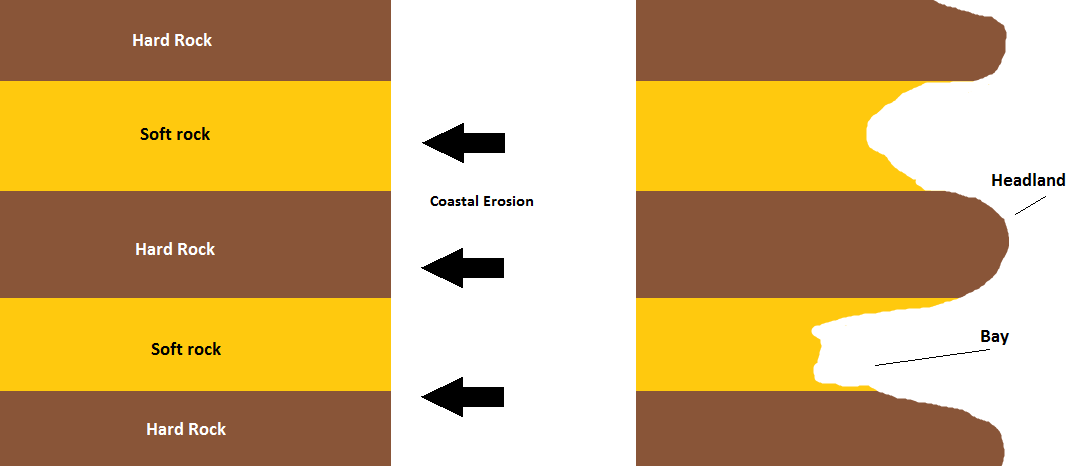
- A bay is a crescent-shaped inundation in the coastline. A headland is a cliff that juts out into the sea and has water on three sides.
- Bays and headlands form through differential erosion, where soft rock is aligned with harder rock. The softer rocks are eroded quicker by the sea, giving them their shape.
- Bays often contain a beach due to their low-energy constructive waves.
- Headlands are often susceptible to the formation of caves, stacks, and stumps.
- Example: Durlston Head and Swanage Bay, Dorset
-
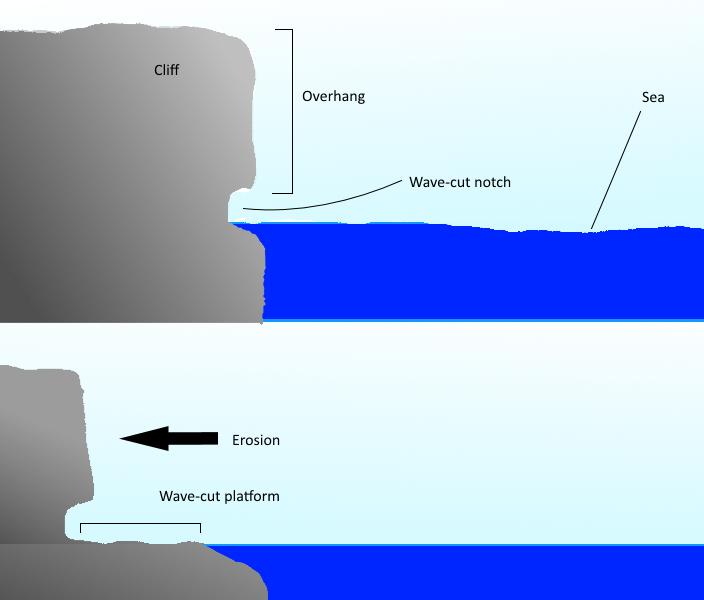
- A wave-cut platform is a flat area of bedrock visible at the base of cliffs.
- Wave-cut platforms are formed through the erosion and undercutting of large cliffs.
- The platforms are often covered at high tide and are only visible at low tide.
-
- Caves:
- Caves are caverns eroded into headlands, they vary in size and are mostly formed at a fault in the rock.
- Arches:
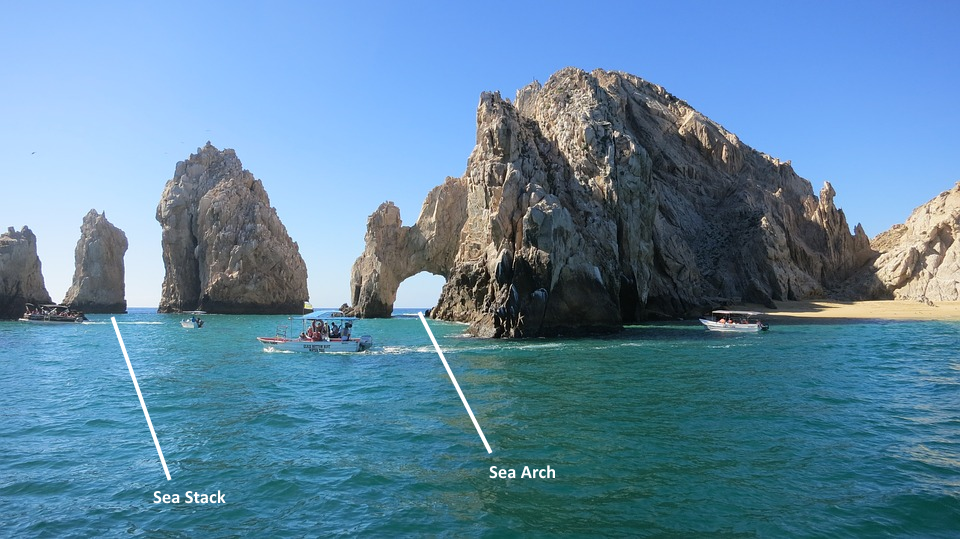
- Arches form when a cave continues to be eroded above sea-level.
- Stacks:
- Stacks form when a sea arch collapses, leaving behind a column of rock. Continued erosion of a stack will form a stump.
-
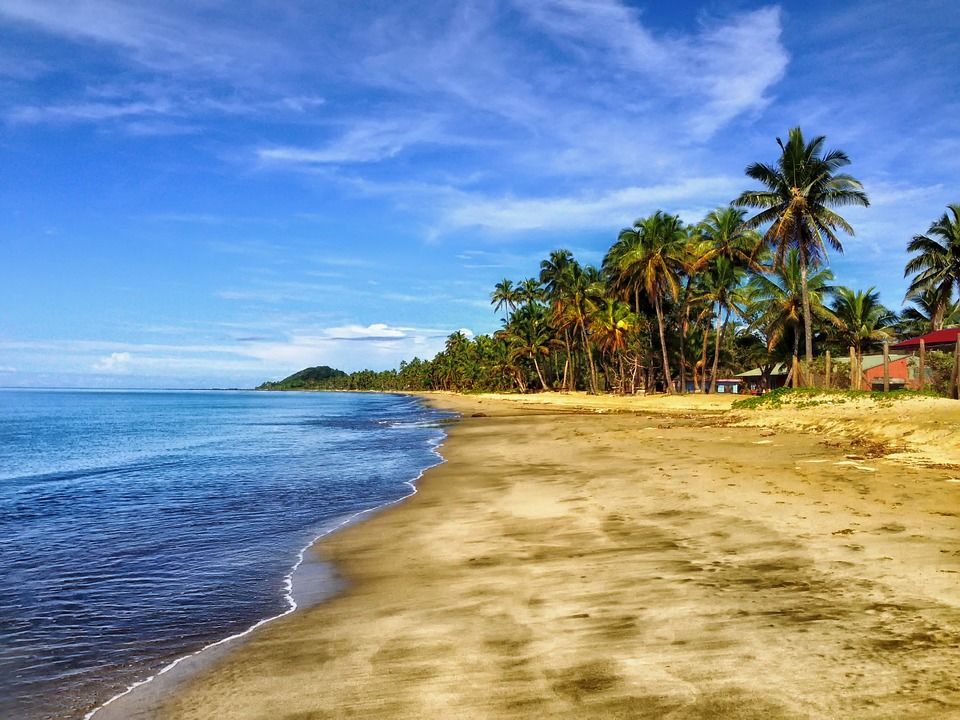
- A beach is the area between the low tide and storm tide marks. It is made up of deposited materials, which are usually small in nature (sand, pebbles etc.) but particle size can range up to rocks.
- Beaches are formed by constructive waves.
- Beaches are usually formed in bays or along large straight stretches of coastline where longshore drift takes place.
- Example: Brighton, England
-
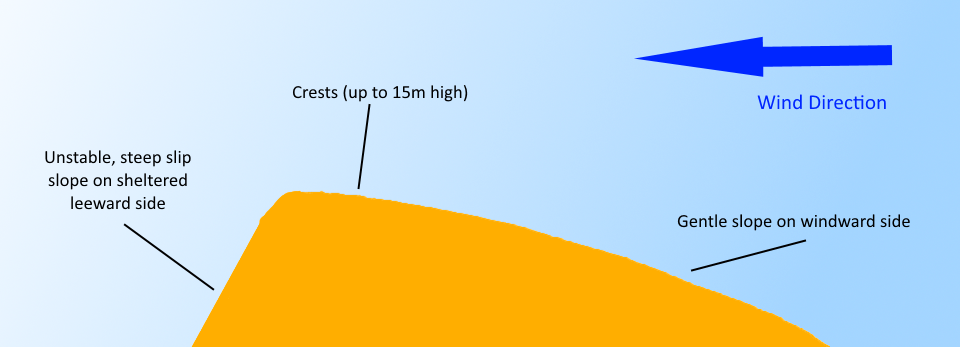
- Sand dunes are large heaps of sand that form on dry, sandy beaches.
- They are formed when sand being transported by the wind meets an obstacle, such as marram grass, and starts to be deposited around it, building up over time.
- Stronger winds create higher dunes.
- Sand dunes usually migrate inwards over time.
-
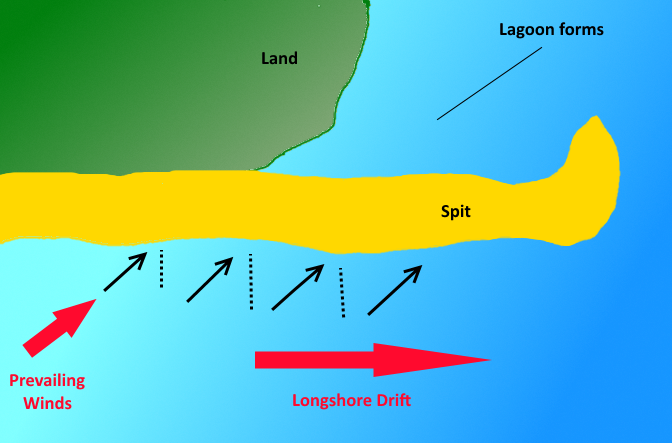
- A sand spit is a continuation of a beach from the land out into the sea.
- Sand spits are very unstable landforms that form when longshore drift continues in the same direction out into the sea.
- Sand spits need to be monitored as they take deposited sand from nearby beaches.
- The ends of sand spits often curve back to mimic the shape of the land. When this happens, lagoons can form in the enclosed waters.
- Example: Poole, Dorset.
-
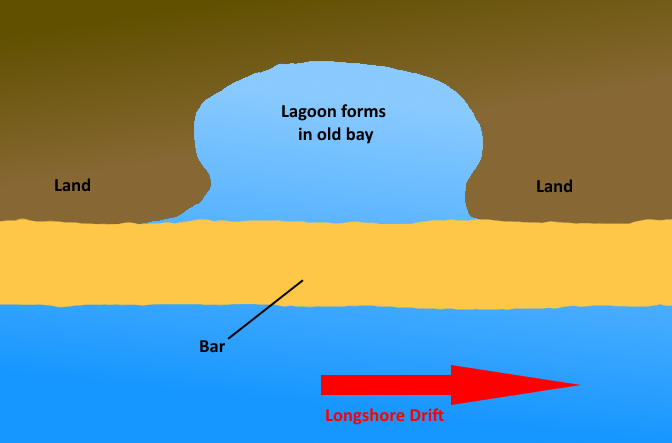
- Bars are formed when a ridge of sand builds up, enclosing a bay.
- Bars are formed in a similar process to sand spits.
- Example: Isles of Skilly, England
Informações
- Descrição
- O usuário eliminou as informações de disciplina Slides sobre Coastal Landforms, criado por Usuário eliminado em 28-08-2018.
- Criado por
- Usuário eliminado · ago 2018
- Atualizado
- 28 ago 2018
- Visualizações
- 333
- Histórico
-
- Criado por Antonia Blankenberg · 15 jun 2017
- Copiado por Antonia Blankenberg · 28 ago 2018
- Avaliação