
64. People Are Hard-Wired for Imitation and Empathy
Slides do conjunto (4)
-
- Primary Cortex- part of the brain that sends out signals to make movement.
- Premotor Cortex- part of the brain that plans movement
- Mirror Neurons- Neurons that fire both when you are performing an action and while you watch someone else perform the same action.

- Legenda: Source: Brain Connection https://brainconnection.brainhq.com/2013/03/05/the-anatomy-of-movement/
-
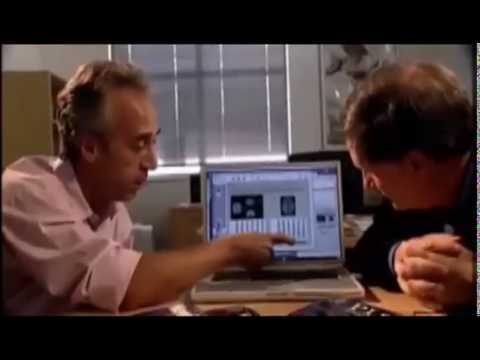
- NOVA Science NOW Mirror Neurons (Incorporar)
- Legenda: A clip explaining mirror neurons and how they impact our lives. Source: PBS's NOVA Science Now, 2005
-
- Vilayanur Ramachandran: The neurons that shaped civilization (Incorporar)
- Legenda: Vilayanur Ramachandran talks about his research into mirror neurons and how they formed the foundations of civilization. Source: TEDIndia, 2009
- Recent theories are that mirror neurons are also what allow us to empathize with others and learn complex social behaviors.
- Studies have noticed that when talking to someone, people will begin to unconsciously imitate each other's body language over time.
- They also found that this imitation encouraged better feelings towards the interaction and person imitating overall than the interactions that didn't have it at all.
-
- As Designers, it is often our goal to communicate a message or even a call to action for the benefit of our clients. By learning the basics of how humans respond to certain stimuli we can then design more effective visuals and gain better results. For example, getting kids to eat vegetables by watching other kids enjoying eating vegetables. Or using stories to create images that people empathize with.
Informações
- Descrição
- O usuário eliminou as informações de disciplina Slides sobre 64. People Are Hard-Wired for Imitation and Empathy, criado por Usuário eliminado em 23-01-2020.
- Criado por
- Usuário eliminado · jan 2020
- Atualizado
- 23 jan 2020
- Visualizações
- 10
- Histórico
-
- Criado por Alyssa Melendez · 21 jan 2020
- Copiado por Alyssa Melendez · 23 jan 2020
- Avaliação