
Flashcards
Global Salamander Diversity

Flashcards do conjunto (11)
- 1Family: Largest living amphibians Asia & NA Aquatic Laterally compressed tail Head flattened, lateral fold along body Vestigial lungs External fertilization Ventral cloacal glands Lay eggs in communal dens, and multiple paternity is suspectedCryptobranchidae
Hellbenders
- 2What are the paedomorphic traits that characterize Cryptobranchidae?Single pair of gill slits
Absence of eyelids
No costal grooves, no nasolabial grooves - 3Family: Small to medium Heavy bodied, thick tails, well-developed limbs Terrestrial or aquatic Relictual pops in Asia and 1 in Eur Lack gills, gill slits, and nasolabial grooves Have eyelids and costal grooves Generally well dev lungs External fertilization, aquatic larvae which are sometimes cannibalistic Eggs in gelatinous sacs attached to things (diagnostic character)Hynobiidae
Asian Salamanders
- 4Family: SE Na and Miss RV Obligate neotenic/paedomorphic External gills, gill slits Small forelimbs, no hindlimbs, no pelvic girdle Permanently aquatic Aestivate in burrows, nocturnal Fert is external, female guards eggsSirenidae
Sirens - 5Family: NA Burrowers, breed in ephemeral pools Mostly terrestrial, some completely aquatic Have eyelids, costal grooves, lungs, gular fold Nasolabial groove absent Internal fert. Polyploidy and gynogenetic lineages from ancient hybrids Variation in life cycle MigrationsAmbystomatidae
Mole Salamanders
- 6Family: Pacific NW Con forests with cold streams Terrestrial (except breeding) Heavy bodies and compressed tails No nosolabial grooves Gular fold and costal grooves present Small lungs Facultative metamorphosis Internal fertilization with spermatophoresDicamptodontidae
Giant Salamanders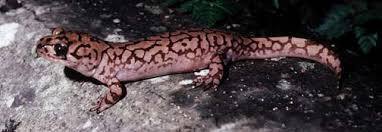
- 7Family: Eur, N Af, Asia, NA Habitat and life cycle varies Aposematic coloring and secretions (+unken response) Eyelids and lungs present Costal grooves present but indistinct No nasolabial grooves Internal fertilization with spermatophore Viviparous and oviparous Granular skin in terrestrial morphsSalamandridae
True Salamanders
- 8Describe the life cycle of the Salamandridae species Notophthalmus viridescensComplex and triphasic
Adults are permanently aquatic. Developing larvae could mature directly into aquatic adult, OR metamophose into an immature terrestrial eft - 9Family: E NA, E Adriatic coast of Eur Totally aquatic, nocturnal 3 Pairs of external gills Tail fin Paedomorphic: 2 gill slits, no eyelids No maxillary bones 2-4 fore and hind toes Internal fertilization Diploid chr # of 38Proteidae
Mudpuppies, Waterdogs
- 10Family: Endemic to Pacific NW Coniferous old growths Semiaquatic No ext gills or gill slits Eyelids, costal grooves present Nasolabial grooves absent Males have unique squared off glands posterior vent Internal fertilization Reduced lungsRhyacotritodidae
Torrent Salamanders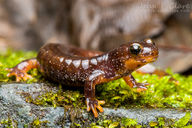
- 11Family: SE US endemics Aquatic Heavy bodied, eel-like Four poorly developed limbs Paedomorphic: eyelids and tongue absent, internal gills and gill slits Costal grooves and lungs present No external gills or nasolabial grooves Internal fertilization AestivationAmphiumidae
Amphiumas
Informações
- Descrição
- O usuário eliminou as informações de disciplina FlashCards sobre Global Salamander Diversity, criado por Usuário eliminado em 04-02-2020.
- Criado por
- Usuário eliminado · fev 2020
- Atualizado
- 4 fev 2020
- Visualizações
- 12
- Histórico
-
- Criado por Emilie Broussard · 1 fev 2020
- Copiado por Emilie Broussard · 4 fev 2020
- Avaliação