
Notas
1.2 - Ultrastructure of cells
Conteúdo das notas (13)
Página 1
Prokaryotic cell structure
first organisms to evolve on Earth
they still have the simplest structure
mostly small in size and found almost everywhere
they have a cell wall outside the cell membrane
protects the cell
maintains its shape
prevents it from bursting
no nucleus is present in a prokaryotic cell
its interior is filled entirely with cytoplasm
there are no compartments
prokaryotes' size is 70 S (Svedberg units)
part of the cytoplasm appears lighter than the rest
this region contains the DNA of the cell
usually one circular DNA molecule
the DNA is not associated with proteins
the lighter area of the cell = nucleoid
contains DNA but isn't nucleus
Cell division in prokaryotes
prokaryotes divide by binary fission
used for asexual reproduction
steps:
the single circular chromosome is replicated
the two copies move to opposite ends of the cell
the cytoplasm divides and the cell divides
each daughter cell has a copy of the chromosome
Página 2
Eukaryotic cell structure
more complicate internal structure than prokaryotic cells
eukaryotic cells are compartmentalized
the most important component is the nucleus
it contains the cell's chromosomes
the compartments are known as organelles
each organelle has a distinctive structure and function
advantages in being compartmentalized
enzymes and substrates can be more concentrated than if they were spread throughout the cytoplasm
organelles with their contents can be moved around within the cell
conditions such as pH can be maintained at an ideal level for a particular process
substances that could cause damage to the cell can be kept inside the membrane of an organelle
example: digestive enzymes of a lysosome could digest and kill the cell if they weren't safely stored in the lysosome's membrane
Página 3
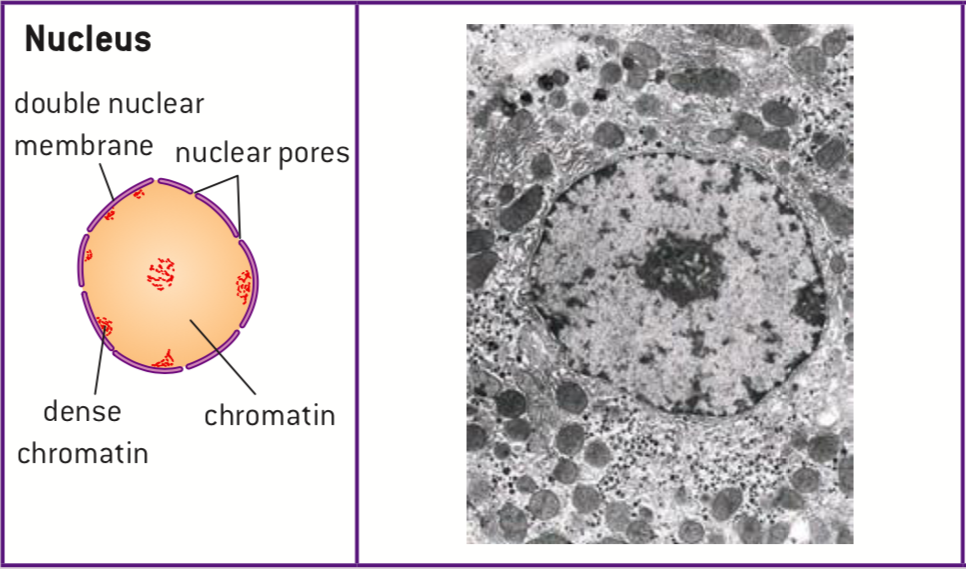
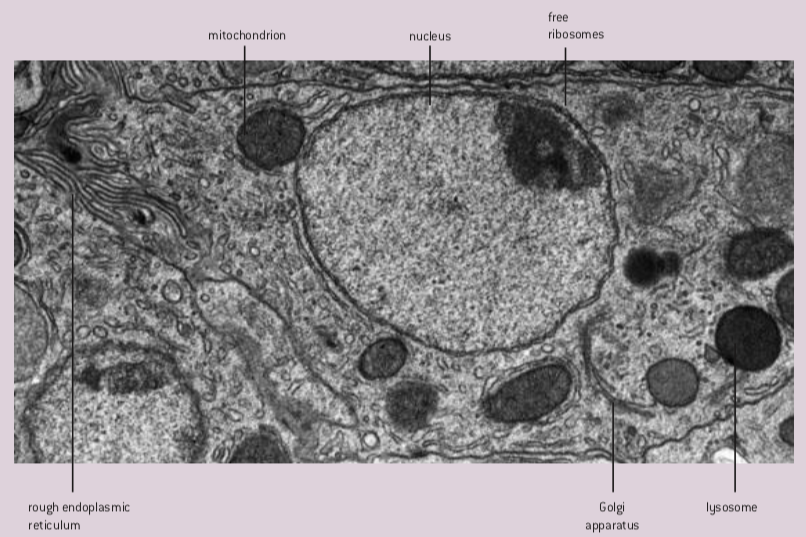
Nucleus
its membrane is double and has pores
it contains the chromosome
uncoiled chromosomes are spread through the nucleus, they are called chromatin
there are often densely staining areas of chromatic around the edge of the nucleus
the nucleus is where replication and transcription happen,
mRNA is transported through the nuclear pores to the cytoplasm
Página 4
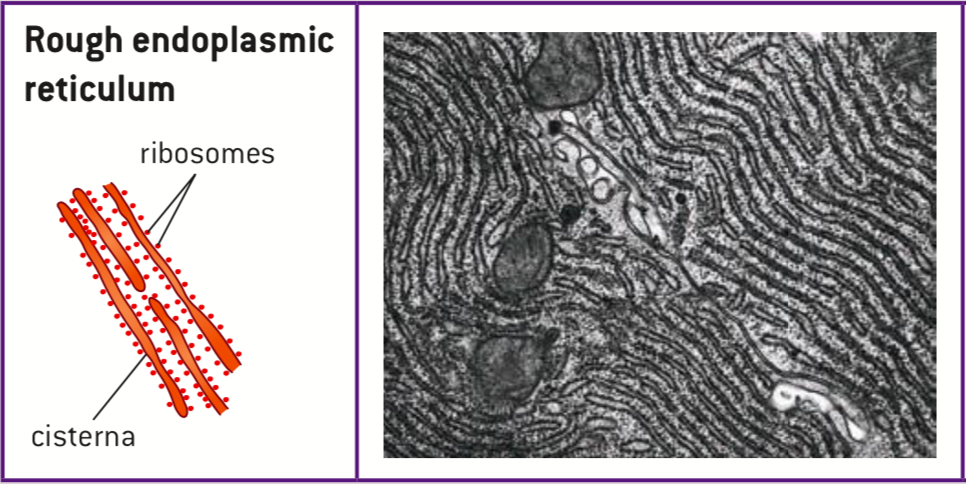
Rough endoplasmic reticulum
consists of flattened membrane sacs called cisternae
ribosomes are attached to the outside of the cisternae
the ribosomes arger than in procaryotes and are classified as 80S
the main function of the rER is to synthesize protein for secretion
these proteins
pass into is cisternae
are carried by vesicles
moved to Golgi Apparatus
Página 5
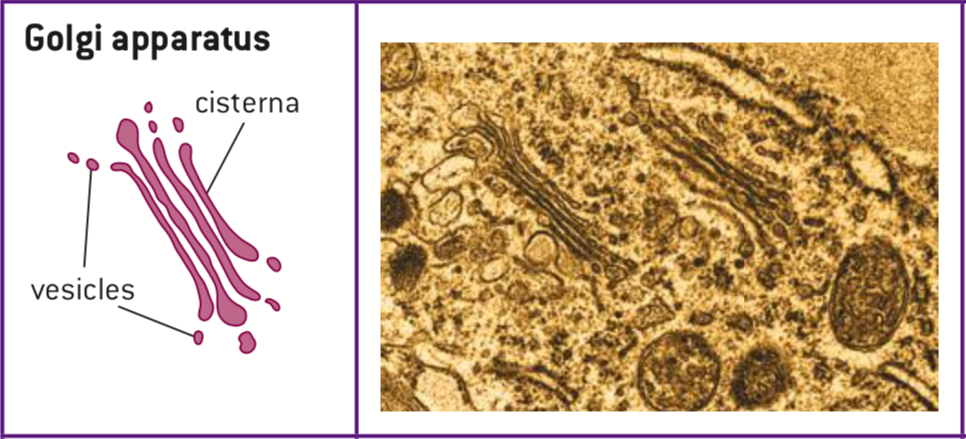
Golgi apparatus
consists of flattened membrane sacs called cisternae
like in rER but not as long, often curved, no ribosomes, have many vesicles around
the Golgi apparatus processes proteins borough in by vesicles from the rER
most of the proteins are carried in vesicles to the plasma membrane for secretion
Página 6
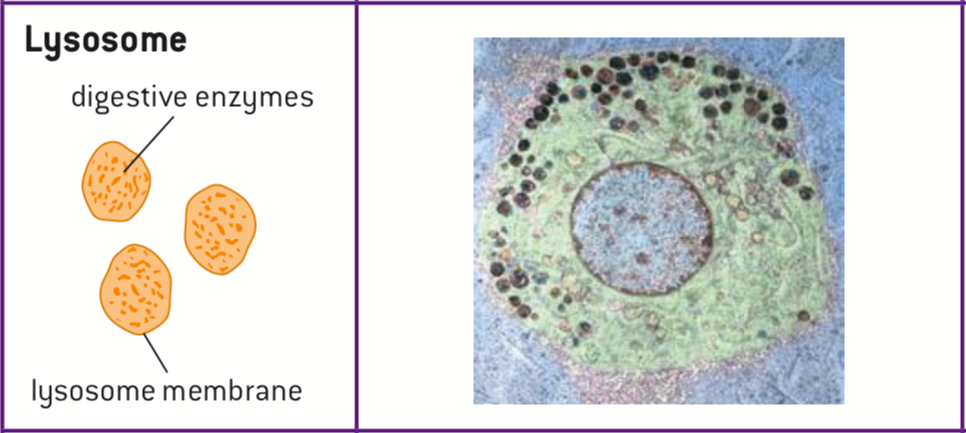
Lysosome
approximately spherical with a single membrane
formed from Golgi vesicles
contain high concentrations of protein
contain digestive enzymes
used to break down ingested food in vesicles
break down organelles in the cell or the whole cell
Página 7
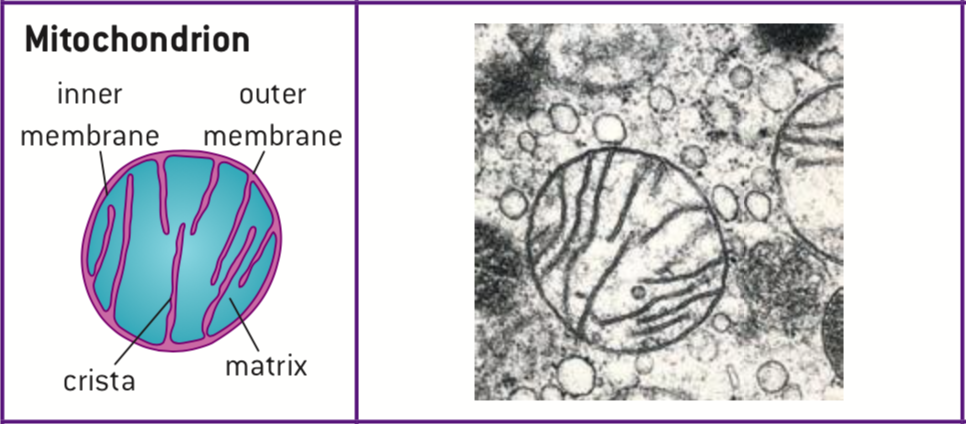
Mitochondrion
a double membrane surrounds it
the inner membranes fold to form structures called cristae
the fluid inside is called the matrix
the shape is variable but is usually spherical or ovoid
ey produce ATP for the cell by aerobic cell respiration
fat is digested here if it's being used as an energy source in the cell
Página 8
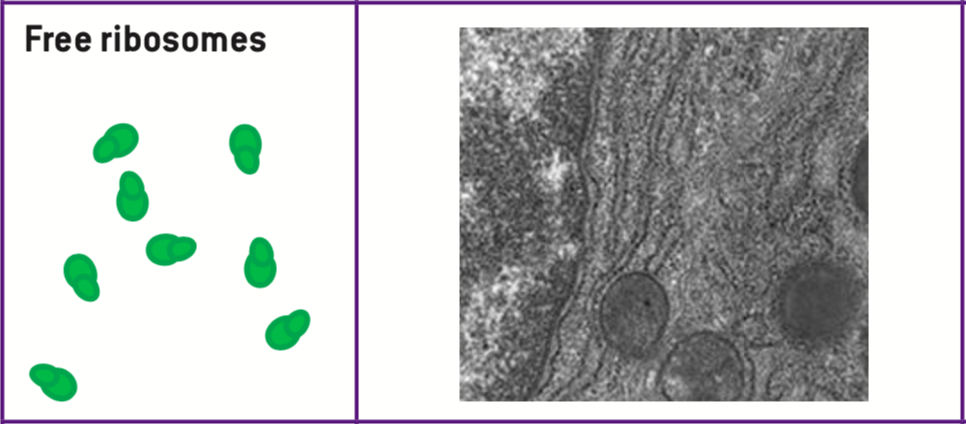
Free ribosomes
appear as dark granules in the cytoplasm
aren't surrounded by a membrane
they synthesize protein to work in the cytoplasm (as enzymes etc)
constructed in a region of the nucleus called the nucleolus
Página 9
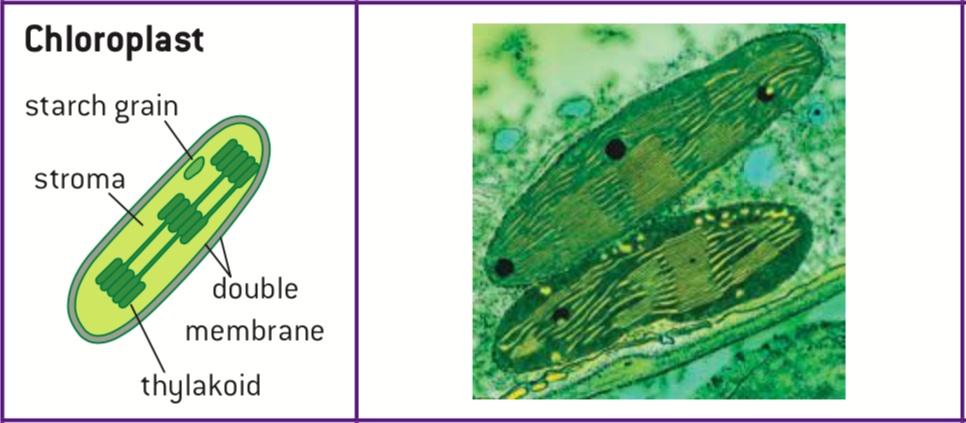
Chloroplast
a double membrane surrounds it
inside are stacks of thylakoids
thylakoids are flattened stacks of membrane
the shape is variable but usually spherical or ovoid
they produce glucose and other organic compounds through photosynthesis
starch grains may be present inside if they have been photosynthesizing rapidly
Página 10
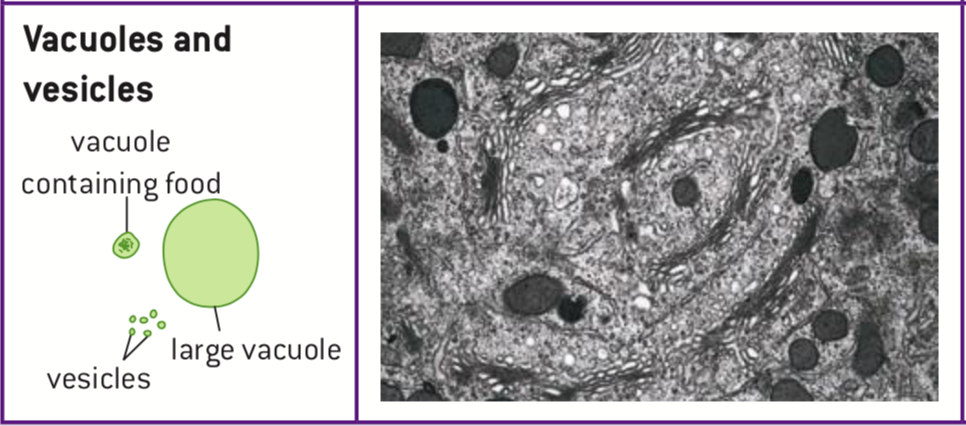
Vacuoles and vesicles
vacuoles:
consist of a single membrane with fluids inside
many plant cells have large vacuoles (occupy more than half of the cell volume)
some animals absorb food from outside and digest them inside vacuoles
some unicellular organisms use them to expel excess water
vesicles
very small vacuoles used to transport materials inside the cell
Página 11
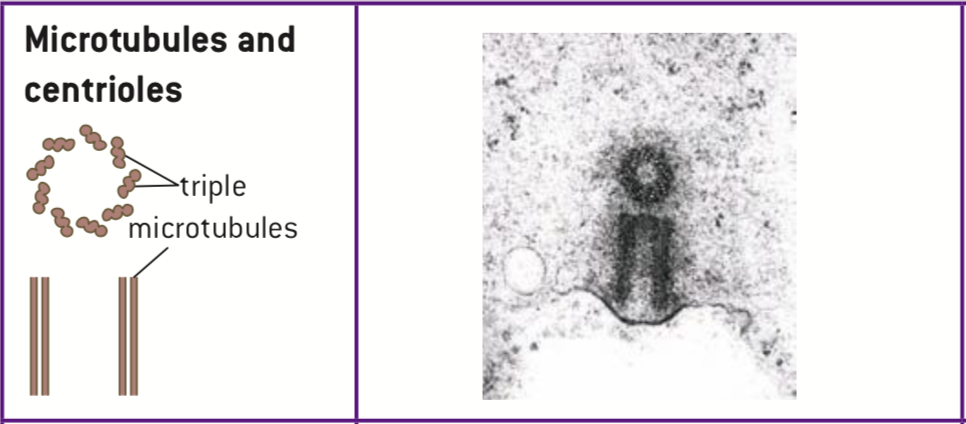
Microtubules and centrioles
microtubules
small cylindrical fibers with a have variety of roles
such as moving chromosomes during cell division
centrioles
consist of two groups of nine triple microtubules
they form an anchor point for microtubules during cell division
and also for microtubules inside cilia and flagella
Página 12
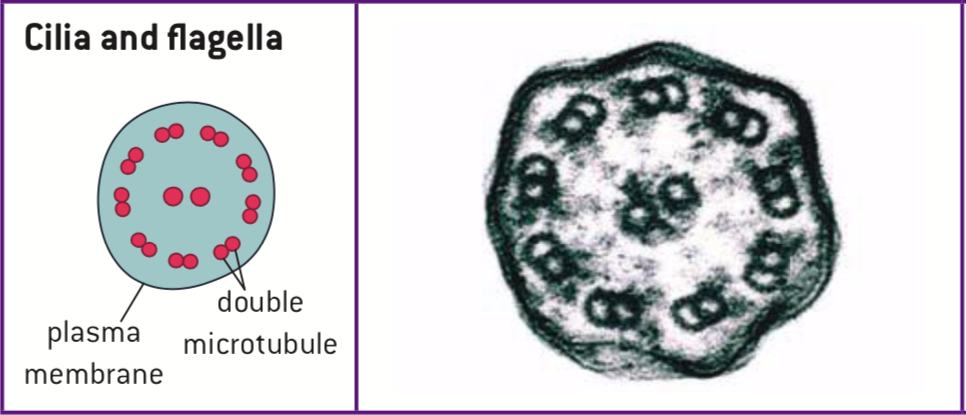
Cilia and flagella
whip-like structures projecting from the cell surface
contain a ring of nine double microtubules plus two central ones
flagella re larger and usually only one is present (as in sperm)
cilia are smaller and many are present
cilia and flagella:
can be used for locomotion
also to create a current in the fluid next to the cell
Página 13
Informações
- Descrição
- O usuário eliminou as informações de disciplina Notas sobre 1.2 - Ultrastructure of cells, criado por Usuário eliminado em 15-02-2021.
- Criado por
- Usuário eliminado · fev 2021
- Atualizado
- 15 fev 2021
- Visualizações
- 11
- Histórico
-
- Criado por Blen Abate · 11 mai 2020
- Copiado por Blen Abate · 15 fev 2021
- Avaliação