
Mapa mental
Production ethanol: fermentation vs. ethene and steam
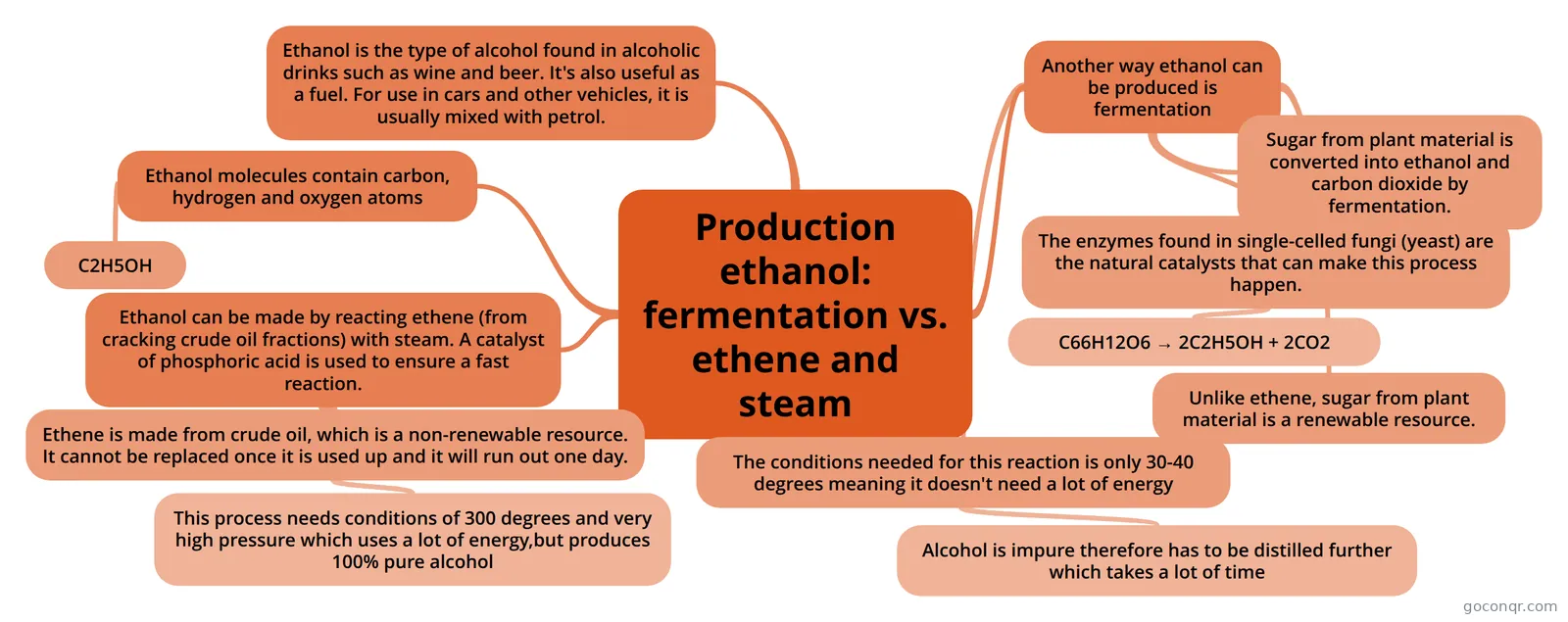
Mind map: ethanol production fermentation vs ethene and steam
Conteúdo do mapa
Production ethanol: fermentation vs. ethene and steam
Ethanol is the type of alcohol found in alcoholic drinks such as wine and beer. It's also useful as a fuel. For use in cars and other vehicles, it is usually mixed with petrol.
Ethanol molecules contain carbon, hydrogen and oxygen atoms
- C2H5OH
Ethanol can be made by reacting ethene (from cracking crude oil fractions) with steam. A catalyst of phosphoric acid is used to ensure a fast reaction.
- Ethene is made from crude oil, which is a non-renewable resource. It cannot be replaced once it is used up and it will run out one day.
- This process needs conditions of 300 degrees and very high pressure which uses a lot of energy,but produces 100% pure alcohol
- Ethene is made from crude oil, which is a non-renewable resource. It cannot be replaced once it is used up and it will run out one day.
Another way ethanol can be produced is fermentation
- Sugar from plant material is converted into ethanol and carbon dioxide by fermentation.
- The enzymes found in single-celled fungi (yeast) are the natural catalysts that can make this process happen.
- C66H12O6 → 2C2H5OH + 2CO2
- Unlike ethene, sugar from plant material is a renewable resource.
- The conditions needed for this reaction is only 30-40 degrees meaning it doesn't need a lot of energy
- Alcohol is impure therefore has to be distilled further which takes a lot of time
Informações
- Descrição
- Mapa Mental sobre Production ethanol: fermentation vs. ethene and steam, criado por tom_gill99 em 12-11-2013.
- Criado por
- tom_gill99 · nov 2013
- Atualizado
- 4 nov 2016
- Visualizações
- 205
- Avaliação