
Mapa mental
Physics Unit 2 - Force, Acceleration And Terminal Velocity
Conteúdo do mapa
Physics Unit 2 - Force, Acceleration And Terminal Velocity
Acceleration
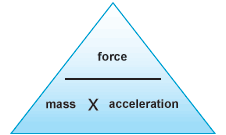
- Non-Resultant Force Creates An Acceleration
- F=m*a
- a=f/m
- m= Mass (Kg)
- a=Acceleration
- F=Resultant Force
- a=Acceleration
Forces
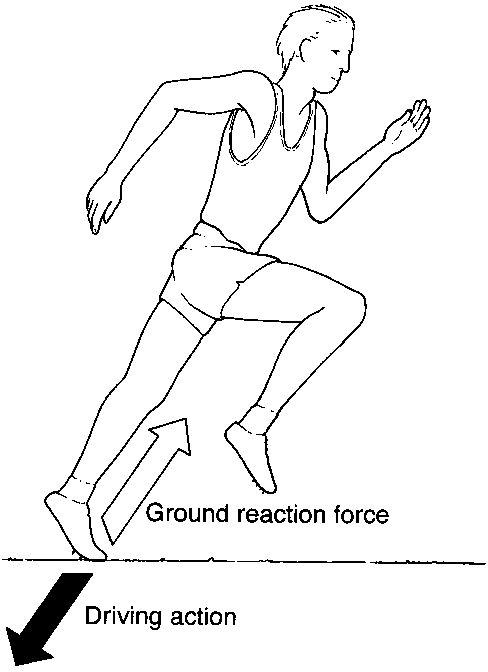
- When two object interact the forces are equal and opposite
- E.G: If you push a trolley it will push back just as hard
- Reaction Forces
- When two objects interact, the forces they apply on each other are EQUAL and OPPOSITE
- When two objects interact, the forces they apply on each other are EQUAL and OPPOSITE
- Frictional Force
- Frintion slows things down
- If an object has no force moving it then it will always slow down and stop
- Friction acts in the opposite direction to movement
- To travel at a steady speed, the driving force needs to balance the frictional forces
- Frintion slows things down
Drag
- Also know as fluids E.G: Air or Water
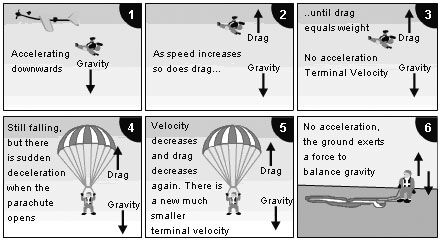
- As Drag Increases, Speed Increases
- This is because as a car speeds up it has much more friction to work against
- Work harder to maintain steady speed
- Terminal Velocity
- Terminal velocity is the highest velocity attainable by an object in free fall
- Objects falling through fluids reach a terminal velocity
- Factors Effecting Terminal Velocity
- Area
- Size
- Shape
- A parachute with a larger surface area has a bigger resistance
- Area
- Factors Effecting Terminal Velocity
- Objects falling through fluids reach a terminal velocity
- Terminal velocity is the highest velocity attainable by an object in free fall
Imagens e arquivos do mapa
Informações
- Descrição
- GCSE Physics Unit 2 - Force, Acceleration and Terminal Velocity.
- Criado por
- Usuário eliminado · set 2016
- Atualizado
- 8 jan 2017
- Visualizações
- 81
- Histórico
-
- Criado por Ryan Storey · 24 fev 2015
- Copiado por MARLENE PEREZ · 23 set 2016
- Avaliação