
Notas
Idealism
Conteúdo das notas (1)
Página 1
Berkeley argued that every quality is secondary:
What we perceive of the world is a combination of sensible qualities such as colour, taste, smell, shape and size, etc.
Experience fundamentally involves pain and pleasure
Such sensations cannot exist in material objects because pleasure and pain are subjective sensations
Therefore sensible qualities cannot exist outside of the mind, they are not in the world but in the mind.
Idealism
RR Problem of Secondary and Primary Qualities:
Berkeley attempts to solve one of the problems of representative realism by suggesting that primary and secondary qualities cannot be seperated.
Example of shape and colour. I cannot draw a shape void of colour as shape is purely the outline of colour.
Since they cannot be seperated it would be hard to argue that one is more real than the other.


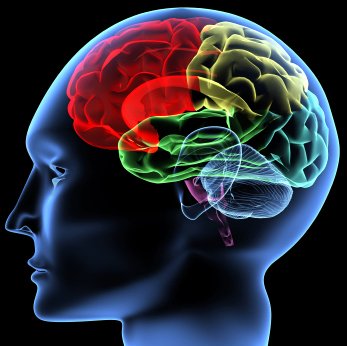
As all qualities of objects are subjective to the perceiver - do objects/the physical world exist at all?
Berkeley argued that we cannot infer from our sense experiences that objects physically exist.
We only have subjective sensations and no direct contact with the physical world.
'Esse est percipi' - to be is to be perceived
There can be no reality apart from experience - if objects are not being perceived they do not exist at all because all the object's qualities are dependent on the mind of the perceiver
Example of an apple. When I am experiencing an apple it corresponds to a 'family of sense-experiences' - crunchiness, sweetness, juiciness and solidity.



Strengths:
simple - only one type of quality therefore solves some of the problems of RR
not concerned with the link between the external world and the perception of the world therefore solves problem of causality
God as the source of our sense-experiences:
Berkeley believed that God gives us our sense-experiences, and that He does so in an orderly way so that we can make predictions on the basis of them and guide our actions accordingly.
God does not need the intermediary of real physical objects
Feeds us similar sense-experiences in similar situations so that we may communicate with eachother.
Problems of Idealism:
Lack of Certainty:
there can be no proof that the physical world is real as we can not perceive it independently of our minds
Physical Objects:
Berkeley claimed that 'esse est percipi' only applied to physical objects and not minds.
However humans cannot observe anything but the course of their own sense-experiences, therefore Berkeley could not have known that 'esse est percipi' only applies to physical objects
Common Sense:
Common sense tells us that objects do exist and continue to exist when unobserved.
If I leave a bath running and return later I would expect that it had continued to fill up without me being there.
Furthermore it seems ridiculous to suggest that once I close my eyes all the objects in the room cease to exist.
Counter:
Berkeley argued that God keeps experiences going even when there is no perceiver there.
Human ability to infer:
Berkeley seems to disregard the human ability to make inferences
Although we can not have direct experiences of unobserved objects we can infer from indirect evidence that the objects continue to exist.
For example I may not have seen the bath filling up but I can infer that I did because when I returned the bath was full.
Surely our inference is justified because we do seem to see the outcome of physical objects existing independently.



Problems with the word 'idea':
Berkeley exploits an ambuigity with his use of the term 'idea'
Berkeley uses the term to refer to sense data, objects and thoughts
However the word 'idea obviously has mental connotations - we think of ideas and we think of the mind.
If we think of a tree we have an idea of a tree in mind but this needs to be distinguished from the claim that the tree itself is in the mind.

Solipsism:
The belief that the only thing I can be abosolutely certain of is my own mind.
The only thing that exists is my mind and everything else is a product of my mind.
Idealists who do not want to ascribe to solipsism must claim that our perceptions correspond to other people's. It would make sense to say they correspond to physical objects however this is obviously not suitable for Idealism.
Reliance on God:
Idealism relies on the existence of God.
The world is, apparently, regular and intransient because these perceptions change state in a predictable manner
A world such as this requires a permanent perceiver, God, in whose mind everything subsists.
However if we cannot know anything except our own experience how can we know God? God is not one of our experiences and therefore we cannot know him empirically.
If we can know God exists without having direct experience of him this could suggest the possibility that we are living in a world with independently existing physical objects that cause our sense experiences.
By introducing God into the equation Berkeley undermines his own argument that we can only have knowledge of our own experiences.
Criticism of RR
Problems
Informações
- Descrição
- A-Level Philosophy (Knowledge of the external world) Notas sobre Idealism, criado por lucy-hook em 15-05-2013.
- Criado por
- lucy-hook · mai 2013
- Atualizado
- 9 mar 2016
- Visualizações
- 120
- Tags
- Avaliação