
Youth and Women in Nazi Germany
Slides do conjunto (5)
-
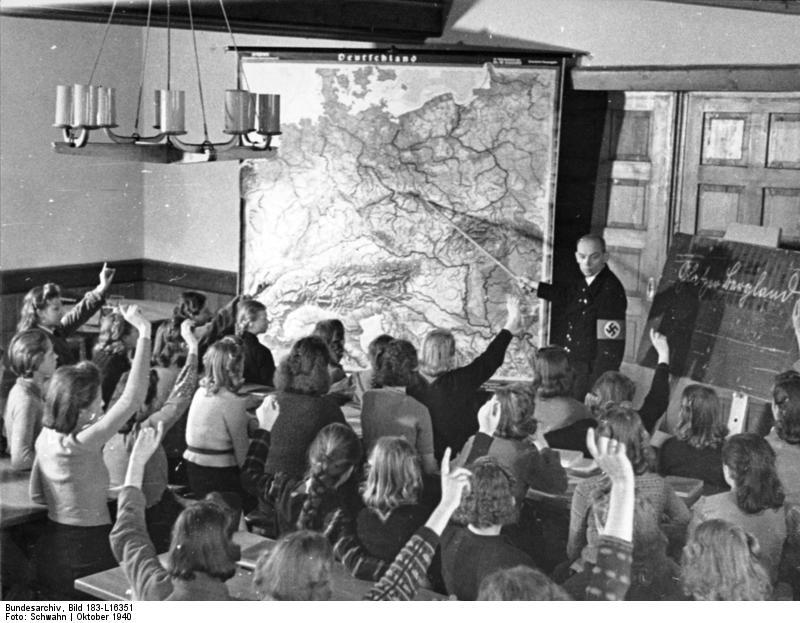
- At school:
- The Nazis reorganised ever aspect of the school curriculum to make people loyal to them. Maths focused on messages of war and getting rid of minorities
- History focused on Germany and the Nazi Party
- Geography talked about expanding 'Greater Germany'
- Biology focused on recognising the Aryan race
- School resources were changed to get rid of anti-Nazi ideology
- Lots of PE lessons were held to keep everyone fit
- Boys were educated to be soldiers, while girls were taught to be mothers
- Teachers had to join the Nazi Teacher's Association or lose their jobs
- Jewish pupils were forced to leave German schools come 1938
-
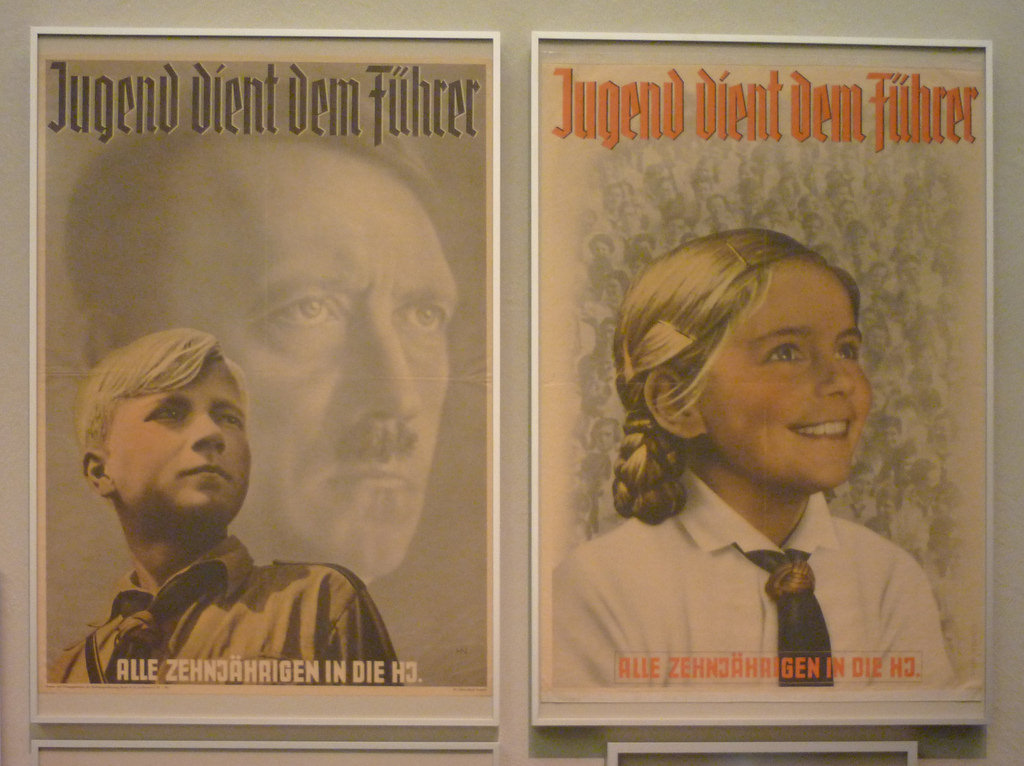
- Hitler Youth:
- Formed in 1933
- This was another way that Hitler indoctrinated young people to become perfect Nazis
- There were four different groups, two for girls and two for boys
- Boys were trained to be soldiers: marching, camping, weapons training, fitness
- Girls were trained to be good mothers: domestic and fitness training
- Both groups trained in utter loyalty to Hitler
- At home:
- Hitler Youth made it clear your first loyalty was to Hitler and not your family
-
Did all youth support the Nazis?
- All other youth organisations had been absorbed or made illegal under the Nazi regime
- Even with these restrictions, only 50% of German boys were members in 1933 and only 15% of girls
- Membership of the Hitler Youth became compulsory in 1939, about 7.5 million were child members; 1 million refused to join
- Some young people decided to join anti-Nazi movements
- The Swing Movement: While some were in the Hitler Youth, the Swing Movement resented the way the Nazi's controlled people's lives. They demonstrated their discontent with the Nazi movement through their interest in banned music, especially American jazz and swing. They hung out in nightclubs and bars, and danced American dances. The Nazis acted against them by closing bars and nightclubs they attended.
- The Edelweiss Pirates: The name given to many small groups of young people across Germany. They wore the edelweiss flower as a symbol of resistance against the Nazis. The earliest group surface in 1934. By 1939, there was an estimated 2,000 Edelweiss Pirate groups. Some groups acted like the Swing Movement, opposing Nazi control of their lives. Other groups, such as those in Cologne, opposed Nazi political ideas. They mocked the Hitler Youth and even violently attacked some people.
- The White Rose Movement: This was a group of university students who distributed anti-Nazi leaflets and urged the Germans not to support World War Two.
-
- The Nazi Party was male-dominated and Hitler had a very traditional view of women
- In rural areas, many women felt that their role was supporting their husbands
- Nazi ideology claimed women should be restricted to three things: Kinder, Küche, Kirche, or ‘children, kitchen, church.’
- Hitler was alarmed at Germany's falling birth rate
- Nazis came up with various ways to make women into wives and mothers
- Hitler offered financial incentives for married couples to have at least four children
- Women were awarded the 'Gold Cross' if they had eight children
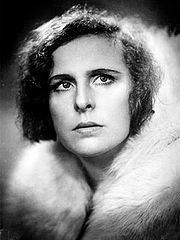
- Legenda: Famous German film producer Leni Riefenstahl
-
- In reality, the Nazis only wanted Aryan mothers to have Aryan children, while other discriminatory policies tried to reduce non-Aryan children
- Posters, newsreels and radio broadcasts celebrated the ideals of motherhood
- The German Maidens' League reinforced ideas that were promoted through propaganda outlets
- Birth rate increased from 15 per 1,000 (1933) to 20 per 1,000 (1939)
- Opportunities for women were limited and discrimination occurred against women in work also
- In the late 1930s, Nazis changed their minds about women; they suddenly needed more female workers as there were no more unemployed men
Informações
- Descrição
- O usuário eliminou as informações de disciplina Slides sobre Youth and Women in Nazi Germany, criado por Usuário eliminado em 11-07-2017.
- Criado por
- Usuário eliminado · jul 2017
- Atualizado
- 11 jul 2017
- Visualizações
- 20
- Histórico
-
- Criado por Andrew Burke · 5 jul 2017
- Copiado por Andrew Burke · 6 jul 2017
- Copiado por Andrew Burke · 11 jul 2017
- Avaliação