
Rebuilding Germany
Slides do conjunto (5)
-
Democratisation and Rebuilding: West
- In 1949, US, British and French zones were merged into the Federal Republic of Germany (West Germany)
- The Federal Republic of Germany (FRG) founded a constitution called the Basic Law
- The Basic Law was there to protect democracy and to stop aggressive minority parties, like the Nazis, from causing problems
- Konrad Adenauer:
- Adenauer was the chancellor of the FRG from 1949-1963
- Adenauer was neither a friend of the Nazis or communists
- 1945 - he formed the Christian Democratic Union Party (CDU)
- The CDU attracted 30% of the vote in Germany and Adenauer was able to form a coalition with other parties
- He banned the right-wing Socialist Reich Party in 1952 and the Communist Party in 1956, as he felt they were a threat to the country's constitution
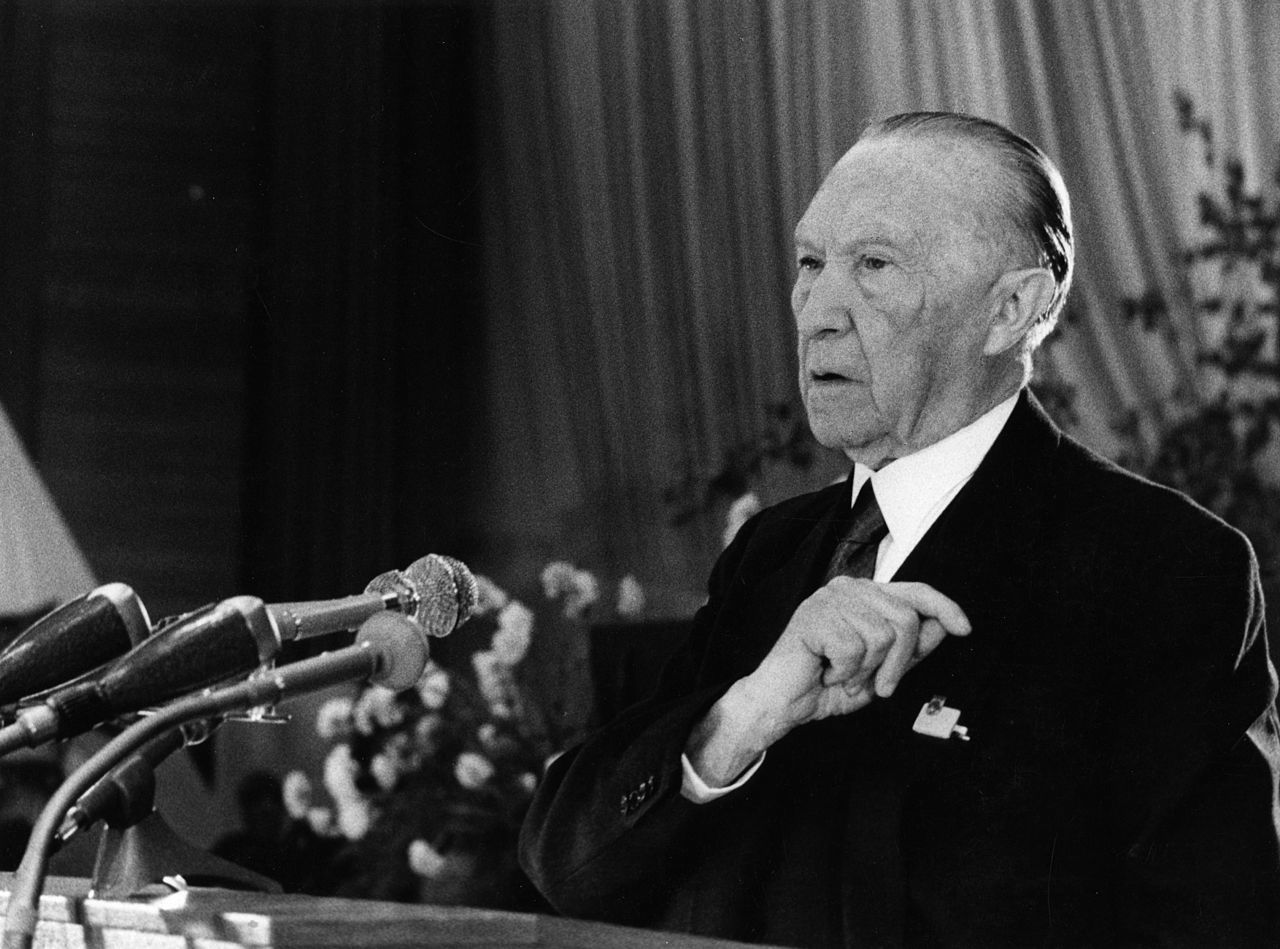
- Legenda: Konrad Adenauer (1876-1967)
-
Democratisation and Rebuilding: West
- The West German 'economic miracle':
- 1948-1954 - the German economy grew 8% each year
- By the early 1950s, Germany was exporting high-quality manufactured goods all over the world
- 1955 - unemployment fell from 8% to 4%, despite the dramatic rise in population
- Adenauer pursued a cautious policy that appeared to pay off
- West Germans began to associate democracy with economic success and prosperity
- Adenauer's share of the German vote rose steadily; the CDU achieved an outright majority in 1957 (50% of the vote)
- The West German miracle was helped by Marshall Aid from America
- Many East German immigrants had valuable technical skills and this boosted the economy
- The government also introduced a compensation scheme for those who lost property or savings during the war
- Better industrial relations encouraged big industries to develop and accept democracy
-
Democratisation and Rebuilding: West
- Agreement with France:
- Adenauer looked for ways to reassure his neighbouring countries that Germany was now a peaceful state
- 1950 - Germany and France formed the European Steel and Coal Community
- This was the first step towards what is now known as the European Union
- By 1954, West Germany was stable, democratic and trustworthy enough to be allowed have its own armed forces again
- Germany was also allowed to join the North Atlantic Treaty Organisation
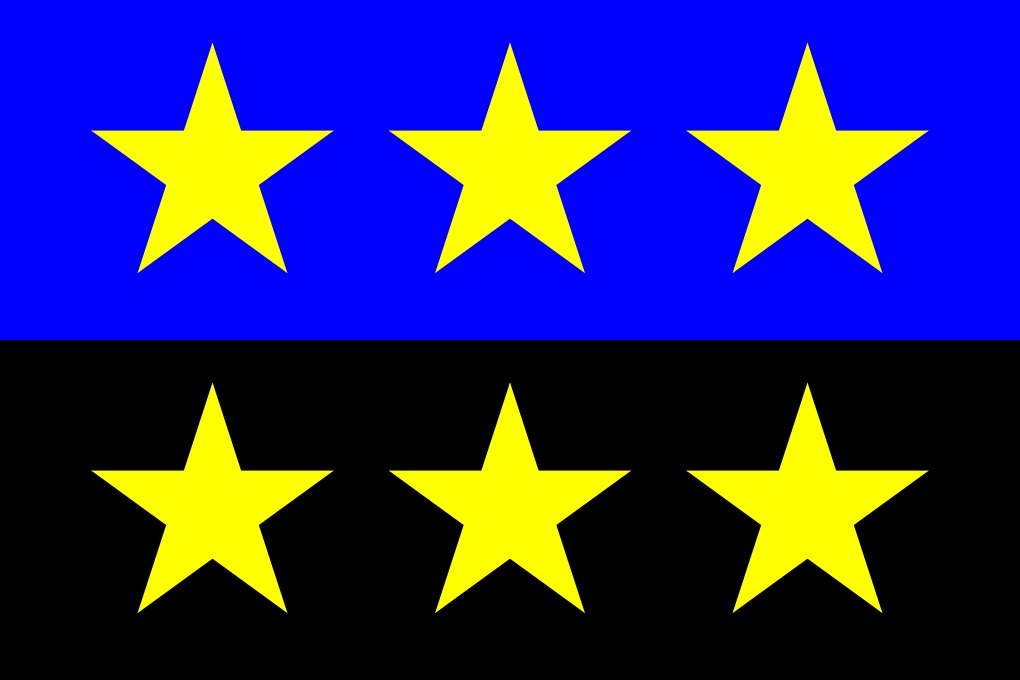
- Legenda: Flag of the European Steel and Coal Community
-
Democratisation and Rebuilding: East
- The Soviets introduced elected assemblies in the eastern sector of Germany. They also allowed political parties to form. On the creation of the Federal Republic of Germany, the Soviet zone became the German Democratic Republic (GDR), also called East Germany.
- In theory, it was a multi-party democracy. However, the USSR made sure the German Communist Party (SED) was the dominant party. The key figure for the SED was its leader, Walter Ulbricht. He was German and a deeply committed communist. He was trained in the USSR during the war and was put in power by the Soviets when the war concluded.
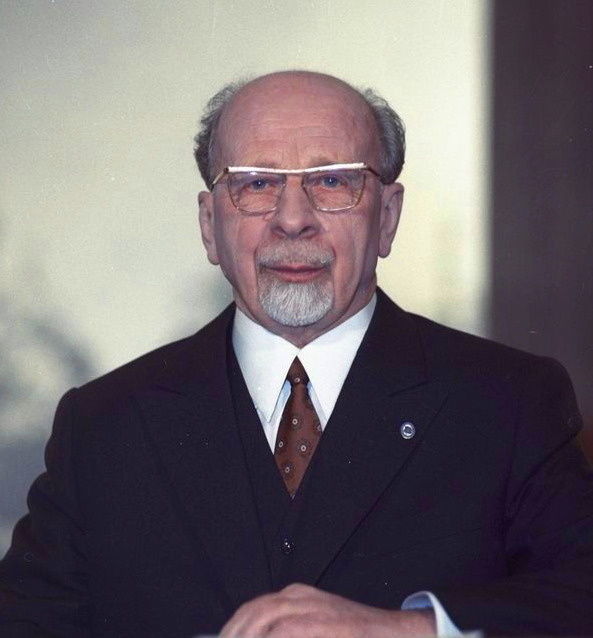
- Legenda: Walter Ulbricht (1893-1973)
-
Democratisation and Rebuilding: East
- The experiences of those in East Germany were harsher than in Western sectors
- Stalin was determined Germany should pay for its wartime actions against the USSR
- Food, industrial equipment and countless other resources were gathered up and shipped out of East Germany
- By 1948, this phase had largely ended and a new communist government was set up under Walter Ulbricht
- Ulbricht scrapped East Germany's constitution in 1950 and reorganised the SED along USSR lines
- A purge against political opponents began; the state took control of the media and education system
- While the newly formed Stasi (secret police) kept a close eye of opposition to the regime
- 1952 - Ulbricht announces the Building of Socialism programme; this led to no 'economic miracle' in East Germany
- Ulbricht brought in compulsory state control of agriculture; hoping to grow enough food for the population and send a surplus to Stalin
- For East Germans, the result of Ulbricht's policies were shortages and repression, food was rationed and attempts to protest were shutdown by the Stasi
- The result of these problems was widespread violent protest; June 1953, workers went on strike in East Berlin and protested in the streets
- In a number of days, 1 million people had joined in
- East German police, alongside Soviet troops moved in and crushed the rebellion
- Around 500 died and 5,000 were arrested
Informações
- Descrição
- O usuário eliminou as informações de disciplina Slides sobre Rebuilding Germany, criado por Usuário eliminado em 12-07-2017.
- Criado por
- Usuário eliminado · jul 2017
- Atualizado
- 12 jul 2017
- Visualizações
- 18
- Histórico
-
- Criado por Andrew Burke · 7 jul 2017
- Copiado por Andrew Burke · 12 jul 2017
- Avaliação