
Notas
British sector of the Western Front 1914-1918
Conteúdo das notas (4)
Página 1
Context
From 1914-1919, British and French forces fought a war against Germany. This war involved very little movement of troops on a large scale, however, it was fought over a small restrained piece of land. Generals of the time were forced to develop new tactics which led to intense fighting like never before. In order to gain advantages over one another, new weapons and technologies were developed that caused death and injury on a scale not previously experienced in war. With high casualty rates, and different types of wounds and injuries being inflicted, medical services had to develop new methods for caring and treating soldiers.
This case study of the British sector along the Western Front will highlight the changes of methods and procedures regarding the treatment and caring for the wounded in battle.
Página 2
Context
In July 1914, war broke out in Europe and spread to become a World War. The war lasted four years and caused death and injury on a scale that had never been seen before in history.
Conventional warfare:
Before 1914, wars had traditionally been of movement
Field guns were utilised to weaken enemy lines
Then the infantry, assisted by cavalry, would move forward in attack and capture the weakened position
Eventually, leading to enemy surrender or retreat
Stalemate and trench warfare:
This new type of warfare that emerged in Western Europe by the end of 1914 was the opposite of a war of movement
Fighting now had become bogged down in one spot, with neither side capable of achieving decisive victory
In these stalemates, both sides were forced to oppose one another on a narrow stretch of no-man's land
This new type of warfare was a war of attrition
Conflict developed into defensive measures, where the priority was to kill or wound as many of the enemy as possible
Also, destroy as much equipment as one could
This type of conflict is called trench warfare
Planning Medical Aid:
This type of conflict had serious consequences for medical planning
Medics had to deal with high incidence rates of wounds, injuries and illnesses
Medical aid had to develop in three main areas to adapt to this new style of fighting
Treatment of high number of casualties
Immediate treatment of soldiers on the front line
Longer-term care and treatment for wounded soldiers
Development of trench warfare:
One of the most intensive areas of fighting was the Western Front where the Allied forces of Britain, France and Belgium fought against the Kaiser's Imperial German army
The Western Front stretched 700 km from the coast of the English Channel in Belgium to the French border with Switzerland
As the war went on, trenches became more sophisticated and effective defensive networks, compared to their initial construction
Página 3
The Trench System
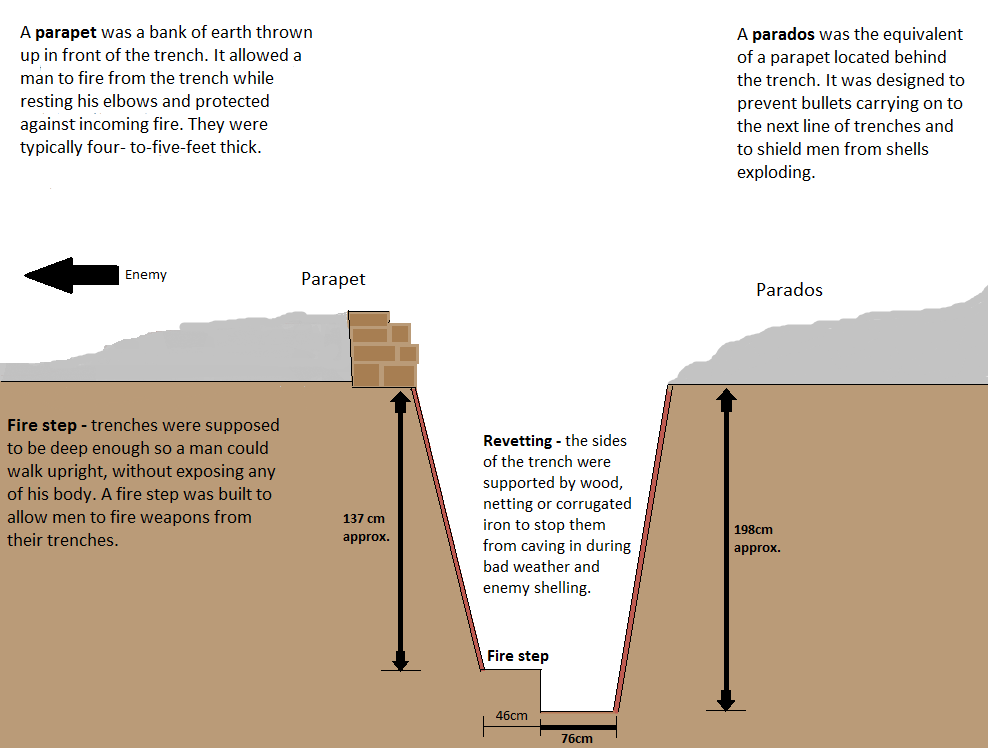
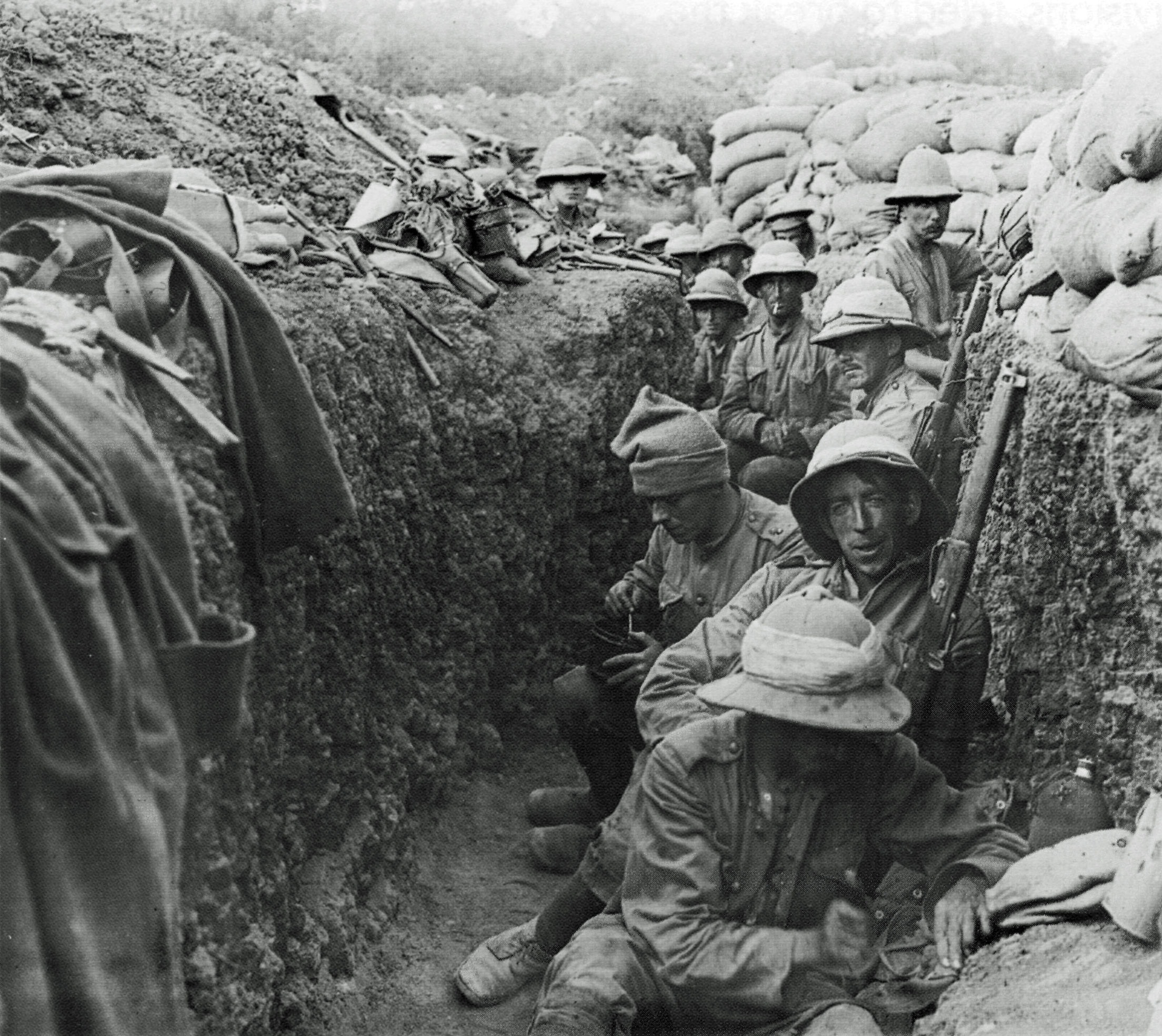
Trench systems consisted of three lines of defence. The front-line trench was supported by a support trench and behind that a reserve trench. Each one of these trenches was connected to one another by communication trenches. The zig-zagged pattern of trenches was a defensive feature that protected against enemy fire and shell explosion.
The features of a trench:
Typically several metres deep with sand bags above head height to protect against sniper fire
The fire step was used by soldiers to peer over no-man's land and used for shelter during shelling or bad weather
At regular intervals there would be a machine-gun post
There was coils of barbed wire laid out across both sides, to slow opposition
The guns of the heavy artillery were located behind the reserve line; used to bombard enemy trenches before an attack
Typically over a 32-day period a soldier would spend:
8 days in a front-line trench
8 days in a reserve trench in case of an attack
16 days away from the front (usually in the nearest town or village)
Below is a cross-section of a trench.
Página 4
The Nature of Trench Warfare
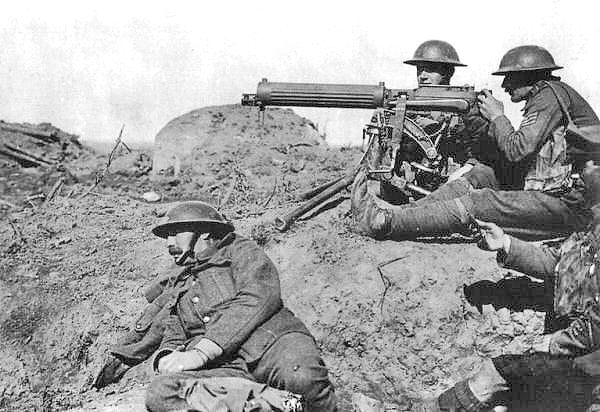
Generals believed that the main means of breaking through the stalemate in war was through a war of attrition. They were convinced with the right concentration of troops along a narrow sector of the front the enemy's line would break. However, the enemy was always quick to bring in new troops and plug any gaps in the front line. Conflict casualty figures were extremely high and highlighted by:
Weapons capable of mass killing (e.g. machine guns)
Gas (used for the first time in 1915)
Heavy artillery - big, powerful guns used to kill and wound hundreds of soldiers
Problem of no-man's land - made soldiers easy targets for snipers and machine gunners
The infantry was now the main fighting weapon
Trench warfare led to the radical rethinking of provision in medical care and treatment of those wounded in battle.
Informações
- Descrição
- O usuário eliminou as informações de disciplina Notas sobre British sector of the Western Front 1914-1918, criado por Usuário eliminado em 12-07-2017.
- Criado por
- Usuário eliminado · jul 2017
- Atualizado
- 12 jul 2017
- Visualizações
- 125
- Histórico
-
- Criado por Andrew Burke · 10 jul 2017
- Copiado por Andrew Burke · 12 jul 2017
- Avaliação