
Notas
Combating the Plague at Eyam
Conteúdo das notas (2)
Página 1
Mompossen and Stanley Lead
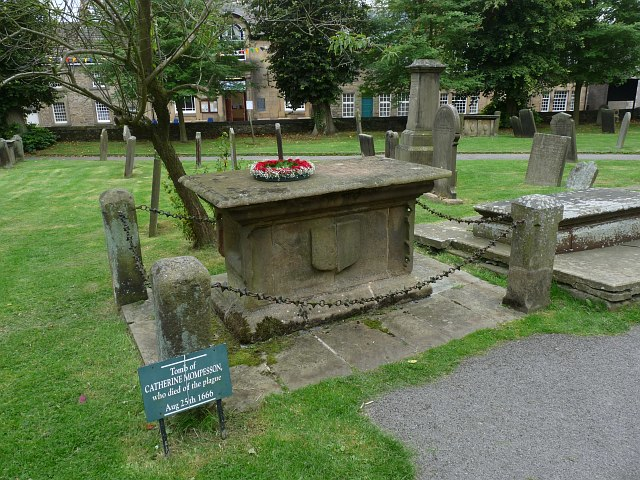
The most important figure at this time was the rector of Eyam, Rev William Mompossen. He lived in the rectory with his wife Catherine and two children. Mompesson had only been his post for a year. Further, Mompossen's predecessor, Rev Thomas Stanley, a Puritan clergyman was still in the village. He had been dismissed as rector for refusing to take the Oath of Conformity and use the Book of Common Prayer that were introduced upon restoration of the king.
It was the actions of Mompesson and Stanley that led to the setting up a quarantine zone in Eyam to prevent the spread of the disease to nearby villages and farms. Around 800 metres from the centre of the town a circular boundary was set up around the entire village. Villagers were banned from moving outside the zones and travellers received warnings not to enter. During the whole time the quarantine zone was erected there was almost zero attempts to break the line.
The village of Eyam cut itself off from outside world and it cost many lives but may have saved many cities in northern England.
Página 2
Quarantine of Eyam
Mompesson and Stanley had a three-point plan approved by the villagers:
Victims of the plague were to be buried as quickly as possible and near to their houses. This was to prevent the spread of the disease from corpses awaiting burial in the cemetery.
The church would be locked during the epidemic; preaching would occur in the open to avoid the risk of disease spreading in a crowded church building. Open air services were held in the Delph valley, where Mompesson preached on top of a rock known as the 'Cucklett Church'.
They would establish a cordon sanitaire around Eyam which no villager could pass. This was to limit the extent of the outbreak.
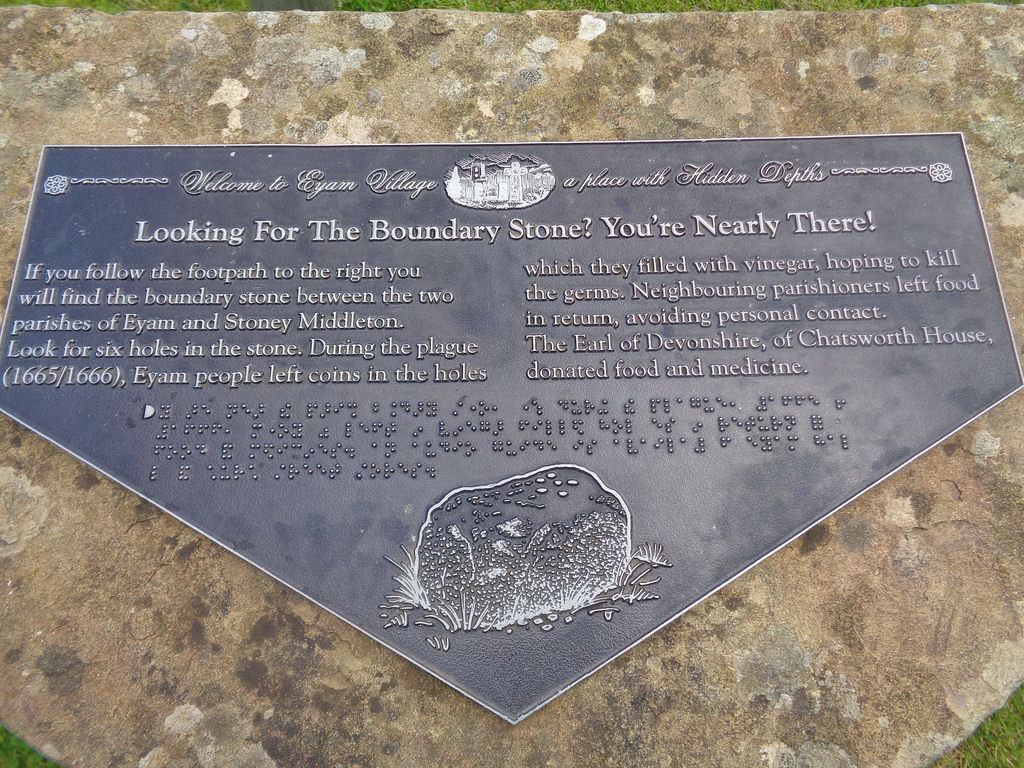
To ensure that the villagers of Eyam did not starve, food and supplies were sent from neighbouring villages. The Earl of Devonshire and other wealthy neighbours provided supplies that were left at the southern boundary of Eyam. The boundary stones acted as drop off points food, medicine and various other goods. To pay for the supplies villagers left money in water troughs that contained vinegar. Vinegar was believed to kill the disease. These measures were enforced to prevent the spread of disease in the area.
Informações
- Descrição
- O usuário eliminou as informações de disciplina Notas sobre Combating the Plague at Eyam, criado por Usuário eliminado em 14-07-2017.
- Criado por
- Usuário eliminado · jul 2017
- Atualizado
- 14 jul 2017
- Visualizações
- 16
- Histórico
-
- Criado por Andrew Burke · 12 jul 2017
- Copiado por Andrew Burke · 14 jul 2017
- Avaliação