
Notas
Public Health and Welfare - 20th and 21st Century
Conteúdo das notas (3)
Página 1
Efforts to Improve Housing and Pollution
The 20th century in Britain involved a move from the Victorian laissez-faire attitude to the belief that the government plays a role in ensuring people lead healthy lives.
The problem identified:
When the Boer War (1899) broke out, many army volunteers were unfit to serve
The state of these volunteers led to the investigation of living conditions and the health of ordinary people living in industrial cities
Various social surveys were carried out which highlighted the extent of the problem
Booth's Life and Labour of the People (1889) found 35% of London's population were living in abject poverty
Rowntree carried out work in York; 1897 and 1898 his researchers interviewed 46,000 citizens of York
Rowntree's results were published in Poverty. A Study in Town Life (1901) - nearly one-half of working citizens in York lived in poverty
Another book which changed the opinions of many at this time was Round About a Pound A Week (1913) published by Reeves
Progress after World War One:
Housing Act 1919 proposed the building of 500,000 homes 'Fit for Heroes'; these homes were only half built
In the 1920s and 30s, there were subsidies for building council houses
While acts of parliament encouraged the demolition of slum properties, the inter-war year economic difficulties halted this process
1939 - 1 million houses had been built by workers to live in
Damage and destruction from the Second World War made the demand for 'affordable' housing even greater
Página 2
Changes to Public Health
December 1952 - London was engulfed in what was called the 'Killer Smog'. This occurred when air pollution and coal fires were trapped by an anticyclone over the city from 5-9 December. Estimates would suggest over 12,000 died and 100,000 became ill as a result.
The government passed town Clean Air Acts in 1956 and 1968
These were to encourage households throughout the country to change from coal fires to cleaner gas and electricity
Further, attempts were made to improve air quality; Environment Protection Act 1990 and Clean Air Act 1993
New towns were developed, like Milton Keynes and Telford, in an attempt to solve overcrowding problems
This was an effort to separate industry and housing from one another
2014 - 2.7 million people lived in new towns or cities in the UK
In the 1960s, slum clearance took place in old towns and cities, alongside a massive project of council house building
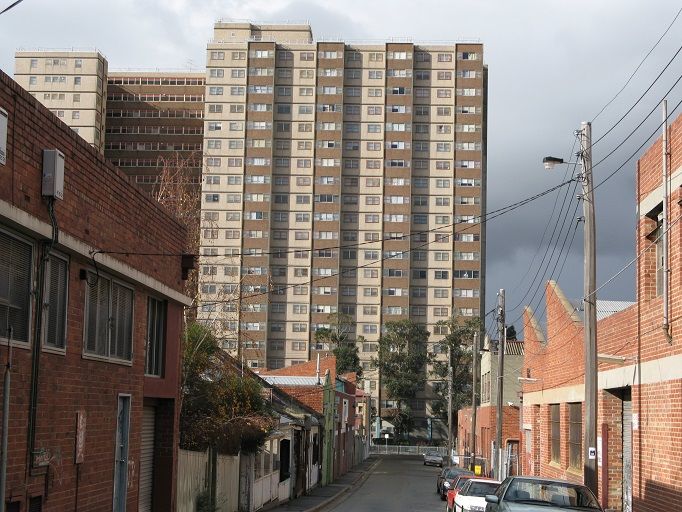
Unfit houses were often replaced with tower blocks that contained central heating, bathrooms and fitted kitchens
Public reaction to towns have often been mixed
Poor maintenance and cheap construction have led these 'ideal' homes in the sky to being deconstructed
Página 3
Governing Health - 21st Century
Scientists estimate that many of us are reducing our life expectancy by the types of lifestyles we employ. We are eating too many of the wrong foods, not getting enough exercise and have unhealthy relationships with alcohol and smoking. Even though recent centuries have brought huge developments in effective medicine and skilled surgery, it means nothing if people continue to live unhealthy lifestyles.
Throughout the 20th century and into the 21st, governments have made more of an effort into health education and pushing people to live healthier lifestyles. The main arguments here are that it is up to each individual to make their own choices or there is money to be saved if people stopped making poor lifestyle choices. For example, if people were to stop smoking this would save the NHS millions of pounds each year.
Hackney, in London, has adopted an alternative approach to promoting healthier lifestyles. This is through the Healthier Hackney Fund, local communities and voluntary bodies can request grants to implement their own ideas for promoting healthier lifestyle choices amongst residents.
Fitness Drives:
In August 2009, the government launched 'Walking for health' which was a fitness campaign encouraging people to walk 10,000 steps a day. 'Be Active' is a scheme from Birmingham City Council that offers free access to leisure facilities for its residents when they register for the programme. Fitness campaigns like these have knock on effects in other areas. This is evident in the rise in the number of people seeking help regarding smoking and alcohol.

Informações
- Descrição
- O usuário eliminou as informações de disciplina Notas sobre Public Health and Welfare - 20th and 21st Century, criado por Usuário eliminado em 24-07-2017.
- Criado por
- Usuário eliminado · jul 2017
- Atualizado
- 24 jul 2017
- Visualizações
- 17
- Histórico
-
- Criado por Andrew Burke · 18 jul 2017
- Copiado por Andrew Burke · 24 jul 2017
- Copiado por Andrew Burke · 24 jul 2017
- Avaliação