
Notas
Summary - Innovation, Nano Technology & Robotics
Conteúdo das notas (1)
Página 1
INNOVATION
What is Innovation?
Innovation is something that is new to you that you are adopting to better a product or process.
Innovation is "the latest thing" and is vital for economic growth.
Innovations must be simple & focussed if they are to be effective, otherwise it will confuse people.
Often a requirement in tenders to demonstrate how you are innovating.
Categories of Innovation
Incremental Innovation - A small improvement in current practice and has minimal impact on other components/systems.
Architectural Innovation - A small improvement within a specific area or core concept but requires significant development in other areas.
System Innovation - A set of complementary innovations which work together to provide new functions.
Modular Innovation - Significant improvement within a specific region but requires no change in other components or systems.
Radical Innovation - A completely new concept or approach which often renders previous solutions obsolete.
These categories of innovation can be used to establish the degree to which the proposed innovation will require special skills, expertise & activities to be effectively implemented.
Incremental & Radial Change?
Incremental changes are small step changes towards something whilst radical change is a significant leap towards something.
What are Disruptive Technologies?
Advances that will transform life, business and the global economy (e.g. clout technology, advanced robotics, 3D printing, renewable energy...)
PwC Survey Results
97% of CEOs see innovation as a key concern for their business.
64% said innovation & operational effectiveness were equally important to the success of their company.
Focus of innovation is changing, with CEOs looking for new sources of revenue rather than improving existing products.
Drivers for Innovation
Company values
Project driven (e.g. time constraints)
Client demand & end-users
Rewards
Internal business benefits
Marketing benefits
Individual need
Cost efficiency
Sustainability
Technology
Global competition.
Barriers to Innovation
People
Scared of the cost
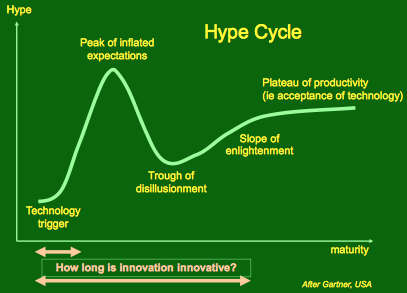
Have over-inflated expectations - "excessive belief causes agonising hangovers' (Financial Times)
Are reluctant to make the effort
Are unable to balance innovation, standardisation & are unwilling to adequately assess the risk.
Are reluctant to accepting the risk of making a mistake.
Other Barriers:
Cost
Fragmentation & existing organisation culture of the industry.
Methods of procurement.
Lack of in-house design or creative skills
Lack of customer demand
Access to external design or creative skills
Manufacturing or development issues
Regulatory issues
Lack of R&D investment - 80% of contractors unaware that research grants are available.
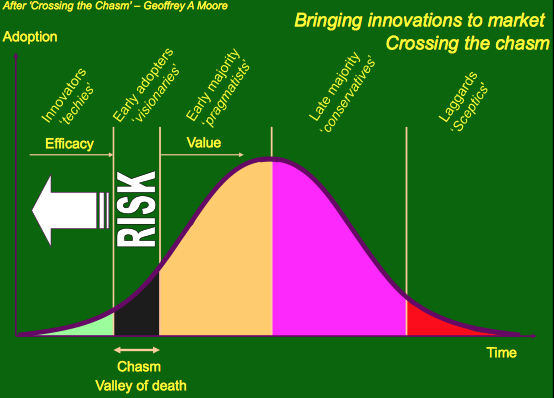
Factors Causing the Best Companies to Win
Led by enthusiastic champions who know their customer & lock the potential of their people.
Quality
Low cost
Functional performance
Delivery time
Reliability
Product support
Styling/design
Marketing
Customer support
Customised product
Continuously innovate products that exceed customer expectations.
Partnering is Dead
Industry believes partnering/alliances are key to innovation.
However, companies tend to keep their best ideas to themselves to provide a competitive edge.
Ideas need to be shared and competition removed if innovation is to be realised.
CIOB Innovation Survey in 2007
Internet and IT developments considered most significant innovations in past 5 years.
Sustainable energy efficiency and carbon reductions identified as best innovations to encourage.
Freedom of employes to innovate and reward schemes/bonuses seen as best method to encourage innovation.
Types of Construction Innovation
Quadrocopters - Compact, robotic flying machines capable of constructing buildings remotely.
Modular Assembly - Effective and efficient method for constructing buildings.
3D Printing - Small & large scale applications for construction.
Laser Scanning - Used to easily & accurately capture significant amounts of information during a site analysis.
Other Innovations:
Harvesting algae - growing on facades as biofuel.
Self-healing concrete
Transparent concrete
Robots
Flexible structures
Smart systems & reactive facades
Implementation Stages for Innovations
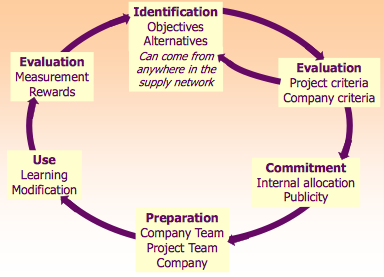
The effective use of construction innovations can be planned by following a cycle of implementation stages and activities:
Identification
Evaluation
Commitment
Detailed preparation
Actual use
Post-use evaluation
Most implementation processes proceed through each stage.
In certain cases the evaluation stage may reveal new criteria which needs to be reconsidered in the identification stage
Therefore, the first 2 stages may cycle through a few repetitions.
Previous experiences with implementing other innovations can feed into decisions and organisation learning.
Criteria to Evaluate Innovation Alternatives
Project Criteria
Cost
Long-term facility performance
Construction performance
Duration (design, planning & construction)
Technical feasibility
Worker safety
Environmental impacts
Risk of failure
Implementation complexity
Company Criteria
Reputation impacts
Unique capability
New market
Compatibility with & utilisation of existing capabilities
Improvement of existing capabilities
Appropriateness of benefits
Effective use of Innovation
Size of initial commitment
Office of National Statistics Survey
Only £33 million is spent on R&D every year, less than 0.2% of it's turnover.
Agriculture industry spends £127 million, 12% of it's far smaller turnover.
Most people said their firms only spend £10,000 a year on R&D and it should be more.
CIOB suggests a web-based for developing and sharing ideas would be helpful.
Companies are failing to apply for Government Grants which could help them innovate.
More than 80% of construction firms were unaware of the grants available to support innovation.
Only 4.1% of firms had applied for grants.
Drivers for Innovation
Cost efficiency - 42%
Time constraints - 24.8%
Sustainability - 18.1%
Client demands - 15.9%
Technology - 9.8%
Global competition - 3.5%
End users - 2.2%
Innovations
Harvesting Algae
Growing algae in building facades.
Can be harvested and used for shading biofuel that the building can use.
Prototype building in Hamburg uses a facade where algae grows between a sandwich of glass, called 'bioreactors'.
Integrated Photovoltaics
The next generations of PVs will be integrated into building materials.
Thin film solar panels are already being installed.
Oxford Photovoltatics is integrating solar cells into glazing panels to produce what looks like 'tinted glass'.
They have received £2 million in funding to take it from concept to intermediate scale.
It could provide 20% of a building's energy.
Self-Healing Concrete
Contains limestone-producing bacteria which are activated by rainwater.
Could potentially increase the service life of the concrete and provide cost savings as a result.
Main problem is scaling up the technology as the healing agent that is required is expensive.
Smart Systems
The use of sensors which would monitor and control a building's behaviour to minimise carbon emissions.
The recession and current economic environment puts pressure on companies to innovate and come up with new ways of doing things.
Flight Assembled Architecture
Use of flying quadrocopters - a remote controlled flying device which can be used for motion capture, aerial photography, site mapping and lay bricks as seen in winery in Switzerland.
Believe they could be used to build complex cylindrical towers which could stand more than 600m high & house 30,000 occupants.
Will require the development of high-performance lightweight materials as current materials are too heavy.
Are perfectly suited for tensile construction where they could easily loop ropes, cables or wires around a structure.
Envisaged that drones could work in areas unfit for humans or help in disaster relief & other emergencies.
3D Printing
Only recently used in construction.
Foster + Partners planning to printing a space station for the moon using lunar rock.
3D printing involves the successive laying down of layers of material.
3D printing is unlikely to suit large sized components as the equipment would be too expensive.
Near Site Manufacture
Skanska developed flying factories which use offsite factories that can be moved from site to site.
The technique could deliver the benefits of offsite whilst overcoming the traditional barriers of capital investment & high transport costs.
Clients could benefits from a 28% reduction in cost per m2 and 30% shorter build times.
Laser Scanning
Has the ability to easily and accurately capture large amounts of information about the entire construction process.
Can capture site conditions, plot the exact location of environmental features like tree locations and root spread.
Can be used during construction to monitor structure, check tolerances, measure deflection, check clashes...
Could compare the emerging construction with the BIM Model.
To utilise the benefits, all the different types of data collected would have to be inserted into a central portal for further analysis.
Funding Options for Innovation
HM Revenue and Customs Tax Credits for Previous Research & Development - Tax rebates of up to £50,000 available.
The Technology Strategy Board - £1,000-2,000 per project and £30,000-60,000 for fully funded Low Impact Building and Technology Feasibility Studies.
Research Councils - Up to 50% match funding for collaborative work that is academically significant.
EU - Major grants for international collaborative R&D.
European Investment Bank - Up to £200 million is available for supporting investments which further EU policy goals.
ARUP 2050 Skyscraper
Flexible Structures
Modular components that can be upgraded and rearranged over time.
Materials maintain and repair themselves.
Structures can be assembled by robots.
Building elements designed for continuous adaptability.
Active structural dampers manage major seismic loads.
Sustainable Resources
Building processes and produces resources.
Cradle to cradle design.
Renewable and recyclable materials.
Buildings as integral components of urban food production.
Full integration with the city and its resource streams.
Reactive Facades
Facades that react to changing environmental conditions.
Surfaces for communication with the wider community.
Integrated food and energy production
Self-cleaning and automated.
Community Integration
Integration of public realm
Linked and integrated to transport systems
Public facilities and green spaces encourage exploration.
Spaces for community services and events.
A building that teaches and encourages sustainable practices.
Smart Systems
Intelligent building systems react to external and internal changes.
Sustainable systems provide ecosystem services.
Sensors, data and automation enable smart environments. On-site energy, food and resource production.
Users engage and communicate with spaces.
Innovation in the Recession
With margins decreasing, construction companies need to innovate to cut costs without compromising quality.
The time and money required for innovations is causing a lot of companies to hold back.
The construction industry has not innovated to the extent that other industries have (e.g. car manufacturing)
When the time comes, companies who have not invested in R&D will get left behind.
The technology is here but it is how we finance and implement the technologies that is the problem.
Crossrail's Bond Street Station
Top-Down construction method used to construct a 2-storey deep basement.
One level used a secant piled box whilst the other a diaphragm wall that would be excavated at a later date.
Early Supply Chain Involvement is required for innovations to be incorporated.
The Optimised Contractor Involvement (OCI) approach is one of the best ways to get innovation.
Procurement is the key to the whole issue, the procurement process has to allow time for flexibility in design and subcontractors have to get involved early on.
If people are brought on early, are set the challenge, then they will deliver.
The message to the supply chain is clear: "come forward with your innovation and you will be heard".
Sharing Innovative Ideas
Sharing innovation is vital if UK construction is going to compete with the rest of the world.
Self-interest and conservative attitudes have to give way to the bigger picture.
Population growth will be a major driver as the industry will have to innovate to meet increasing demands.
BIM will also be a major driver.
Intelligent buildings are driven by intelligent clients who must drive innovation in projects.
Overall, we must push past the environmental, financial, technical, and social constraints to drive innovation.
Timid thoughts and staying within limits will not drive innovation.
Clients such as Crossrail, Highways Agency and Network Rail are taking the lead.
The supply chain must also step up.
NANOTECHNOLOGY
Exciting Nano Innovations
Kalwall Nanogel - High light transmission, great insulation properties, waterproof and light (aerogel is 5% solid & 95% air)
Ultra-Ever Dry - a superhydrophobic (water) & oleo phobic coating that will completely repel almost any liquid.
Other Functions of Nanotechnology
Flexible solar cells
Ground stabilisation
Corrosion resistant rebar
Self-healing, compacting and cleaning concrete
Phase changing materials
Self-cleaning glass
Super-insulation (aerogel)
UPVC window protection - nanotechnology used to reduce UV damage and maintain the plastic used in the UPVC windows.
Growth in Nanotechnology
2006 saw 212 products with nanotechnology
2011 saw 521% increase from 212 to 1,317 nan-enabled products.
Largest product category for nanotechnology is health & fitness with 738 products.
Nanotechnology & Concrete
Nanotechnology can provide the following improvements to concrete:
Ultra-high compressive strength & improved tensile strength.
Controlled triggering of setting.
More efficient cement hydration.
Increased aggregate bond strength.
Control of cracks & self-healing.
Reduced permeability
Freeze/thaw resistant
Chloride/sulfate resistant
Minimise shrinkage
Minimise pavement curling/warping
Self-cleaning
Longer life pavements/structures
Potential Health Hazards of Nanoparticles
The exposure potential of a nano particles is dependent on:
Its bioavailability to humans through inhalation, ingestion & dermal pathways.
It's ability to accumulate, persist and translocate within the environment and human body.
Products containing hazardous nanoparticles can cause H&S risks through it's lifecycle, from material processing and transportation to use and disposal.
Problematic Nanoparticles are carbon nanotubes and quantum dots.
There is emerging evidence indicating exposure to some types of nano material can cause inflammation and fibrosis of the lungs or skin inflammation.
Insufficient data to confirm the health consequences and to understand the conditions that produce such effects.
Each nano particle is different, some are less harmful than others.
Zinc and Carbon Black have been identified as having detectable biological effects.
Silica nano particles have been found to exhibit size-dependent toxicity.
Methods of Exposure to Nanomaterials
Breathing
Swallowing
Eyes
Skin contact
What Can We Do About Nano?
Keep researching
Clarify which are worse
Know how the particles are released
Develop methods of protection
Know which nano particles are in which components.
Tell people where they are.
The 5 Principles of Safer Nanotechnology
Size, surface and structure - key to how hazardous a particular nanotechnology is.
Alternative materials - replace the main material or nano with a less hazardous one.
Functionalisation - change or improve the bonding of the nano.
Encapsulation - enclose the nano within another material.
Reduce the quantity - use less of hazardous nano particles in materials.
Why isn't Nanotechnology Just Banned?
Nano particles exist in nature & are everywhere (e.g. bacteria), it couldn't be banned even if it was wanted.
Nano particles can be created from normal materials by traditional means (e.g. burning)
Nano particles are so small that they can't be seen, which is part of the worry.
The size isn't the only problem, it's their proportions.
ROBOTICS
Examples of Robotics in Construction
Automation in Japan.
Honda bi-peds
Cyberdyne Robot Suit HAL
Cyberdyne Robot Suit HAL
Hybrid Assistive Limb is a robot to expand & improve physical capability.
When a person moves, nerve signals are sent from the brain from the muscles via motoneurons to move the musculoskeletal system
Sensors on the skin of the user catch the signals.
The unit is design to move unitedly with the user's muscle movement to support daily activities.
HAL could be used to support disabled people, for heavy labour in factories and as rescue support in disaster sites.
Remote Operated Vehicles (ROVs)
Used where access to sites is restricted or operations for humans is time-consuming or dangerous.
What are Construction Robots?
Tele-operated human-machine systems - Remote control dumpers and trench rollers, manual handling robots for cladding
Pre-programmed systems - Concrete eating robots.
Autonomous with on-board sensors - Robot poweefloat & ROMA Climbing Robot for inspection tasks.
Integrated construction automation systems - Automated Building Construction System (ABCS)
Pre-Programmed SystemsConcrete eating robots - break up with concrete with jets of high-pressure water before sucking & capturing the aggregate, cement & water before processing and separating the clean aggregates into bags.
Japan Leading the Way
Despite the economic recession, the largest construction companies in Japan continue to invest heavily in R&D.
Unlike the UK, the majority of research in Japan is undertaken by private research institutes.
The last decade has seen a decline in construction robotics research due to the inability to recover the costs in it's use & to reduce site labour.
Construction automation is still seen as the key to safer, more successful and profitable construction industry.
Increased Productivity
Skilled labour shortages and an ageing workforce have generated the need for increased productivity through the use of human-machine construction systems.
Material Manipulators
Used to aid with placing oversized heavy components in construction (e.g. cladding, ceilings)
Generally guided manually.
Automated guided vehicles have been adapted for use on construction sites to provide transport of components.
Concrete Placing and Finishing
Tele-operated articulated concrete distribution arms improve the quality and safety of concrete placing whilst reducing the number of operatives required.
Provide a more predictable finishing rate & increased productivity.
Radio-Controlled Construction Plant
Enables the operator to control a machine while observing images at a place remote from the immediate work environment.
Advantages: Increases operator safety, improves labour management and increases work efficiency.
Systems have been successfully used for work in close proximity to volcanoes and landslides.
Could be efficient for conducting quarrying, mining and general earth moving procedures.
Humanoid Robots
Japanese started a 5 year humanoid robotics research project in 1998 in response to an increasing demand for them.
An advanced prototype was developed which has endless potential throughout hazardous industries.
Possible Applications in Construction: Plant operation, welding, material handling, disaster recovery, nuclear operations...
Integrated Systems - The Way Forward
Integrated construction automated systems consist of 4 fundamental elements:
A temporary covered working platform and jacking system.
Just-in-Time delivery of structural members and sub-assembled components.
An automated material handling system.
A centralised on-site integrated control centre.
A fully enclosed temporary working platform provides a factory type environment where all the technology operates.
The enclosed working structure provides protection from adverse weather & reduces the impact of the project on the surrounding environment.
The entire platform is constructed on hydraulic jacks.
Once each floor is complete, the platform can be raised to a suitable level for completing the next floor.
Material manipulators automatically orientate and position sub-assemblies & structural members.
A central information management system monitors and coordinates the construction process.
The systems maintains a real-time inventory of drawings, components, scheduling and progress and monitors operations, labour activity, safety and quality standards.
Obayashi Corporation - Automated Building Construction System (ABCS)
Integrates factory automation and construction project operations.
A parallel material delivery system performs the vertical & horizontal transport of structural components from the site delivery area to the construction operation level.
The structural steel roof for the finished structure supports the cranes and material hoists.
On completion of two structural floors, the factor is automatically jacked up.
The control system allows the site manager to review construction progress, revise the programme of work and arrange future delivery of materials without leaving the on-site office facility.
Could reduce the construction schedule for a 30-storey structure by 3 months.
Could reduce the construction schedule for a 40-storey structure by 6 months.
Automation on UK Projects
Limited use of tele-operated construction plant in UK construction.
Meadowside Granary Demolition Project successfully utilised a tele-operated demolition manipulator.
Conclusions
Fully automated construction systems are too technologically sophisticated & expensive for use in an unstructured construction environment.
Tele-operated machinery offers limited productivity but increases operator safety & work quality.
Further development & use of construction automation & robotics is only possible if construction projects are re-engineered to provide a more structured and controlled operating environment.
TOP-DOWN BASEMENT CONSTRUCTION
Stages of Top-Down Construction
Essentially involves casting the ground floor slab as early as possible so the superstructure above can be constructed whilst the basement is excavated below.
Install perimeter walls (e.g. diaphragm wall, contiguous pile or secant wall)
Install bearing piles with columns embedded into low cut-off level concrete.
Excavate & cast B2 slab.
Extend columns & cast second floor slabs.
Cast ground floor slab integral with embedded columns
Excavate and cast B3 slab.
Extend columns & cast upper floor slabs.
Excavate and cast B1 slab
Extend columns and cast first floor slab.
Top-Down Construction Using CEMLOC
CEMLOC system was developed by Skanska.
It is a unique system that is an adaption of the traditional approach which dramatically aids top-down construction.
The system accurately places & holds plunged columns.
CEMLOC is lowered into the casing and aligned with locating dowels.
4 rams at top & bottom of CEMLOC lock it to the casing.
Column is then plunged into the concrete whilst being held accurately & precisely by the CEMLOC.
CEMLOC is then removed after the concrete has set.
Restraint and column projection is removed once the column has set.
Working platform is reinstated.
Grout and backfill is removed later in the process as the basements are constructed.
Case Studies of Top-Down Construction
One Hyde Park, Knightsbridge - housing scheme for the wealthy, four storey basement, saved 6 months on the programme.
The Shard, London - had a top-down core.
Top-Down Construction - London Shard
Raft foundation was constructed over a 36-hour pour of 700 truckloads and 5,500m3 of concrete.
The Shard had already climbed to 21 storeys by the time the foundation was poured.
Top-Down Construction - London Shard
Raft foundation was constructed over a 36-hour pour of 700 truckloads and 5,500m3 of concrete.
The Shard had already climbed to 21 storeys by the time the foundation was poured.
Stages of Construction
The secant pile wall was installed around the perimeter along with the plunge piles and columns.
The ground floor slab of the building was cast and excavation began down to level two of the basement.
The floor slab at basement level two was cast and the slipform for the construction was erected to 'jump-start' the core. As the core goes up, excavation below basement level 2 continued.
As the core construction continued, the raft foundation was cast at basement level three before the concrete walls between the base of the core and the raft were installed.
Challenges of the Project
Site must operate around the thousands of commuters using London Bridge station.
Bus station on the doorstep of the site had to remain running.
Hospital located across from the site.
Specialised concrete mixture to flow into the densely packed reinforcement and to prevent shrinkage and cracking due to temperature differences.
Narrow roads and large amounts of pedestrians made moving materials to/from the site a major challenge.
Must have minimal impact on surroundings.
Large Victorian water mains and tunnels of the Jubilee line run beneath the site.
Logistical challenges of a constrained site.
Benefits of Top-Down Construction
Reduced programme
Improved health & safety by segregating the excavation and concreting.
250,000 man hours with no accidents.
Saves time by enabling the simultaneous construction of the building's superstructure and substructure.
Risk Management for Deep Basement Construction
Plan tolerances (vertical & horizontal)
Understand ground conditions
Piling platform stability
Watertightness
Consider adjacent buildings
Female pile concrete mix.
Healthy Innovations - Stages of Pile Top Break Down
Auger fitted with appropriate head
Auger drilled into ground to required depth
Concrete poured down hollow core of auger whilst auger is removed
Steel reinforcement cage pushed into wet concrete.
Wet concrete overspill at ground level removed.
Ground level reduced & top section of pile 'broken down' to desired level.
Pile cap or capping beam constructed.
Main Piling Health Risks
Manual handling aspect of changing auger heads.
Contaminated land hazards
Dermatitis & other cement-related hazards
Injury risks in placing rebar cage
Major hand-arm or whole-body vibration hazards (e.g. HAVS)
Noise and dust hazards (e.g. silicosis)
Method for Addressing Risk of Removing Tops of Insitu Bored Piles
Note - There are a number of methods for addressing this risk.
Method 1
Method used by Elliot reduces the risk of HAVS and other associated health risks by exploiting the physics of crack propagation.
Isolating sleeves are fixed to the steel reinforcement bars above the final cut-off level to prevent them bonding with the concrete.
A 51mm diameter hole is drilled horizontally into the concrete cut-off level to just beyond the centre of the pile.
A standard hydraulic splitter is inserted & activated & after 30 seconds the concrete cracks across the desired level.
A crane or excavator is then used to lift the surplus concrete in a single piece.
Elliot's suggest it reduces HAVS risks by more than 90% and takes roughly 10 minutes, bringing productivity & cost benefits.
Page 1
page 2
page 3
page 4
Page 5
Informações
- Descrição
- Undergraduate Advanced Construction (Summary Notes) Notas sobre Summary - Innovation, Nano Technology & Robotics, criado por d.moran-10 em 03-06-2014.
- Criado por
- d.moran-10 · jun 2014
- Atualizado
- 6 abr 2018
- Visualizações
- 581
- Avaliação