
Notas
Later Medieval Ages and the Church

Conteúdo das notas (4)
Página 1
Later Middle Ages Change
Crime and punishment in the later Middle Ages involved a deeper role of the government and a more centralised legal system under Henry II. Henry II made a number of impacts:
Became king in 1154 and introduced important reforms for crime and punishment
1166 - Henry II reorganised courts and established prisons for those accused and waiting for trial (Assize of Clarendon)
He ordered royal judges (Justices in Eyre) to visit each county two times per year to hear the most serious criminal cases
The king had a greater role in matters of legality and centralised control of the court system
Written instructions were given to sheriffs across the country, overall the whole system was more uniform
Change and continuity in crime and law enforcement:
In the 13th and 14th centuries, the repaid growth of towns meant that there were more opportunities for crimes to be committed in small villages. There was a shift away from local communities coping with crimes in their areas towards a systematic approach under government-appointed officials. Older approaches did remain and people continued to apprehend offenders. Towns were divided into wards to help communities for this purpose.
Old Anglo-Saxon practices continued at the local level regarding less serious crimes. Local men known as 'tythingmen' in Saxon times were now known as 'constables'.
New laws and new crimes:
Parliament (gathering of powerful individuals and the king to discuss and bring in new laws):
Statute of Labourers: when the Black Death hit in 1348 about one third of the population of England died as a result of the plague. With far fewer workers available at this time, peasants began to demand higher wages. Ruling classes were anxious that peasants would become more wealthy and powerful (did not want to pay higher wages), therefore, a new law was introduced to protect their concerns
Statute of Labourers was introduced in 1351
It established a maximum wage for workers and it became a crime to ask for more than the maximum
Further, it was illegal to move to a new area to find better paid work
The Statute of Labourers demonstrated the growing power of parliament, as they passed the law
Heresy: in the 13th and 14th centuries, certain people were questioning the beliefs and practices of the Church. They wanted the Church to be reformed, disagreed over the sacraments, and the translated the Bible into English so the layman could read it. The clergy (workers for the church) felt threatened by these questionings and new ideas. Medieval kings were also keen to support the church.
Laws against heresy (holding to set of beliefs different from the established religion of the time) were passed in 1382, 1401, and 1414
People were committed heresy were labelled as heretics; punishment could be severe (burning at the stake introduced in 1401)
Law introduced in 1414, gave Justice of the Peace powers to arrest suspected heretics
The government and Church were working together
If suspects of crimes were found guilty in Church courts, they were taken to secular (non-religious) authorities for their punishment
Página 2
Maintaining Law and Order
In the later Medieval Period, alongside the Anglo-Saxon community-based policing system two new official roles were introduced - the coroner and the Justice of the Peace.
1194 - King Richard I instituted coroners to investigate situations of suspicious death (i.e. no natural explanation)
1195 - Richard I appointed several knights as protects of the 'king's peace' in unruly areas; the community could not maintain law and order alone
1327 - Edward III extended this system to all areas
1361 - these men were known as Justices for the Peace (JPs) - they met four times in a year to fulfil magistrate duties and enforce the law (known as Quarter Sessions)
All these men were assigned to their roles under the king's central authority. Crime and punishment developed from a system imposed by a powerful, central government base. Representatives were selected based on their status and wealth and were influential in local government and law administration.
Punishment in the later Middle Ages:
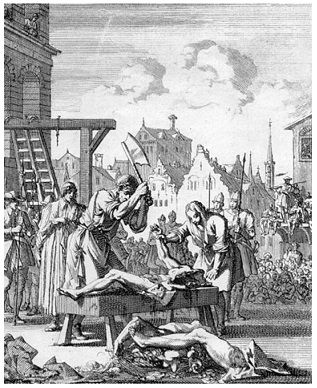
The punishment system still relied on fines, corporal punishments and execution. A significant new punishment was introduced for the crime of high treason (plotting to betray or kill the king. Seen as a crime against God as well as the king) - this involved:
A person would be semi-strangled, and then revived
Their abdomen would be cut open and intestines drawn out
Once they died, their limbs could be cut off and transported to various areas around the country
This was an extreme form of deterrence to those who considered challenging the king
Página 3
The Power of the Church in the Middle Ages
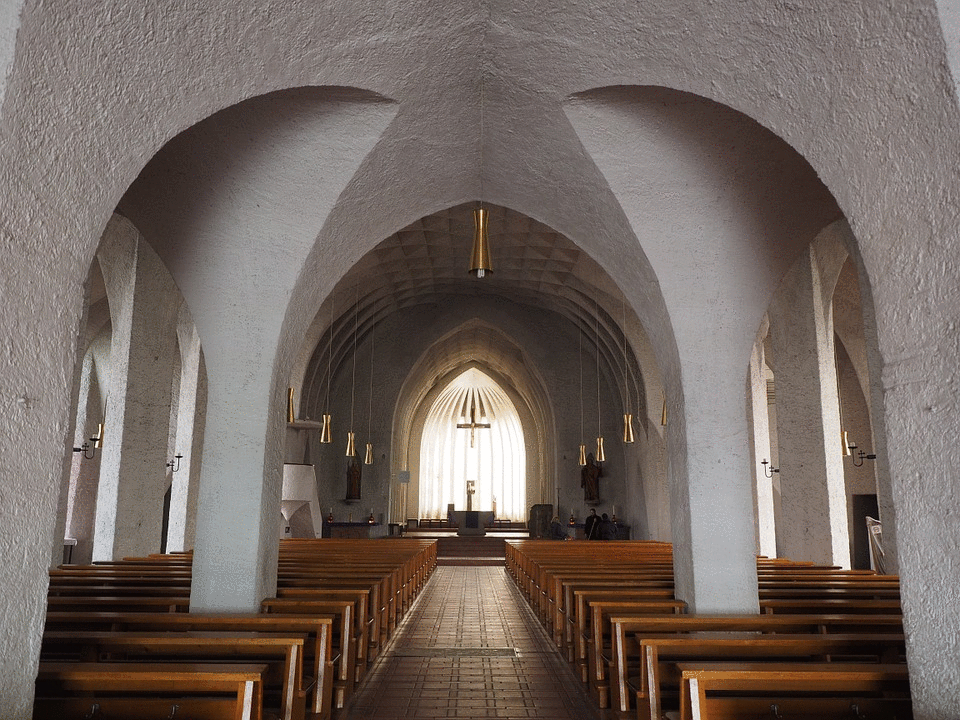
The church controlled the thoughts and actions of people throughout the period c.1000-c.1500. The Church played an important role in the changing nature and continuity of crime and punishment. Clergymen were often the most educated members of the local communities. They managed the cathedrals, large, impressive pieces of architecture that demonstrated to people God's power on earth. The Church had the power to protect, but also to judge.
The Church was involved in secular areas too, it owned about one fifth of the country's wealth and received one tenth of all earnings in Church taxes. The Church became worried with the growth of Islam in Asia and Africa. From 1290 onwards, English Jews were made convert to Christianity or be exiled (ordered to leave the country).
Trial by Ordeal ends:
In 1215, the Pope declared that priests should stop aiding in the organisation of trial by ordeal. When priests were not available to organise the trials they soon came to an end. Due to this change, a new system of determining if someone was guilty or innocent had to be found.
The solution in England was a trial by jury. Trial by jury was a group of twelve men who observed the trial and then decided whether the accused awas guilty or innocent.

Página 4
The Power of the Church in the Middle Ages
Church Courts and the King:
Even though trial by ordeal ended, the influence of the Church in crime and punishment still continued. William I, in the 11th century, encouraged the Church to establish courts for 'moral crimes'. The Church court revolved around the principle that punishments should leave chances for criminals to reform and seek forgiveness for their soul.
Punishments motivated by retribution alone were seen as faulty; maiming was a better option as it offered criminals the opportunity to think about their crimes and develop a sense of regret. In the late 12th century, King Henry II wanted to limit the power of the church. He believed the separate Church courts challenged his power.
The king and bishops met at the Council of Clarendon to discuss the problems of the courts; Henry wanted the bishops to agree about a statement of the relationship between the Church laws and king's laws. This was known as the Constitutions of Clarendon.
Benefit of Clergy:
Henry II disputed with the Church over how far the king's authority could be imposed on members the of clergy being tried for a criminal offence. Senior Church officials contended that clergy should only be tried in Church courts; this right is called the 'benefit of clergy'.
Punishments in Church courts were often less serious, commonly enforced pilgrimage, confession and apology in service. The system became open to abuse and many people pretended to be clergy. However, clergy were often well educated and the test to see if someone was a clergyman was to make the accused read Psalm 51.
Offering Sanctuary:
Some churches provided sanctuary (safe place to hide, those accused of crimes were protected from the law). Sanctuary was only really offered by particularly important churches.
A person who claimed sanctuary would have went to one of these churches and requested help from the clergy. The clergy would report the crime, however, if the clergy found it fair they would give the accused the chance to swear an oath to exit the country within 40 days. Anyone who did not leave in the time limit would be outlawed. This continued throughout the medieval period until it ended under the reign of Henry VIII in 1536.
Informações
- Descrição
- O usuário eliminou as informações de disciplina Notas sobre Later Medieval Ages and the Church, criado por Usuário eliminado em 02-08-2017.
- Criado por
- Usuário eliminado · ago 2017
- Atualizado
- 2 ago 2017
- Visualizações
- 27
- Histórico
-
- Criado por Andrew Burke · 1 ago 2017
- Copiado por Andrew Burke · 2 ago 2017
- Copiado por Andrew Burke · 2 ago 2017
- Avaliação