
Notas
Key Socialist Thinkers

Conteúdo das notas (6)
Página 1
Karl Marx (1818–1883) & Friedrich Engels (1820-1895)
Historical Materialism:
Friedrich Engels co-wrote the Communist Manifesto (1848) alongside Marx. Engels provided the financial assistance that allowed Marx to pursue a career writing about his ideas in the first place. Engels agreed with Marx that the means to establishing a classless society was via bloody revolution. Engels entire outlook was shaped by Hegel’s concept of historical materialism.
Similarly, Marx traces the winding and long road of history through the materialist conception of history (historical materialism):
History was seen as a series of disconnected occurrences before the work of Marx
Marx and Friedrich Engels put forward the idea that history and therefore, human development depends on the development of productive forces throughout time
They established a scientific basis for history
They devised that humankind is constantly changing in nature due to the process of labour
“History does nothing, it ‘possesses no immense wealth’, it ‘wages no battles’. It is man, real, living man who does all that, who possesses and fights; ‘history’ is not, as it were, a person apart, using man as a means to achieve its own aims; history is nothing but the activity of man pursuing his aims.” (Karl Marx and Friedrich Engels, The Holy Family, Chapter VI)
Historical materialism describes the driving force behind social development is class struggle. Utilising the method of dialectical materialism of history, it is obvious that human history has specific laws and therefore, can be understood as a process.
The rise and fall of socio-economic formations can be explained scientifically through how societies can and cannot develop their means of production.
"The materialist conception of history starts from the proposition that the production of the means to support human life and, next to production, the exchange of things produced, is the basis of all social structure; that in every society that has appeared in history, the manner in which wealth is distributed and society divided into classes or orders is dependent upon what is produced, how it is produced, and how the products are exchanged. From this point of view, the final causes of all social changes and political revolutions are to be sought, not in men's brains, not in men's better insights into eternal truth and justice, but in changes in the modes of production and exchange.” (Friedrich Engels, Socialism, Utopian and Scientific).
Marxist socialism explains the development of society in terms of progress of productive forces. Marx's ideas were influenced by the works of Friedrich Hegel:
Hegel set forth an understanding of historical progress
He claimed that history move forward in a series of logical events based upon the dialectic (this involves discourse between two or more people holding different viewpoints about certain subjects, they wish to establish the truth of the subject matter through reasoned argument)
Hegel believed that every idea or incident in society was undergoing an internal conflict
Every thesis contained an antithesis that resulted in social progress
With this thinking, Marx claimed that socialism would challenge capitalism and result in a new historical era
Hegel maintained that alienation was the product of our perception of the world being inconsistent with the realities of the world. Progress only comes about through the development of class consciousness.
Marx argued that the exploited proletariat would adopt a new class consciousness in their struggle against the bourgeoisie. Hegel believed the end of history resulted when the dialectic of society resulted in our consciousness becoming the collective consciousness. Marx saw this as the communist society.
“The philosophers have only interpreted the world, in various ways. The point, however, is to change it."
Página 2
Karl Marx (1818–1883) & Friedrich Engels (1820-1895)
Marx's Main Ideas:
Marx tried to provide an answer as to why capitalism needed to be reformed. This is the type of economy in the progress of history that had come to dominate the Western world when Marx was writing.
Problems with the capitalist system, according to Marx:
Alienation of work: work should be a source of joy. Workers need to see themselves in the objects they create. However, this is increasingly rare in terms of the modern world. The problem is that modern work is specialised.
Insecurity: Capitalism makes the human being expendable. People can be let go of so easily once the costs rise.
Workers get paid nothing, while capitalists make huge benefits: Marx believed that capitalists shrunk the wages of the worker as much as possible to squeeze out profits for themselves (primitive accumulation). Marx argued that profit is theft, as you are stealing the talents and abilities of the workforce you have. Profit is the term used instead of exploitation.
Crises are endemic to the capitalist system
The wealth of massive corporations should be redistributed to everyone
''The Communist Manifesto' (1848) - Marx’s highlights his ideal society:
No private property or inherited wealth
Steeply graduated income tax
Centralised control of banking, communication and transport industry
Free education
Through the class struggle (proletariat vs bourgeoisie) classes develop a concept of themselves. Capitalism replaces this natural egalitarian collaboration with conflict and competition.
The works of Marx can be divided into two main aspects:
Critique of capitalism
The better option of society to be built around common ownership of the means of production
In capitalism, the bourgeoisie have incentive to extract the maximum level of surplus value (profit) from their workers. The exploitation of the proletariat (working class) is inevitable under the capitalist system. Marx would argue Social Democrats’ thinking of state intervention in order to tame capitalism is flawed. While Democratic socialists are wrong, according to Marx, that a parliamentary means for the advancement of socialism will occur. Capitalists won’t allow people to vote away their wealth.
Mark argued that only revolution would lead to ultimately a better world and economic system. Marx believed that the economic base of society needed to be overhauled; fraternity would be generated through fair distribution of wealth and people would be free of competition and consumerism.
'The Communist Manifesto’ (1848) again highlights some important ideas:
“The history of all hitherto societies is the history of class conflict”
Marx and Engels contended that social class can be distinguished by the means of production (physical and mental)
Capitalism dissolves the meaningful relationships in society that create social cohesion
Commodification (people being treated as mere commodities)
Karl Marx - The Revolutionary Scholar I THE INDUSTRIAL REVOLUTION (Incorporar)
Página 3
Rosa Luxemburg (1871-1919)
Luxemburg was a Marxist who was heavily involved in left-wing politics (e.g. Spartacist revolution in Germany 1919). She was a co-founder of the anti-war Spartacus League and ‘The Red Flag’ newspaper which raised awareness of the exploitation that occurred under the capitalist system. Luxemburg argued against the evolutionary model of socialism as it was not sufficient regarding the depth of exploitation already pressing the working class.
Luxemburg argued that the only real meaningful revolution that would lead to a socialist society is the revolution based on class consciousness.
She warned that the dictatorship of the proletariat would be replaced by dictatorship of the party
Luxemburg was a true believer in the value of revolution being the catalyst for social change
Luxemburg was a defender of the Marxist conception of history (dialectical materialism)
Luxemburg believed in the ability of a general strike to radicalise workers and result in a socialist revolution:
"The mass strike is the first natural, impulsive form of every great revolutionary struggle of the proletariat and the more highly developed the antagonism is between capital and labour, the more effective and decisive must mass strikes become. The chief form of previous bourgeois revolutions, the fight at the barricades, the open conflict with the armed power of the state, is in the revolution today only the culminating point, only a moment on the process of the proletarian mass struggle." (The Mass Strike, the Political Party and the Trade Unions, 1906)
Luxemburg remained opposed to the ideas of revisionist socialism, first put forward by Eduard Bernstein:
Bernstein argued that the living and working conditions of the proletariat were not getting worse, but improving
In Evolutionary Socialism (1899), Bernstein argued that a revolutionary overthrow of capitalism was unnecessary and a peaceful transition to socialism could occur
Contrary to the ideas presented by Bernstein, Luxemburg remained faithful to the principles of revolutionary Marxism
Luxemberg was a co-founder of the Spartacus League alongside Karl Liebknecht in 1914. The Spartacist Manifesto of 1918 highlights some of the ideas Luxemberg followed:
“The question today is not democracy or dictatorship. The question that history has put on the agenda reads: bourgeois democracy or socialist democracy. For the dictatorship of the proletariat does not mean bombs, putsches, riots and anarchy, as the agents of capitalist profits deliberately and falsely claim. Rather, it means using all instruments of political power to achieve socialism, to expropriate the capitalist class, through and in accordance with the will of the revolutionary majority of the proletariat.”
"Freedom only for the members of the government, only for the members of the Party - though they are quite numerous - is no freedom at all."
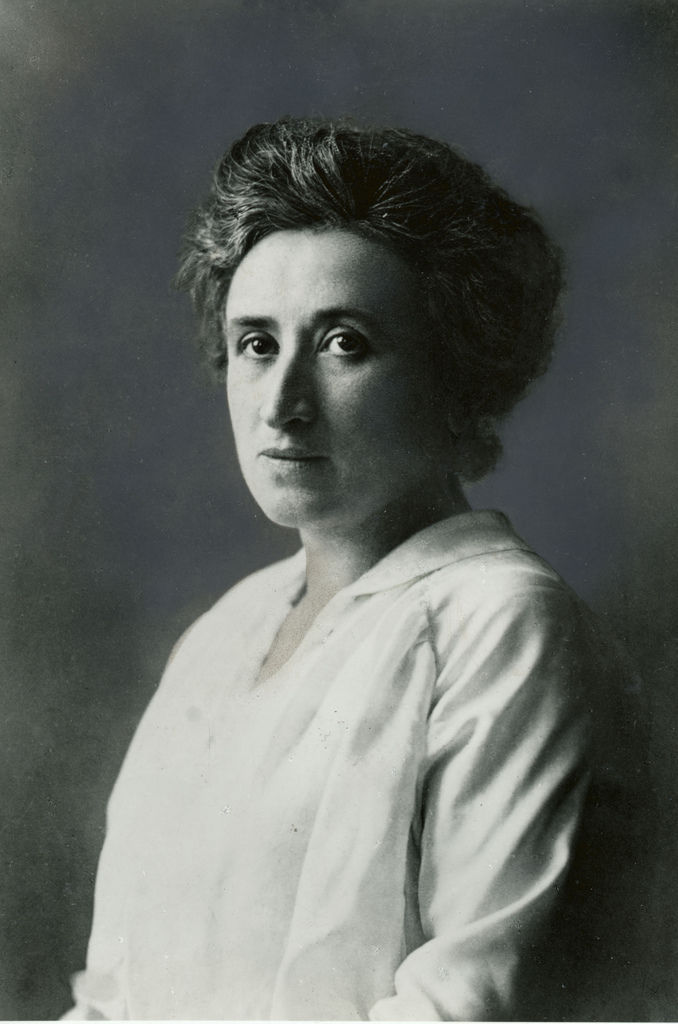
Image Credit: https://www.flickr.com/photos/rosalux/6851009903
Página 4
Beatrice Webb (1859-1947)
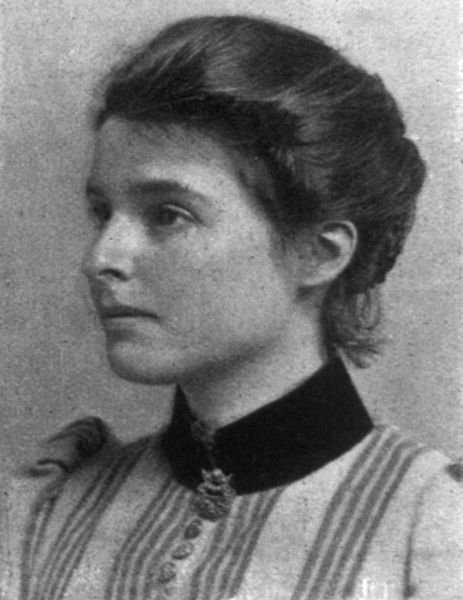
Webb was above all an English sociologist as well as a socialist and social reformer. Alongside Sidney Webb, Beatrice wrote the original Clause 4 which was the Labour Party’s constitution. This was a point of reference for the ideology and being of the Labour Party.
This committed the Labour party to “the most equitable distribution therefore that may be possible upon the common ownership of the means of production, distribution and exchange.”
Seen as promoting nationalisation amongst the economy
Tony Blair after gaining leadership of the party replaced Clause 4
Webb was part of the founding body of the Fabian Society:
Home of left-wing intellectuals and politicians
They argue that an incremental change in society based on socialist principles is preferred to the bloodshed and chaos that comes with revolutionary socialism
Webb believed that a technocratic (the government or control of society or industry by an elite of technical experts) leadership of elites should oversee society
Fabian’s believed the state should expand its role rather than the state being overthrown by the proletariat. This was promotion of the idea of “the inevitability of gradualness”.
Fabian Society:
Distanced themselves from Marxist socialists; denied the necessity of revolution
Full realisation of social and economic reforms and legislation to improve working conditions, plus progressive taxation of capitalist’s income would result in a smooth transition to socialism
Social control and fair distribution of income for Fabians would mean the greatest happiness for the greatest number of people
Fabians utilised scientific approaches to solve practical problems
Cooperatives:
In 1844, Rochdale Pioneers founded the modern cooperative movement in Lancashire, England
This movement provided an affordable alternative to poor-quality food and provisions
They used any surplus to the benefit of the community
This movement flourished from its beginnings and encompassed many sectors across the globe
From her experience of Lancashire life, Webb in her book The Cooperative Movement in Great Britain (1891), distinguished between ‘cooperative federalism’ and ‘cooperative individualism’:
Webb self-identified as a cooperative federalist
This ideology advocates for consumer cooperative societies (enterprises are owned by consumers and managed democratically to fulfil the needs of their members)
They operate within the market, separate from the state, acting as a form of mutual aid
Mainly take the form of food co-operatives (decisions for production and distribution of food are outlined by the members)
Webb argued that consumer cooperatives should establish cooperative wholesale societies (here consumers can collectively purchase goods at wholesale prices and collectively own factories and farms)
Webb spoke against the idea of worker cooperatives (people who carried out the work and benefited from the labour had control over how the cooperative was organised). Cooperative individualism ultimately promotes the ownership and control of the workplace by the workers. Thus, cooperative individualists maintain company profits should be paid in dividends to workers.
"Renunciation - that is the great fact we all, individuals and classes, have to learn. In trying to avoid it we bring misery to ourselves and others."
Página 5
Anthony Crosland (1918–1977)
Crosland was a twentieth century British politician who was associated with Social Democratic thinking. Crosland believed that socialism could be achieved through the humanising of the capitalist system. He focused on practical achievements rather than theoretical rhetoric.
His most influential work was ‘The Future of Socialism’ (1956) where he outlined how to achieve objectives of social justice and egalitarianism.
Crosland wanted to develop the ideology of social democracy that existed at the time
The Marxist view of the world, for Crosland, had been disproved by the harsh world of the 1930s being transformed by war and post-war Labour reforms:
Output and standards of living rose steadily in a capitalistic society
The power of the business class was reduced with increased government power and bargaining power of labour
Poverty had been reduced significantly by redistributive taxation, welfare benefits and rising living standards
Crosland argued that the ownership of the means of production was largely irrelevant in the mid-20th century:
“the definition of capitalism in terms of ownership…has wholly lost its significance and interest now that ownership is no longer the clue to the total picture of social relationships; and that it would be more significant to define societies in terms of equality, or class relationships, or their political systems.”
Modern socialism, Crosland noted, is not about public ownership but about improving welfare and social equality for all (Crosland noted that poverty was virtually abolished by the 1950s in the United Kingdom)
Therefore, continual nationalisation is not a central goal for government (Crosland saw nationalisation as an ineffective means to an end)
Political values of personal liberty, social welfare and equality took centre stage
Instead of overthrowing the rich and elite, policies of high taxation, educational development and expansion of social services were pursued
“The socialist seeks a distribution of rewards, status and privileges egalitarian enough to minimise social resentment, to secure justice between individuals and to equalise opportunities; and he seeks to weaken the existing deep-seated class stratification with its consistent feelings of envy and inferiority, and its barriers to uninhibited mingling between the classes.”
Above all, Crosland was a revisionist. This approach contains some important processes:
Analysing what is actually happening as opposed what ought to happen
Subjecting methods to scrutiny (prepared to modify these methods if faced with changing circumstances)
Crosland argued that Labour governments would be able to utilise their powers of the state to regulate capitalism in an appropriate way. He believed that socialism would be achieved through promotion of capitalist efficiency and responsibility of society which would lead to economic growth.
Crosland argued that Britain “ceased to be a capitalist country” after the welfare policies that were implemented by Clement Attlee. He was interested in improving the lives of working people. Ultimately, he downplayed public ownership of means of production and prioritised trying to end poverty and establishing better public services.
Página 6
Anthony Giddens (1938-Present)
Giddens was the prominent thinker behind the third way (a political and theoretical perspective that sought to alter left-wing ideas of the economic and political realities of globalisation)- a philosophical approach that shaped policies of New Labour (1997-2010).
Giddens sought to rebrand social democracy in the context of globalisation. He was a sociologist and one of the rare few who influenced British public policy. He argued the third way was a means to modifying the welfare system that would give people a ‘hand-up, not a hand-out’.
This was to allow fairer redistribution of wealth. Moreover, the third way highlighted that profit motive should be the only legitimate concern of the private sector
Where the Old Labour focused on equality and social justice. New Labour, with Giddens influence, sought to emphasise the relationship between benefits and obligations
Welfare payments should be attached to appropriate behaviour with sanctions for those acting irresponsibly
Third way thinking outlined active welfare (ensure those who claimed such benefits attempted to escape the poverty trap)
Giddens believed the welfare system needed to be mended, as “all welfare states create problems of dependency, interest-group formation and fraud".
Gidden’s Main ideas:
Contemporary society is best understood by the term ‘late modernity’.
According to Giddens, late modern societies are shaped by the extension and development of the similar social forces that comprised earlier forms of modern social life
The key forces, for him, are the disembedding of time and space and the loss of tradition
Globalisation has allowed people to interact with each other in a way that is not limited by time-space constraints as it was with older societies
Moreover, tradition has lost its place in society and people are more reflexive about their social worlds
Giddens also offered a thorough critique of historical materialism:
There is no overarching mechanism of social change, no universal historical motor such as class conflict
Universal stages of social development do not exist, they are ruled out by things such as human agency and historicity of societies
Society's needs are that of the individual, therefore, principles of adaptation cannot be applied to them
Pre-capitalist societies are divided by class, only within capitalism do class societies exist where class conflict is endemic
While class conflict is integral in capitalist societies, there is no directive that guarantees the emergence of a working class
Sociology addresses a reflexive reality (circular relationships of cause and effect)
In a society of reflexive modernity and an economy producing huge amounts of goods with minimal labour, politics is undergoing change:
Giddens argues that ‘life politics’ (pursuit of knowledge/self-Enlightenment) may become more visible than politics of inequality
We live in an age of ‘dialogic democracy’ where differences are settled through discourse as opposed to violence
The political concepts of ‘left’ and ‘right’ are breaking down
In Beyond Left and Right (1994), Giddens constructed a framework for radical politics:
Repair damaged solidarities
Recognise the centrality of politics of self-actualisation (life politics)
Accept that active trust implies generative politics
Embrace principles of dialogic democracy
Reevaluate the welfare state
Confront violence
In The Third Way (1998), Giddens outlines a broad range of policy proposals for the ‘progressive centre-left’ in British politics:
"the overall aim of third way politics should be to help citizens pilot their way through the major revolutions of our time: globalisation, transformations in personal life and our relationship to nature" (Anthony Giddens)
Giddens dissociated himself from the New Labour Party in the way they interpreted the third way in day-to-day political life. For Giddens, the point of the third way was to go beyond both free market fundamentalism and traditional top-down socialism. He wanted to make political values of the centre-left impactful in a globalising world.
Informações
- Descrição
- O usuário eliminou as informações de disciplina Notas sobre Key Socialist Thinkers, criado por Usuário eliminado em 11-08-2017.
- Criado por
- Usuário eliminado · ago 2017
- Atualizado
- 30 jan 2019
- Visualizações
- 38
- Histórico
-
- Criado por Andrew Burke · 2 ago 2017
- Copiado por Andrew Burke · 4 ago 2017
- Copiado por Andrew Burke · 11 ago 2017
- Avaliação