
Notas
Renaissance and Change in Health
Conteúdo das notas (5)
Página 1
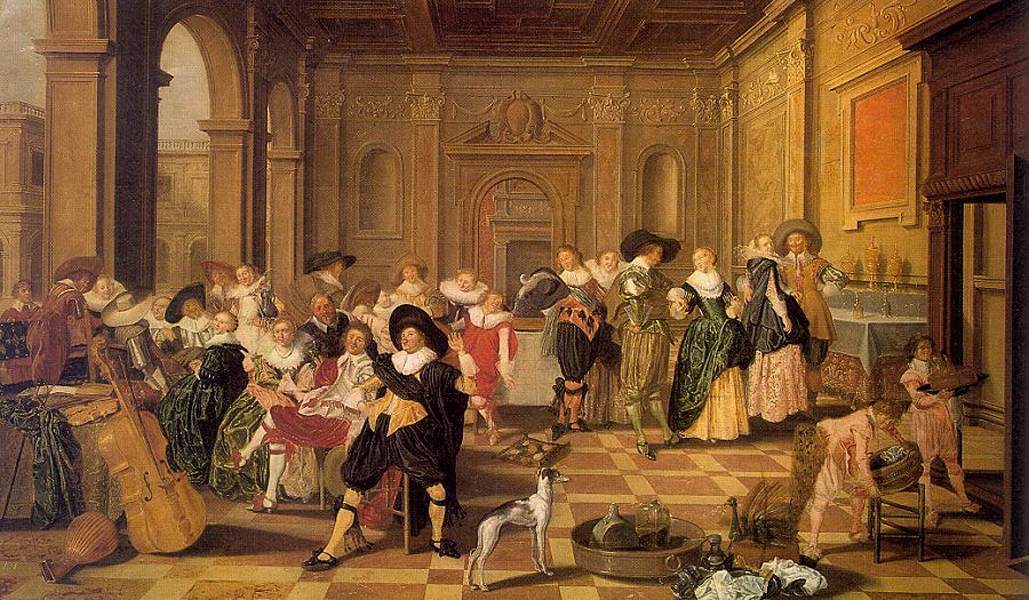
Renaissance Key Changes
In the 15th century, there was a 'rebirth' of Western civilisation and this was the result of a number of key changes that occurred around this time:
Governments, like that of Herny VIII, became strong and rich. Trade became popular and economies boomed. People were now wealthy enough to afford doctors.
Artists (e.g. Leonardo da Vinci) transformed the painting industry. Artists studied more of the body and people's knowledge about anatomy improved.
The Renaissance also saw the beginning of the scientific method.
The invention of the printing press allowed for the dissemination of new knowledge faster than ever before.
The discovery of the New World by Columbus led to new foods and medicines being introduced to Europe.
The setting up of societies, like the Royal Society, allowed for greater and more coherent transmission of new ideas to the public.
Página 2
The Renaissance and Galen
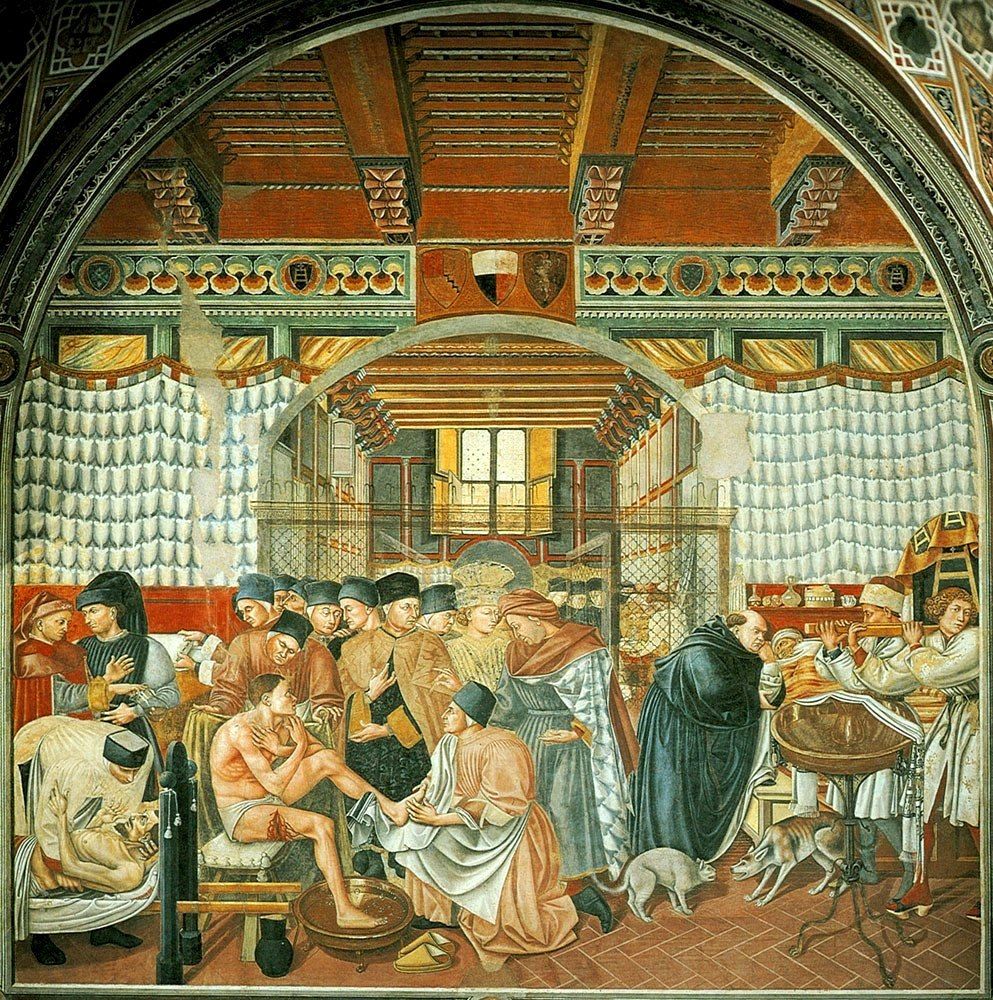
The time of the Renaissance led to a revival of ancient things; Galen's works were re-translated from Arabic into Greek and Latin. By 1525, Galen's entire works were published in Greek and then into Latin. Galen's works soon came to be challenged through the inquisitive nature of people from the Renaissance.
The more artists and surgeons studied anatomy and the workings of the body, the more discrepancies were pointed out in Galen's works. The medical world seemed to split into two camps; physicians who held strongly to the ideas of Galen and those who explored the human body through experimenting and experience.
Role of the church:
The churches' attitude towards medicine had a profound influence on its progress and developments
The church continually encouraged people to pray for their sins and ask for forgiveness to receive healing from their illnesses
The church was responsible for setting up university schools throughout Europe that were used to educate people about Hippocratic and Galenic texts
The church insisted on the use of Galenic texts and this can be seen as a limiting condition on developing understandings of the how the body worked
Vesalius and anatomy:
Andreas Vesalius (1514-64) was born in Brussels and studied in Paris and Padua, Italy
He was appointed professor of surgery and anatomy in Padua
He carried out his own dissections, believing anatomy was key to understanding how the body functioned
Vesalius challenged Galen's ideas of anatomy
Vesalius views were more accurate as he studied with human bodies rather than animals
Vesalius encouraged other doctors to approach human anatomy in this manner
In 1543, Vesalius published Fabric of the Human Body, which had major influences on medicine in Britain
Paré and treating wounds:
Ambroise Paré (1510-90) started work as an apprentice to his brother who was a barber-surgeon
He served as a surgeon in the French army for 30 years
In the siege of Milan in 1536, he ran out of hot oil to cauterise wounds
Instead, he mixed egg yolk, turpentine and oil of roses to dress raw wounds
This was much less painful and was more effective in encouraging healing
Paré utilised ligatures to tie-off wounds after amputation and found that the wounds healed better
Soon after, he developed artificial limbs for those who lost a hand or leg due to their wounds
Página 3
Treatment at the Time
Many of the traditional treatments and remedies from the medieval period carried on into the Renaissance and the early modern period. However, there was some new developments. 'Ladies of the manor' began compiling recipe books of cures. Physicians also began to write more in English rather than Latin in order to help more people.
Herbs were used in a more coherent way by incorporating the doctrine of signatures with astronomy. The doctrine of signatures applied to utilising plants on parts of the body that the plant resembled.
New ingredients were also brought from around the world:
Rhubarb coming from Asia was labelled a wonder drug
Tobacco, brought over by Walter Raleigh from America, was used in many herbal remedies
A scientific approach of observation, experiment and recording outcomes led to advances in medicine regarding not only new treatments but new ideas of dealing with disease. New studies of mental illness (known as melancholy) and midwifery were conducted in this period.
Página 4
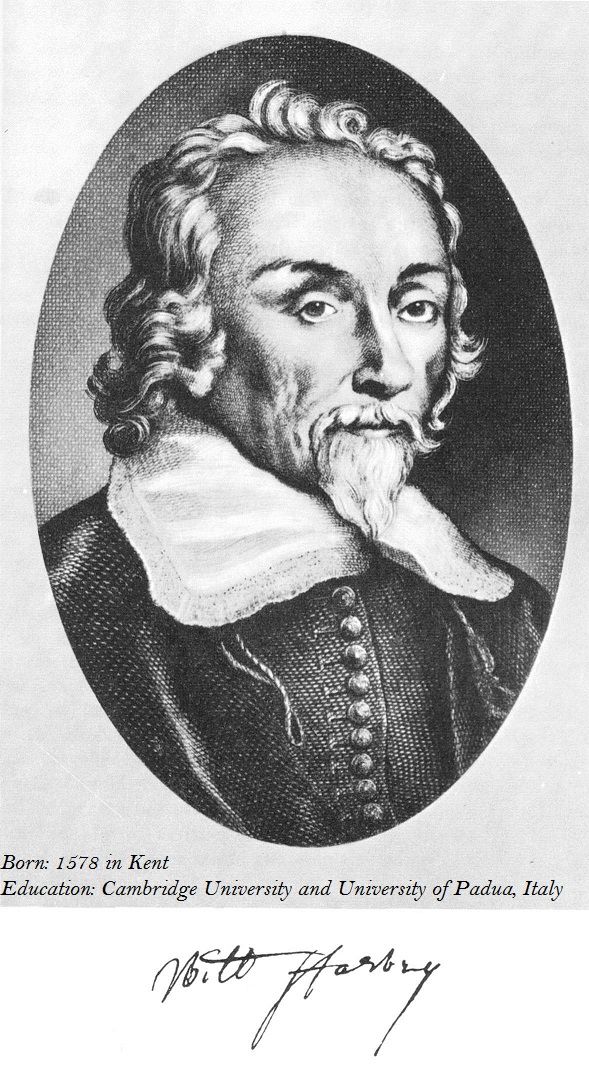
William Harvey (1578-1657)
Harvey's most famous work On the Motion of the Heart was first published in 1628. This book changed views of Galen's work and changed medicine completely. While in Padua, Harvey was taught that the veins in humans had valves and blood pumped one way. No one understood why this happened though.
Further into his career, Harvey was experimenting on animals and through this he discovered that blood moves around the body in a circular motion. This led to his well-known discovery of the circulation of blood. From working with cold-blooded amphibians, Harvey was able to demonstrate how blood followed in a patient's forearm. He showed that the heart worked as a pump and blood flowed in one-way system around the body.
Harvey also demonstrated that Galen's belief that the liver was the centre of the body - made new blood - was completely false. Those who supported Galen dismissed Harvey's work entirely. People argued that Harvey could not see capillaries and therefore was not able to prove their existence. It was 60 years later that capillaries were observed properly.
Página 5
The 'English Hippocrates'
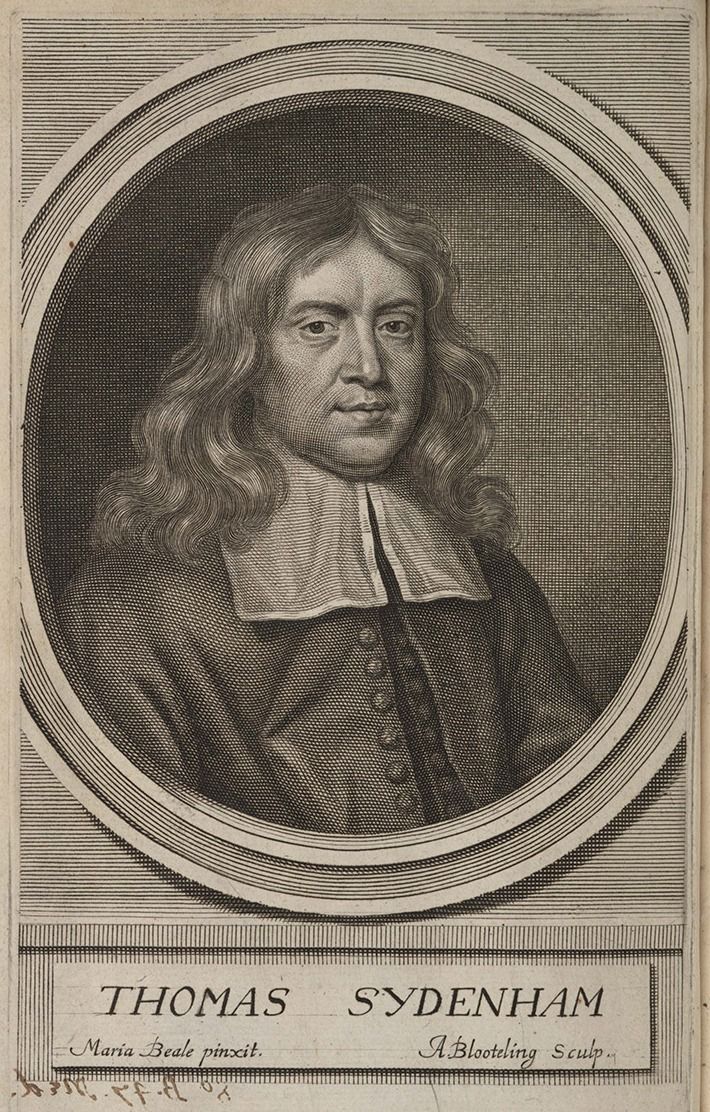
Thomas Sydenham (1624-89) was educated in both Oxford and Cambridge, until he joined the Parliamentary Army in the English Civil War. In 1663, he was set up as a physician where he began a new process of diagnosis and treatment.
Sydenham believed in close observation of symptoms that related to a disease and as little intervention as possible with a patient
He argued that physicians must avoid speculation and carefully monitor symptoms and treatments given
This would build up a strong body of knowledge in relation to diseases and illnesses
This was a 'scientific-method' in treating illness
Sydenham believed diseases had different characteristics; therefore, each disease has a unique treatment
He was interested in the diseases that plagued the city of London at the time such as smallpox
Sydenham developed a successful treatment for smallpox, contrary to the older ways physicians attempted to cure it (blankets and hot drinks to 'sweat' the disease out)
Sydenham's 'cool therapy' involved lots of fluids, moderate bloodletting and keeping the patient cool
This treatment appeared to work
Informações
- Descrição
- O usuário eliminou as informações de disciplina Notas sobre Renaissance and Change in Health, criado por Usuário eliminado em 23-08-2017.
- Criado por
- Usuário eliminado · ago 2017
- Atualizado
- 1 mar 2019
- Visualizações
- 65
- Histórico
-
- Criado por Andrew Burke · 20 jul 2017
- Copiado por Andrew Burke · 23 ago 2017
- Avaliação