
Notas
Investigation at Whitechapel

Conteúdo das notas (5)
Página 1
Jack the Ripper
In the year 1888, five women were murdered in the Whitechapel area. The following victims were:
31 August - Mary Ann Nichols at Buck's Row
8 September - Annie Chapman on Hanbury Street, Spitalfields
30 September - Elizabeth Stride on Berners Street
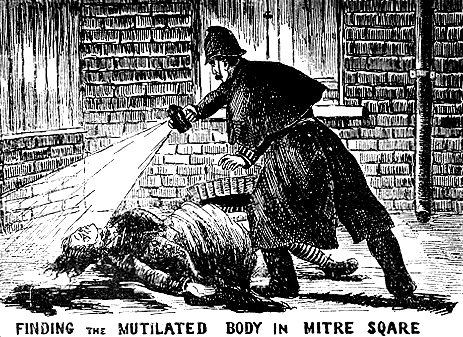
30 September- Catherine Eddowes in Mitre Square, Aldgate
9 November - Mary Jane Kelly at Miler's Court, Dorset Street, Spitalfields
The police at Whitechapel believed the same person had carried out all of these murders. The murderer was never brought to justice but was given the famous name 'Jack the Ripper'. The process of investigating these murders provides a case study which demonstrate the challenges facing police in Whitechapel and their ability to investigate crime.
Jack The Ripper Unmasked? (Incorporar)
Página 2
Policing Problems
Problem of the police and the media:
Inspector Frederick Abberline and his Criminal Investigation Department team were assigned to the case of Jack the Ripper in order to support the H Division in this difficult time. The task of investigation became more difficult with the police receiving 300 letters and postcards sent to them and newspapers, with many claiming to be the murderer.
Problem of police force rivalry:
Shortly after the discovery of Catherine Eddowes's body, PC Alfred Long of the H Division discovered a significant clue on Glouston Street about half a mile away from the murder. The clue was a piece of Eddowes's apron that contained stains of blood and faeces.
In the alleyway nearby, there was a message on written on the wall: "The Juwes are the men that will not be blamed for nothing'". The Commissioner at the time, Warren, ordered the message to be washed off the wall before the community would see it and possibly riot against the Jewish population. Moreover, the murder occurred within the boundaries of the City of London, which had its own police force. They did not want to conflict with a rival police force for the capture for a serial killer. Police investigation normally encountered problems due to the rival police atmosphere in London.
Página 3
The Investigation
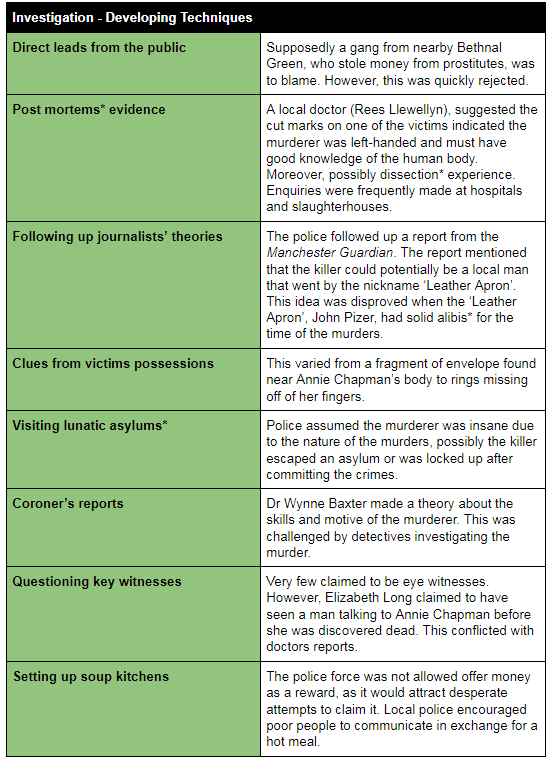
After the discovery of the first body (Mary Ann Nichols) on the 31 August, the police utilised a number of methods of enquiry:
Key Words:
Post mortem: an examination of a dead body to determine the cause of death
Dissection: the action of dissecting a body or plant to study its internal parts, usually for scientific study
Alibi: a claim or piece of evidence that one was elsewhere when an act, typically a criminal one, is alleged to have taken place.
Lunatic asylums: this was the Victorian term for a hospital for the mentally ill
Página 4
The Investigation
Despite the use of all various methods in order to identify the murderer, the newspapers and public labelled the police force as incompetent. Fear struck through the town on the night of 30 September when two women were brutally murdered in one night. In order to deal with criticisms, Chief Inspector Swanson made a Home Office report highlighting Metropolitan Police methods:
House to house searches
2000 lodging housing residents were questioned
80,000 handbills were distributed
Thames River Police cooperated to question sailors in the docks and other Metropolitan divisions and opium dens
The police even planned to use the bloodhounds, Barnaby and Burgho. However, the police did not pay the owner and he refused to work further with the forces.
Obstacles to success:
Lacking in forensics: the Metropolitan forces had no scientific means (forensic techniques) to aid in their investigation. They needed to catch the criminal in the act because their chances of catching the Ripper were severely reduced due to:
It was 12 years later fingerprinting was used for detection of criminals
DNA evidence came about in the later part of the 20th century
Scientists did not know the difference between animal and human blood, as well as blood types
Eventually, Scotland Yard had a collection of criminal's mug shots, but this record was small
Crime-scene photography was just beginning
The Vigilance Committee: these people seriously halted the efforts of the police. Members of the local community organised themselves to go out at night with weapons and whistles in a vain and revenge-driven effort to catch the Ripper. This was counter-productive and damaged police investigations. It has also been theorised that some in the streets were SDF (Social Democratic Federation) supporters who were attempting to make a mockery of the police and local government.
Página 5
Improvements after 1900
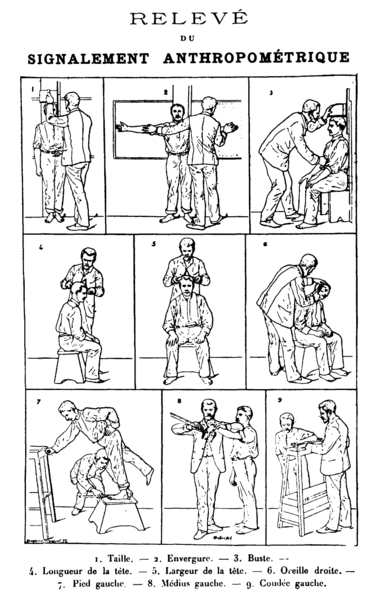
The Bertillon System:
This was a system that recorded the physical measurements of criminals through photography and records. This would help police to identify criminals who committed repeated offences. Physical measurements were made that would only apply to a single person. The inability of the force to catch the Ripper led to the adoption of the Bertillon System in 1894.
Measurements of suspects were made, mug shots captured and records stored away in a central place. Physical measurements were eventually replaced by the fingerprint system a few years later, but Bertillon's photographic methods continued and are used still today.
Improvements in Communication:
Police only could communicate over distances by a whistle in 1888. By the turn of the century, the police were using telephone lines to communicate with one another. The H Division received their first telephone line in 1901 and their station had one installed in 1907. Them, in 1909, the H Division received bicycles which aided in the catching of criminals.
Improvements in environment:
The authorities in London began to improve health and housing in the district, with surrounding boroughs receiving street lighting to aid in the sight of activities in the streets at night. The murders were important in the creation of two laws:
The Houses of the Working Classes Act (1890) - the new London County Council had the opportunity to redevelop housing and replace slums with mass low-cost housing
The Public Health Amendment Act (1890) - local councils were given greater powers to improve toilets, paving, and many sanitary services
Despite these reforms and no more serial killings, murder continued throughout the 1890s. Many youths pretended to be Jack the Ripper to frighten women. Further, violence increased against prostitutes.
The diagram below comes from: Alphonse Bertillon's, Identification anthropométrique (1893)
Informações
- Descrição
- O usuário eliminou as informações de disciplina Notas sobre Investigation at Whitechapel, criado por Usuário eliminado em 24-08-2017.
- Criado por
- Usuário eliminado · ago 2017
- Atualizado
- 24 ago 2017
- Visualizações
- 71
- Histórico
-
- Criado por Andrew Burke · 22 ago 2017
- Copiado por Andrew Burke · 24 ago 2017
- Avaliação