
Quiz
IB Cell Biology
Este quiz tem tipos de pergunta que abrem no player de sempre.
Perguntas do quiz (32)
1Surface tension is caused by [blank_start]cohesive[blank_end] hydrogen bonding which resists the penetrating of its surface.
- Acohesive
2[blank_start]Hydrophilic[blank_end] is a term used to describe substances that are chemically attracted to water.
[blank_start]Hydrophobic[blank_end] is a term used to describe substances that are insoluble in water.- AHydrophilic
- BHydrophobic
3All [blank_start]lipids[blank_end] are hydrophobic.
- Alipids
4Which of the following statements are true?
- AAn anabolic reaction is the building up of large molecules
- BA catabolic reaction is the building up of large molecules
- CAn anabolic reaction is the breaking down of large molecules
- DA catabolic reaction is the breaking down of large molecules
- EExergonic reactions release energy
- FEndergonic reactions release energy
- GExergonic reactions require energy
- HEndergonic reactions require energy
5Anabolism + Catabolism = [blank_start]Metabolism[blank_end]
- AMetabolism
6Carbohydrates are made up of [blank_start]carbon, hydrogen and oxygen[blank_end]
- Acarbon, hydrogen and oxygen
- Bcarbon, nitrogen, oxygen
- Ccarbon, hydrogen, sodium
- Dcarbon, nitrogen, sodium
7glucose is a sugar and a [blank_start]mono[blank_end]saccharide.
- Amono
8Solvent + [blank_start]Solute[blank_end] = Solution
- ASolute
9The [blank_start]polar[blank_end] attraction of [blank_start]large[blank_end] quantities of water molecules can interrupt [blank_start]intramolecular[blank_end] [blank_start]forces[blank_end] and result in the [blank_start]dissociation[blank_end] of the [blank_start]atoms[blank_end].
- Apolar
- Bnon-polar
- Clarge
- Dsmall
- Eintramolecular
- Fforces
- Gwaves
- Hhydrophilic
- Ihydrophobic
- Jdissociation
- Katoms
- Lmolecules
10Water dissolves nutrients, gases and waste products making it a good [blank_start]solvent[blank_end].
- Asolvent
11Which of the following saccharides are disaccharides?
- AGlucose
- BGalactose
- CFructose
- DSucrose
- ELactose
- FMaltose
- GGlycogen
- HStarch
- ICellulose
12Drag and drop the correct functions and uses to the correct -saccharides.
Glucose: [blank_start]Quickly absorbed and used in respiration[blank_end]
Galactose: [blank_start]an energy molecule[blank_end]
Fructose: [blank_start]transporting sugar[blank_end]
Lactose: [blank_start]is quickly digested[blank_end] and found in milk
Maltose: broken down by starch and is [blank_start]a quick store of energy[blank_end]
Glycogen: Insoluble storage of glucose in the liver, [blank_start]produced using insulin[blank_end]
Starch: [blank_start]Longterm energy store[blank_end]
Cellulose: [blank_start]Structural unit in plant cell walls[blank_end]- AQuickly absorbed and used in respiration
- Ban energy molecule
- Ctransporting sugar
- Da quick store of energy
- Eproduced using insulin
- FLongterm energy store
- GStructural unit in plant cell walls
- His quickly digested
13Non-competitive inhibitors are not influenced by the [blank_start]concentration[blank_end] of the substrate. They bind irreversibly the the enzyme.
- Aconcentration
14Non-competitve inhibitors need to bind at the active site of an enzyme to work.
- AVerdadeiro
- BFalso
15The [blank_start]end[blank_end] product of respiration is ATP.
- Aend
16Which of the following statements about ATP is false?
- AWhen respiration slows down more ATP is produced.
- BAs ATP is used up the inhibition stops and the reaction speeds up again.
- CATP slows down reactions considerably.
17How many sites does an inhibitor molecue have?
[blank_start]__[blank_end]- A2
18When an inhibitor is present it fits into the [blank_start]allosteric[blank_end] site of an enzyme. This causes a [blank_start]conformational[blank_end] change in the enzyme's molecular shape so that the [blank_start]active[blank_end] site of the substrate changes. This causes the substrate to no longer be able to bind with the enzyme.
- Aallosteric
- Bconformational
- Cactive
19How is the negative feedback loop achieved with inhibitors?
Start the loop at the upper left side with: 'The reaction slows down'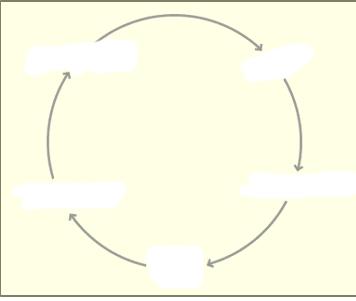
- AThe reaction slows down
- BThe inhibitor concentration diminishes
- CThe enzyme's concentration diminishes
- Denzyme's shape changes to active form
- EThe reaction speeds up
- FThe inhibitor molecule is released
20Sort the following statements into competitive and non-competitive inhibitors.
Competitive
- Increasing the inhibitor concentration [blank_start]increases the effect[blank_end]
- Competes with the [blank_start]substrate[blank_end] at the active site
- Active site [blank_start]remains the same[blank_end]
Non-Competitive
- Increasing the inhibitor concentration [blank_start]doesn't influence the effect[blank_end]
- Inhibitor [blank_start]does not bind[blank_end] at the active site
- Active site [blank_start]may change shape[blank_end]- Aincreases the effect
- Bdoesn't influence the effect
- Csubstrate
- Dsolute
- Esolvent
- Fenzyme
- Gremains the same
- Hmay change shape
- Idoes not bind
- Jbinds
21Label this chlamydomona
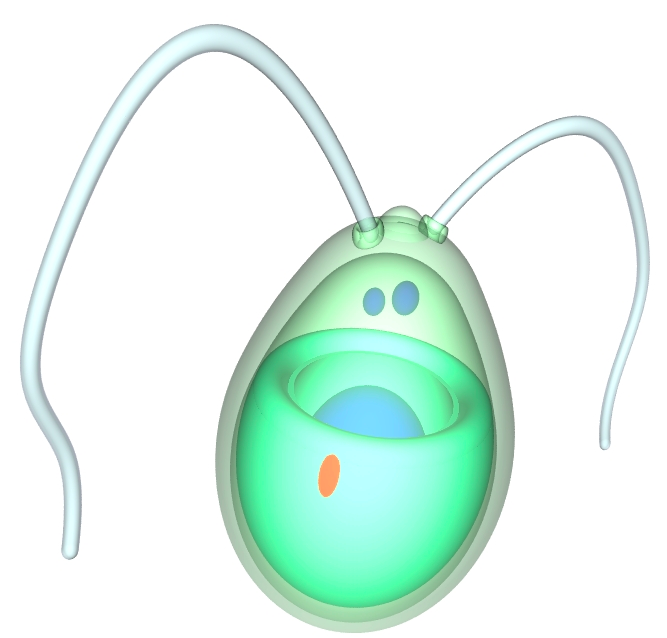
- Aflagella
- BChloroplast
- Cnucleus
- Dstarch
- Emitochondrion
- Fgolgi body
- Gcell wall
22Label the Eschericha coli
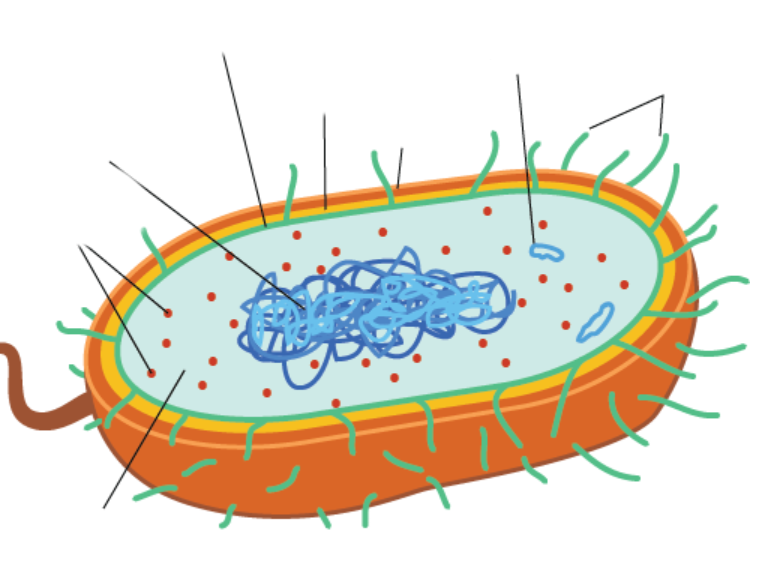
- Acircular DNA
- Bplasmid
- Cpili
- Dribosome
- Emembrane
- Fcell wall
23Differentiation is a process that occurs in the cells of [blank_start]multi[blank_end]cellular organisms.
- Amulti
24Match the stem cells with their functions.
Totipotent - Can differentiate [blank_start]into any type of cell[blank_end]
Pluripotent - Can differentiate [blank_start]into many types of cells[blank_end]
Multipotent - Can differentiate [blank_start]into a few closely-related types of cell[blank_end]
Uni-potent - Can differentiate [blank_start]only it's own type[blank_end]- Ainto any type of cell
- Binto many types of cells
- Cinto a few closely-related types of cell
- Donly it's own type
25Label the following 2D fluid mosaic model.
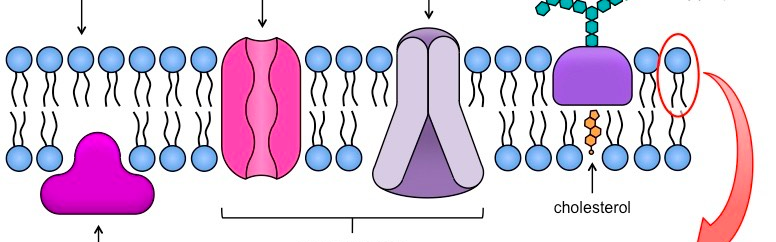
- Aintegral proteins
- Bchannel protein
- CCarrier protein
- Dperipheral protein
- Ephospholipid
- Fglycoprotein
26Match the following with their correct functions.
[blank_start]Channel protein[blank_end]: for passage through the membrane
[blank_start]Pump protein[blank_end]: for [blank_start]active transport[blank_end] across the membrane. (using energy from ATP)
Electron carrier proteins: a chain of [blank_start]peripheral and integral[blank_end] proteins that allow electrons to pass through the [blank_start]membrane[blank_end]
Enzymes held in the membrane: [blank_start]catalyze[blank_end] reactions at the surface of the membrane. (within or outside of the cell)
[blank_start]Active site[blank_end]: the substrate molecule fits here and the reaction then occurs
Binding protein for attachment of a specific [blank_start]hormone[blank_end]: a signal is then generated that is transmitted inside the cell
cell-cell recognition site: - attachment may result in cells [blank_start]binding[blank_end] together
[blank_start]binding sites[blank_end]: for antigen-[blank_start]antibody[blank_end] reaction- AChannel protein
- BPump protein
- Ccatalyze
- DActive site
- Ebinding
- Fbinding sites
- Gantibody
- Hhormone
- Iperipheral and integral
- Jmembrane
- Kactive transport
- Ldiffusion
- Mosmosis
27Two amino acids undergo a condensation reaction to form a [blank_start]Di-Peptide[blank_end] bond.
- ADi-Peptide
28Many different amino acids linked together by peptide bonds is called a [blank_start]polypeptide[blank_end].
- Apolypeptide
29Different amino acid sequuences will fold into different configurations due to the chemical properties of the [blank_start]R-groups[blank_end].
- AR-groups
30Proteins that consist of more than one polypeptide chain linked together are known as having a [blank_start]quaternary[blank_end] structure.
- Aquaternary
31Meiosis Steps:
1. [blank_start]Metaphase I[blank_end] -- [blank_start]homologous chromosomes line up[blank_end]
2. [blank_start]Anaphase I[blank_end] -- [blank_start]spindle fibers pull pairs[blank_end]
3. [blank_start]Telophase II[blank_end] -- [blank_start]4 haploid (N) cells form[blank_end]
4. Interphase -- [blank_start]DNA replication occurs[blank_end]
5. [blank_start]Anaphase II[blank_end] -- [blank_start]sister chromatids separate[blank_end]
6. [blank_start]Telophase I[blank_end] -- [blank_start]2 haploid calls form[blank_end]
7. [blank_start]Metaphase I[blank_end] --- [blank_start]spindle fibre attach to pairs[blank_end]
8. [blank_start]Anaphase II[blank_end] -- [blank_start]chromatids move to ends of cell[blank_end]
9. [blank_start]Prophase I[blank_end] -- [blank_start]crossing over (if any) occurs[blank_end]- AProphase I
- BMetaphase I
- CAnaphase I
- DTelophase I
- EProphase II
- FMetaphase II
- GAnaphase II
- HTelophase II
- Icrossing over occcurs
- Jhomologous chromosomes line up
- Kcytoplasm divides
- Lnew spindles form
- Mchromosomes line up (again)
- Nchromatids move to poles
- Onuclear envelope forms around each set
- Pcytoplasm divides again
- Qchromosomes go to poles
32What is a nucleosome?
- AA region in a prokaryotic cell where DNA is found
- BA DNA molecule wrapped around histone proteins
- CA ribosome of a prokaryotic cell
- DA molecule consisting of a sugar, a base and a phosphate
Informações
- Descrição
- Extra biology
- Autor
- Imani :D
- Idioma
- English
- Visualizações
- 98
- Etiquetas
- Avaliação
- Ainda sem avaliações Avalie este quiz