
Quiz
GEGE2001 Week 03 (L05 & L06)
Este quiz tem tipos de pergunta que abrem no player de sempre.
Perguntas do quiz (15)
1(from end of L05 slides)
In a particular cell, a non Watson-Crick base pair (T-G) is formed during DNA replication. What is likely to happen next?- APolymerase *probs* removes it, often via 3' exonuclease activity
- BPolymerase *probs* removes it, often via 5' exonuclease activity
- CPolymerase *probs* removes it, often via 3' endonuclease activity
- DPolymerase *probs* removes it, often via 5' endonuclease activity
2(from end of L05 slides)
How does a frameshift mutation differ from a missense mutation?- AMissense affects many codons; Frameshift mutation does not.
- BFrameshift affects many codons; Missense mutation does not.
- CFrameshift affects many codons; Missense mutation only affects 3.
- DMissense affects many codons; Frameshift mutation only affects 3.
3(from end of L05 slides)
Did the fluctuation test show that bacterial cells induce mutation upon exposure to the selective agent (viral infection)? Explain. (well, don’t explain *here*, but be ready to)- ANo.
- BYes.
4DNA is replicated in:
- AS phase
- BM phase
- CG phase
- DCytokinesis
- ETelekinesis
5UV:
- Alight has HIGH energy
- Blight has LOW energy
- Cdamage forms a join between two adjacent bases, usually Thymine (forming a Thymine dimer)
- Ddamage forms a join between two adjacent bases, usually Cytosine (forming a Cytosine dimer)
- Edamage forms a join between two adjacent bases, usually Adenosine (forming a Adenosine dimer)
- Fdamage forms a join between two adjacent bases, usually Guanine (forming a Guanine dimer)
- Gdamage forms a join between two adjacent bases, usually Adenine (forming a Adenine dimer)
6Which of the following is NOT a type of DNA mutation (necessarily)?
- AIndels
- BIncels
- CTransitions
- DTransversions
7Types of mutations AT THE PROTEIN-CODING LEVEL. Fill in the blanks:
Silent mutation: [blank_start]________________[blank_end];
Missense mutation: [blank_start]________________[blank_end];
Nonsense mutation: [blank_start]________________[blank_end];
Frameshift [blank_start]________________[blank_end].- Abp change, NO amino acid sequence change
- Bbp change, amino acid change
- Cbp change, early stop codon
- D1bp+ indel, alters reading frame
8UV repair in humans is through:
- ANucleotide excision repair
- BEnzyme photolyase
9A mutation resulting in COPY NUMBER VARIATION can vary between identical twins. Therefore it happens during:
- AMitosis
- BMeiosis
- CBoth of the above
- DNone of the above
10What does the image above show?
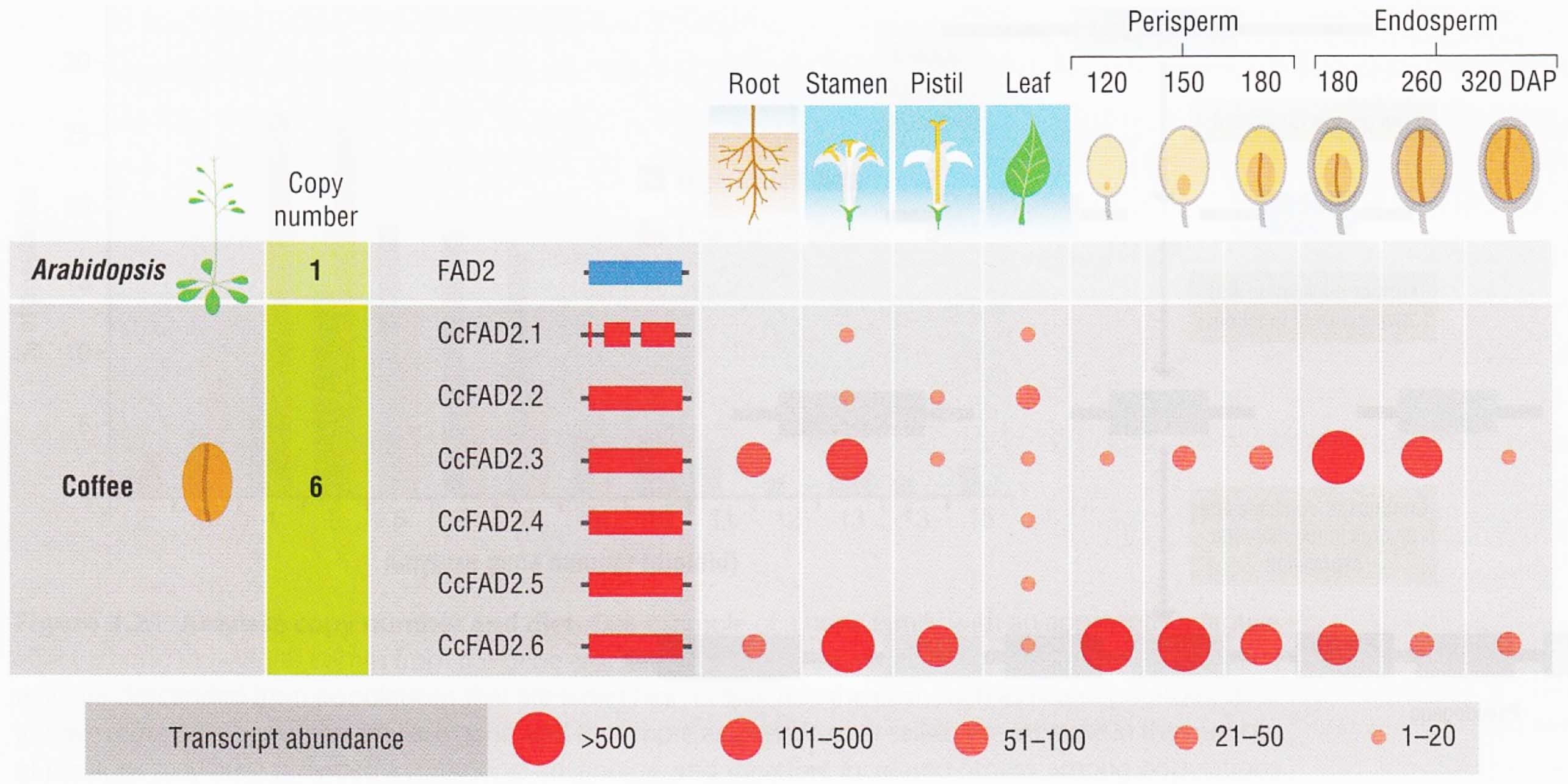
- AGene expression of different members of a gene family varying in different parts of the same plant
- BGene expression of different members of a gene family varying in different stages of the same plant's development
11(from end of L06 slides)
Variation in gene regulation = mutations that alter the amount of protein product, without a chance in the amino acid sequence. Basically a regulatory mutation. This can be in which of the following:- Apromoters
- Bintrons
- C5’-UTR
- D3’-UTR
- Eexons
- F5’-URT
- G3’-URT
12Blonde vs brown-hair is an example of variation in:
- Agene expression
- Baa sequence
- Cgene splicing
13(from end of L06 slides)
Define a gene family:- AA set of several similar genes, formed by duplication of a single original gene
- BA set of several copies of identical genes, responsible for varying levels of a single trait
14(from end of L06 slides)
What is a pseudogene?- AA non-functional copy of a gene including a regulatory mutation that prevents its expression
- BA non-functional copy of a gene including a premature stop codon within the gene that prevents its expression
15(from end of L06 slides)
What are the 2 most likely sources of phenotypic and genomic variation between individuals within a species? (…excluding environmental factors for some reason)- AVariation in amino acid sequences
- BRegulatory sequences
- CVariation in gene number
- DVariation in splicing
- ENovel genes
Informações
- Descrição
- L05 - Mutation and repair: - Errors and repair; - Types of mutations; - Consequences of mutation L06 - Mutation and phenotypic variation: - Phenotypic differences can be obtained by: * Adding sequences to the genome; * Changing sequences or gene expression; * Changing the environment
- Autor
- Michael Jardine
- Idioma
- English
- Visualizações
- 56
- Etiquetas
- Avaliação
- Ainda sem avaliações Avalie este quiz