
Quiz
qwertyuiopoiuytrewq V2
Perguntas do quiz (95)
1This molecule is a product from:
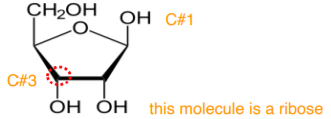
- Aglycolysis
- Bgluconeogenesis
- Chexose phosphate pathway
- Danaerobic fermentation
- Ebeta-oxidation
2The circled carbon position is:
- A2
- B3
- C4
- D5
- E1
3The molecule can be used to produce glucose in gluconeogenesis is:
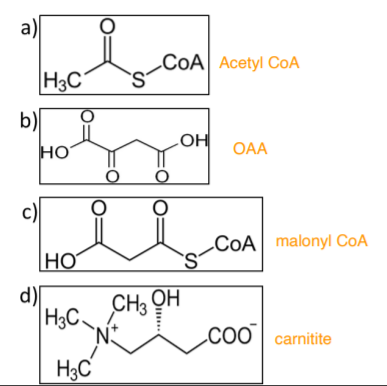
- AA
- BB
- CC
- DD
4The molecule which facilitates the transport of fatty acyl-CoA into the mitochondria is:
- AA
- BB
- CC
- DD
5The molecule produced by acetyl CoA carboxylase for fatty acid synthesis is:
- AA
- BB
- CC
- DD
6The one whose cell surface localization is enhanced by insulin signaling pathway is?
- AGlut1
- BGlut2
- CGlut3
- DGlut4
- ESGLT
7Which one is expressed abundantly on neuronal cells?
- AGlut1
- BGlut2
- CGlut3
- DGlut4
- ESGLT
8Which one has a large Km and expressed mainly in hepatocytes and pancreatic alpha/beta-cells?
- AGlut1
- BGlut2
- CGlut3
- DGlut4
- ESGLT
9Which one is abundantly expressed in red blood cells to ensure supply of glucose to erythrocytes?
- AGlut1
- BGlut2
- CGlut3
- DGlut4
- ESGLT
10In which compartment of cell does fatty acid synthesis occur?
- Asoluble cytoplasm (cytosol)
- Bendoplasmic reticulum (ER)
- CGolgi complex
- DMitochondrion (beta oxidation)
- Enucleus
11After entering cells, the immediate product of the first reaction catalyzed by hexokinase is
- Aglucose 6-phosphate
- BFructose 1-phosphate
- Cglucose 1-phosphate
- DFructose 6-phosphate
- Eglucose 3-phosphate
12The major pathway responsible for maintaining blood glucose level 48 hours after a regular meal
is:- Apentose phosphate pathway, non-oxidative phase
- Bglycolysis
- Cgluconeogenesis
- Dglycogenolysis
- Eglycogenesis
13At 50 hours after a regular meal, in addition to glucose, another major carbon fuel supplied by liver to neurons is:
- Aamino acids
- Bfatty acids
- Cfructose
- Dketone bodies
- Eacetyl CoA
14The most important rate limiting enzyme for glycolysis is
- Apyruvate kinase(also involved)
- Bglyceraldehyde-3 phosphate dehydrogenase
- CHexokinases(also invoved)
- Dphosphoglycerate kinase
- Ephosphofructose kinase 1(PFK1)
15General effects of glucagon (increase blood glucose level) on skeletal muscle include:
- Aglycolysis increases
- Bglycogen synthesis is stimulated
- Cglycogen synthase activity increases(sysnthsis more
glycogren) - Dglycated myoglobin increases (high levelm of glucose level)
- Eglycogen breakdown increases
16When glucagon (need more glucose) binds to cell surface receptors, which of the following response is unlikely?
- Ahepatocytes: glycogen breakdown will be stimulated
- Badipocytes: fatty acid synthesis will be
stimulated - Cadipocytes: fatty acid release will be stimulated
- Dhepatocytes: gluconeogenesis will be accelerated
- Eskeletal muscle: glycogen breakdown will be stimulated
17Under anaerobic condition, one of the products of the glycolysis, pyruvate, is converted to lactate. The biological importance of this reaction is:
- ATo increase lactate levels in cells in order to enhance the expression of lactate dehydrogenase.
- BLactate can reduce the intracellular pH, which helps the cell survival
- CThis process is directly coupled with substrate level phosphorylation, hence
making ATP - DTo oxidize NADH to NAD+, a required cofactor for glycolysis; so ATP production via
glycolysis can continue - EWithout oxygen, neurons use lactate as a fuel supply
18The pyruvate dehydrogenase complex is mainly located:
- Aon the mitochondrial inner membrane
- Bin the smooth ER
- Cin the peroxisomes
- Din the mitochondrial matrix
- Ein the cytosol
19Ketone bodies can be utilized by the following organs, except for:
- Abrain
- Bliver
- Cheart
- Dskeletal muscle
- Ekidney
20Deficiency of fatty acyl-CoA dehydrogenase may lead to:
- Ainfant sudden death
- Binfant diabetes
- Cmalabsorption of essential fatty acids
- Dstearate diarrhea
- Evitamin D insufficiency
21The following molecules are involved in fatty acid biosynthesis, except for:
- APyruvate carboxylase (coveert to oxdiatate)
- Bmalonyl CoA
- Cfatty acid synthase (FAS)
- Dacetyl CoA carboxylase
- Emalic enzyme (in the cytochrome, cutralic get cleaved,use4d NADP as a cofator)
22Pyruvate dehydrogenase complexes uses several cofactors which require the following vitamins as precursor, except for:
- Avitamin B3
- Bvitamin B5(co
A) - Cvitamin B2
- Dvitamin B1
- Evitamin B6
23When some amino acids are utilized as carbon sources, the first step is to remove the amino group by transamination with alpha-KG, which requires a cofactor derived from
- Avitamin
B6 - Bvitamin
B5 - Cvitamin
B7 - DVitamin
B1 - Evitamin
B3
- Avitamin
24The catabolism of odd-numbered fatty acids requires the following vitamins,
except for:- Avitamin
B2 - Bvitamin
B3 - Cvitamin
B12 - Dvitamin
B7 - Evitamin
B1
- Avitamin
25Which of the following statements regarding oxidation of fatty acids for ATP production is incorrect?
- AThe acyl-CoA needs translocation into mitochondrial matrix
- BThe first step is ATP-dependent activation of fatty acids to form acyl-CoA, using two
ATP equivalent per fatty acid molecule. - CThe translocation step needs carnitine and translocases, also known as
CAT, which is rate-limiting - DThe beta-oxidation enzymes are generally located in the mitochondrial matrix
- Eunsaturated fatty acids cannot be catabolized by beta-oxidation (CAN be)
26Glycogen storage disease may be caused by the deficiency of the following enzymes, except for:
- Aglyceraldehyde-P
dehydrogenase - Bglycogen synthase
- Clysosomal glycosidase
- Dbranching enzyme
- Eglycogen phosphorylase
- Aglyceraldehyde-P
27Pancreas (endocrine, extrocine) is important for human metabolism because it produces the following, except for:
- Aglucocorticoids
- Blipases
- Cglucagon
- Dprotease
- Einsulin
28The rate limiting step in fatty acid biosynthesis is:
- Amalonyl CoA association with fatty acid synthase (FAS)
- Bacetyl CoA carboxylation by ACC to form malonyl CoA
- Ccitrate break down by citrate lyase to form acetyl CoA and OAA in the cytosol
- Ddehydrogenation of malate in the cytosol by malic enzyme
- Ethe final step, release of palmitate from FAS
29About glycogenin expression and subcellular localization the right combination is:
- Amyocyte: endoplasmic reticulum
- Bcardiac myocyte: peroxisome
- Chepatocyte: cytosol
- Dadipocyte: mitochondrion
- Emyocyte: mitochondrion(of myocyte and cytosol then this answer could be
right)
30Which of the following enzymes has the least influence on the speed of glycolytic pathway?
- Aphosphoglycerate mutase
- Bpyruvate kinase
- Chexose kinase
- Dphosphofructose kinase 1
- Ephosphofructose kinase 2
31About AMPK, which one of the following statements is incorrect?
- AExercise may activate its activity in myocytes (muscle cells)
- BIt synergizes with insulin, and represses the expression of PEPCK in hepatocyte
- CIt is an intracellular energy sensor regulating the energy metabolism at the cellular level
- DIt is a molecule binds and synergizes with insulin to promote glycolysis in multiple
tissues (binds is wrongs) - EIt is a protein kinase activated by increased level of AMP in cells
32The rate of pentose phosphate pathway is limited by G6PD activity, which is allosterically inhibited by:
- ADecrease of intracellular NADPH levels
- BDecrease of mitochondrial NADPH levels
- CIncrease of ribose-phosphate levels
- DIncrease of intracellular NADPH levels
- EDecrease of ribose phosphate levels
33Reduced glutathione (GSH) level has been reported to be critical for the recovery of Covid-19 patients. Low intracellular levels of NADPH may cause:
- Ahigh level of GSH, high level of
GSSG - Birrelevant to the levels of GSH
and GSSG - Chigh level of GSH, low level of
GSSG - Dlow level of GSH, high level of
GSSG - Elow level of GSH, low level of
GSSG
- Ahigh level of GSH, high level of
34Which of the following statements about lipid digestion and absorption is NOT correct?
- Achylomicron carries a protein called Apo protein B100 on its surface
- Bchylomicrons will be transported to the circulation via lymph duct
- Cmalabsorption causes lack of essential fatty acids and lipid soluble vitamins
- Ddigestion needs lipases secreted by pancreas and bile juice from gallbladder
- Eabsorbed lipids will be incorporated into chylomicrons, which is released by intestinal mucosa
35During starvation, AMP increase in hepatocytes indicates ATP depletion which stimulates AMPK activity. A well-known activity of AMPK is to phosphorylate acetyl CoA carboxylase.(inhibate fatty acid systhesis) This phosphorylation will:
- Ablock glycolysis
- Bdecrease fatty acid synthesis
- Cinhibit TCA cycle
- Dstimulate acetyl CoA carboxylase activity
- EIncrease fatty acid synthesis
36After an Italian spaghetti meal an increase of blood glucose levels to 12 mM will significantly increase the activity of:
- AGlut3
- BGlut1 and Glut3
- CGlut1
- DGlut1, Glut 2 and Glut3
- EGlut2
37Fructose 2, 6-bisphosphate is:
- AAn intermediate product of catabolism of fructose to generate ATP
- BAn intermediate metabolite in fatty acid synthesis
- CAn intermediate product of glycolysis which promote the release of O2
- DA waste byproduct of the glycolytic pathway
- EA regulatory molecule that allosterically stimulates PFK1 activity and the glycolytic pathway
38Completely oxidation of one mole of hexanoyl CoA (an 6C, fully saturated fatty acyl CoA) in mitochondrion maximally may generate:
- A8 mole ATP
- B38 mole ATP
- C42 mole
ATP - D30 mole ATP
- E12 mole ATP
39Historically, which term was used to indicate the glycolytic processes in normal eukaryotic cells?
- AThe Pasteur Effect
- BThe Embden–Meyerhof–Parnas (EMP
Pathway) - CThe Warburg Effect
- DThe Krebs Effect
- EThe Entner–Doudoroff Pathway (ED
Pathway)
40For fatty acid biosynthesis, each round contains four reactions. Which of the following accurately describes the four reactions in the correct order?
- ACondensation-reduction-hydration-reduction
- BCondensation-dehydrogenation-reduction, reduction
- CCondensation-reduction-dehydration-reduction
- DCondensation-reduction-dehydrogenation-reduction
- EDehydrogenation, condensation, dehydration,
reduction
41In pentose phosphate pathway, after two steps of oxidation, the end products
from one molecule of G6P will be:- Aone NADH, one NADPH and one
ribose phosphate - Btwo NADH and one pentose phosphate
- Cone NADPH and one pentose phosphate
- Dtwo NADPH and two pentose phosphate
- Etwo NADPH and one pentose phosphate
- Aone NADH, one NADPH and one
42In a lipogenic liver, the beta oxidation pathway is repressed mainly by:
- AIncreased level of malonyl CoA, which represses CAT activity, thus slowing down the translocation of acyl-CoA to mitochondria
- BIncreased glucagon level, thus promoting the utilization of glucose, repressing utilization of fatty acids
- CIncrease of Ca++ in mitochondrial matrix, which speed up TCA cycle and increased ATP inhibits beta-oxidation
- DLack of ATP, fatty acids cannot be activated
- ELipogenesis depletes ATP, which activates AMPK and inhibits energy consumption, so cell does not need a fast beta oxidation
43Generally, the effects of epinephrine (adrenaline) (make atp in skeletal muscle) on hepatocytes (increase glucose level to sketel mucscle) may include:
- Ainhibiting glycogen breakdown
- Benhancing glycogen synthase activity
- Cinhibiting glycolysis
- Dstimulating glycogen synthesis
- Einhibiting glucogenolysis
44Which of the following correctly describes the sequence of events of beta-oxidation of fatty acyl CoA in mitochondria?
- Adehydrogenation-dehydrogenation-hydration-cleavage
- Bdehydrogenation-hydration-dehydrogenation-cleavage
- Cdehydrogenation-hydration-dehydration -cleavage
- Ddehydrogenation-dehydration-dehydrogenation-cleavage
- Ehydration-dehydrogenation-dehydrogenation-cleavage
45In gluconeogenesis, how many moles of ATP are required to synthesize one mole glucose from 2 moles of OAA?
- A12
- B8
- C4
- D2
- E6
46The mobilization and utilization of endogenous TAG may not include:
- Abeta-oxidation, resulting in cleavage by thiolase to form acetyl CoA in mitochondrion
- BATP-dependent activation of free fatty acid to form acyl-CoA in the cytosol
- Cinsulin signaling activates hormone sensitive lipase on white adipose tissue (adipocytes), which releases fatty acids
- Dtransport free fatty acids by the circulatory system to cells which need fatty acids as fuel
- Etranslocation of acyl-CoA into mitochondria, a carnitine-dependent process
47Which of the following carbon sources cannot be used in gluconeogenesis?
- AOAA from aspartate catabolism
- Briboses from pentose pathway
- Cacetyl CoA from beta oxidation
- Dglycerol-3 phosphate released from breakdown of
phospholipids - Ealpha-ketoglutarate from glutamate and glutamine catabolism
48About insulin, which of the following statement is NOT correct?
- Aits target organs/tissues include liver, muscle and adipose
- Bits release is triggered by increased ATP levels in β cells
- Cit promotes glycogen phosphorolysis and glycolysis to generate large amount of ATP in muscle (not promote glycogen phosphorolysis)
- Dit may regulate the expression of metabolic enzymes.
- Eit is produced by pancreatic β cells
49Insulin stimulates PI3K-PKB pathway, which may lead to:
- Aconverting phosphorylated glucose to glucose
- Bconverting glycogen phosphorylase
a to phosphorylase b - Cconverting glycogen synthase a to glycogen
synthase b - Dincreasing internalized Glut4
- Econverting glycogen phosphorylase b to phosphorylase a
50Some steps in the glycolytic pathway cannot be simply reversed in gluconeogenesis, thus need bypassing by different enzymes; these steps include the following, except for:
- Ahexokinase-catalyzed formation of G6P
- Bpyruvate kinase-catalyzed formation of pyruvate
- CPFK1-catalyzed formation of F1,6BP
- DPhosphoenolpyruvate to pyruvate, accompanied by substrate level phosphorylation
- EF1,6BP broken by aldolase
51About ketone bodies, which of the following statement is not correct?
- Aare produced by hepatocytes
- Bcan be used by all tissues, such as neurons and hepatocytes
- Cis an alternative fuel, particularly important for brain
- Dare produced from acetyl CoA
- Eoverproduction of ketone bodies may occur in diabetic patients, even with hyperglycemia
52Which process is NOT considered a general function of the pentose phosphate pathway?
- AThe production of pentose phosphate for biosynthesis of some cofactors
- Bthe production of NADPH to help prevent oxidative stress in erythrocytes
- CThe transfer of electrons to the electron transport chain for ATP production
- Dthe production of pentoses necessary for nucleotide synthesis
- Ethe production of NADPH for reductive biosynthesis in adipose cells
53In humans, the Cori cycle is an example of metabolic coordination among active skeletal muscle, the circulatory system and liver. Which two metabolic pathways are involved in this cycle?
- Agluconeogenesis in muscle and glycogenolysis in liver
- Bglycolysis in muscle and gluconeogenesis in liver
- Cglycolysis in muscle and the pentose phosphate
pathway in liver - Dpentose phosphate pathway in muscle and
gluconeogenesis in liver - Ebeta-oxidation in muscle and ketogenesis in liver
54In some cell types, insulin signaling will triggers the glucose transporter 4 translocating to the cell membrane, hence increasing the transport of glucose into cells. Which cell types respond to insulin in this manner?
- Ahepatocytes and skeletal myocytes
- Berythrocytes and neurons
- Cerythrocytes and adipocytes
- Dskeletal myocytes and adipocytes
- Eneurons and the hepatocytes
55Under anaerobic conditions, yeast performs two additional steps after glycolysis; which convert pyruvate to ethanol. What is the purpose served by these two additional steps in the metabolism of yeast cells?
- AThey know our students like beer.
- BThey are required to complete the oxidation of glucose and maximizing ATP production
- CThey are required to re-oxidize limited amounts of NADH to NAD+ and decrease pyruvate level, thus sustaining continuous glycolysis to ensure ATP production
- DThey are required to remove pyruvate, ensuring ATP production.
- EThey are required to oxidize NADH to generate ATP
56Which of the following carbon sources cannot be used in gluconeogenesis in human cells?
- Asuccinyl-CoA
- Baspartate
- Cpalmitate
- Dglutamate
- Ealanine
57Which statement is accurate, regarding fatty acids stored in adipocytes?
- AThey are part of the cell components, and cannot be oxidized for energy in this tissue.
- BThey are primarily bound to albumin and stored in lipid droplets.
- CThere is a constant movement of fatty acids in and out of adipose tissues, which is independent of hormone signals.
- DUpon glucagon signaling, fatty acids are converted into ketone bodies in adipocytes
- EIn adipocytes, fatty acids up-taken from the bloodstream are assembled into triglycerides by directly esterifying to glycerol.
58Which statement is INCORRECT regarding the transport of long-chained fatty acids into the mitochondrial matrix?
- AThe cytosolic and mitochondrial matrix pools of coenzyme A are separated by biomembranes
- BIt is not a rate-limiting step in the oxidation of these fatty acids.
- COnce these fatty acyl molecules are in the matrix, carnitine can be transported out of mitochondria.
- DIt is inhibited by the increase of malonyl-CoA levels
- EPatients with a carnitine deficiency are likely to have impaired betaoxidation of fatty acids
59For catabolism of the amino acids with hydroxyl groups, the amino groups are usually removed by:
- Adecarboxylation initiated deaminination
- Bhydrolysis to remove α-amino group
- Ctransamination to remove α-amino
group - Ddehydration initiated deamination
- Eoxidative deamination
60Pentose phosphate pathway has two phases: the oxidative phase and the non-oxidative phase.
- ATrue
- BFalse
61PLP is a cofactor required for glycogen phosphorylase activity, which is derived from vitamin B6.
- ATrue
- BFalse
62Human fatty acid synthase is an enzyme complex of 7 subunits, each with a specialized activity. ( for human we have 1 only)
- ATrue
- BFalse
63beta-oxidation of fatty acids also occurs in peroxisomes, which similarly has
ETC to make ATP. N(peroxisome do not have ETC)- ATrue
- BFalse
64The oxidized glutathione protects enzymes from oxidative damage. (used
reduced)- ATrue
- BFalse
65G6P phosphatase is an enzyme specifically expressed in hepatocytes.
- ATrue
- BFalse
66Completely oxidation of one mole of hexanoyl CoA (an 6C, fully saturated fatty acyl CoA) in mitochondrion maximally may generate:
- A30 mole ATP
- B32 mole ATP
- C42 mole ATP
- D48 mole ATP
- E38 mole ATP
67Each round of beta-oxidation has 4 steps. The correct order of the four steps are:
- Adehydrogenation to generate FADH2, Reduction, dehydrogenation to generate NADH, cleavage to for to acetyl CoA and a new acyl CoA.
- Bdehydrogenation to generate FADH2, Hydration, dehydrogenation to generate NADH, cleavage to for to acetyl CoA and a new acyl CoA.
- Cdehydrogenation to generate NADH, Hydration, dehydrogenation to generate FADH2, cleavage to for to acetyl CoA and a new acyl CoA.
- Ddehydrogenation to generate FADH2, dehydration, dehydrogenation to generate NADH, cleavage to for to acetyl CoA and a new acyl CoA.
68For beta oxidation of fatty acids as energy, the rate limiting step is:
- Atransportation into mitochondria
- Bbiosynthesis of fatty acyl CoA in the mitochondria
- CActivation by ATP
- Dbiosynthesis of fatty acyl-CoA in the cytosol
- EFatty acyl CoA dehydrogenation
69Regarding propionyl-CoA metabolism, which of the following statement is incorrect?
- APropionyl-CoA is a rare metabolite, which cannot be further catabolized by human cells, thus being disposed by urine
- Bfurther converting methylmalonyl-Coa to succinyl-CoA depends on vitamin B12
- CPropionyl-CoA may arise from diet, or catabolism of fatty acids and some amino acids.
- DPropionyl-CoA (3C) can be converted to Methylmainyl-CoA (4C) after a carboxylation reaction facilitated by vitamin B7
- EThe structure of vitamin B12 is very complicate and contains cobalt.
70In glycolysis pathway, the energy released during the breakdown of glucose to pyruvate is harvested or stored by:
- AATP and NADH
- BNADH
- CFADH2
- Dphosphoenolpyruvate
71Biochemical features of glycolysis include the following, except for:
- AHigh fuel efficiency
- Boxygen-independent
- Celectron-transport chain independent
- Dmitochondrion-independent
- ERapid production of ATP
72About the overall steps of digestion and absorbtion of dietary fatty acids, which of the following is correct?
- AAfter absorption to mucosa cells, free fatty acids are used to re-synthesize TAG, which is then packed into chylomicron.
- Bchylomicron is transported to liver via portal vein, an via hepatic vein to reach circulation
- CFat digested to free fatty acids, which are absorbed into mucosa cells and released into blood circulation directly.
- Dchylomicron is purely compose of lipids, without protein components.
73 In amino acid catabolism, amino-transferases remove the alpha-amino groups in transamination reactions. This type of enzymes requires an important cofactor derived from:
- AB3
- BB2
- CB5
- DB6
- EB12
74Pyruvate dehydrogenase complex contains 3 enzymatic activities, sequentially named E1,E2 and E3.
Which of the following description of the E1-E3 is correct?- AE1: pyruvate dehydrogenase; E1: pyruvate transacetylase; E3: dihydrolipoyl dehydrogenase
- BE1: pyruvate decarboxylase; E2: dihydrolipoyl transacetylase; E3: dihydrolipoyl dehydrogenase
- CE1: pyruvate dehydrogenase; E2: dihydrolipoyl transacetylase; E3: dihydrolipoyl dehydrogenase
- DE1: pyruvate dehydrogenase; E2: dihydrolipoyl dehydrogenase; E3: dihydrolipoyl transacetylase
- EE1: dihydrolipoyl dehydrogenase; E2: dihydrolipoyl transacetylase; E3: pyruvate dehydrogenase
75Historically, which term was used to indicate the glycolytic processes in normal eukaryotic cells?
- AThe Embden–Meyerhof–Parnas (EMP Pathway)
- BThe Warburg Effect
- CThe Pasteur Effect
- DThe Krebs Effect
- EThe Entner-Doudoroff Pathway (ED Pathway)
76After uptaking into cardiomyocyte, a 18C-fatty acid will be likely utilized in the following order:
- ASynthesized into fatty acyl CoA, transported into, Activation by ATP, beta-oxidation to generate Acetyl coA
- BActivation by ATP in cytosol, converting to Fatty acyl CoA, transported into mitochondrion, beta-oxidation to generate Acetyl coA
- CActivation by ATP in cytosol, converting to Fatty acyl CoA, beta-oxidation to generate Acetyl coA, transporting acetyl coA into mitochondrion
- DActivation by ATP in cytosol, transported into mitochondrion, converting to Fatty acyl CoA, beta-oxidation to generate Acetyl coA
- ETransported into mitochondrion, activation by ATP, converting to fatty acyl CoA, beta-oxidation to generate Acetyl coA
77For catabolism of the amino acids with hydroxyl groups, the amino groups are usually removed by:
- Adehydration initiated deamination
- Btransamination to remove a-amino group
- Chydrolysis to remove a-amino group
- Ddecarboxylation initiated deaminination
- Eoxidative deamination
78The catabolism of odd-numbered fatty acids requires the following vitamins, except for:
- AB1
- BB2
- CB3
- DB7
- EB12
79About anaerobic glycolysis, which of the following statement is incorrect?
- AIn human cells, anaerobic glycolysis generates alcohol, which later on degraded by alcohol dehydrogenase to acetaldehyde upon reoxygenation.
- BAnaerobic glycolysis in human cells generates lactate, not alcohol
- CAnaerobic glycolysis to produce ATP is developed earlier than oxidative phosphorylation method evolutionarily.
- Din some bacteria, anaerobic glycolysis generates lactate to recover NAD+ (oxidized)
- EIn yeast, anaerobic glycolysis generates alcohol to regenerated NAD+ (oxidized)
80The most important regulatory enzyme of glycolytic pathway is:
- Aphosphofructokinase-1 (PFK1), which converts F6P to F1,6BP.
- Bphosphoglycerate kinase, which catalyzes the first production of ATP
- CGlyceraldehyde-3-phospate dehydrogenase, which catalyzes the generation of NADH
- DAldolase A, which breaks the 6C hexose-phosphate to 3C triose phosphate
- Epyruvate kinase, which chatalyzes the 2nd production of ATP
81In gluconeogenesis, the rate limiting enzymes are:
- Aphosphofructose kinase 1
- BPEP carboxykinase
- Cpyruvate kinase
- Dpyruvate carboxylase
- EF1,6 bisphosphatase
82 Fatty acid biosynthesis requires high concentrations of NADPH. Which compartment of human cell does fatty acid synthesis occur?
- AGolgi complex
- Bendoplasmic reticulum (ER)
- Cmitochondrion
- Dsoluble cytoplasm (cytosol)
- Enucleus
83The rate limiting step of fatty acid synthesis is:
- Acondensation of malony-CoA with growing fatty acyl chain
- Bbeta oxidation to generate acetyl CoA as substrates
- Ctransfer citrate out of mitochondria
- Drecognizing and binding malonyl CoA by Acyl carrier protein (ACP)
- Ecarboxylation of acetyl CoA to form malonyl CoA
84Glycogen storage disease may be caused by the deficiency of the following enzymes, except for:
- Alysosomal glycosidase
- Bbranching enzyme
- Cglycogen synthase
- Dglycogen phosphorylase
- Eglycerol 3-P dehydrogenase
85Deficiency of a fatty acyl-CoA dehydrogenase may lead to:
- Ainfant sudden death
- Bvitamin D insufficiency
- Cmalabsorption of essential fatty acids
- Dstearate diarrhea
- Einfant diabetes
86About glycogenin expression and subcellular localization the right combination is:
- Amyocyte: mitochondrion
- Bcardiac myocyte: peroxisome
- Chepatocyte: mitochondrion
- Dhepatocyte: cytosol
- Emyocyte: endoplasmic reticulum
87Completely oxidizing a G6P to 6CO2 via the pentose pathway may result in:
- A4 NADPH
- B8 NADPH
- C6 NADPH
- D12 NADPH
- E2 NADPH
88For fatty acid biosynthesis, each round contains four reactions. Which of the following correctly describes the four reactions in the correct sequence?
- ACondensation-reduction-dehydrogenation-reduction
- BDehydrogenation, condensation, dehydration, reduction
- CCondensation-dehydrogenation-reduction, reduction
- DCondensation-reduction-dehydration-reduction
- ECondensation-reduction-hydration-reduction
89The major products of pentose pathway with important biological roles is/are:
- ANADPH
- Bpentose phosphate
- Cerythrose 4-phosphate
- DNADPH and pentose phosphate
- ENADPH, pentose phophate and erythrose 4-phosphate
901. The single most important enzyme involved in glycogen synthesis is:
- Aphosphoglucomutase
- BGlycogen synthetase
- CGlycogen synthase
- DUDP-Sugar Pyrophosphorylase
- Eglycogen branching enzyme
91Hepatocytes synthesize fatty acids, and most of the fatty acids are esterified into TAG, which will be:
- Areleased to circulation directly and carried by plasma proteins
- Bcarried by a lipoprotein called VLDL through the circulation
- Ccarried by a lipoprotein called LDL through the circulation
- Dcarried by either VLDL or chylomicron through the circulation
- Ecarried by a lipoprotien called chylomicron through the circulation
92In most cells, reduced glutathione is used to protect cells from damage caused by reactive oxygen species. The most important metabolic pathway that maintains the intracellular levels of reduced glutathione is:
- Apentose pathway
- Bglycolytic pathway
- Ckrebs cycle
- Dgluconeogenesis
- Efatty acid beta oxidation
93After biosynthesis, palmitate can be elongated to stearate in either mitochondria or endoplasmic reticulum. Both palmitate or stearate can be modified by desaturation at delta9, which is catalyzed by an enzyme located at:
- Amitochondria
- Brough endoplasmic reticulum
- Ccytosol
- Dsmooth endoplasmic reticulum
- Ecell surface
94Glycolysis contains 10 steps, among which 7 steps are reversible and 3 steps are not reversible in glyconeogenesis. The three non-reversible steps are:
- AA. hexokinase catalyzed Glucose to G6P
- BB. phosphofructokinase (PFK) catalyzed F6P to F1, 6BP
- CC. Pyruvate kinase catalyzed PEP to enol pyruvate
- DA, B, and C
- EA and B
95The most important substrate/s for gluconeogenesis upon starvation is/are:
- Acarbon skeletons from catabolism of most amino acids
- Bfatty acids from TAG break down
- Cpropionyl-CoA from catabolism of odd-numbered fatty acids
- Dglycerol from TAG breakdown
- Eacetyl CoA from fatty acid beta-oxidation
Informações
- Descrição
- 123
- Autor
- Joseph Jung
- Idioma
- English
- Visualizações
- 28
- Etiquetas
- Avaliação
- Ainda sem avaliações Avalie este quiz