
Quiz
C1 Quiz
Este quiz tem tipos de pergunta que abrem no player de sempre.
Perguntas do quiz (14)
1Label the pie chart with the names of each element found in air.
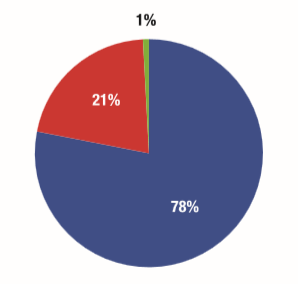
- ANitrogen
- BOxygen
- CArgon and other gases
2Which gases do today's scientists think the early atmosphere of the Earth was made up of?
- Acarbon dioxide
- Bwater vapour
- Cammonia
- Dmethane
3Four billion years ago the Earth''s atmosphere was hot and much thicker than it is now. Gradually the temperature fell and most of the water vapour condensed, falling as rain and forming the oceans. About 3 billion years ago life began in the form of tiny bacteria-like creatures. They began to use the carbon dioxide from the air and light from the Sun to grow. This process of photosynthesis removed CO2 from the air and produced oxygen as a waste product. Gradually the amount of oxygen in the air increased and animals evolved that were able to breathe the oxygen.
- AVerdadeiro
- BFalso
4Which processes removed carbon dioxide from the air to leave the composition as it is today?
- APhotosynthesis
- BRespiration
- CDissolving into oceans
5Particulates are tiny bits of solid that float in the air.
Choose a natural source of particulates.- Avolcanoes
- Bdeforestation
- Cburning fossil fuels
6What is a pollutant?
- AA substance that is harmful to health or the environment and which is produced by human activity.
- BThe end result of a chemical reaction.
7Which of the following shows an example of a positive correlation?
- AWhere the amount of pollutants in the air from burning fossil fuels is high there are more deaths from asthma, and heart and lung diseases.
- BThe higher the levels of smog, the lower the air quality.
8Choose the correct equation for the combustion of a hydrocarbon in air.
- Ahydrocarbon + oxygen -> carbon dioxide + water (+energy)
- Bhydrocarbon + oxygen -> carbon + water (+ energy)
- Chydrocarbon + oxygen -> carbon dioxide (+energy)
9An oxidation reaction is a reaction where oxygen is lost.
- AVerdadeiro
- BFalso
10Mass is never lost or gained in chemical reactions. We say that mass is always conserved. In other words, the total mass at the end of the reaction is equal to the total mass of the reactants at the beginning.
- AVerdadeiro
- BFalso
11Scientists have found that nitrogen monoxide is formed is [blank_start]furnaces[blank_end] and engines when nitrogen and oxygen in the air are heated to about [blank_start]1000[blank_end] degrees celsius. When the nitrogen [blank_start]monoxide[blank_end] is released into the atmosphere it cools down then reacts with more [blank_start]oxygen[blank_end] to form nitrogen dioxide.
N2 + O2 -> 2[blank_start]NO[blank_end]
2NO + [blank_start]O[blank_end]2 -> 2NO2- A1000
- Bfurnaces
- Cmonoxide
- Doxygen
- ENO
- FO
12Which two gases react with oxygen and water in the atmosphere to produce acid rain?
- Asulphur dioxide
- Bnitrogen dioxide
- Ccarbon monoxide
13There are two methods of [blank_start]flue[blank_end] gas desulphurisation. The most common method uses [blank_start]calcium[blank_end] oxide (lime) which is obtained by heating [blank_start]limestone[blank_end]. The lime is mixed with water to make an alkaline [blank_start]slurry[blank_end]. Sulphur dioxide is washed or '[blank_start]scrubbed[blank_end]' out of the flue gases with water and reacts with the lime. The compound formed is reacted with [blank_start]oxygen[blank_end] in the air to make calcium sulphate, which can be sold to make plaster for walls, helping to pay for the process.
The second method uses seawater (naturally slightly alkaline) to react with the sulphur dioxide and act as a [blank_start]coolant[blank_end]. The product is [blank_start]oxidised[blank_end], giving off carbon dioxide. A [blank_start]large[blank_end] volume of seawater has to be used for this process, however.- Aflue
- Bcalcium
- Climestone
- Dslurry
- Escrubbed
- Foxygen
- Gcoolant
- Hoxidised
- Ilarge
14What is a catalytic converter?
- AA platinum catalyst that makes pollutant gases react with each other.
- BA conversion table with the rates of different catalysed reactions.
Informações
- Descrição
- GCSE Chemistry Quiz sobre C1 Quiz, criado por Leah Firmstone em 29-10-2015.
- Autor
- Leah Firmstone
- Idioma
- English
- Visualizações
- 1.296
- Etiquetas
- Avaliação
- 3,9 de 5 · 16 avaliações Avalie este quiz