
Quiz
Body Systems Revision
Este quiz tem tipos de pergunta que abrem no player de sempre.
Perguntas do quiz (13)
1All living things are composed of basic units called [blank_start]__________[blank_end]. Groups of similar cells form [blank_start]_____________[blank_end]. Groups of tissues working together to perform a particular function are called [blank_start]____________[blank_end]. Groups of organs that work together are called organ [blank_start]____________[blank_end].
Every cell in the body carries out a process called [blank_start]__________________.[blank_end] This process needs [blank_start]_____________[blank_end] and sugar to produce [blank_start]________[blank_end] and [blank_start]_________ __________[blank_end].- Aparticles
- Bkleenex
- Corigins
- Dgroups
- Eanaerobic respiration
- Foxygen (O)
- Gmoney
- Hcarbon dioxide (2nd)
- Icells
- Jtissues
- Korgans
- Lsystems
- Maerobic respiration
- Nfire
- OH2O (1st)
- Pcarbonic acid
2A correct definition and example of mechanical digestion is...
- ADigestion that involves physically breaking down food. Examples are the stomach gurgling and the vili moving.
- BDigestion that involves acids and enzymes to break down food. Examples are peristalsis and the lower intestine churning.
- CDigestion that involves physically breaking down food. Examples are chewing food (Mastication) and the stomach churning.
- DDigestion that involves acids and enzymes to break down food. Examples are chewing food and the stomach churning.
3A correct definition and example of chemical digestion is...
- ADigestion that involves chemically breaking down food. Examples are enzymes in the saliva in your mouth and enzymes and acid in your stomach.
- BDigestion that involves chemically breaking down food. Examples are enzymes in food which are released after you break food particles so that food digests itself and leaves all the nutrients for your body.
- CDigestion that involves nuclear fusion to split the atoms of your food. Examples are CERN and other LHC facilities.
- DDigestion that involves physically breaking down food. Examples are chewing food and the stomach churning.
4The main acid found in the stomach is...
- AHydro-Carbon Acid
- BHCl (That is an L btw)
- CHC
- DHydro-Calcic Acid
5Stomach walls are so [blank_start]thick[blank_end] so that acid cannot [blank_start]build-up[blank_end]
- Athick
- Bthin
- Cmedium-sized
- Dred
- Ebuild-up
- Fmake it blue
- Geat away the flesh
- Hcreate new flesh
6The correct order that food goes through in your digestive system is:
[blank_start]Mouth[blank_end], [blank_start]Esophagus[blank_end], [blank_start]Stomach[blank_end], [blank_start]Small Intestine[blank_end], [blank_start]Large Intestine[blank_end], [blank_start]Rectum[blank_end] and [blank_start]Anus[blank_end]- AMouth
- BMooth
- CEsophagus
- DTrachea
- EStomach
- FLiver
- GSmall Intestine
- HSmall Internship
- ILarge Intestein
- JLarge Internship
- KColon
- LRectum
- MWrekt'Em
- NAnus
- OAnulus
7Which of the following are parts of the circulatory system?
- AHeart
- BLungs
- CBrain
- DArtyries
- EArteries
- FCapillaries
- GVains
- HVeins
- ICapilleries
- JBlood
8Label the parts of the heart correctly
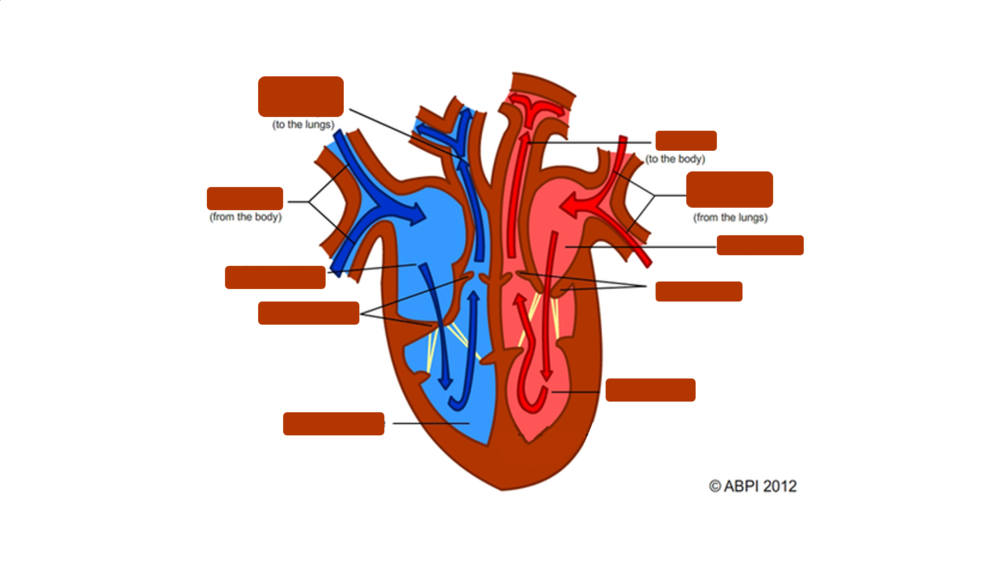
- AAorta Vein
- BAorta
- CPulmonary Veins
- DPulmonary Aorta
- ELeft Atrium
- FRight Attic
- GLeft Heart Valves
- HLeft Venules
- ILeft Ventricle
- JLeft Vesticle
- KRight Ventricle
- LRight Vesticle
- MRight Heart Valves
- NRight Heat Valves
- ORight Arteum
- PRight Atrium
- QVena Cava
- RVenus Cava
- SPulmonary Artery
- TPulmonary Arteriole
9There are five types of blood vessels in our bodies: arteries, [blank_start]arterioles[blank_end], venules, [blank_start]veins[blank_end] and [blank_start]capillaries[blank_end].
Arteries and arterioles carry blood from the heart to the [blank_start]body[blank_end]. They carry [blank_start]oxygenated[blank_end] blood (except the pulmonary artery). They have thick, muscular walls (Lesser so of the arterioles) that are able to withstand [blank_start]high[blank_end] pressures. Veins and [blank_start]venules[blank_end] carry blood from the [blank_start]body[blank_end] back to the heart. They carry [blank_start]deoxygenated[blank_end] blood (except the pulmonary veins). Veins and venules have [blank_start]thin[blank_end] walls, and valves to stop blood flowing backwards. Capillaries are tiny blood vessels. They have the thinnest [blank_start]walls[blank_end] (1 cell thick), that allow [blank_start]oxygen[blank_end] and carbon dioxide to pass into and out of the bloodstream.- Aarterioles
- Bveins
- Ccapillaries
- Dbody
- Eoxygenated
- Fhigh
- Gvenules
- Hbody
- Ideoxygenated
- Jthin
- Koxygen
- Lwalls
10Correctly label the parts of the respiratory system
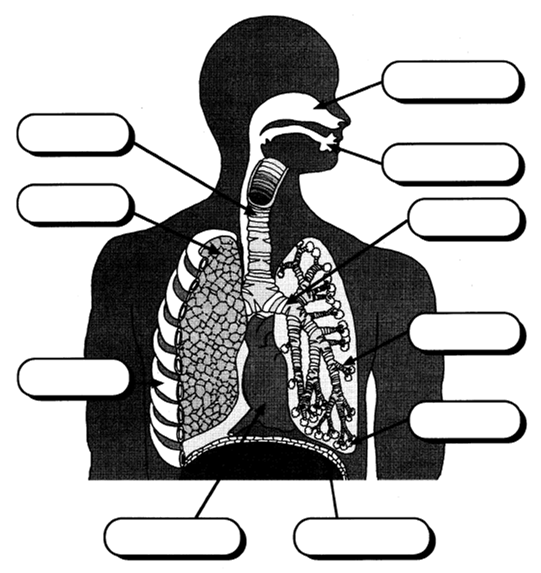
- ANasal Cavity
- BSinusitis
- COesophagus
- DTrachea
- EMouth
- FTeeth
- GBronchi
- HBroncolli
- IHeart (Very faint, bottom left)
- JDiaphragm
- KDiazepam
- LRibs
- MLeg Piece
- NLungs
- OLunges
- PBronchioles
- QBronchiless
- RAlveoli
- SOlivoila
11Excretion is the process of removing unwanted [blank_start]cellular[blank_end] waste from the body. The main organs of the excretory system are the [blank_start]kidneys[blank_end]. These organs filter wastes like urea and excess [blank_start]salts[blank_end] and water from the body. This waste then travels down the [blank_start]ureter[blank_end] to the bladder. When the bladder is full, urine is expelled from the body via the [blank_start]urethra[blank_end].
- A3G
- Bmetabolic
- Csalty
- Dunmetabolised
- Egall bladder
- Fvenules
- Gureters
- Hkidneys
- Isalts
- Jurine
- Kammonia
- Lsugars
- Mkidney stones
- Ndorsal aorta
- Ourethra
- Pureter
- Qbladder
- Rurethra
- Svena cava
- Tureter
12The main function of the human urinary system is to remove urine (OMG I didn't know that!). Urine contains excess [blank_start]salts[blank_end], excessive [blank_start]water[blank_end] and [blank_start]nitrogenous[blank_end] wastes which include urea which is a by product of breaking down [blank_start]ammonia[blank_end],
- Amoney
- Bsalts
- Cstones
- Dproteins
- Ewater
- Fsugars
- Ghormones
- Hblood
- Initrogen-based
- Jhomogenous
- Knitrogenius
- Lcarbon-based
- Mammonia
- NM&Ms
- Oamenities
- PAmsterdam
13Correctly label the urinary system
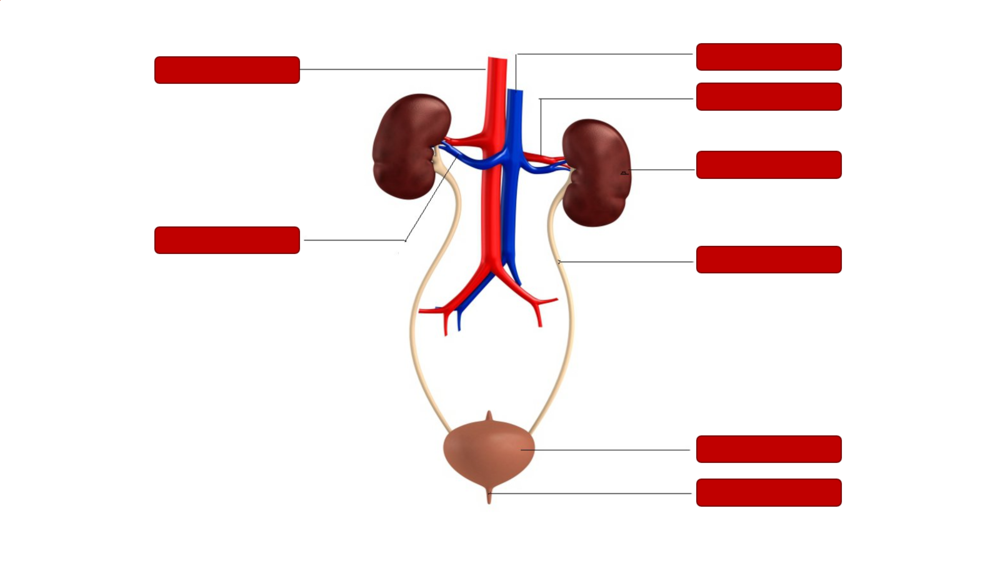
- Akidney
- Bkidnays
- Curethra
- Durethre
- Eurinary bladder
- Furic bladder
- Gureater
- Hureter
- Irenal veins
- Jrenal veens
- Kabdominal aorta
- Labdominion aorta
- Minferior vena cava
- Ninterior vena cava
- Orenal arteries
- Prenal artries
Informações
- Descrição
- Revision of body systems work.
- Autor
- Usuário eliminado
- Idioma
- English
- Visualizações
- 21
- Etiquetas