
Quiz
NM1 Exam 2
Este quiz tem tipos de pergunta que abrem no player de sempre.
Perguntas do quiz (53)
1What angle should the ankle be at in initial contact?
- A0-Degrees
- B30-Degrees
- C45-Degrees
- D90-Degrees
2If an unexpected obstacle popped up out of the floor what type of postural control would a patient use?
- AAdaptive
- BAnticipatory
- CIntrinsic
- DExtrinsic
3Which strategy occurs in response to a small perturbation on a firm support surface?
- AAnkle Strategy
- BHip Strategy
- CStepping Strategy
4Which order do the muscles fire in an ankle strategy?
- ADistal to Proximal
- BProximal to Distal
5Which of the following represents the proper order of activation for the ANKLE strategy used in response to a FORWARD-induced sway (aka forward-sway, anterior sway, made to move forward)?
- AGastrocnemius -> Hamstrings -> Paraspinals
- BParaspinals -> Hamstrings -> Gastroncnemius
- CGastrocnemius -> Quadriceps - > Paraspinals
- DParaspinals -> Quadriceps -> Gastroncnemius
- EGastrocnemius -> Quadriceps - > Abdominals
- FAbdominals -> Quadriceps -> Gastroncnemius
- GGastrocnemius -> Hamstrings -> Abdominals
- HAbdominals -> Hamstrings -> Gastroncnemius
6Which of the following represents the proper order of activation for the ANKLE strategy used in response to a BACKWARD-induced sway (aka backward-sway, posterior-sway, made to move backward)?
- ATibialis Anterior -> Quadriceps -> Abdominals
- BAbdominals -> Quadriceps -> Tibialis Anterior
- CTibialis Anterior -> Hamstrings -> Abdominals
- DAbdominals -> Hamstrings -> Tibialis Anterior
- EGastrocnemius -> Quadriceps -> Abdominals
- FAbdominals -> Quadriceps -> Gastrocnemius
- GGastrocnemius -> Hamstrings -> Abdominals
- HAbdominals -> Hamstrings -> Gastrocnemius
7Which strategy occurs in response to larger or faster perturbations, or when the support surface is compliant (i.e. soft), or very narrow (i.e. a balance beam).
- AAnkle Strategy
- BHip Strategy
- CStepping Strategy
8Which direction do the muscles fire in a hip strategy?
- Aproximal to distal
- Bdistal to proximal
9Which of the following represents the proper order of activation for the HIP strategy used in response to a BACKWARD-induced sway (aka backward-sway, posterior-sway, made to move backward)?
- AParaspinals -> Hamstrings
- BHamstrings -> Paraspinals
- CParaspinals -> Quadriceps
- DQuadriceps -> Paraspinals
- EParaspinals -> Gluteals
- FGluteals -> Quadriceps
- GHamstrings -> Gluteals
10Which of the following represents the proper order of activation for the HIP strategy used in response to a FORWARD-induced sway (aka forward-sway, anterior sway, made to move forward)?
- AAbdominals -> Quadriceps
- BQuadriceps -> Abdominals
- CAbdominals -> Hamstrings
- DHamstrings -> Abdominals
11Which postural strategy utilizes UE movements
- AAnkle Strategy
- BHip Strategy
- CStepping Strategy
- DAll of the Above
- ENone of the Above
12If the necessary musculature for a given strategy is significantly weak (weak ankle or trunk musculature), a stepping strategy may be employed instead.
- AVerdadeiro
- BFalso
13If someone were standing on a foam-pad and they were pushed forward what muscles would they recruit to prevent LOB? Which strategy is this?
- AAbdominals -> Quadriceps
- BHip Strategy
- CAnkle Strategy
- DQuadriceps -> Abdominals
- EStepping Strategy
- FGastrocnemius -> Hamstrings -> Paraspinals
- GParaspinals -> Hamstrings -> Gastrocnemius
- HParaspinals -> Hamstrings
- ITibialis Anterior -> Quadriceps -> Abdominals
14If you were to nudge a patient on his sternum in a posterior direction on a firm surface what postural strategy do you think he might use? What muscles would be activated (in order of activation) to prevent a LOB?
- AAnkle Strategy - Posterior Sway
- BTibialis Anterior -> Quadriceps -> Abdominals
- CAbdominals -> Quadriceps
- DGastrocnemius -> Hamstrings -> Paraspinals
- EParaspinals -> Hamstrings
- FAbdominals -> Quadriceps -> Tibialis Anterior
- GQuadriceps -> Abdominals
- HParaspinals -> Hamstrings -> Gastrocnemius
15If you were to ask a patient to stand on a piece of foam what sensory system(s) would be providing inaccurate information for postural control? What system(s) would be providing accurate information?
- AInaccurate: Somatosensory
- BAccurate: Vestibular
- CInaccurate: Vestibular
- DInaccurate: Visual
- EAccurate: Visual
- FAccurate: Somatosensory
16Which test(s) would you use to test somatosensation, vision, and the vestibular system?
- ASensory Organization Test (SOT)
- BClinical Test for Sensory Interaction in Balance (CTSIB)
- CBerg Balance Test
- DTimed-Up-and-Go (TUG)
17Which system do young children typically rely upon for balance?
- AVision
- Bsomatosensation
- Cvestibular
18Which of the following conditions is most likely to have scaling difficulties with the postural synergies?
- AParkinson's Disease
- BLesion of Cerebellum
- CTraumatic Brain Injury
- DStroke
- EMultiple Sclerosis
19Which of the following conditions is most likely to demonstrate coactivation of the postural synergies?
- AParkinson's Disease
- BLesion of Cerebellum
- CMultiple Sclerosis
- DStroke
- ETraumatic Brain Injury
20Which of the following tests assess anticipatory postural control?
- ATUG
- BBerg Balance
- CRomberg
- DFunctional Reach Test
- EDynamic Balance Test
- FTimed 10-meter Walk Test
- G6-min Walk Test
- HAction Research Arm Test (ARAT)
- IBox and Block Test
- JWolf Motor Function Test (WMFT)
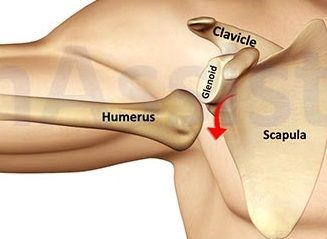
21If an individual has an inferior shoulder subluxation, what is the position of the humerus, humeral head, and scapula?
- AHumeral Head is below the inferior lip of the glenoid fossa
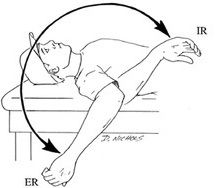
- BHumerus is in internal rotation
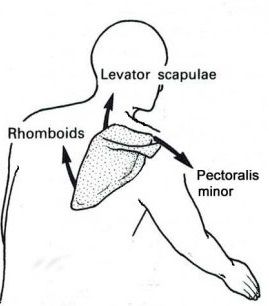
- CScapula is depressed and downwardly rotated, with the inferior angle of the scapula winging
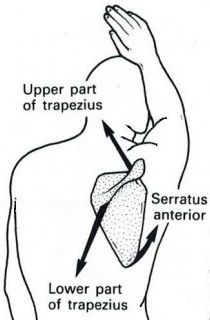
- DScapula is depressed and upwardly rotated, with the inferior angle of the scapula winging
- EHumeral Head is behind the posterior lip of the glenoid fossa
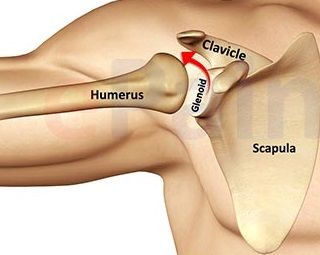
- FHumeral Head is in front of the anterior lip of the glenoid fossa
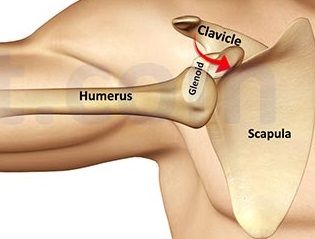
- AHumeral Head is below the inferior lip of the glenoid fossa
22Select the Intrinsic Causes of Shoulder Subluxation.
- ATrunk – Joint Malalignment
- BImbalance of Muscle Activation
- CWeakness
- DTone Abnormalities
- ESoft Tissue Extensibility
- FPositioning
- GHandling
- HAssistive Devices
23Which of the following are in agreement with Fitts' Law?
- AAssuming a static distance, if target size decreases, the time to reach it increases.
- BAssuming a static distance, if target size increases, the time to reach it increases.
- CAssuming a static target size, if distance increases, the time to reach it increases.
- DAssuming a static target size, if distance decreases, the time to reach it increases.
- EMovement time is a function of the distance to the target and the accuracy needed to hit the target.
- FThere is a positive correlation between movement precision, movement distance, and movement time.
- GThere is a negative correlation between movement precision, movement distance, and movement time.
24What are the 2 requirements for a successful grasp?
- AHand must be adapted to the shape, size, and use of the object.
- BFinger movements must be timed so that they close around the object at the appropriate moment.
- CSubject must be strong enough to lift the object.
- DSubject must be able to see the object in order to grasp it successfully.
25Moving the arm into shoulder flexion or abduction without proper scapulohumeral rhythm, may cause which of the following?
- AShoulder Subluxation
- BShoulder Impingement
26Without proper scapulohumeral rhythm, which of the following motions are likely to cause shoulder impingement?
- AShoulder Flexion
- BShoulder AB-Duction
- CShoulder Extension
- DShoulder AD-Duction
- EShoulder Internal Rotation
- FShoulder External Rotation
27[blank_start]Action Research Arm[blank_end] Test - Assesses upper limb functioning using observational methods
[blank_start]Box and Block[blank_end] Test - Assesses unilateral gross manual dexterity
[blank_start]Wolf Motor Function[blank_end] Test - Quantitative measure of upper extremity motor ability through timed and functional tasks.- AAction Research Arm
- BBox and Block
- CWolf Motor Function
- DBox and Block
- EWolf Motor Function
- FAction Research Arm
- GWolf Motor Function
- HAction Research Arm
- IBox and Block
28What neurological diagnosis do you think is likely to have motor adaptation problems?
- AStroke
- BMultiple Sclerosis
- CParkinson's Disease
- DTraumatic Brain Injury
- ELesion of the Cerebellum
29Hypermetric scaling is likely to result from which of the following?
- ALesion of the Cerebellum
- BTraumatic Brain Injury
- CParkinson's Disease
- DMultiple Sclerosis
- EStroke
30What neurologic condition will result in delayed initiation of reaching tasks?
- AParkinson's Disease
- BTraumatic Brain Injury
- CLesion of the Cerebellum
- DMultiple Sclerosis
- EStroke
31In a reach-and-grasp task, which of the following elements is most important for the accuracy of the movement?
- AVisual Feedback
- BProprioceptive Feedback
- CSomatosensory Feedback
- DSpeed of Movement
- EDistance to Object
32Which of the following may cause shoulder pain?
- ALoss of scapulohumeral rhythm
- BInadequate external rotation of the humerus during flexion and abduction leading to impingement
- CLack of the downward gliding movement of the head of the humerus in the glenoid fossa resulting in impingement
- DInferior Shoulder Subluxation
33[blank_start]Progression[blank_end]: Rhythmic patterns of muscle activation advance the body in the desired direction. Also includes the ability to initiate, terminate and guide movement in a desired direction.
[blank_start]Stability[blank_end]: The ability to maintain upright posture against gravity and against perturbations (expected and unexpected) during gait.
[blank_start]Adaptation[blank_end]: The ability to alter the gait pattern to meet the demands of the environment (negotiating obstacles, uneven terrain, and altering speed and direction).- AProgression
- BStability
- CAdaptation
- DStability
- EAdaptation
- FProgression
- GAdaptation
- HProgression
- IStability
34[blank_start]Step Length[blank_end] - The distance from initial contact of one foot to initial contact of the other foot.
[blank_start]Stride Length[blank_end] - The distance covered from initial contact of one foot to the following initial contact by the same foot.
[blank_start]Step Width[blank_end] - Horizontal distance between the middle heel of one foot and the middle heel of the opposite foot
[blank_start]Cadence[blank_end] - The number of steps per unit of time (112.5 per minute or 1.9 steps/second)
[blank_start]Gait Velocity[blank_end] - The average horizontal speed of the body.- AStep Length
- BStride Length
- CStep Width
- DStride Length
- EStep Width
- FStep Length
- GStep Width
- HStep Length
- IStride Length
- JCadence
- KGait Velocity
- LGait Velocity
- MCadence
35[blank_start]Temporal Cortex[blank_end] - ID what an object is
[blank_start]Parietal Lobe[blank_end] - ID where an object is
[blank_start]Cerebellum and Basal Ganglia[blank_end] - Modify and Refine Movement
[blank_start]Motor Cortex[blank_end] - Activates motor pathways according to movement plan
[blank_start]Cerebellum[blank_end] - Error Detection/Correction during movement- ATemporal Cortex
- BParietal Lobe
- CCerebellum and Basal Ganglia
- DMotor Cortex
- ECerebellum
- FParietal Lobe
- GCerebellum
- HTemporal Cortex
- ICerebellum and Basal Ganglia
- JMotor Cortex
- KCerebellum and Basal Ganglia
- LMotor Cortex
- MCerebellum
- NParietal Lobe
- OTemporal Cortex
- PMotor Cortex
- QTemporal Cortex
- RCerebellum
- SCerebellum and Basal Ganglia
- TParietal Lobe
- UCerebellum
- VParietal Lobe
- WTemporal Cortex
- XCerebellum and Basal Ganglia
- YMotor Cortex
36While moving both arms towards targets of identical size and distance, one arm had to mover over a hurdle, but the other did not. Movement time increased for both arms. Why?
- ATemporal Assimilation
- BSpatial Assimilation
- CBimanual Timing
37While moving both arms towards targets of identical size and distance, one arm had to move over a hurdle, but the other did not. The movement trajectory increased for the arm moving over the hurdle, but so did the trajectory for the other arm. Why?
- ABimanual Timing
- BSpatial Assimilation
- CTemporal Assimilation
38Limbs like to time movement together, either in-phase or out-of-phase. Why?
- ABimanual Timing
- BSpatial Assimilation
- CTemporal Assimilation
39According the Sensory Organization test (SOT/ CTSIB) which of the following conditions isolates the vestibular system:
- AStanding, platform fixed, eyes blindfolded
- BStanding, platform fixed, visual box surrounding subject is fixed, eyes open
- CStanding, platform tilts, eyes blindfolded
- DStanding, platform tilts, visual box surrounding subject is fixed, eyes open
40You are standing in soft sand with your feet together when your friend unexpectedly pushes you forward? To prevent a loss of balance you respond with the following muscle activation pattern (in order of recruitment):
- AAbdominals, quadriceps
- BAbdominals, quadriceps, tibialis anterior
- CGastrocnemius, hamstrings, paraspinals
- DHamstrings, paraspinals
41Individuals with co-activation of the postural synergies most likely have a lesion in which area of the central nervous system:
- ABasal Ganglia
- BCerebellum
- CDorsal Columns
- DInternal Capsule
42You are standing in the dark on a pillow, in order to maintain postural stability your CNS is primarily relying on your:
- ALimbic system
- BSomatosensory system
- CVestibular system
- DVisual system
43You are walking through the forest when you unexpectedly trip on a tree root requiring you to employ a postural strategy to prevent you from falling down? This is an example of:
- AFeedback control
- BFeedforward control
- CSelf-initiated control
44While walking with your patient, she encounters a freshly mopped floor? Prior to stepping onto the wet surface, she slows her walking and begins taking short, shuffling steps? Which of the following best describes your observations?
- AHer hip flexors are fatigued and her step length is therefore reduced
- BShe is using adaptive, feed-back strategies to modify her gait
- CShe is using anticipatory strategies to modify her gait
- DShe is using her central pattern generator to adapt her walking to the environment
45A Trendelenberg gait pattern is the _________gait pattern due to ________.
- ACompensatory; hip adductor tightness
- BCompensatory; hip extensor tightness
- CResultant; hip abductor weakness
- DResultant; hip flexor weakness
46Which of the following best explains why the pelvis rotates forward during gait?
- ATo minimize medial-lateral displacement
- BTo minimize the knee extension at initial contact
- CTo minimize vertical displacement and energy expenditure
- DTo prevent knee buckling and minimize the required ankle DF at initial contact
47During stance, individuals with hip extensor weakness compensate by:
- ACircumducting the leg during the swing phase
- BLeaning their trunk forward (anteriorly)
- CUsing a posterior trunk lean to minimize muscle activation
- DVaulting to minimize use of the involved leg
48Which muscle group controls the knee from the end of the loading response to midstance (i.e. from 15 degrees of flexion to 0 degrees of flexion)?
- ACo-contraction of knee flexors/ extensors
- BConcentric knee extensors
- CEccentric knee extensors
- DEccentric knee flexors
49Which of the following is the correct order of events for a normal reach and grasp?
- AEye movement to locate object, head turning, arm transport, hand pre-shaping, grasp
- BEye movement to locate object, head turning, hand pre-shaping during arm transport, grasp
- CHead turning to locate object, eye movement & vision to identify what and where, hand pre-shaping, arm transport, grasp
- DHead turning, eye movement & vision to identify what and where, hand pre-shaping during arm transport, grasp
50Your patient's right arm is weaker than her left arm. During bimanual tasks you observe that the right arm is able to move faster (more like the left arm) than when the arm is moved individually? This is known as:
- AMovement assimilation
- BSpatial assimilation
- CTemporal assimilation
- DTrajectory assimilation
51During examination of UE control, you observe your patient reach for an object. The patient exhibits slow movement and movement decomposition to reach the object. When asked to reach quickly, the patient over-shoots the object. Strength testing reveals good to normal UE strength. Sensation is intact. Where is this lesion?
- ABasal ganglia
- BCerebellum
- CCorticospinal tracts
- DPeripheral nerve
52Which of the following is true regarding shoulder subluxation?
- APain is one of the first symptoms of a subluxed shoulder
- BShoulder subluxation can be caused by weakness and abnormalities of tone
- CAfter stroke, shoulder subluxation can be caused by a tear in the labrum
- DShoulder subluxation is rare and takes months to develop
53Which of the following is true regarding examination and treatment of shoulder dysfunction?
- AAn inferior subluxation is measured in centimeters to objectively document the amount of subluxation
- BIt is important to examine trunk posture in persons with shoulder dysfunction
- CPatients with subluxation should immobilize their shoulder to prevent further dysfunction
- DSlings should not be used when gait training with persons with shoulder dysfunction
Informações
- Descrição
- USA - NM1 Quiz sobre NM1 Exam 2, criado por Ben Williams em 12-07-2017.
- Autor
- Ben Williams
- Idioma
- English
- Visualizações
- 132
- Etiquetas
- Avaliação
- Ainda sem avaliações Avalie este quiz