
Flashcards
COMPARATIVE POLITICS PS 2082
Flashcards do conjunto (42)
- 1COMPARATIVE POLITICS PS 2082 EMFSS UNIVERSITY OF LONDON UNIVERSITY COLLEGE LAHORE WISAM KHURRAM UG2OFFICE HOURS: WALK INS OR THROUGH APPOINTMENT
wisam.khurram@ucl.edu.pk - 2COMPARATIVE POLITICSComparative Politics is one of the oldest fields of political analysis, forming the basis for much of the writings of political philosophers throughout the ages.
- 3Comparative Politics, as the name suggests, utilises the comparative approach in terms of empirically analysing a number of issues within political science.Presidential vs Parliamentary system
Dictatorships vs Democracy
Federations vs Centralised systems - 4Essentially, we're going to be comparing and contrasting several elements of Political ScienceWe will not only be analysing the differences between two or more differing concepts but also examining if said concepts complement each other in any way
- 5CHAPTER 1: MODES OF COMPARING POLITICAL SYSTEMSThe chapter introduces some
necessary comparative concepts:
1. Democratic legitimacy,
2. Institutionalism
3. Political culture - 6DEMOCRACY?All democracies have:
• some form of electoral system
• some kind of legislative assembly
• some system of decentralisation - 7DEMOCRATIC LEGITIMACYThe basic idea of legitimation is that the
exercise of political authority should be seen as right by those required to
obey it
(Weber, Lipset and Beetham) - 8All states need to be minimally legitimate in the sense of being supported by some people on the basis of some notion of rightfulnessHowever, democracies need to be actively supported as well as just passively
accepted, which raises the question of whether there is something called
‘democratic legitimacy’ - 9Dictatorship >> Legitimacy problem = UnstableDemocracy >> Legitimacy problem
=
Deep Political Crisis - 10Observations: 1. Is Democratic Legitimacy different from Legitimacy alone? 2. Is Democracy the only Globally Legitimate system of Governance? 3. Does the nature of democratic legitimacy vary from country to country?

- 11INSTITUTIONALISMINSTITUTIONS?
- 12Rules - Formal and InformalLaw vs Social Etiquette
- 13Drinking is Illegal (Rule)Remove one’s hat in a church (Ettiquete)
- 14Institutions: Parliament Supreme Court (Different from IR)Should a state only concern itself with the enforcement of rules?
- 15Should rule changes have widespread acceptability in the sense that rules are valued by the people who are expected to follow them?If the breaking of a particular rule has significant support, should that rule be changed?
- 16Are people in democracies more likely to follow rules because they have given their active consent to the rule-makers?Institutionalism and Democratic Legitimacy?
- 17POLITICAL CULTUREPolitical culture can be
defined as the way in which people think about politics - 18People in different societies think about their political system in quite different ways.Political
culture can be understood, in part, as the outcome of particular historical
processes that translate into different life experiences - 19why does Britain have a monarchical democracy and the USA have a republican system of presidential democracy?Most British people want to have a monarchy and most
Americans want to have a presidential system - 20Historically, most British people were able to achieve their rights under the Crown, which was not true for the Americans, who had to fight a war of independence from the BritishIn the Nordic region, democracy
has been understood to have a strong element of social equality which is different from a number of capitalist democracies across the globe - 21Stable systems generally need quite a lot of self-reinforcementIn stable democracies, people are both subject to the law and authors of its reinforcement
- 22While law enforcement agencies have a responsibility to uphold the law, they also need to be stopped from breaking it themselves. It takes one ambitious judge, general or politician to overstep institutional boundaries.Public opinion and public culture may help restrain such steps.
- 23Hence, Politcal Culture and Institutionalism go hand in hand.However, if there is a legitimacy problem, people may not assist in the upholding of institutions. In fact, people may even support their violation
- 24For example, when Peruvian President Fujimori quite illegally used the army to close the National Congress in 1992, his popularity went upHowever, such cases may arise because the political culture is so different from the institutions that govern the people
- 25—Countless examples of political systems failing to generate democratic legitimacy:
Pakistan _ Democracy?
Afghanistan - Democracy?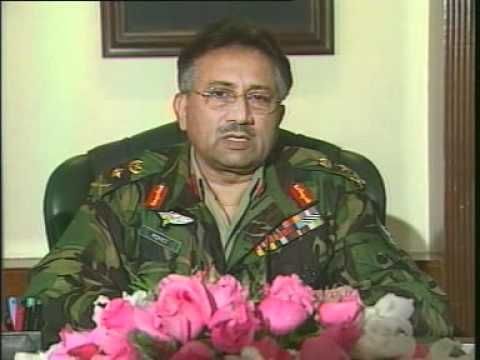
- 26How to reform poorly-functioning democracies?Deliberation, the thought gone into
policy, is essential to every political system. No matter how democratic the
processes by which government are elected, the absence of deliberation
will eventually discredit the system because of its poor performance. - 27Just as the enforcement of laws requires courts and judges, deliberation requires a professional civil service and the employment of expertise in the making of political decisions.Hence, for a democratic system to work :
Democratic Legitimacy and the Enforcement of Law is both enabled by Political Culture. - 28What's the most important of the three?INSTITUTIONS
- 29DEMOCRATIC LEGITIMACYWhat kind of legitimacy democratic
states possess? - 30It is the state itself, not a monarch, a president, or a prime minister, that possesses this legitimacy.People should retain the belief in the worth of the political system regardless of
who happens to be in power. - 31STATE?A state has a legitimate monopoly on the exercise of physical force within its
borders - 32A state is a human community that claims the monopoly of the legitimate use of physical force within a given territory. - Max WeberDemocracy can only exist if a recognisable sovereign authority can, if
necessary, impose itself by force. There would be no point in having a
system of contested elections unless the winners eventually had something
to govern. This monopoly of force is the backbone of ‘state-ness’. - 33The state also has a monopoly on the making of laws and develops special institutions, such as parliaments, for that purpose.Symbolic expressions
such as flags, monuments, or the presence of rulers on stamps remind the society of the state's existence complementing its legitimacy as a law-making body. - 34A State should be recognised by the international community in order to be legitimate.Weber did not reduce ‘legitimacy’ to any particular form of government.
He was prepared to define monarchies and communist systems as
legitimate, as well as constitutional democracies. - 35Legitimate power in this context simply means official, rightful power as opposed to the power of bandits, warlords or insurgents.A French pirate who, early in the nineteenth century, was arrested and brought before Napoleon. Napoleon asked him what he was doing. The pirate replied that he was doing exactly what Napoleon was doing, but on a smaller scale.
- 36What would Weber say to the pirate?The official, public, power of the state should be considered in a different way to that of the power of a particular individual or private group
- 37If democracies and authoritarian forms of government can be legitimate, the question is whether democracy possesses a special type of legitimacyIt is generally agreed that a system of government is legitimate if the majority of people in the country consider it to be the best available form of government
- 38Democratic government requires legitimacy because it relies much more on self-policing than authoritarian government does.Competitive elections provide one source of legitimacy since the public gets the final say on who governs them and can ideally
remove unpopular leaders, so they should be more inclined to support the
system. - 39Democracies are different from non-democracies because when faced with crises, it is much easier to get rid of ineffective rulers in democracies. - BeethamBarack Obama? What did his election do?
- 40Nevertheless, people can accept the existing system for negative reasons: 1. fear or apathy 2. for instrumental reasons 3. for principled reasonsMost stable democracies are systems that perform well economically
and have traditional sources of loyalty.
e.g. Britain has a traditional
monarch and a reasonably successful economy. - 41Democratic legitimacy may also come from a sense that people have a stronger sense of ownership of the state. e,g, SwitzerlandThe way in which specific institutions
reinforce legitimacy is also important
e.g. French Presidentde
Gaulle using presidential powers to resolve a deep crisis over Algerian
decolonisation. - 42LEGITIMACY AS A COMPARATIVE CONCEPTWeber believed that different types of states in history depended on
different types of legitimacy.