
Flashcards
UNIT 3.4.2 CONTROLLING NUCLEAR REACTIONS

Flashcards do conjunto (10)
- 1What does nuclear fission mean?Nuclear fission means splitting a nucleus of an atom into smaller nuclei with the release of energy.
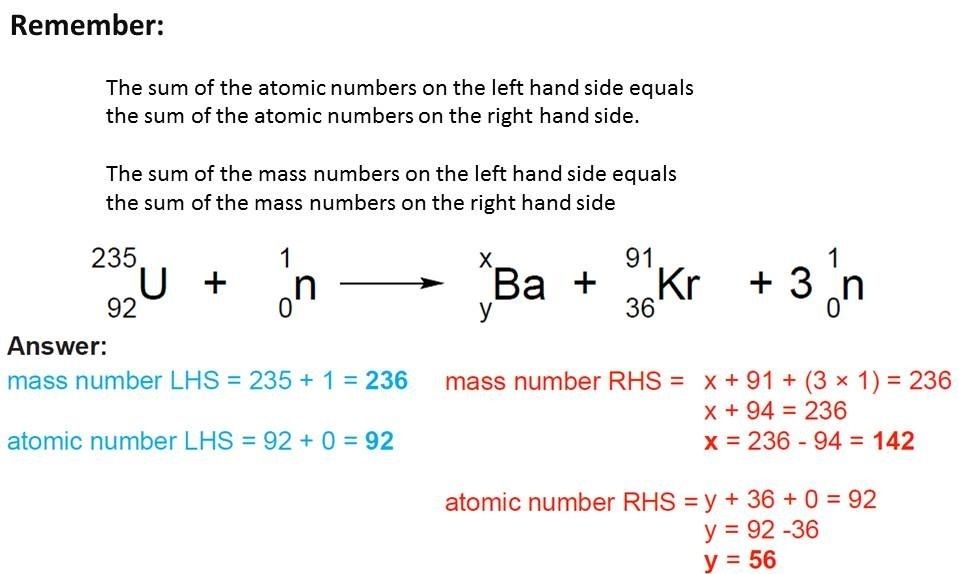
- 2Why is the nuclear fission of uranium-235 called a chain reaction?1. The uranium nucleus splits into two smaller nuclei
2. Three more neutrons are released
3. Energy is released
The 3 additional neutrons released will hit other uranium or nuclei and cause them to split. Even more neutrons are then released, which in turn can split more nuclei.
This is called a CHAIN REACTION. - 3—

- 4—

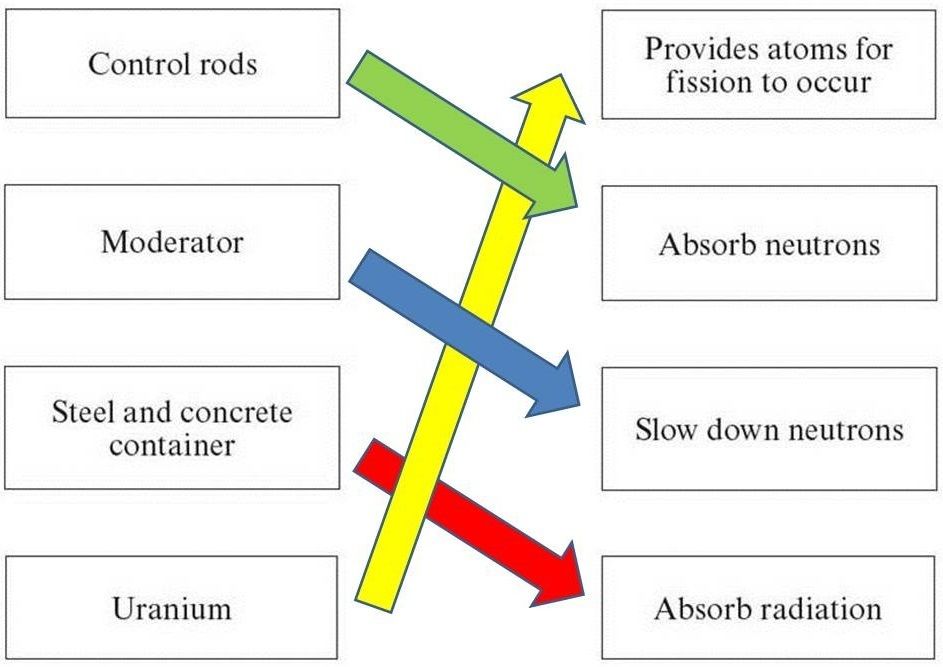
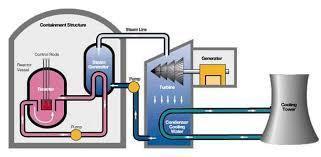
- 5When the nucleus of an uranium atom is split in a nuclear reaction, an immense amount of energy is released, far more than from a chemical reaction. What do we use this energy for?Nuclear power stations use the the energy released to produce electricity.
- 6What harmful emissions do nuclear power stations produce?Nuclear power stations do not produce any harmful emissions. Nuclear energy can make a major contribution to supplying our electricity without the emission of harmful greenhouse gases.
- 7State two reasons why waste radioactive waste from nuclear reactors needs to be stored safely for a long period of time.Any 2 of the following:
- Waste material is highly radioactive.
- Radioactive waste has a very long half- lives.
- To prevent waste getting into the environment, food chain or water supply.
- Waste material is harmful toxic /
/poisonous / dangerous to living things.
- Radioactive materials can cause cancer
- Radioactive material must be stored to prevent theft / use as weapons/use by terrorists.
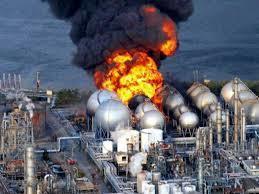
- 8Nuclear power station accidents can be caused by ‘human error.’ Name one other way a nuclear power station accident could occur.Nuclear power station accidents can occur due to natural disasters, such as the earthquake and tsunami which damaged the Fukushima nuclear power plant in Japan in March 2011, releasing harmful radioactive material into the surrounding area.
- 9A radioactive source has a half-life of 30 minutes. What percentage of the source remains after two hours?The half-life of a radioactive source is the time taken for half its radioactive atoms to decay. Therefore:
0 minutes = 100% source present
30 minutes = 50% source present
60 minutes = 25% source present
90 mins minutes = 12.5% source present
120 minutes = 6.25% source present - 10Cobalt-60 has a half life of 5 years. A sample of cobalt-60 has an activity of 2,000 Bq. What will the activity be after 15 years?The half-life of a radioactive source is the time taken for half its radioactive atoms to decay. Therefore:
At 0 years the activity = 2,000 Bq
At 5 years the activity = 1,000 Bq
At 10 years the activity = 500 Bq
At 15 years the activity = 250 Bq
Informações
- Descrição
- Nuclear reactions are used to generate electricity. What happens in a nuclear reaction? How is it different to a chemical reaction? How is a nuclear reaction controlled in a nuclear reactor? Why have nuclear accidents happened? What have been the consequences of nuclear accidents? How does the risk of using nuclear power compare to other forms of power generation? This topic looks at how we can control a nuclear reaction so that we can generate electricity.
- Criado por
- Mr S Lee
- Visualizações
- 283
- Tags
- Avaliação