Flashcards
Exam prep for PSYCH402317
Flashcards do conjunto (67)
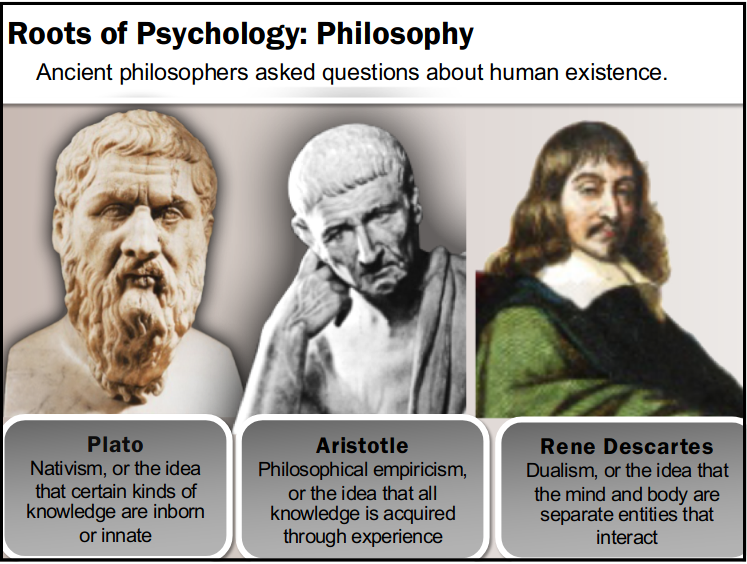
- 1What were some early philosophical arguments for the roots of human psychology (i.e., arguments of Plato, Aristotle, & Descartes)?
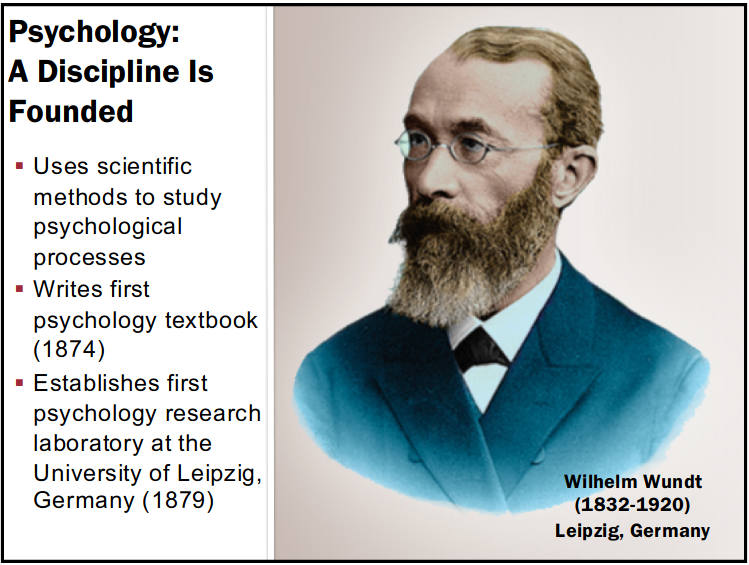
- 2Who was Wilhelm Wundt? What is Structuralism?
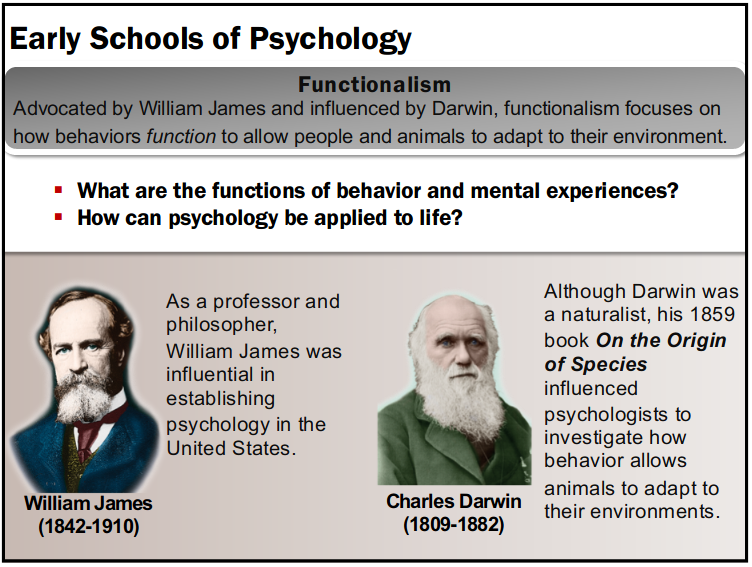
- 3Who was William James? What is Functionalism?
- 4Who was Sigmund Freud? Psychoanalytic theory and the importance of the unconscious.
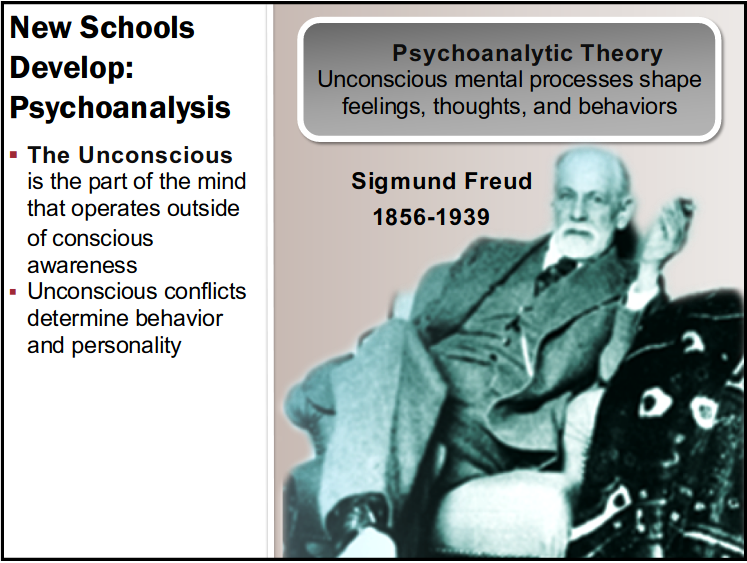
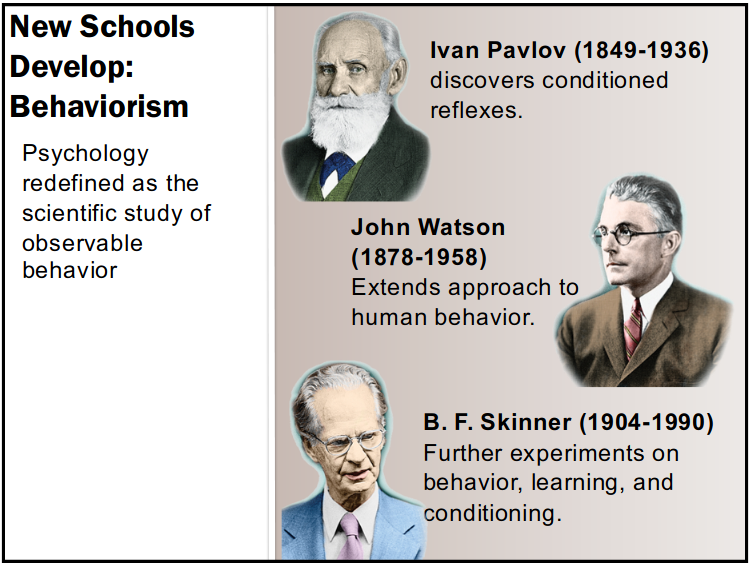
- 5What is Behaviorism? Who were the three key contributors to this perspective?
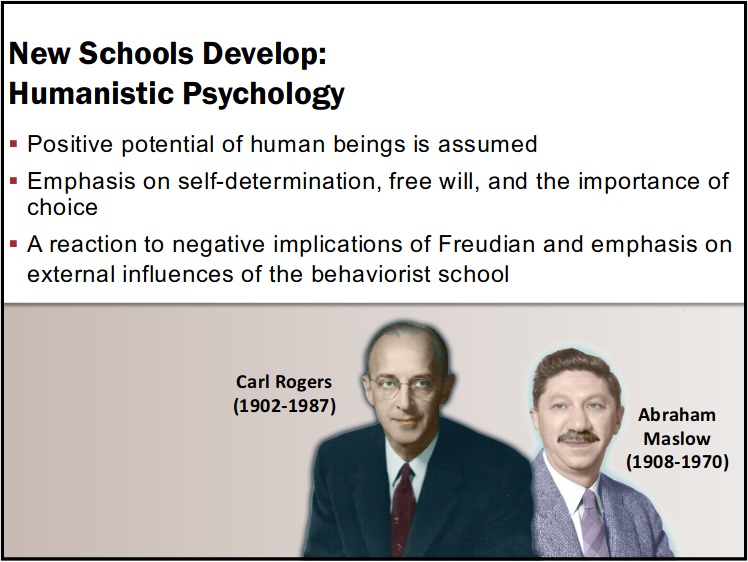
- 6What was the Humanistic perspective? Proponents?
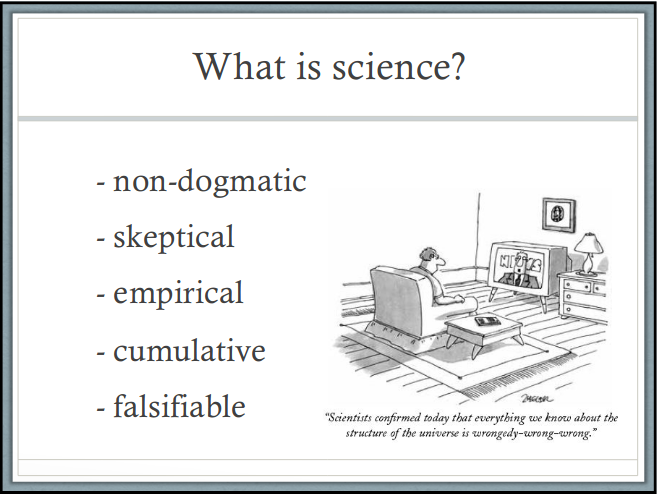
- 7What are some of the basic characteristics of science that we discussed in class (e.g., non-dogmatic, falsifiability, etc.)?
- 8What were the three types of descriptive study we discussed in class(1)?
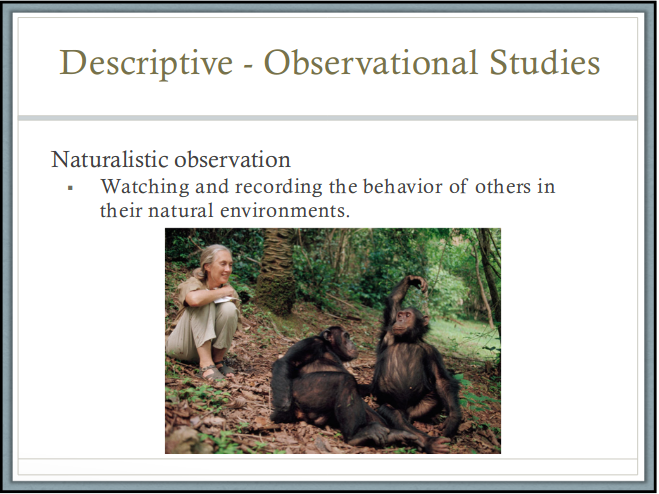
- 9What were the three types of descriptive study we discussed in class(2)?
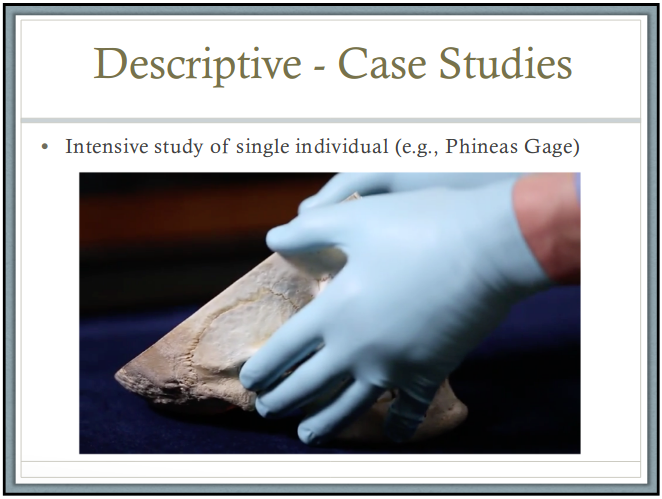
- 10What were the three types of descriptive study we discussed in class(3)?
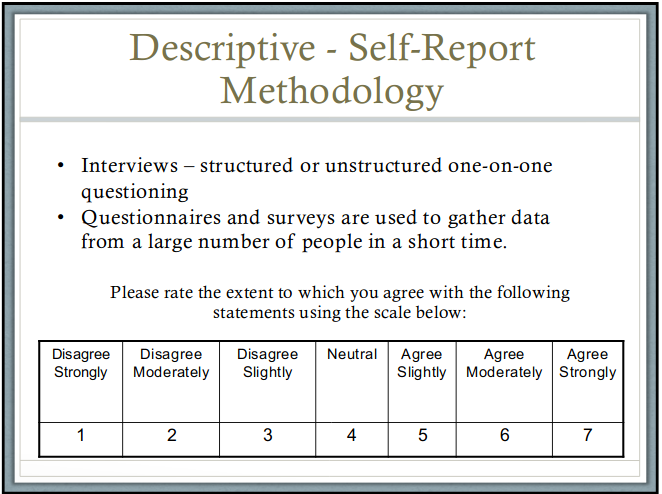
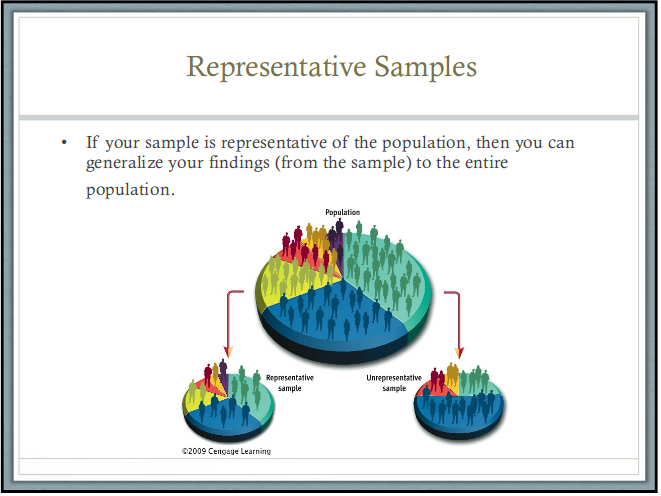
- 11difference between a sample and a population. Why is representative sampling important?
- 12What is the correlation coefficient? What does the sign (+/-) indicate? What does the number value indicate?
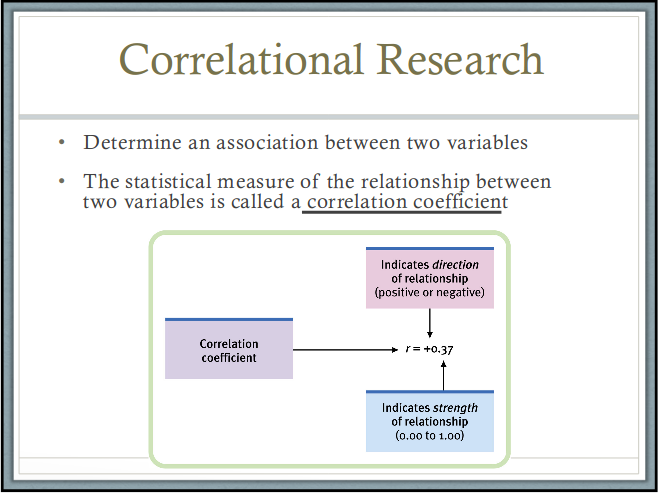
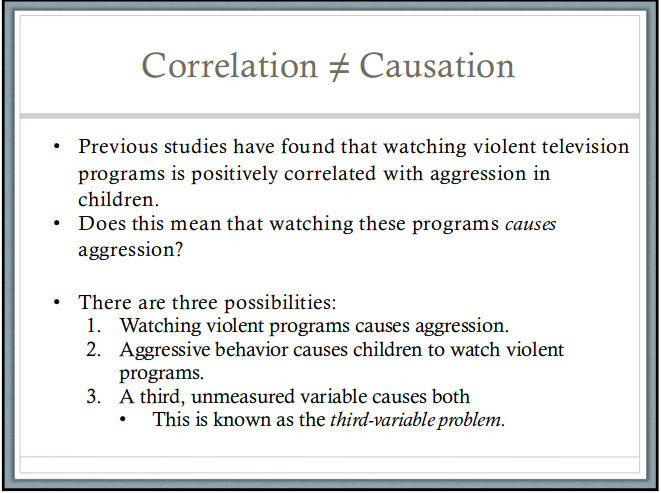
- 13Can correlational research allow us to determine cause-effect relationships? Why or why not? What is the third variable problem?
- 14Independent Variablesindependent variable in an experi-
ment, the factor that is manipulated; the
variable whose effect is being studied - 15Confounding Variableconfounding variable in an experi-
ment, a factor other than the independent
variable that might produce an effect. - 16Dependent Variabledependent variable in an experi-
ment, the outcome that is measured; the
variable that may change when the
independent variable is manipulated. - 17Experimentexperiment a research method in
which an investigator manipulates one or
more factors (independent variables) to
observe the effect on some behavior or
mental process (the dependent variable).
By random assignment of participants,
the experimenter aims to control other
relevant factors. - 18Control Groupcontrol group in an experiment, the
group not exposed to the treatment; con-
trasts with the experimental group and
serves as a comparison for evaluating
the effect of the treatment. - 19Random Assignmentrandom assignment assigning partici-
pants to experimental and control groups
by chance, thus minimizing preexisting
differences between the different groups. - 20Populationpopulation all those in a group being
studied, from which samples may be
drawn. (Note: Except for national studies,
this does not refer to a country’s whole
population.) - 21Random Samplerandom sample a sample that
fairly represents a population because
each member has an equal chance of
inclusion. - 22Scatterplotscatterplot a graphed cluster of dots,
each of which represents the values of
two variables. The slope of the points
suggests the direction of the relationship
between the two variables. The amount
of scatter suggests the strength of the
correlation (little scatter indicates high
correlation). - 23Regression Toward the meanregression toward the mean the
tendency for extreme or unusual scores
or events to fall back (regress) toward
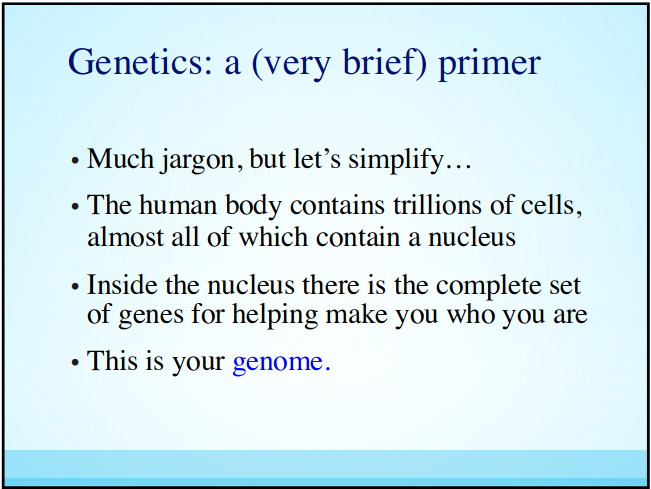
the average. - 24What is the genome?
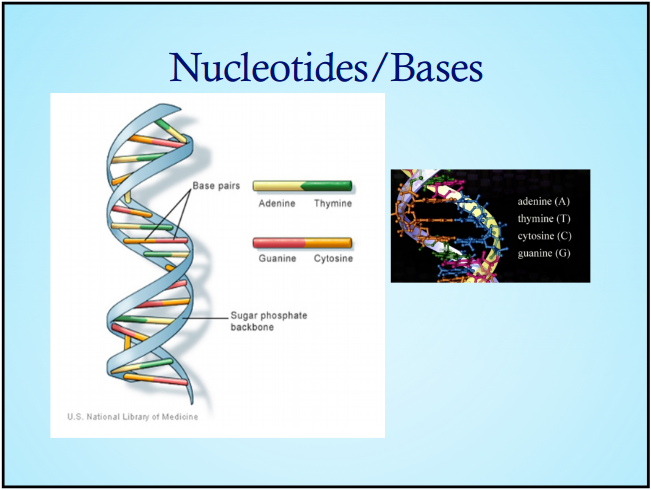
- 25DNA?Deoxyribonucleic acid (DNA) is a nucleic acid that contains the genetic instructions used in the development and functioning of all known living organisms and some viruses. The main role of DNA molecules is the long-term storage of information. ... Within cells, DNA is organized into structures called chromosomes.
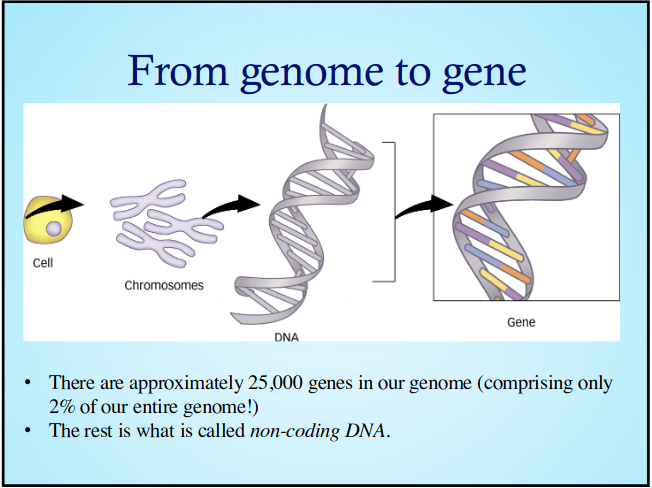
- 26GenesThe genes are essentially the segments of DNA molecules that contain the code for particular peptides or proteins which then determine who we are (at birth and what we can become - let's not forget about the importance of environment, but the genes give us the starting point).
- 27Nucleotides/Bases?
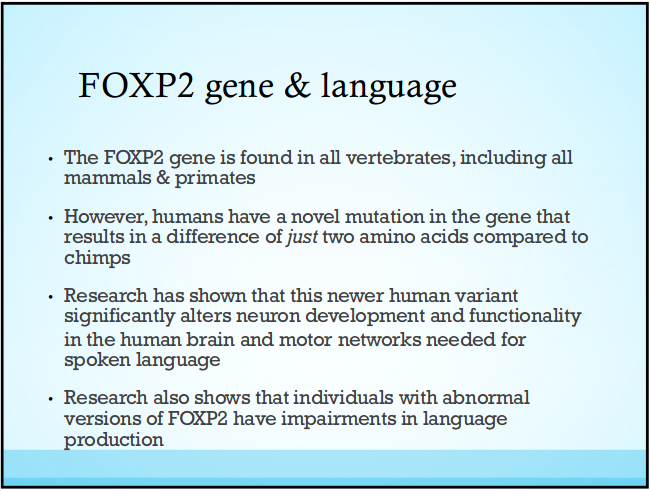
- 28What’s the significance of the human FOXP2 gene?
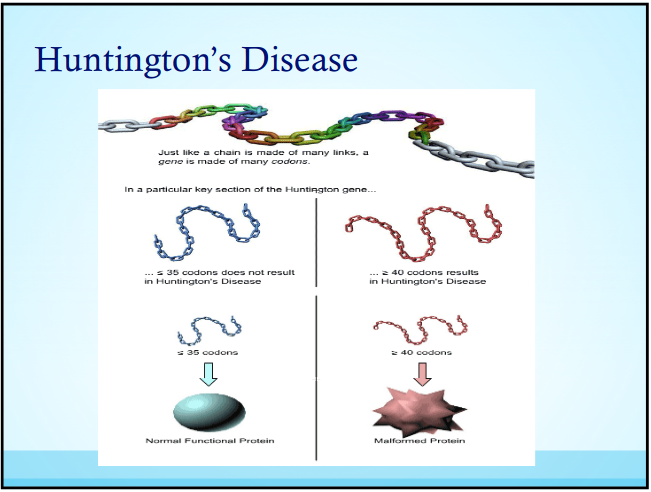
- 29What is Huntington’s Disease and what causes it (at both the genetic and neurological level)?
- 30What is behavior genetics?behavior genetics the study of the
relative power and limits of genetic and
environmental influences on behavior. - 31What are some of the major findings of twin and adoption studies regarding psychological traits such as intelligence and personality?Inherit their traits from genes, can still be different based on nature experiences
- 32What happens when rats are raised in impoverished vs. enriched environments?
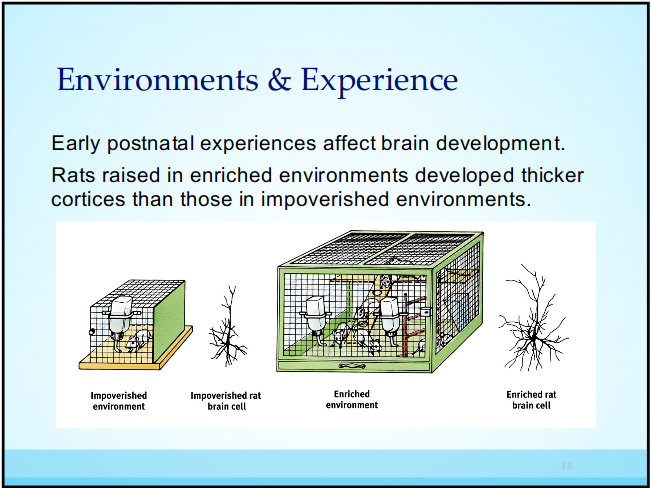
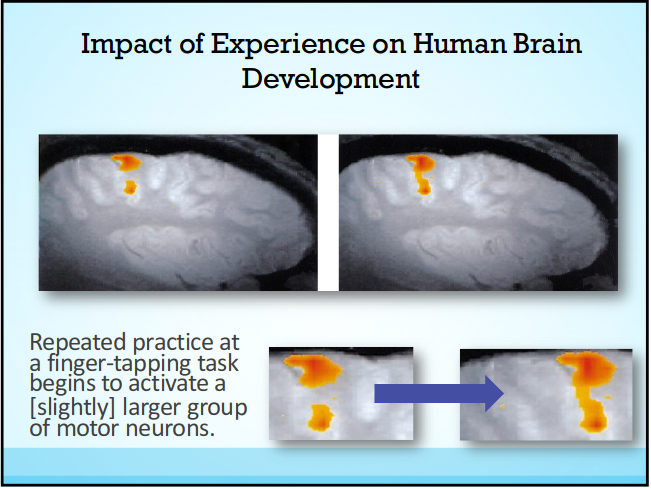
- 33Provide some examples of how experience can alter our brains.
- 34How can chronic stress accelerate the aging process? How can stress-reduction techniques counteract this process?Shortens Telometers, stress-reduction techniques preserver and maintain telometers
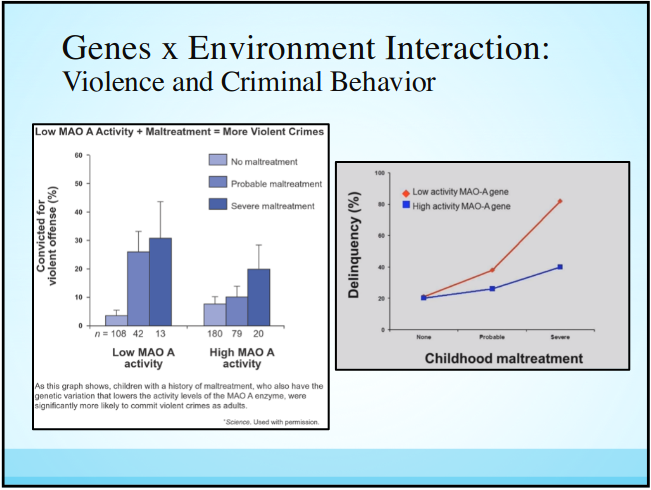
- 35Based on the study mentioned in class, how does the interaction of genes and early experiences lead to individual differences in violence and criminal behavior later in life?
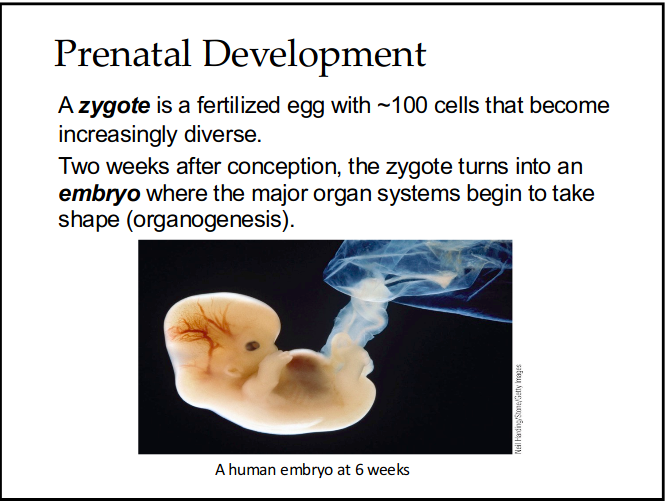
- 36What are the major prenatal stages of development? (PT. 1)
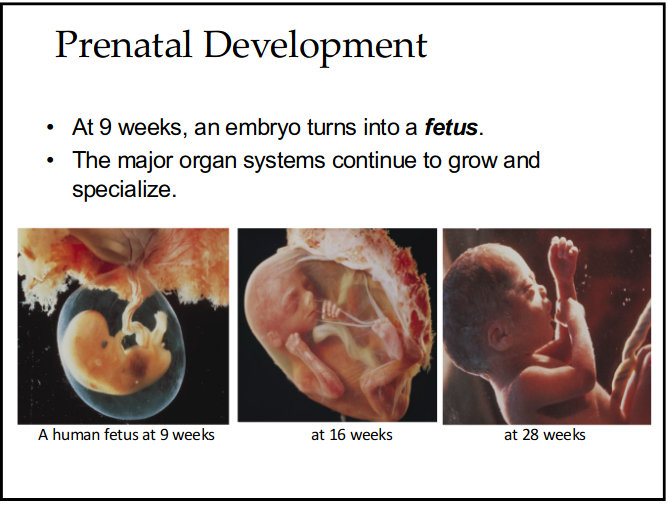
- 37What are the major prenatal stages of development? (PT. 2)
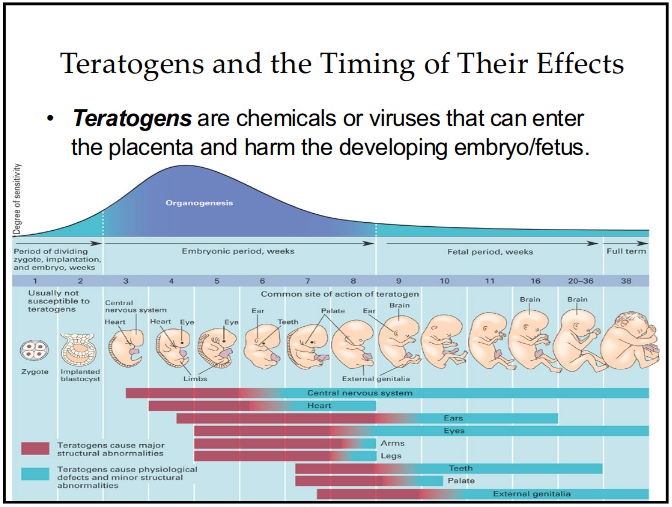
- 38What are teratogens? What biological mechanism may minimize teratogen exposure in early pregnancy?
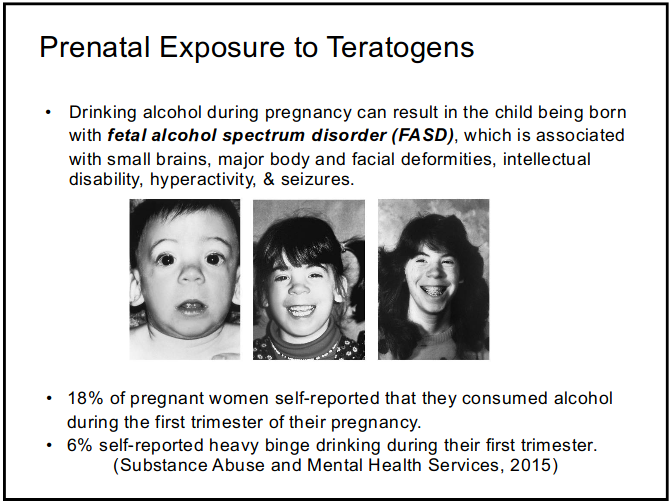
- 39What is fetal alcohol spectrum disorder?
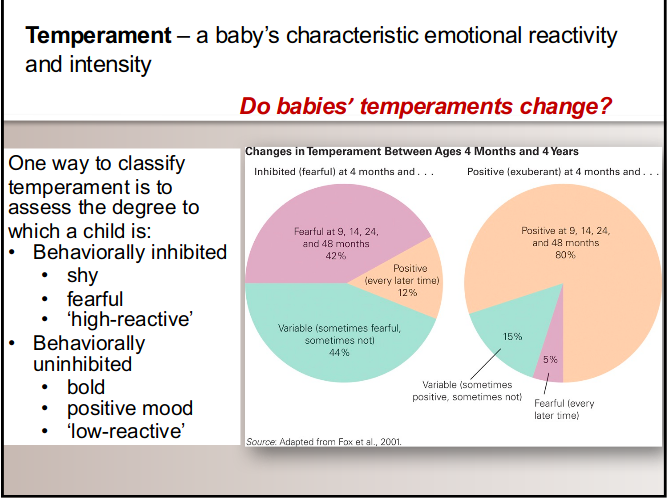
- 40Describe the different temperamental styles and research regarding their consistency across childhood.
- 41What is attachment?
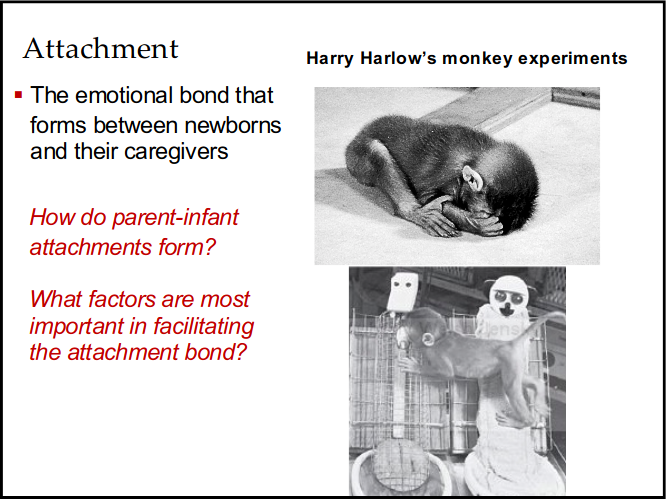
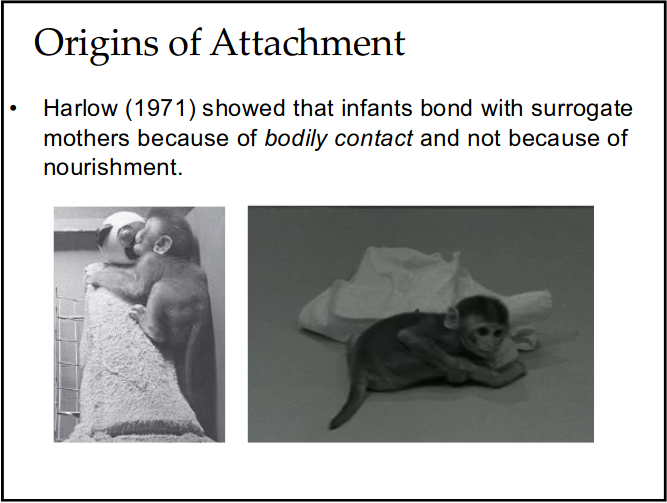
- 42What did Harry Harlow’s experiments with monkeys show us about the mechanisms of attachment?
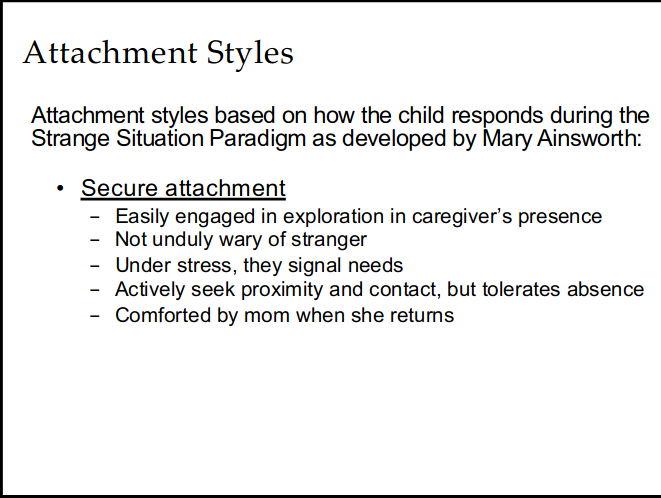
- 43What are the findings regarding attachment in orphans(1)What are the different attachment styles? How are these typically assessed??
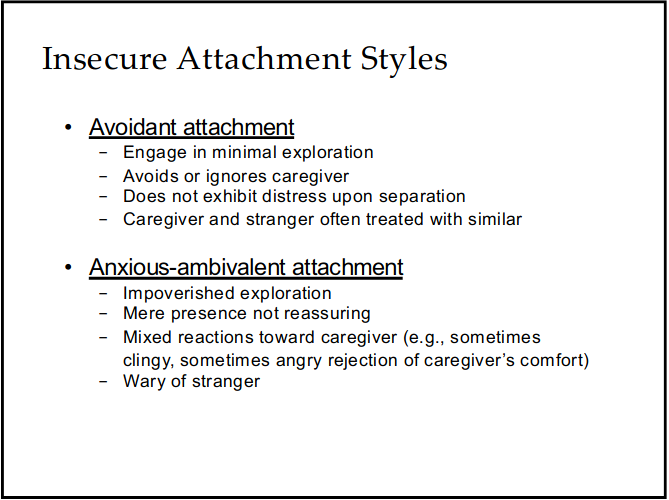
- 44What are the findings regarding attachment in orphans(2)What are the different attachment styles? How are these typically assessed??
- 45Explain how maternal care (low-licking vs. high-licking) in rats can lead to long-term changes in genetic expression and brain functioning in rat pups raised by these mothers?More licking = Better reaction to stress, safer. Vise versa
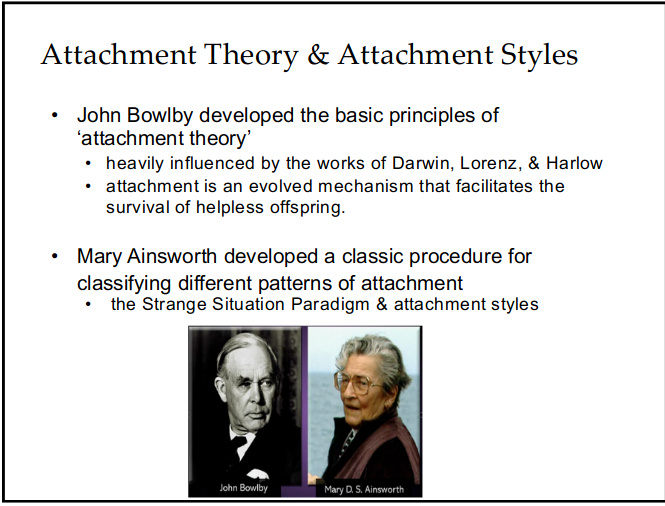
- 46Who are John Bowlby and Mary Ainsworth?
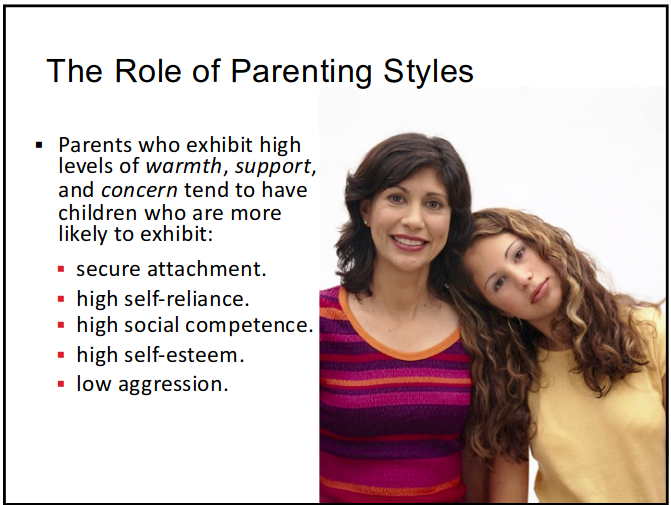
- 47How does early attachment affect our later social experiences?
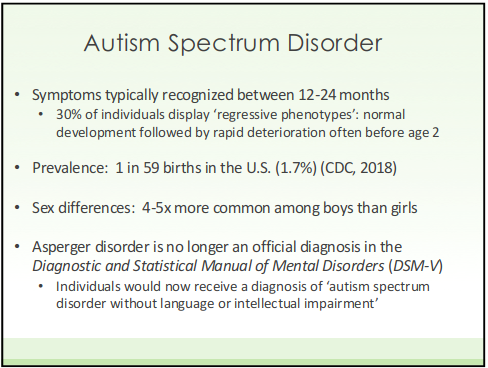
- 48Be familiar with the diagnostic criteria for Autism Spectrum Disorder(1).
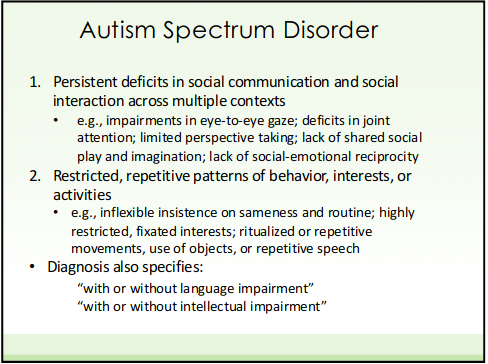
- 49Be familiar with the diagnostic criteria for Autism Spectrum Disorder(2).
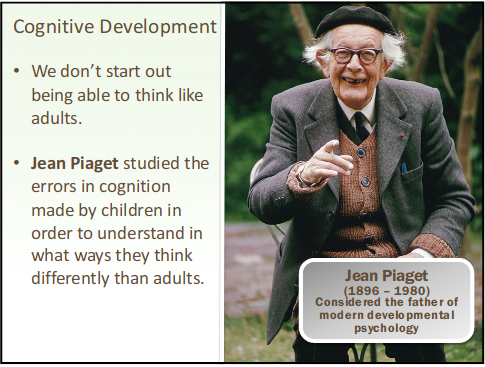
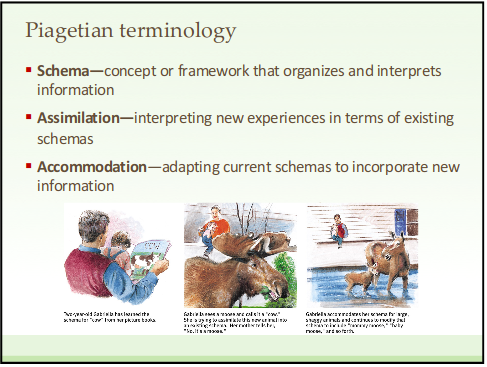
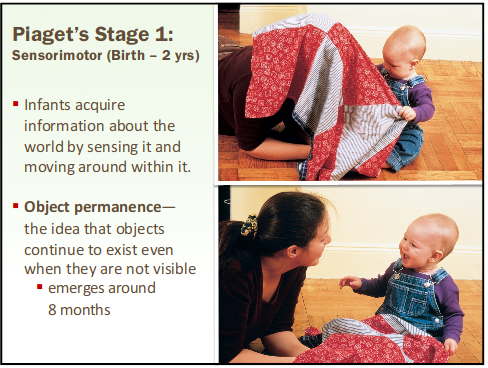
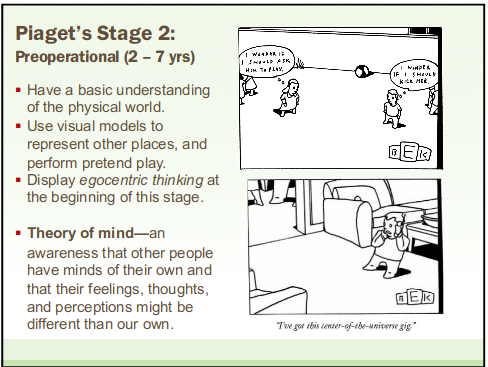
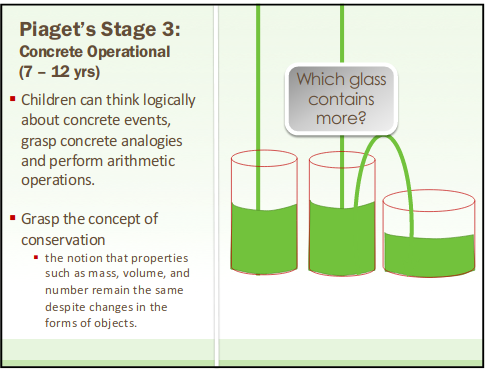
- 50Who is Jean Piaget?
- 51What is a schema? What is assimilation and accommodation?
- 52—
- 53—
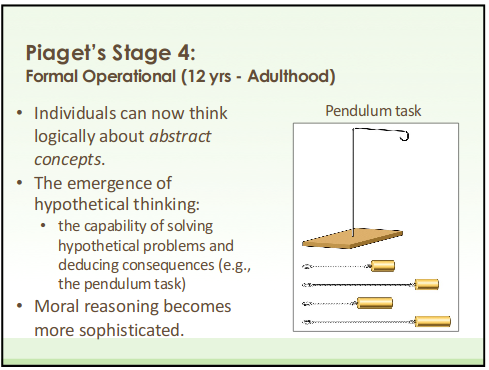
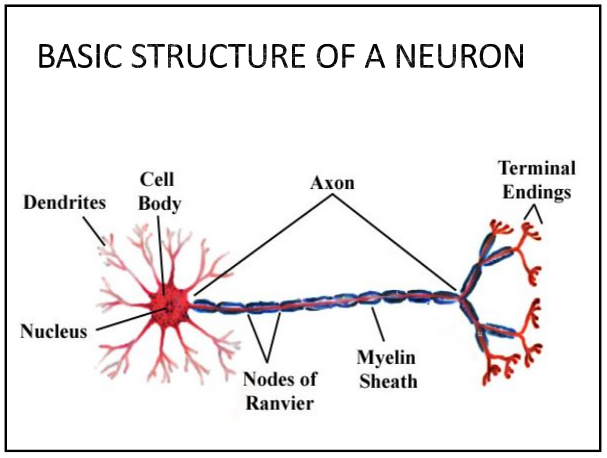
- 54Know the basic anatomy of a neuron.
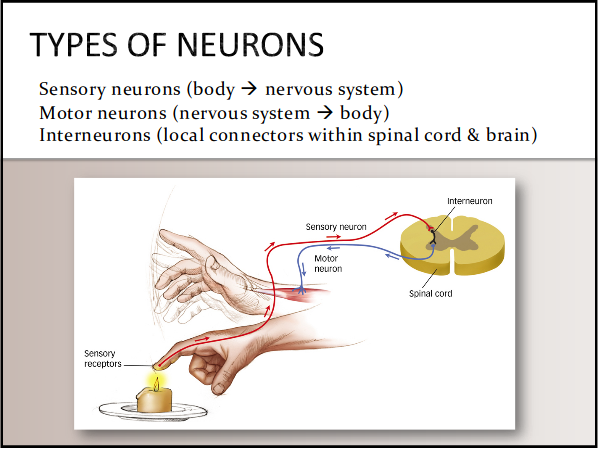
- 55What are sensory-, motor-, and interneurons?
- 56What are mirror neurons?A mirror neuron is a neuron that fires both when an animal acts and when the animal observes the same action performed by another. Thus, the neuron "mirrors" the behavior of the other, as though the observer were itself acting.
- 57What is the resting potential? What are the roles of sodium and potassium ions during this period?
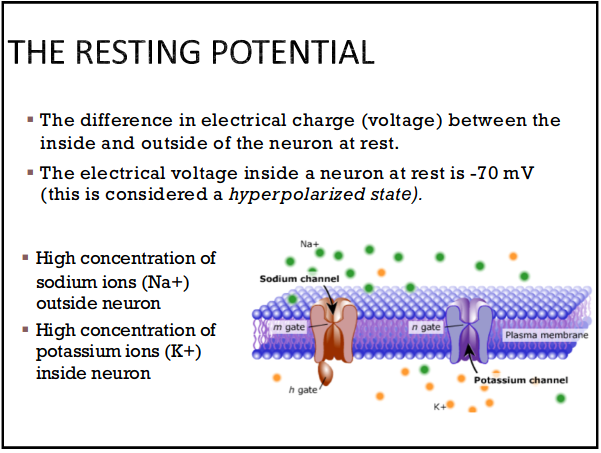
- 58What is an action potential? Where does the action potential take place (i.e., which part of the neuron)? What are the roles of sodium and potassium ions during this period?
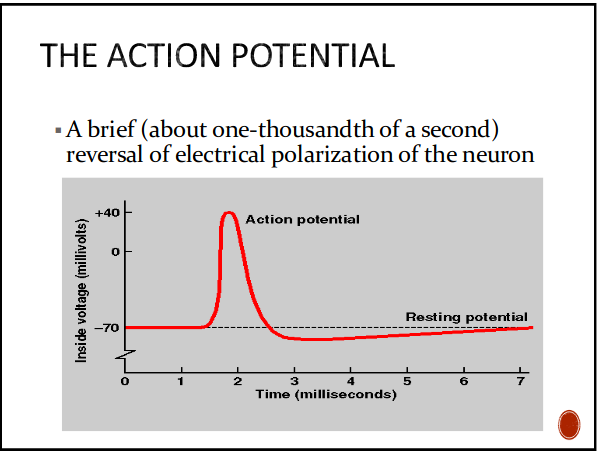
- 59What is hyperpolarization, depolarization, and repolarization?
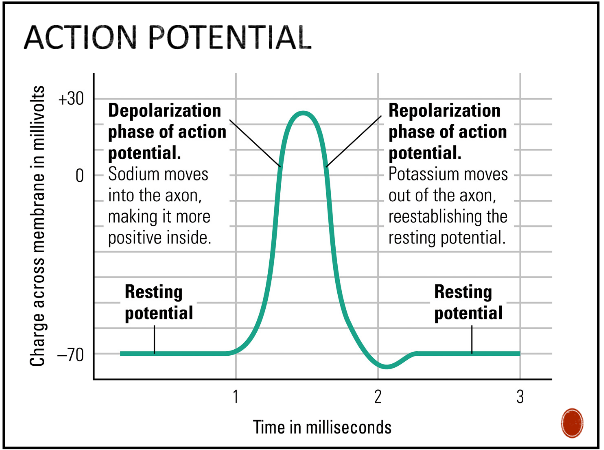
- 60What is the sodium-potassium pump?
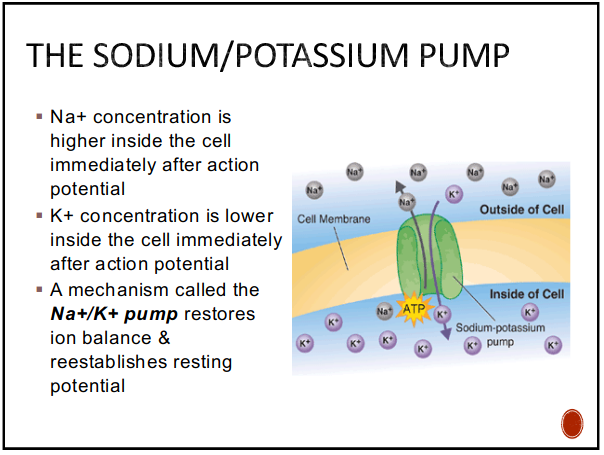
- 61Describe the process of propagation of the action potential down the axon? How does myelin impact this process?
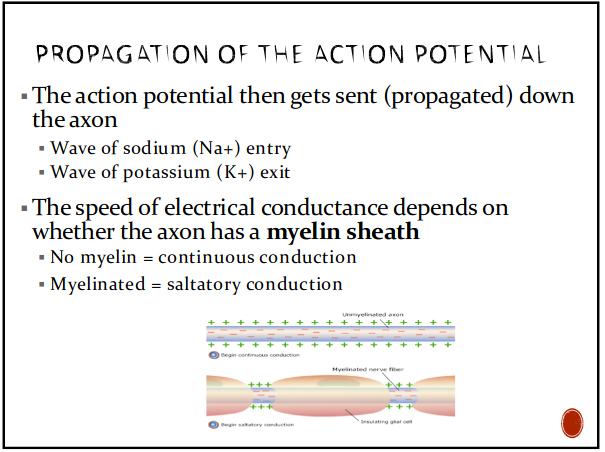
- 62What is the distinction between gray and white matter?
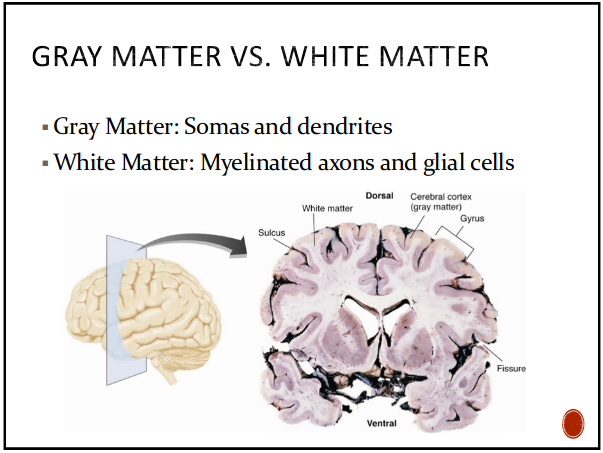
- 63What is a synapse?
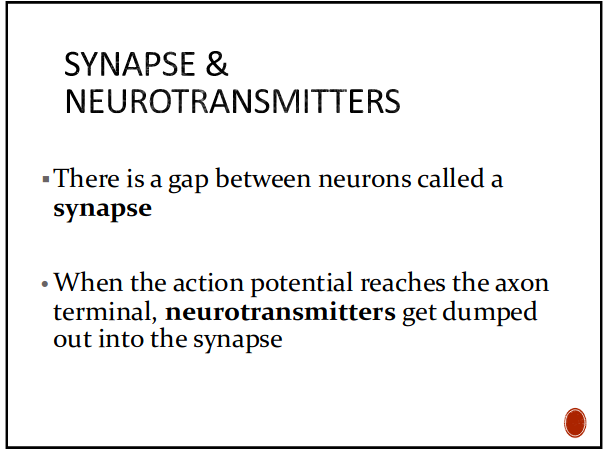
- 64Describe the process of how one neuron (the presynaptic neuron) communicates with its neighboring neuron (the postsynaptic neuron).
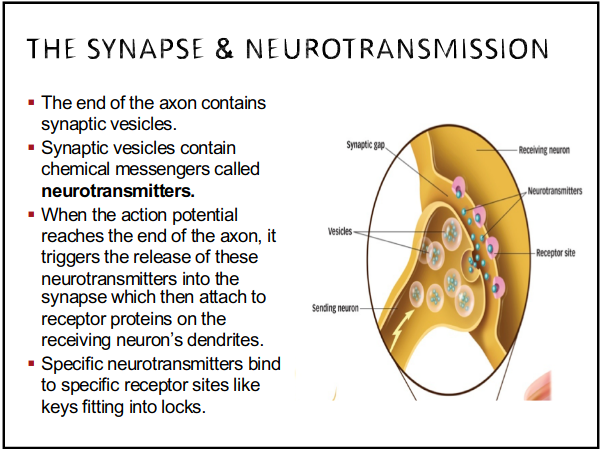
- 65Explain the difference between excitatory vs. inhibitory transmission.
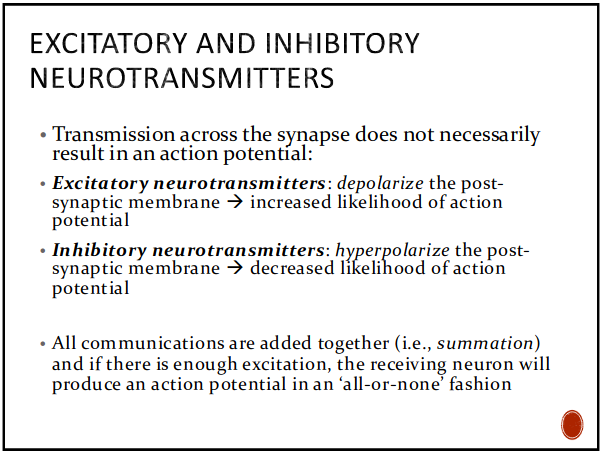
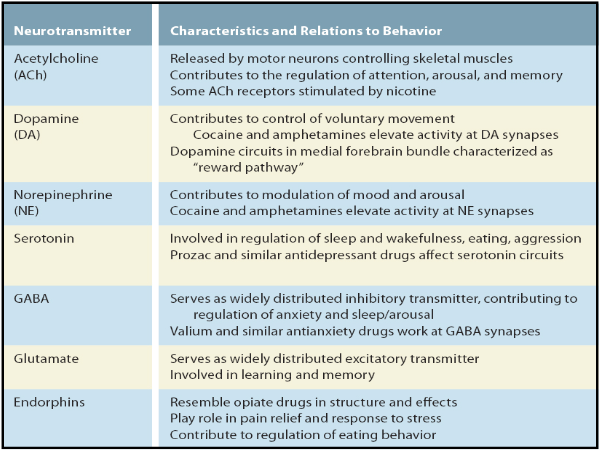
- 66What is a neurotransmitter? Know the different neurotransmitters we covered in class and their associated functions.
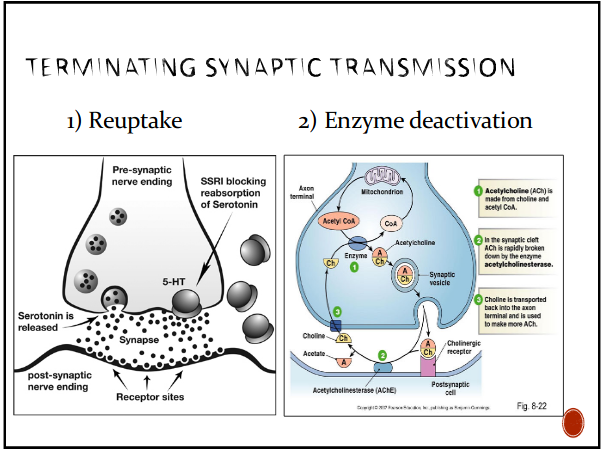
- 67What is reuptake and enzyme deactivation?