
Flashcards
Geography multi choice flashcards
Flashcards do conjunto (77)
- 1Demography deficitHigher proportion of dependents to workers. Low economic growth.
- 2Demography dividendHigher proportion of workers to dependents. High economic growth.
- 3Total dependency ratioNumber of dependents over 100 workers
- 4Youth-dependent ratioNumber of people aged 15 and under to the working age population
- 5Old-dependency ratioNumber of people aged 65 and above to the working age population
- 6Population growth rateThe increase/decrease in population during a period of time expressed as % of the population when the period began.
- 7Demographic change/Population growth rateFertility(crude birth rate), mortality(crude death rate) and net migration
- 8Total fertility rateAverage number of children born per woman if they would live past their reproductive age
- 9Crude birth rateNumber of births in a year. Expressed as % of the population or per 1000 people.
- 10Crude death rateAverage number of deaths in a year. Expressed as % of the population or per 1000 people.
- 11DevelopmentA multi dimensional process. Improvement in human welfare, quality of life, social well being. Satisfying the populations needs and wants.
- 12Sustainable developmentDevelopment that meets the needs of the present without compromising the ability of future generations to meet their own needs.
- 13Economic growthIncrease in total value of goods and services produced.
- 14Demographic momentumPopulation
growth caused by more women giving
birth even though each has the same
number of or fewer children is called
“population momentum.”
When the fertility rate is falling and the mortality rate is falling even more but because there are a high proportion of people from reproductive ages, the fertility remains high in several decades. Once this happens a country moves to different stage in the demographic transition model. It's common in LDC. - 15Demographic inertiaThe well-below replacement level of fertility which becomes established over several decades causing decline in population numbers
- 16Demographic transitionThe changes that occurs when a country transition from high mortality and high fertility to low mortality and low fertility
- 17Demographic transition - stage 1High fertility and high mortality
- 18Demographic transition - stage 2Decline in mortality. High fertility. Increased population growth. High youth dependency ratio
- 19Demographic transititon - stage 3Decline in fertility. Lower youth dependency ratio. Demographic momentum
- 20Demographic transition - stage 4Decline in fertility and mortality. HIgh old-dependency ratio. Demographic inertia.
- 21UrbanisationIncreased proportion of people in urban areas which is due to movement from rural areas to urban areas.
- 22GDPGross domestic product. Measures the national income/national production and national consumption in one year. Measures the economic quality of a country.
- 23GNPGross national product. GDP + National income from investment abroad.
- 24GDP/GNP per capitaAverage income per person in a country in one year.
- 25PPPPurchasing power parity. An economic theory that estimates the amount of adjustment needed on the exchange rate between countries in order for the exchange to be equivalent to each currency's purchasing power.
- 26What are the measurements of economic development?* GDP per capita
* Population growth
* occupational structure of the labor force
* Urbanisation
*Consumption per capita
* Infrastructure
* Social conditions(mortality, life expectancy etc.) - 27Multi dimensional index list1. UNDP (United nations development programme)
2. HDI (Human development Index)
3. HSDI (Human sustainable development index) - 28HDIHuman development index. Measure the social and economic development based on four criteria.
1. Life expetancy at birth
2. Mean years of schooling
3. Expected years of schooling
4. GNP/GDP per capita - 29Gini indexMeasures the distribution of income/welfare within a country. Can be used to compare different countries.
- 30Low gini indexShows an equal income distribution
- 31High Gini indexShows a high income differences between groups of people
- 32Advantages with Gini index* earners and groups are anonymous
* size of the economy is irrelevant
*size of the population is irrelevant... - 33Disadvantage with Gini index* Different curves can have same Gini index
* Doesn't measure informal sector, only measures the income
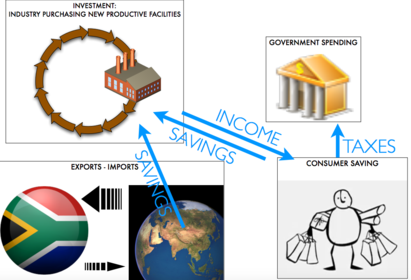
* Doesn't account for the impact of progessiva taxation. - 34Expenditure/Consumption formula for GDPY = C + I + E + G
Y = GDP
C = Consumer spending
I = Investment made by industry
E = excess of exports over imports
G = Government spending - 35GapminderIt measures wealth, time and health
- 36Development measurements* Human development index(HDI)
* Happy planet index
* Corruption perception index
* Complex venn digram
* Gini index(Social inequality) - 37Disadvantages with GDP* Only measures market exchange
* Goods and services might be bad ones(selling nuclear weapons)
* Natural resources treated as infinite
* Ignores freedom and human rights
* Ignores human distribution within a society
* Treats the tip of the iceberg as the most important features - 38Human development index (HDI)Index that measures the opportunities for people. Measures
* Life expectancy
* Education
* Wealth (access to resources needed for a decent standard of living)
Index is standardised and a single index, statical not multidimensional. - 39Complex venn diagramA diagram that enables us to see groups of countries with similar characteristics (economic, population and political)
- 40Happy planet index (HPI)An index that measures the environmental efficiency of delivering happy and long lives for citizen of nations.
Measures how much it cost to use the planet resources for the well being of a nation’s citizens - 41The Great DivergenceMeasures the economic growth in the past 2000 yrs in different parts of the world
- 42ConsumptionThe consumption of material resources/goods and services and no resources consumption. It serves peoples needs, values and tastes.
- 43Material resources consumptionThe consumption of natural resources
- 44Natural capitalNatural resources. E.g: species, habitats, local ecosystems, biomes, sub-soil resources etc including farmland, food, ocean, atmosphere, spiritual and recreational values.
- 45Manufactured capitalInfrastructure. E.g: roads, buildings, ports, machinery, equipment, housing, personal and commercial transport
- 46Human capitalEducation, skills, knowledge, health of an individual or a population
- 47Knowledge capitalScience and technology, arts and humanitites
- 48Instititutional capitalRule of law, social norms of behaviour, habitual social practices, economic markets, traditions, governments at all levels
- 49When is consumption good for the human development?It is good when it:
* Enlarges the capabilities(power and possibilities) of people without negatively affecting the wellbeing of others
* is as fair to future generations as to the present ones
* respects the carrying capacity of the planet - 50GlobalizationThe process of the growing interdependence of countries resulting from their increase economic integration
- 51The basic four material resources of the consumption1. Water
2. Food
3. Energy
4. Minerals - 52Drivers of consumption/higher consumption* attainment of adequate living standard
* preferences and social factors
* ageing population
* household structure
* population movement
* food requirement
* consumption and population - 53Peak oilAn assumption that the global production of oil reaches its maximum rate, after which production will gradually decline
- 54First long wave cycleThis wave cycle developed:
Original industrial revolution
(1784-1800)
* Iron smelting
* mechanization of textiles
* enlightenment era - 55Second long wave cycleThis wave cycle developed:
(1845-1858)
* steam engines
* spread of railways system
* road improvements
* bessemer steel process
* canal improvements - 56Third long wave cycleThis wave cycle developed:
(1896-1907)
* engineering
* chemicals
* electricity
* telegraph company network - 57Fourth long wave cycleThis wave cycle developed:
(1949-1966)
* aerospace
* airports, airlines
*highways
*electronics - 58Fifth long wave cycleThis wave cycle developed:
(1990-200?)
* digital network
* software
* new media (social media)
* biotechnologies - 59Post-industrial countries* Focus alot on services.
* Focus less in industry.
* And even less on agriculture. *Industrialisation has decreased.
*E.g: Sweden, UK - 60Industrial countries* Focus alot in industries.
*Focus less in services.
* And even less on agriculture.
* Industrialisation has increased.
* E.g: China, Malasia, SIngapore - 61Liberalization________ of trade and capital markets. It's the de-regulation of e.g. financial industry from government
- 62Multinational companies(MNC)Companies or corporations that have offices/facilities in many different countries * It's interdepndent
* Benefit from cheap labour - 63FordismA system of mass production
* Is in industrialised countries. (China, Malasia)
* System consist also of the liberalisation of companies (de-regulation) - 64Export processing zonesSmall area which import small stuff, manufactures and exports the product
* there are several zones
* the country that host the zones pays the infrastructure
* enhance foregin exchange earnings
- which reduces poverty
* part of a corrupt system
- exploit the workers
* mostly located in China - 65Age-sex pyramid* Expansive
* Constrictive
* Stationary - 66—Constrictive age-sex pyramid
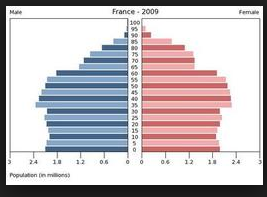
- 67Stationary age-sex pyramidStationary age-sex pyramid
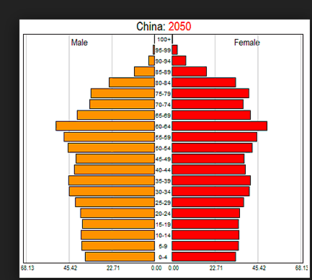
- 68—Expansive age-sex pyramid
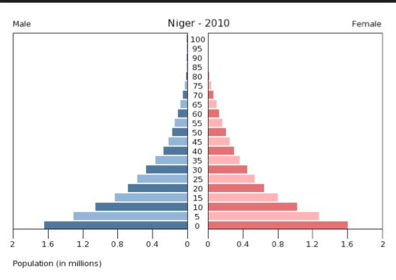
- 69Replacement fertilityIt is the average number of children born to a woman so that a population can replace itself from one generation to the next.
- 70CDO (Collateralized debt obligation)Bundled debt from different types of loans from different people. Investors sell the mortgages to investment banks, investment banks combined different loans to cdos. Investment banks sell CDOs to investors
- 71The three agricultural revolutions1. Neolithic revolution
2. Green revolution
3. Industrial revolution - 72Material economy1. Extraction
2. Production
3. Distribution
4. Disposal(avfallhantering) - 73Extraction* Natural resources exploitation/trashing the planet
* the west used up their natural resources and turns and use the third world’s natural resources
* if you don’t buy or own a lot of stuff you/the third world people/first world people/second world people don’t have value and don’t own the natural resources - 74Production* Natural resources turned into products
* toxins goes in and out the production
* in consequence humans and the planet becomes contaminated and wasted
- especially the factory workers
* 4 billion toxins produced in the US - 75Distribution* Selling all the toxic contaminated junks/products as quickly as possible
* Goals are
- keep the price down
- keep the people buying/stimulate the consumption
- keep the products going
* Externalized cost
- the real cost of the production does cover the price
- consumer pay less for the actual cost of the product - 76Consumption* our value is measured on how much we consume
* ultimate goal for the western world is to consume goods..
* perceived obsolescence
- convinces us to throw away stuff that is perfectly useful
- companies make our products have low expectancy
* more advertisement = more consumption - 77Disposal (avfallhantering)* pollute the natural capital and causes climate change
* recycling is not the solution
- doesn’t change the real solution
- certain products are non-recyclable
Informações
- Descrição
- FlashCards sobre Geography multi choice flashcards, criado por zeinab.hassano em 21-09-2015.
- Criado por
- zeinab.hassano
- Visualizações
- 41
- Avaliação