
Flashcards
P1 Edexcel Core

Flashcards do conjunto (58)
- 1Describe the term efficiencyEfficiency is the proportion of energy transferred to useful forms
- 2Explain the condition needed for something to keep at a constant temperatureThe average power absorbed = the average power radiated

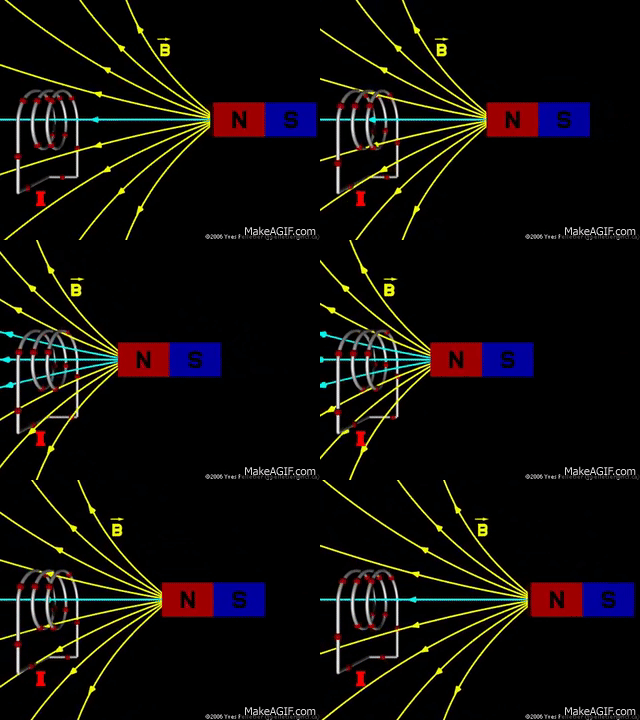
- 3Explain how an electric current is induced by a magnet and wireMovement so the wire cuts the magnetic field lines, which induces a voltage, which induces a current
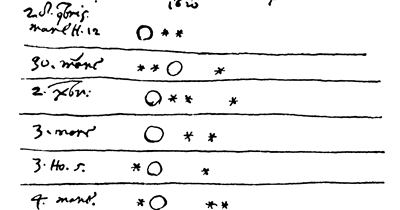
- 4Describe Galileo's observations and explain how they changed our ideas of the universeGalileo saw 4 moons orbiting Jupiter. This disproved the geocentric theory because it showed that not everything orbited the Earth
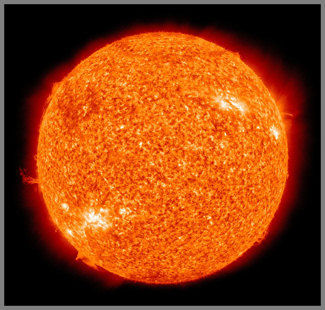
- 5Recall the life cycle of a star the similar in mass to our sunNebula -> Main Sequence -> Red Giant -> White Dwarf -> Black Dwarf
- 6Recall the life cycle of a star with a greater mass then our sunNebula -> Main Sequence ->
Super Red Giant -> Supernova -> Black hole or Neutron star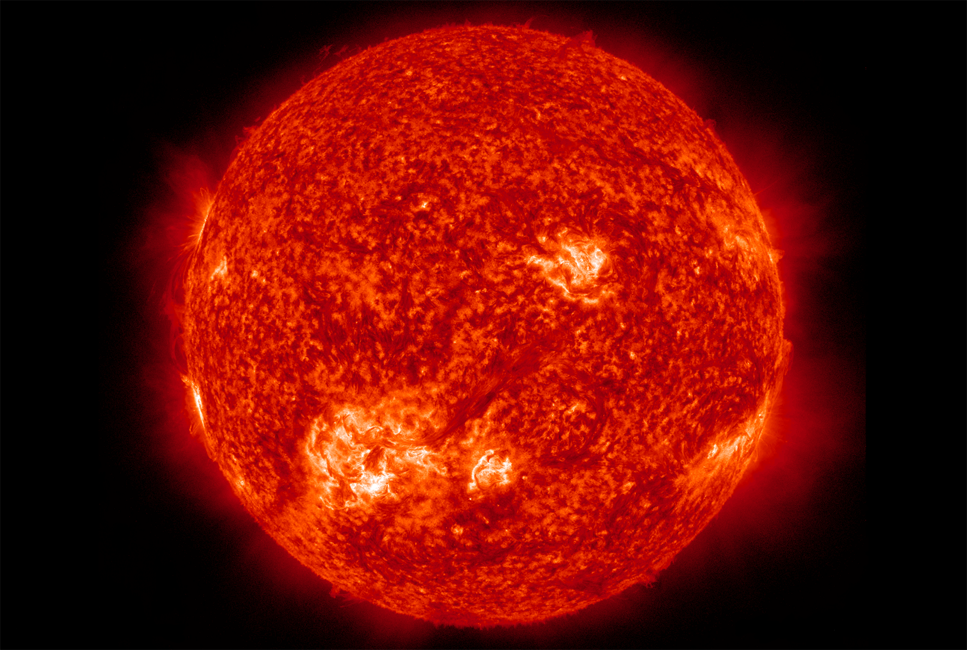
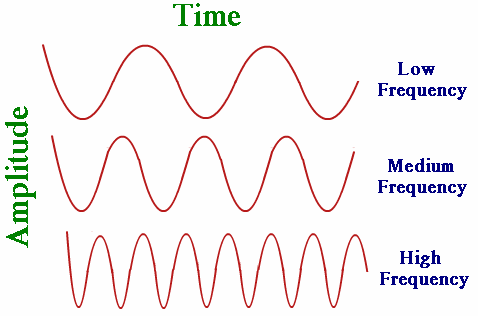
- 7Describe how potential danger is related to the frequency of a waveAs the frequency of a wave increases its potential danger also increases
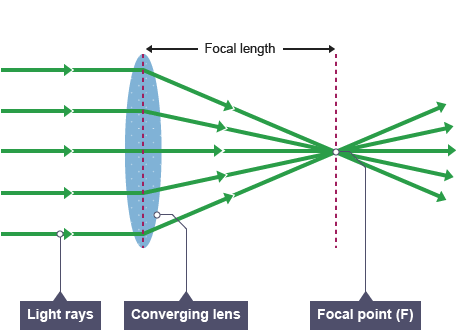
- 8Explain how to measure the focal length of a lensMeasure the distance between the focal point and the lens
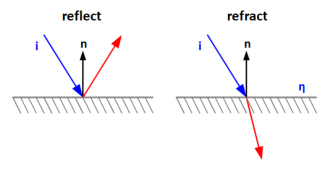
- 9Describe what happens to all waves at a boundary between different materialsThe waves are refracted and reflected
- 10Recall what ionising radiations are emitted byIonising radiations are emitted by radioactive sources
- 11Describe the term redshiftRedshift is the increase in wavelength of light of an object moving away from the observer
- 12Describe the terms current and voltageCurrent is the rate of flow of charge/flow of electrons and voltage is the electrical pressure/measure of energy transferred
- 13Describe what all waves do and do not transferAll waves transfer information and energy but do not transfer matter
- 14Describe the dangers of microwave, infra-red and ultraviolet radiationMicrowave: internal heating of body cells. Infra-red: skin burns. Ultraviolet: damage to surface cells and eyes, leading to skin cancer and eye conditions.
- 15State the people discovered IR and UV and describe their experimentHerschel discovers IR using thermometers that showed a greater temperature rise beyond the red end of the spectrum. Ritter discovered UV using silver chloride paper that turned black quickest beyond the violet end of the spectrum
- 16Recall the shared properties of all EM wavesAll EM waves are transverse and travel and the same speed in a vacuum
- 17Explain why waves refract at a boundary between different materialsThe waves change speed because they move into a more dense or less dense material
- 18State the evidence that supports the big bang theoryThe big bang theory is supported by redshift and the CMBR (cosmic microwave background radiation
- 19Explain why some telescopes are located outside the earths atmosphereNo absorption of light by the atmosphere and no light pollution/cloud cover
- 20Describe the three advantages of modern telescopesThey use other parts of the EM spectrum, they can be connected to computers to store large amount of data, they have a larger magnification to view faint objects
- 21Explain how a main sequence star is formed from a nebulaNebula is pulled in by gravity. The temperature increases until it is hot enough to fuse hydrogen to helium
- 22State what causes the motion of tectonic platesConvection currents in the mantle
- 23Describe the terms ultrasound and infrasoundUltrasound are sound waves with frequencies above 20,000 Hz. Infra-sound are sound wave with frequencies below 20 Hz
- 24Explain why step-up transformers are used in the transmission of electricityThe step-up transformer increase the voltage of electricity. This lowers the current and reduces heat lost in the power lines which increases the efficiency of energy transmission
- 25Describe how to calculate payback timesPayback time = Total cost / savings per year
- 26List the waves of the electromagnetic spectrum in order of increasing frequency/decreasing wavelengthRadio waves, microwaves, infrared, visible light, ultraviolet x-rays, gamma rays
- 27Explain why the Big Bang theory is more accepted then the steady state theoryThe Big Bang theory is supported by both redshift and the CMBR where as the steady state theory is only supported by redshift
- 28Describe law of conservation of energyEnergy cannot be created or destroyed, it can only be transformed
- 29Explain how data from seismometers can be used to identify the location of an earthquakeArrival of the P-wave and S-wave is timed, distance of the earthquake is calculated using time difference between the two waves, information from three seismometers is used to pinpoint the earthquake (triangulation).
- 30Explain how earthquakes are caused at plate boundariesConvection currents in the mantle move the tectonic plates. Friction causes pressure to build up between the plate. Sudden movement (jolt/jerk/slip) of the plates releases energy causing an earthquake
- 31Describe the term Power and state its unitsPower is the energy transferred per second and it is measured in watts
- 32State how scientists use waves to find out information about our UniverseUsing the naked eye, photography and telescopes.
- 33Define the term amplitudeAmplitude = distance from the baseline of zero displacement to the point of maximum displacement (to top of crest or to bottom of trough)
- 34Define the term wavelengthOne wavelength (m) = distance of one complete cycle or oscillation = horizontal distance from any point on the wave until where it begins to repeat = distance between two crests = distance between two troughs
- 35Define the term frequencyFrequency of a wave (Hz) = number of complete cycles/oscillations per second = number of complete waves passing a given point per second.
- 36Describe the differences between longitudinal and transverse wavesTransverse wave the oscillations are perpendicular (at 90 degrees) to the direction of energy transfer, but in a longitudinal wave the oscillations are parallel to the direction of energy transfer
- 37Identify sound, electromagnetic and seismic waves as transverse or longitudinal.Electromagnetic waves - transverse only
Sound waves - longitudinal only
Seismic waves - can be of both types of wave - 38State the order of the visible spectrumred, orange, yellow, green, blue, indigo, violet
(Roy G. Biv) - 39Describe some uses of radiowavesradio waves: broadcasting, communications and satellite transmissions
- 40Describe some uses of microwavesmicrowaves: cooking, communications and satellite transmissions
- 41Describe some uses of infraredinfra-red: including cooking, thermal imaging, short range communications, optical fibres, television remote controls and security systems
- 42Describe some uses of visible lightvisible light: including vision, photography and illumination
- 43Describe some uses of ultravioletultraviolet: including security marking, fluorescent lamps, detecting forged bank notes and disinfecting water
- 44Describe some uses of x-raysX-rays: including observing the internal structure of objects, airport security scanners and medical X-rays
- 45Describe some uses of gamma raysgamma rays: including sterilising food and medical equipment, and the detection of cancer and its treatment
- 46State ionising radiation from the nucleus of an atomIonising radiation includes alpha and beta particles and gamma rays.
- 47State the name of the galaxy that the Solar System is part ofthe Solar System is part of the Milky Way galaxy
- 48Define a galaxyA galaxy is a collection of stars
- 49Define the UniverseThe Universe includes all of the galaxies
- 50Describe the methods used to gather evidence for life beyond EarthSpace probes, soil experiments by lunar/planetary landers and Search for Extraterrestrial Intelligence (SETI)
- 51Explain what is meant by the CMBR (cosmic microwave background radiation)The CMBR (cosmic microwave background radiation) is the energy remnant left over from the big bang.
- 52Explain why the red-shift of galaxies provides evidence for the Universe expandingRed-shift tells us that galaxies are moving away. Almost all galaxies show red shift, which means that they are all moving away. This tells us the universe must be expanding
- 53Describe some uses of ultrasounda) sonar
b) communication between animals
c) foetal scanning - 54Describe uses of infrasounda) communication between animals
b) detection of animal movement in remote locations
c) detection of volcanic eruptions and meteors - 55State two ways that seismic waves are generatedSeismic waves are generated by earthquakes or explosions
- 56Explain why scientists find it difficult to predict earthquakes and tsunami waves even with available data.We do not know when the tectonic plates will slip, making earthquakes and tsunamis unpredictable.
- 57Describe the factors that affect the size of an induced currenta) stronger magnet
b) faster spinning/movement
c) more turns on the coil of wire - 58State the main forms of energythermal (heat), light, electrical, sound, kinetic (movement), chemical, nuclear, potential (elastic), potential (gravitational).