
Flashcards
A & P Test Four - Heart Sounds/Pediatric Conditions Flashcards
Flashcards do conjunto (29)
- 1What does the first heart sound represent? What does it sound like?Closure of the AV valves at the beginning of systole. Sounds like "lub."
- 2What is the second heart sound? What does it sound like?Closure of the semilunar valves (aortic & pulmonic) & the end of systole. Sounds like "dub."
- 3What is the third heart sound? What does it sound like?A weak rumble occasionally heart at the beginning of the middle 1/3 of diastole. Sounds like Kentucky.
- 4What does a 3rd heart sound potentially indicate?1. Significant left ventricular dysfunction
2. 1st sign of CHF
3. Blood entering and distending a relatively non-compliant LV. - 5What does the fourth heart sound represent? What does it sound like?Inrushing of blood into the ventricles when atria contract - atrial contraction late in diastole.
Sounds like "Tennessee" - 6What patients can you hear a fourth heart sound with?Hypertensive patients with a thick left ventricle
- 7What is the name of the condition that causes rheumatic fever?Group A hemolytic streptococci
- 8What is the most damaged valve in rheumatic fever? The second-most damaged?Most frequently: MV
2nd-Most Frequently: AV - 9Name some causes of heart murmurs.1. Infectious lesions (bacterial endocarditis): drug use, dental decay.
2. Congenital defects: Stenosis or lack of one or more leaflets and congenital bicuspid aortic valve.
3. Degenerative defects. (Calcific aortic stenosis) - 10Choose from pressure/volume problems: Stenotic lesions Regurgitant/Insufficiency lesionsStenotic: pressure
Regurgitant: volume - 11What does an aortic stenosis murmur sound like?Loud systolic ejection murmur that may be transmitted to the neck.
- 12—Aortic stenosis (systolic murmur); most often heard at the right sternal border.
- 13What is the normal aortic valve area?2.5 to 3.5 centimeters squared
- 14What is severe stenosis that would indicate the need for aortic valve replacement?Pressure gradient greater than 50 mmHg and valve size less than 1 cm2.
- 15What is the triad associated with aortic stenosis?SAD: syncope, angina, and dyspnea. Happens in 80 percent of males.
- 16What lesions are due to pressure overload? What kind of hypertrophy does this cause? How do the sarcomeres replicate?Aortic and mitral stenosis. Causes concentric hypertrophy, which causes parallel replication of sarcomeres.
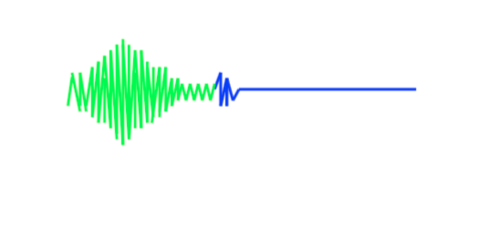
- 17—Aortic regurgitation murmur
- 18What are the examples of volume overload lesions? Is this eccentric or concentric? How does it affect the sarcomeres?Aortic and mitral regurgitation. Eccentric hypertrophy, which results in serial replication of sarcomeres.
- 19How do AS and AR affect net stroke volume output?Net stroke volume output from the LV is reduced.
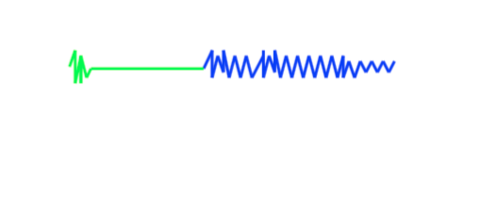
- 20What is a high-pitched, blowing murmur heard throughout systole?Mitral regurgitation
- 21Where is mitral regurgitation most heard?The apex of the heart. It transmits to the left atria, which is deep in the chest.
- 22—Mitral regurgitation murmur
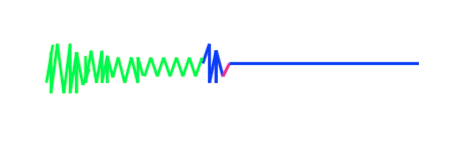
- 23What conditions can mitral regurgitation precipitate?Atrial fibrillation
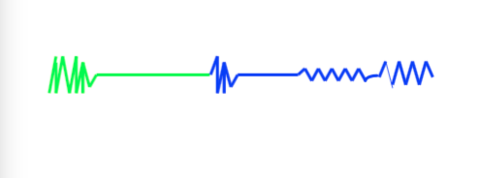
Pulmonary edema - 24When is mitral stenosis heard?During the last third of diastole
- 25—Mitral stenosis murmur
- 26What is the normal size for the mitral valve?4 to 6 cm2; typically becomes symptomatic when less than 50 percent reduction in valve orifice.
- 27What are the effects of mitral stenosis?Increased LA volume leads to AFib
Increased LA pressure leads to pulmonary edema
Decreased pulmonary compliance can lead to increased RV pressures & subsequent RV failure. - 28How are cardiac output and MAP affected in mitral stenosis compared with aortic stenosis?In mitral, the LV is normal. Cardiac output and MAP aren't as affected in mitral stenosis as they are in aortic stenosis.
- 29What are the effects of blood flow in mitral stenosis and regurgitation?Mitral regurgitation: Blood that has flowed into the LV during diastole leaks back into the LA during systole.
Mitral stenosis: Blood flow from the LA to the LV is impeded.
Informações
- Descrição
- FlashCards sobre A & P Test Four - Heart Sounds/Pediatric Conditions Flashcards, criado por Rachel Nall em 11-07-2016.
- Criado por
- Rachel Nall
- Visualizações
- 35
- Avaliação