power = current x voltageenergy = power x timeenergy = current x voltage x timeCurrent in amps = charge in coulombs / time in secondsVoltage = current x resistance electric current is the rate of flow of electric charge1 volt = 1 joule per coulomb
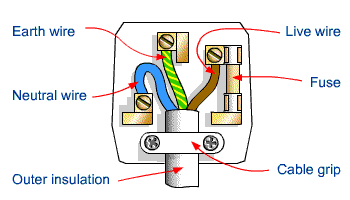
Safety Features:InsulationDouble insulation - wiring insulated and cased in plastic or other insulating materialEarth Wire - provides a very low resistance path for current in the event the live wire touches the case.Fuses - ceramic heat proof tubes with a thin wire designed to melt when certain current exceeded breaking the circuit.Circuit breaker - do the same as fuses but don't need to be replaced and reset by pressing a button
Slide 4
Measuring Current and Voltage
Current is measured using an ammeter placed in series with the component through which the current passes.
Voltage is measured using a voltmeter placed in parallel with the component through which the current passes.
Slide 5
Series vs Parallel
Same current flows through all the components
Any break in the circuit stops current flowing
If the lamps are identical they will get an equal share of the voltage and be the same brightness
Current can split / take two routes
I = I1 + I2
If the lamps are identical the current will divide equally - same voltage + brightness
If the lamps are not identical the current will not divide equally
If one of the lamps blows the other will be unaffected but the current supplied by the battery will half
Slide 6
Resistance
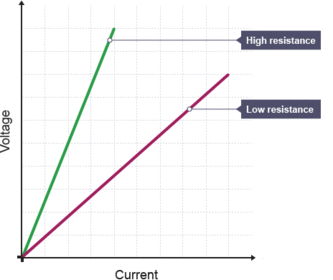
For metal wires, current varies in proportion to the voltage as long as the wire doesn't get hot.
Different wires allow different sized currents to flow for a given voltage; some wires allowed current to flow easily while others didn't
Resistance is measured in ohms
A component with a resistance of 1 ohm will pass a current of 1 Amp when a voltage of 1 volt is applied across it
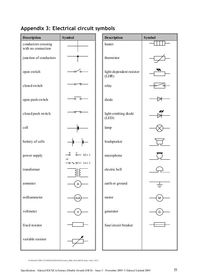
There are fixed resistors and variable resistors. Resistors have many uses such as lamp dimmers, speed control in slot car games and volume control in audio equipment
Slide 7
Components with resistance
Thermistors:
Resistance changes with change in temperature
Resistance decreases as temperature increases
Used in temperature sensing circuits
Slide 8
Light-Dependent resistors (LDR)
Resistance changes with the amount of light shining on the LDR
More light means less resistance
Used in light sensitive circuits like those to turn on street lights in the dark
Components with resistance
Slide 9
Components with resistance
Diodes and Light emitting diodes (LEDs)
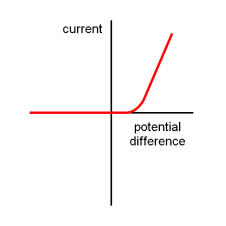
Only allow current to flow in the direction of the arrow (circuit symbol)
That is because in one direction they have little resistance and in the other very high resistance.
LED's light up when a current passes through them
Diodes control the direction in which current can flow in a circuit and are used in power supplies for DC equipment
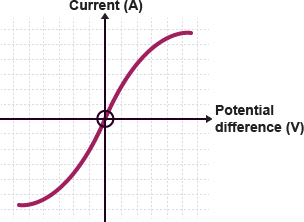
Diodes have a very high resistance when the voltage is applied in the 'wrong' direction - shown by the horizontal line when the voltage is negative. When the voltage is applied in the right direction, when it reaches about 0.7 volts the resistance drops to a small value - the graph curves and becomes very steep