
Quiz
Part2 US History EOC Review Test
Fragen in diesem Quiz (38)
1Base your answers to question on the cartoon on the left and on your knowledge of social studies.
What is the main idea of this cartoon from the Reconstruction Era?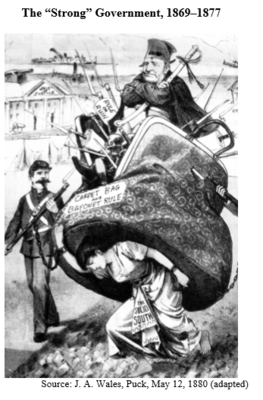
- ASouthern society was oppressed by Radical Republican policies.
- BMilitary force was necessary to stop Southern secession.
- CUnited States soldiers forced women in the South to work in factories.
- DSharecropping was an economic burden for women after the Civil War.
2Base your answers to question on the cartoon on the left and on your knowledge of social studies.
Which congressional action led to the Southern viewpoint expressed in this cartoon?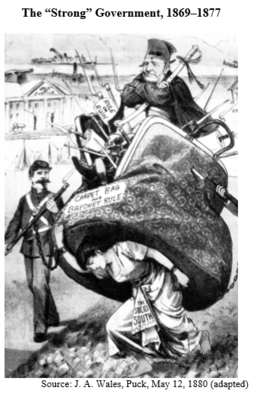
- Apassage of the Homestead Act
- Bstrengthening of the Fugitive Slave Laws
- Cmilitary occupation of the former Confederate States
- Dending the Freedmen’s Bureau
3Which statement best explains why Reconstruction ended?
- AReconstruction policies were no longer needed when the Southern states rejoined the Union
- BAfrican Americans prospered financially.
- CReconstruction was intended to be a short term event that would end in 10 years.
- DEnforcement of Reconstruction Acts decreased because of political compromise.
4 What effect did the system of sharecropping have on the South after the Civil War?
- AIt kept formerly enslaved persons economically dependent.
- BIt brought investment capital to the South.
- CIt encouraged Northerners to migrate south.
- DIt provided for a fairer distribution of farm profits.
5 Following the Civil War, many Southern states enacted Black Codes to
- Aprovide free farmland for African Americans
- Bguarantee equal civil rights for African Americans
- Crestrict the rights of formerly enslaved persons
- Dsupport the creation of the Freedmen’s Bureau
6What was a major result of the Civil War?
- AStates now had the right to secede from the Union.
- BCongress passed an amendment to provide for the direct election of senators.
- CThe power of the central government was strengthened.
- DThe judiciary became the dominant branch of the federal government.
7 Constitutional amendments adopted during Reconstruction were intended to
- Aprovide legal and political rights for African Americans
- Bend property and religious qualifications for voting
- Ccorrect problems with the Electoral College system
- Dlimit the number of terms of the president
8The institution of slavery was formally abolished in the United States by the
- ACompromise of 1850
- BEmancipation Proclamation of 1863
- Ccreation of the Freedmen’s Bureau in 1865
- Dratification of the 13th amendment in 1865
9 In the mid-1800s, the growth of the populations of California and the western territories was mainly a result of the
- Adiscovery of gold and silver
- Bopening of the Panama Canal
- Cmigration of freedmen after the Civil War
- Dsecession of the Southern states
10The Homestead Act of 1862 helped the development of the West by
- Aproviding free land to settlers
- Bgranting land for construction of transcontinental railroads
- Callowing slavery to spread to the territories
- Dplacing Native American Indians on reservations
11In the late 19th century, the federal government aided the growth of transcontinental railroads by
- Alegalizing rate rebates for large shippers
- Bproviding free land for laying railroad tracks
- Crequiring standard-gauge tracks on all interstate lines
- Dforcing small lines to consolidate into large systems
12In an effort to resolve conflicts with the frontier settlers in the 1870s, the federal government forced Native American Indians to
- Amove west of the Mississippi River
- Blive on reservations with definite boundaries
- Crelocate to urban industrial centers
- Dhelp build the transcontinental railroad
13 Passage of the Dawes Act of 1887 affected Native American Indians by
- Asupporting their cultural traditions
- Battempting to assimilate them into mainstream American culture
- Cforcing their removal from areas east of the Mississippi River
- Dstarting a series of Indian wars on the Great Plains
14 What was a major effect of the Agricultural Revolution in the United States during the late 1800s?
- AUnemployed factory workers could find jobs in agriculture.
- BFood supplies were increased to feed urban dwellers.
- CThe size of farms decreased.
- DUnited States farm exports decreased.
15The changes in American agriculture during the late 1800s led farmers to
- Agrow fewer cash crops for export
- Brequest an end to agricultural tariffs
- Cdemand a reduced role for government in agriculture
- Dbecome more dependent on banks and railroads
16A goal of the Granger and Populist movements was to
- Aexpand rights for African Americans
- Bhelp western farmers fight unjust economic practices
- Cprovide support for the banking industry
- Denable big business to expand without government interference
17In the late 1800s, the Granger movement tried to improve conditions for farmers by
- Alowering the rate of inflation
- Bstrengthening the gold standard
- Cforcing railroads to lower their rates
- Dmaking labor unions stronger
18The success of the Populist Party of the 1890s can best be measured by which development?
- AThe party replaced one of the two major parties.
- BThe party gained support among business leaders.
- CTwo of the party’s candidates were elected to the presidency.
- DSeveral of the party’s proposed reforms were made into laws.
19 During the late 1800s, many farmers supported the idea that free and unlimited coinage of silver would
- Aend farm subsidies
- Bhelp farmers to repay their loans
- Clead to lower prices for consumer goods
- Ddecrease prices for farmland
20Base your answer to the question on the cartoon to the left and on your knowledge of social studies.
This cartoon from the 1896 presidential election campaign attacked William Jennings Bryan’s proposal for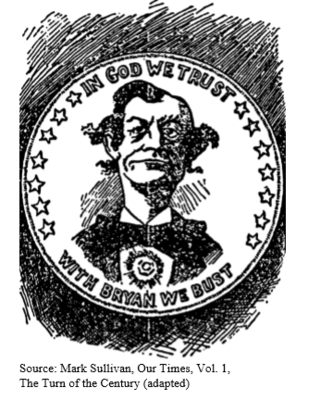
- Afree coinage of silver
- Blower tariffs on farm goods
- Cstrengthening the gold standard
- Dgovernment regulation of the railroads
21What major trend related to population occurred during the industrialization boom of the late 1800s?
- AImmigration decreased.
- BSuburbanization decreased.
- CUrbanization increased.
- DMigration to rural areas increased.
22In the last half of the 1800s, which development led to the other three?
- Aexpansion of the middle class
- Bgrowth of industrialization
- Cformation of trusts
- Dcreation of labor unions
23Which major population shift in the late 1800s occurred as a result of industrialization?
- Anortherners to the Sun Belt
- Brural residents to urban areas
- Cworking class people from the cities to the suburbs
- DAfrican Americans from the North to the South
24Why did the United States follow a policy of open immigration during much of the 1800s?
- AMany United States citizens wanted to live abroad.
- BThe United States had a shortage of labor.
- CProsperous conditions in Europe resulted in fewer immigrants coming to the United States.
- DImmigrants provided United States industry with investment capital.
25The “new immigrants” to the United States between 1890 and 1915 came primarily from
- Asouthern and eastern Europe
- Bnorthern and western Europe
- CEast Asia
- DLatin America
26 Which action by the federal government during the late 1800s is an example of nativism? (5.01)
- Apassage of the Chinese Exclusion Act
- Bcreation of tribal reservations in the East
- Cgrants of financial aid to western farmers
- Dsupport for the construction of transcontinental Railroads
27 The growth of big business in the late 1800s resulted in
- Aa reduction in child labor
- Bthe elimination of the middle class
- Cthe widening of the economic gap between rich and poor
- Da shift in transportation investment from railroads to canals
28During the late 1800s, business leaders formed trusts mainly to
- Areduce prices
- Beliminate competition
- Cimprove worker productivity
- Destablish overseas factories
29Base your answer to question on the cartoon on the left and on your knowledge of social studies.
Which economic concept is best illustrated by the cartoon?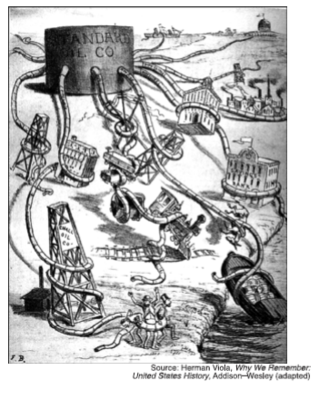
- Asupply and demand
- Bmercantilism
- Cmonopoly
- Dtrade
30Base your answer to questions 67 and 68 on the cartoon below and on your knowledge of social studies.
What is the main idea of this cartoon?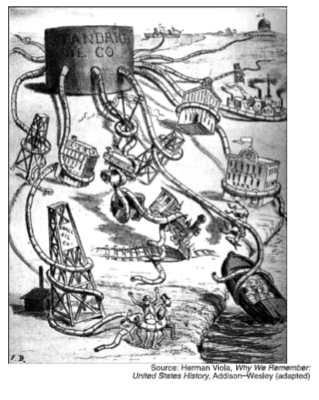
- AThe Standard Oil Company was a harmful monopoly.
- BThe best way to develop major industries was to form proprietorships.
- CGovernment regulations were strangling the Standard Oil Company.
- DForeign competition in the oil industry was hurting American companies.
31Base your answers to the question on the passage below and on your knowledge of social studies.
“. . . This, then, is held to be the duty of the man of Wealth: First, to set an example of modest, unostentatious living, shunning display or extravagance; to provide moderately for the legitimate wants of those dependent upon him; and after doing so to consider all surplus revenues which come to him simply as trust funds, which he is called upon to administer, and strictly bound as a matter of duty to administer in the manner which, in his judgment, is best calculated to produce the most beneficial results for the community— . . .”
— Andrew Carnegie, “Wealth,” North American Review, June 1889
According to this passage, the responsibility of the wealthy is to- Ainvest in future industry to increase wealth
- Bshare their excess wealth with the community
- Cmaintain a lifestyle consistent with their wealth
- Dinfluence government to assist all people
32Base your answers to the question on the passage below and on your knowledge of social studies.
“. . . This, then, is held to be the duty of the man of Wealth: First, to set an example of modest, unostentatious living, shunning display or extravagance; to provide moderately for the legitimate wants of those dependent upon him; and after doing so to consider all surplus revenues which come to him simply as trust funds, which he is called upon to administer, and strictly bound as a matter of duty to administer in the manner which, in his judgment, is best calculated to produce the most beneficial results for the community— . . .”
— Andrew Carnegie, “Wealth,” North American Review, June 1889
Andrew Carnegie carried out the ideas expressed in this statement by- Afunding numerous libraries and educational institutions
- Bserving many years in the federal government
- Cinvesting his fortune in several new industries
- Dpromoting programs to benefit the wealthy
33 Business leaders John D. Rockefeller, J. P. Morgan, and Cornelius Vanderbilt were referred to as robber barons primarily because they
- Abought titles of nobility from foreign governments
- Bwere ruthless in dealing with competitors
- Cstole money from state and local governments
- Dgained all of their wealth by illegal means
34During the late 1800s, the defenders of Social Darwinism would most likely have supported
- Alabor unions
- Bprogressive income taxes
- Claissez-faire capitalism
- Denvironmental conservation
35 What was the main benefit that labor unions of the late 19th century gained for their members?
- Ajob security
- Bimproved wages and hours
- Cpaid vacations
- Dhealth insurance
36During the late 1800s, what was the main reason labor unions had difficulty achieving gains for workers?
- ACommunists had taken control of the major unions.
- BThe government supported business efforts to limit the powers of unions.
- CMost unions had been organized by big business.
- DMost workers were satisfied with working conditions.
37Base your answers to the question on the cartoon on the left and on your knowledge of social studies.
What is the main idea of this cartoon from the 1800s?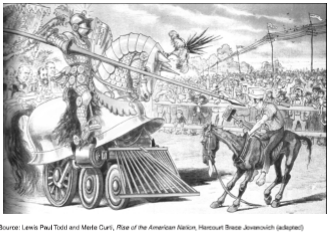
- ALabor is gaining power over big business.
- BMost Americans support the labor movement.
- CBusiness has advantages over labor.
- DGovernment should support the expansion of railroads.
38The American Federation of Labor responded to the situation shown in the cartoon by
- Aorganizing skilled workers into unions
- Bencouraging open immigration
- Cforming worker-owned businesses
- Dcreating a single union of workers and farmers
Informationen
- Beschreibung
- Part2 US History EOC Review Test
- Autor
- april.robinson.s
- Sprache
- English
- Aufrufe
- 856
- Verlauf
- Erstellt am 30 Apr 2016 · aktualisiert am 27 Sep 2017
- Schlagwörter
- Bewertung
- 5,0 von 5 · 1 Bewertung Bewerte dieses Quiz