
Karteikarten
Science 9 Safety Test Flash Cards
Karten in diesem Stapel (21)
- 1What does WHMIS stand for?Workplace Hazardous Materials Information System
- 2WHMIS is an _____________ to help workers and students know more about ____________ of material they use in the workplace and school.WHMIS is an information system to help workers and students know more about safety and health hazards of material they use in the workplace and school.
- 3WHMIS gives people key ___________ information in the form of ______________ and ______________ (MSDS)WHMIS gives people key safety information in the form of special labels, symbols and Material Safety Data Sheets (MSDS)
- 4Why does the border around each hazard symbol matter?Depending on the shape, the border determines how dangerous the hazard is.
- 5An octagon (same shape as a stop sign) indicates "______" and represents the ___________ hazard.An octagon (same shape as a stop sign) indicates "DANGER" and represents the most dangerous hazard.
- 6A four sided diamond ("______") indicates a ________or ______ hazard level. Thus a warning diamond does not pose as extreme a risk as the danger octagon.A four sided diamond ("WARNING") indicates a moderate or medium hazard level. Thus a warning diamond does not pose as extreme risk as the danger octagon.
- 7The upside down triangle ("_____") represents the _________ or the _____ hazard of the three borders. Still has some hazard.The upside down triangle ("CAUTION") represents the slightest or the least hazard of the three borders. Still has some hazard.
- 8_________ put anything in your mouth.Never put anything in your mouth.
- 9_______________ put anything down the sink or into the garbage without permissionNever put anything down the sink or into the garbage without permission.
- 10Use a ______ to clean an acid spill and use an _____ to clean a base spillUse a base to clean an acid spill and use an acid to clean a base spill
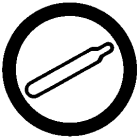
- 11Define Compressed Gas. (Class A)Compressed gas is a gas kept under pressure. Heat may cause container to explode. Drop or impact may explode. Handle with care, keep away from heat or potential ignition. Large cylinderes must be secured with chain.
- 12Define Flammable and Combustible Materials. (Class B)Material is potential fire hazard. May burn at low temperature. Spark, flame or friction may ignite. May burst into flame spontaneously. Keep away from heat sources. Store in cool, fire-proof area.

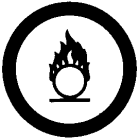
- 13Define Oxidizing Materials. (Class C)This material is at risk of fire or explosion near flammable or combustible material. May burn skin or eyes on contact. Keep away from combustible materials and store in proper area. Keep away from ignition. Never smoke near and wear proper protective equipment including eye, face, hand, and body equipment.
- 14Define Poisonous and Infectious Material (Class D)Material is potentially fatal poisonous substance. May be fatal or cause permanent damage if inhaled, swallowed, or absorbed through skin. May burn skin or eyes.
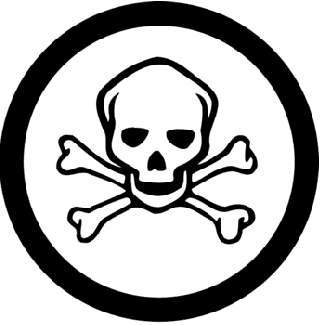
- 15Define Materials Causing other Toxic Effects. (Class D Division 2)Material is poisonous but not immediately dangerous to health. May cause death or permanent damage from repeated exposure overtime. Includes materials that cause immediate irritation to the skin or eyes, and which can cause health effects like allergies, asthma, cancer. Wear all protective equipment and make sure area is well ventilated. Store in proper areas.

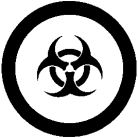
- 16Define Biohazardous Infectious Material (Class D Division 3)Includes any organisms like bacteria and viruses, and the toxins they produce that are believed to cause disease. e.g. anthrax, salmonella, hepatitis B virus, AIDS virus, contaminated blood, etc.
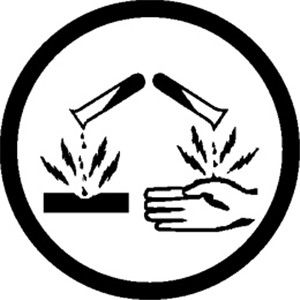
- 17Define Corrosive Material (Class E)Caustic or acid materials that can eat through the skin or corrode metals like aluminum and steel. e.g. chromic acid, sulphuric acid, sodium hydroxide, some household cleaners, water treatment chemicals, etc.
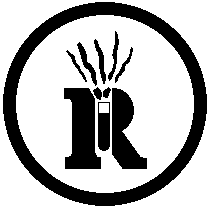
- 18Define Dangerously Reactive Material (Class F)Products that undergo dangerous reactions (such as polymerization, decomposition or condensation), when subjected to heat, pressure, shock, or contact to water.
- 19Never allow a container to _________ dry.Never allow a container to boil dry.
- 20Do not ______ unused chemicals to the original containers. Your teacher will tell you what do to with unused chemicals and how to dispose of any other materials. Never pour _______ chemicals down the drain without permission from your teacher.Do not return unused chemicals to the original containers. Your teacher will tell you what do to with unused chemicals and how to dispose of any other materials. Never pour unused chemicals down the drain without permission from your teacher.
- 21Do not leave ________ on the counter or floor.Do not leave water on the counter or floor.
Informationen
- Beschreibung
- For help memorizing the safety symbols in Science 9.
- Erstellt von
- Braden Papa
- Aufrufe
- 169
- Tags
- Bewertung