
Karteikarten
Ohne Titel
Karten in diesem Stapel (200)
- 14 Reasons for Using Derivatives1. Manage Risk
2. Speculate
3. Reduce Transaction Costs
4. Minimize taxes/avoid regulatory issues - 2Bid PriceThe price at which market-makers will buy and end users will sell
- 3Ask/Offer PriceThe price at which market-makers will sell and end-users will buy
- 4Bid-ask spreadAsk price - Bid price
- 5Round-Trip Transaction CostsDifference between what you pay and what you receive from a sale using the same set of bid/ask prices.
- 6PayoffAmount that one party would have if completely cashed out
- 7ProfitAccumulated value of cash flows at the risk free rate
- 8Long PositionBenefits from an increase in the price of an asset
- 9Short PositionA short position in an asset benefits from a decrease in the price of the asset
- 103 steps to short selling process1. Borrow an asset from a lender
2. Immediately sell the borrowed asset and receive the proceeds(usually kept by lender or third party
3. Buy the asset at a later date in the open market to repay the lender(close/cover the short position). - 11HaircutAdditional collateral placed with lender by short-seller. It belongs to short seller - Interest is given
- 12repo rateInterest rate on Haircut for a bond
- 13Short rebateInterest rate on haircut in stock market
- 143 reasons to short-sell assets1. Speculation - speculate that the price of an asset will decline
2. Financing - To borrow money for additional financing of a corporation
3. Hedging - To hedge the risk of a long position on the asset. - 151. In-the-money 2. At-the-money 3. Out-of-the-money1. Produce a positive payoff if the option is exercised immediately
2. The spot price is approximately equal to the strike price
3. Produce a negative payoff if the option is exercised immediately - 16European-style-optionCan only be exercised at expiration
- 17American-style-optionCan be exercised at any time during the life of the option
- 18Bermudan-style-optionCan be exercised during bounded periods(specified periods during option life)
- 19Zero-Coupon Bond(ZCB) 1. Buying a risk free ZCB 2. Selling a risk-free ZCB 3. Payoff on a risk free ZCB 4. Profit on a risk free ZCB1. Lending at the risk free rate
2. Borrowing at the risk free rate
3. ZCB's maturity value
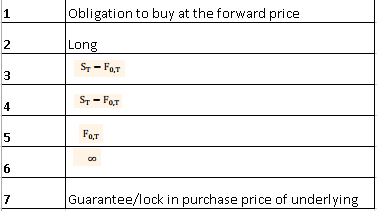
4. 0 - 20Long Forward: 1. Definition 2. Position 3. Payoff 4. Profit 5. Maximum Loss 6. Maximum Gain 7. Strategy
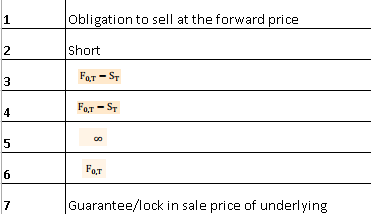
- 21Short Forward: 1. Definition 2. Position 3. Payoff 4. Profit 5. Maximum Loss 6. Maximum Gain 7. Strategy
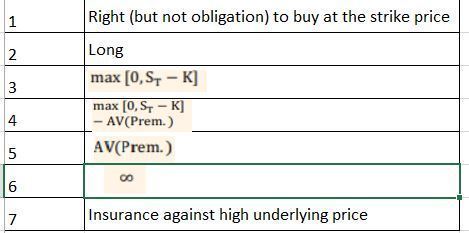
- 22Long Call: 1. Definition 2. Position 3. Payoff 4. Profit 5. Maximum Loss 6. Maximum Gain 7. Strategy
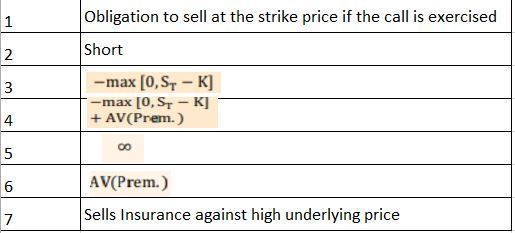
- 23Short Call: 1. Definition 2. Position 3. Payoff 4. Profit 5. Maximum Loss 6. Maximum Gain 7. Strategy
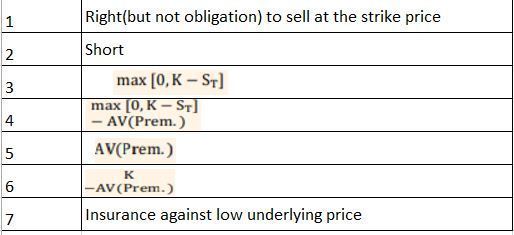
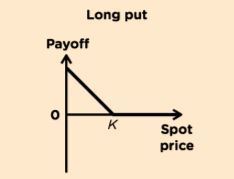
- 24Long Put: 1. Definition 2. Position 3. Payoff 4. Profit 5. Maximum Loss 6. Maximum Gain 7. Strategy
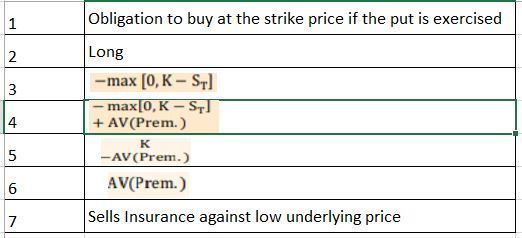
- 25Short Put: 1. Definition 2. Position 3. Payoff 4. Profit 5. Maximum Loss 6. Maximum Gain 7. Strategy
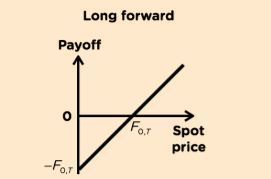
- 26Payoff Graphs Long Forward
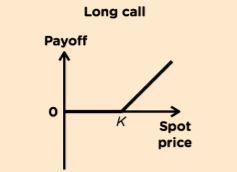
- 27Long Call Payoff Graph
- 28Long put payoff graph
- 29Naked PositionAn option writer with no offsetting position in the underlying asset.
- 30Covered PositionAn option writer has an offsetting position in the underlying asset
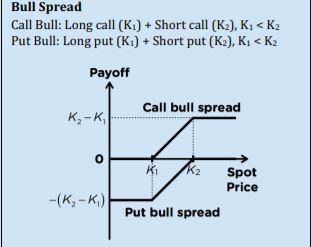
- 31Bull Spread Payoff and graph
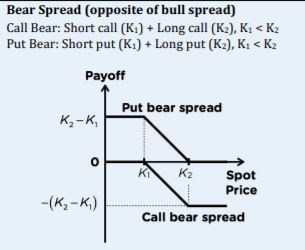
- 32Bear Spread Description and graph
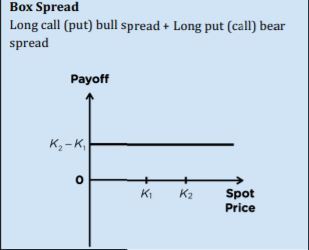
- 33Box Spread Description and graph
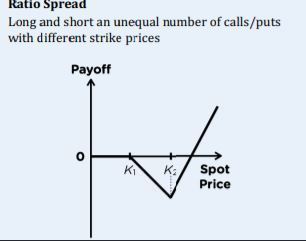
- 34Ratio Spread Description and Graph
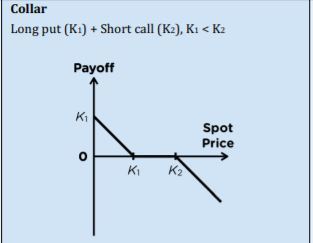
- 35Collar description and graph
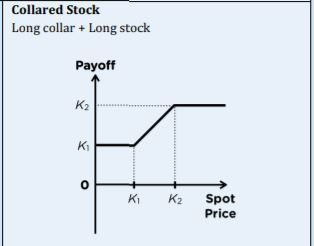
- 36Collared Stock description and graph
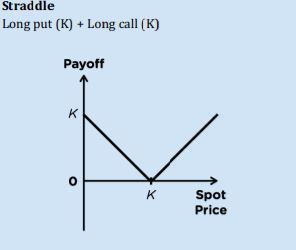
- 37Straddle Description and graph
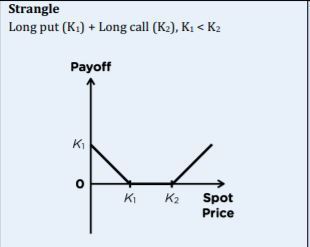
- 38Strangle Description and Graph
- 39Butterfly Spread Description and GraphSymmetric: equidistant strike prices
Asymmetric: Non-equidistant strike prices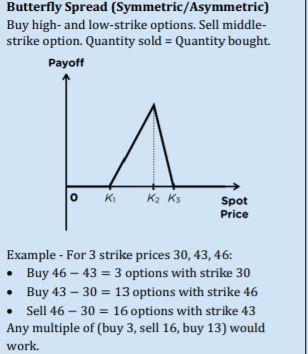
- 40Outright Purchase: 1. Payment time 2. Receive Stock time 3. Payment1. T = 0
2. T= 0
3. Spot price at T=0 - 41Fully Leveraged Purchase 1. Payment time 2. Receive Stock time 3. Payment1. T = T
2. T= 0
3. Spot Price at T = 0 accumulated at risk free rate - 42Prepaid forward contract: 1. Payment time 2. Receive Stock time 3. Payment1. T = 0
2. T= T
3. Prepaid forward price - 43Forward contract: 1. Payment time 2. Receive Stock time 3. Payment1. T = T
2. T= T
3. Forward Price - 44Prepaid forward price for 1. No Divs 2. Discrete Divs 3. Continuous Divs
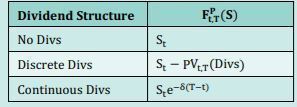
- 45Forward price 1. No Divs 2. Discrete Divs 3. Continuous Divs
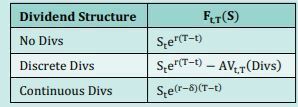
- 46Forward Premium
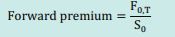
- 47Annualized forward premium rate

- 48Two ways to create a long Synthetic long Forward1. Buying a stock and borrowing money(i.e. selling a bond)
2. Buying a call and selling a put at the same strike - 49Two ways to create a short Synthetic long Forward1. selling a stock and lending money(i.e. buying a bond)
2. selling a call and buying a put at the same strike - 50ArbitrageA transaction which generates a positive cash flow either today or in the future by simultaneous buying and selling of related assets with no net investment or risk - buy low/sell high.
- 51Cash and carryThe actual forward is overpriced - short actual forward and long synthetic forward
- 52Reverse Cash-and-carryThe actual forward is underpriced - Long actual forward and short synthetic forward
- 536 aspects of a Future1. Traded on an exchange
2. Standardized(size, expiration, underlying)
3. more liquid
4. Marked to market and often settled daily
5. minimal credit risk
6. Price limit is applicable. - 54Notional Value# contracts * Multiplier * Futures price
- 55Balance time T
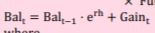
- 561. Gain_t(Long position) 2. Gain_t(short position) 3. Price change_t
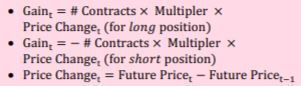
- 57Maintenance MarginMinimum margin balance that the investor is required to maintain in margin account at all times
- 58Margin callIf the margin balance falls below the maintenance margin, then the investor will get a request for an additional margin deposit. The investor has to add more funds to bring the margin balance back to the initial margin.
- 59Put Call parity: 1. Stocks 2. Futures 3. Bonds 4. Exchange options 5. Currency options
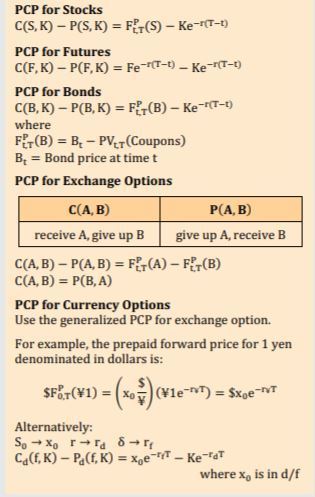
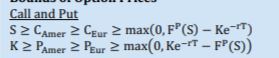
- 60Bounds 1. Call 2. Put
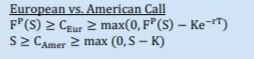
- 611. European Call Bounds 2. American Call Bounds
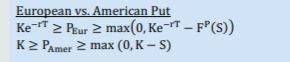
- 621. European Put Bounds 2. American Put Bounds
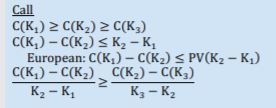
- 63Three Call Identities
- 64Three Put identities
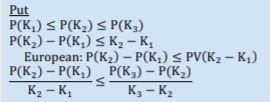
- 65Time to expiration identities
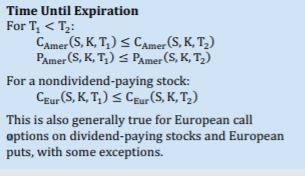
- 66Replicating Portfolio - Delta
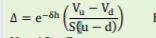
- 67Replicating Portfolio - B
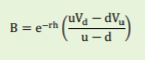
- 68Value of Option

- 69Replicating Portfolio: 1. Call 2. Put1. Buy Shares and Borrow Money
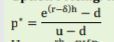
2. Sell Shares and lend money - 70Risk neutral probability - binomial
- 71Value of an option - binomial

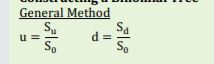
- 72General Method: 1. u 2. d
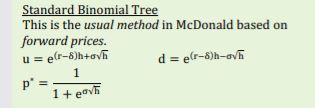
- 73Usual Method in Mcdonald 1. u 2. d 3. p of up movement
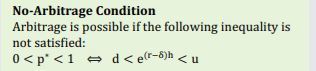
- 74No-arbitrage condition - binomial
- 75Options on Future Contracts: 1. u 2. d 3. p upward movement 4. delta 5. B
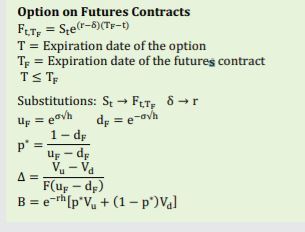
- 76Lognormal Model: 1. Expected Value 2. Variance
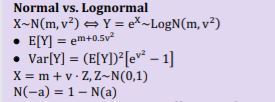
- 77Three Properties of Lognormal Distribution1. Cannot be negative
2. Product of two lognormals is a lognormal
3. Lognormal Dist is skewed Right - 78Lognormal for Stocks: Ln(S_t/st) ~ N(m,V^2) 1. mean 2. variance
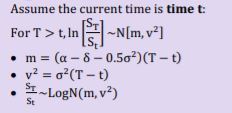
- 79T>t Ln(S_T) ~ N[m,v^2) 1. Expected Value of S_T 2. Variance of S_T 3. Covariance of S_t and S_T
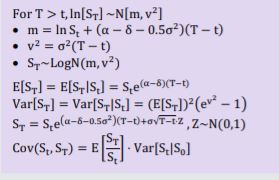
- 80How to find the pth percentile of S_T
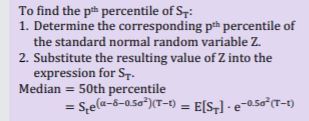
- 81Probability that S_T is greater than K
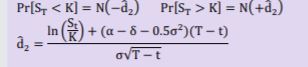
- 821. Conditional Expectation of S_T 2. Partial Expectation of S_T
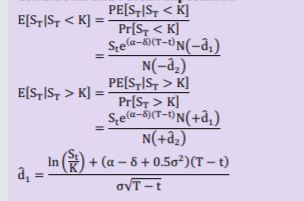
- 83Black Scholes 1. Expected Call Payoff 2. Expected Put Payoff
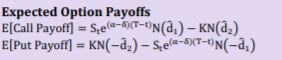
- 84Difference between true pricing and risk-neutral pricingTrue pricing uses the expected rate of return on the option while risk-neutral pricing uses the expected option payoff at the risk-free rate.
- 855 steps to estimate lognormal parameters
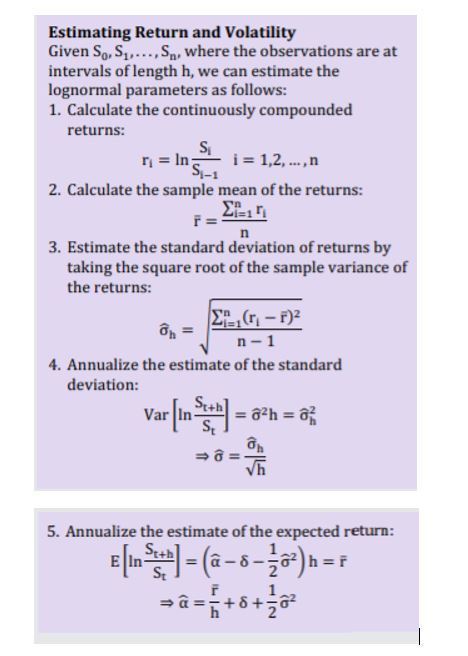
- 867 Black Schole's Formula Assumption1. Continuously compounded returns on the stock are normally distributed and independent over time. There are no sudden jumps in the stock price
2. Volatility is known and constant
3. Future Dividends are known
4. The risk-free rate is known and constant
5. There are no taxes or transaction costs
6. Short-selling is allowed at no cost
7. Investors can borrow and lend at the risk free rate. - 87Generalized BS Formula
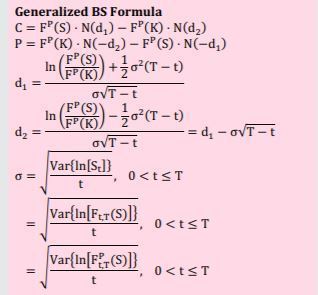
- 88BS Formula for continuous dividend stock
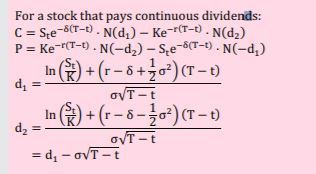
- 89Black Scholes Options on Futures ContractUse the generalized BS formula in conjunction with the appropriate prepaid forward prices. The prepaid forward price for a futures contract is just the present value of the futures price: Fe^-rT
- 90Black Scholes Options on Currencies
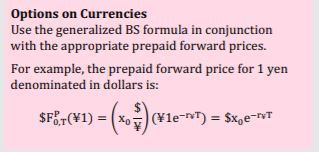
- 91Delta: 1. Definition 2. Long Call Sign 3. Long Put Sign1. Derivative of option value with respect to stock price
2. Positive
3. Negative - 92Gamma: 1. Definition 2. Long Call Sign 3. Long Put Sign1. Second derivative of Option Value with respect to stock price
2. Positive
3. Positive - 93Theta: 1. Definition 2. Long Call Sign 3. Long Put Sign1. Derivative of option value with respect to time
2. Usually negative
3. usually negative - 94Vega: 1. Definition 2. Long Call sign 3. Long Put sign1. Derivative of option value with respect to volatility
2. positive
3. positive - 95Row: 1. Definition 2. Long Call Sign 3. Long Put Sign1. Derivative of option value with respect to risk free rate
2. Positive
3. Negative - 96Psi: 1. Definition 2. Long Call Sign 3. Long Put Sign1. Derivative of option value with respect to dividend rate
2. negative
3. positive - 97Risk Premium: 1. Definition 2. For an option 3. For a stock1. The Risk premium of an asset is defined as the excess of the expected return of the asset over the risk-free return
2. expected return of option minus risk free rate
3. Expected return of stock minus risk free rate - 98How is elasticity related to risk premium and volatility1. Risk premium of an option equals elasticity times risk premium of a stock
2. Volatility of an option is equal to the absolute value of elasticity times the volatility of a stock - 99Sharpe Ratio: 1. For an option 2. For a stock 3. Identity between stock and option
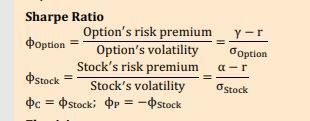
- 100Elasticity
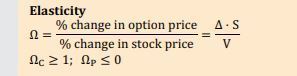
- 101Greeks for a portfolioSum of the Greeks
- 102Elasticity of a portfolio
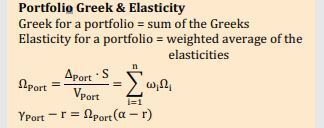
- 103Delta-Gamma-Theta Approximation

- 104Delta-Gamma Approximation

- 1053 components of a delta-hedged portfolio1. Buy/Sell Options
2. Buy/Sell Stocks
3. Borrow/lend money (sell/buy bond) - 106Two ways to calculate Overnight profit1. Sum of profit on options, profit on stocks, and profit on bonds.
2. Sum of gain on options(ignore interest), gain on stocks(ignore interest), and interest on borrowed/lent money. - 107Profit of Market makers with delta hedge from time t to t+h
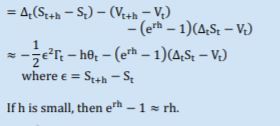
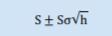
- 108Two stock prices where the delta-hedged portfolio breaks even
- 109Hedging multiple GreeksThe delta of the stock is 1 but all other Greeks of the stock are 0. To hedge multiple Greeks set the sum of the Greeks you are hedging to zero.
- 110Guaranteed Minimum Death Benefit(GMDB)Guarantees a minimum amount will be paid to a beneficiary when the policyholder dies
- 111Guaranteed Minimum Accumulation Benefit(GMAB)Guarantees a minimum value for the underlying account after some period of time, even if the account value is less also known as a guaranteed minimum maturity benefit.
- 112Guaranteed Minimum Withdrawal Benefit(GMWB)Guarantees that upon the policyholder reaching a certain age, a minimum withdrawal amount over a specified period will be provided
- 113Guaranteed Minimum Income Benefit(GMIB)Guarantees the purchase price of a traditional annuity at a future time.
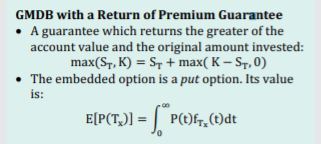
- 114GMDB with ROP Guarantee: 1. Payoff 2. Option type 3. Option Value
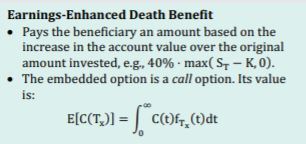
- 115Earnings-Enhanced Death Benefit c
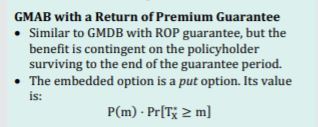
- 116GMAB with ROP Guarantee 1. Payoff 2. Option type 3. Option Value
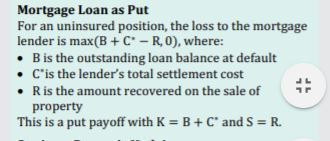
- 117Mortgage Loan 1. Payoff 2. Option type
- 118Static HedgingBuy options and hold to expiration
- 119Dynamic HedgingFrequently buy/sell assets and/or derivatives with the goal of matching changes in the value of guarantee
- 120Variable AnnuityA variable savings product with the option to convert the accumulated amount to an annuity.
- 121Return of Premium GuaranteeGuarantee which returns the greater of the account value and the original amount invested.
- 122Guaranteed replacement cost coverageOptional Benefit that can be added to a property insurance policy to cover the cost of replacing a physical piece of property when the cost is more than the amount of insurance in the base policy.
- 123Inflation IndexingFeature which adjusts for inflation in defined benefit pension plans. Full vs Partial measured with CPI.
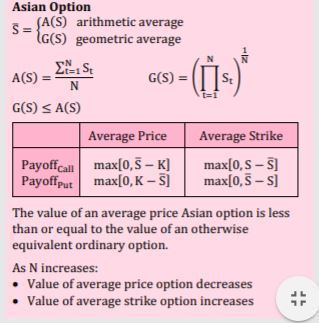
- 124Asian Option: 1. Two methods - Calculation 2. Payoffs for 4 option types 3. As N increases what happens to option value
- 125Three Types of Barrier Options and definitions1. Knock-in: Goes into existence if barrier is reached.
2. Knock-out: Goes out of existence if barrier is reached.
2. Rebate: Pays fixed amount if barrier is reached. - 126Up and in, up and out, up rebate happen whenStock price is less than barrier
- 127Down and in, down and out, down rebate happen whenStock price is greater than the barrier
- 1282 identities of barrier optionsIdentities:
1. Knock-in + knock-out = ordinary option
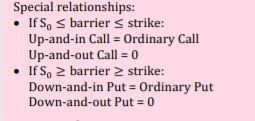
2. Barrier Option <= Ordinary Option - 1292 special relationships of barrier options
- 130Compound Option: 1. Compound Call 2. Compound Put1. Allows the owner to buy another option at the strike price
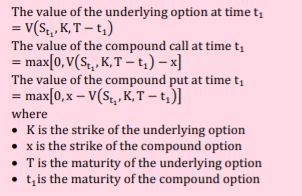
2. Allows the owner to sell another option at the strike price - 1311. Value of underlying option at time t_1 2. Value of compound call at time t_1 3. Value of compound put at time t_1
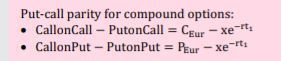
- 132Put Call Parity for Compound Options
- 133Gap Option: 1. K1 and K2 2. Payoff Call/Put 3. Value
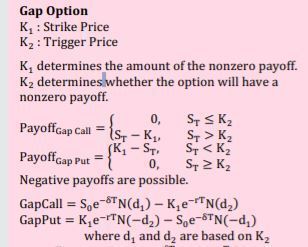
- 134PCP for Gap Options

- 135Black Scholes for Exchange Option
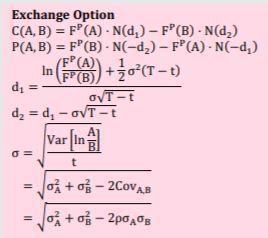
- 1363 maxima and minima identities
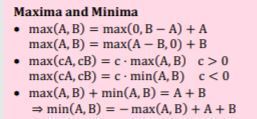
- 137Exchange Options: 1. C(A,B) 2. P(A,B)1. C(A,B) = P(B,A) - Allows the owner to receive A and give up B
2. P(A,B) = C(B,A) allows the owner to give up A and receive B. - 138Forward Start OptionPrepaid forward on an option. Provides the owner with an option at some specified future time. When the forward start option expires the owner will receive an option whose strike price depends on the stock price at that time.
- 139Asian OptionHas a payoff depending on the average stock price over a period of time. Path-dependent option
- 140Barrier OptionOption that goes into or out of existence if the price of the underlying asset reaches a specified barrier during the life of the option. Path-Dependent
- 141Compound OptionAllows the owner to buy or sell another option at a specified strike price
- 142Gap OptionAn option in which the price that determines whether or not the option will have a nonzero payoff may be different from the price that determines the amount of the nonzero payoff, thus creating the gap.
- 143Exchange OptionAn option that allows its owner to exchange one asset for another
- 144Chooser OptionAn option that allows the owner to choose at a specified future time whether the option will be a European Call option or a European put option. Underlying asset, strike price, and expiration date will remain the same regardless of choice.
- 145Lookback OptionOption whose payoff at expiration depends on the maximum or minimum of the stock price over the life of the option
- 146Shout OptionAn option that gives the owner the right to lock in a minimum payoff exactly once during the life of the option at a time that the owner chooses. When this right is exercises the owner is said to "shout" to the writer.
- 147Rainbow OptionAn option whose payoff depends on two or more risky assets. Example: Exchange option that allows the owner exchange a share of stock A for two shares of stock B.
- 148Forward Start Option Black Scholes Pricing
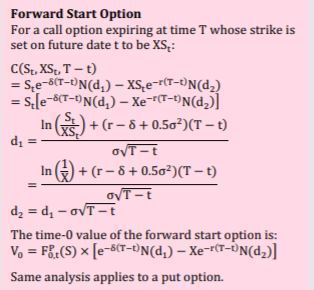
- 149Chooser Option Value/Pricing
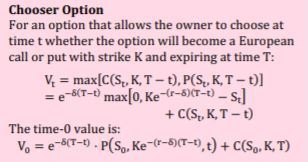
- 1504 Types of Lookback options and payoffs
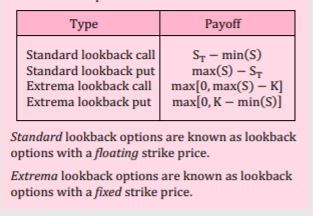
- 151Shout Option Payoff: 1. Call 2. Put
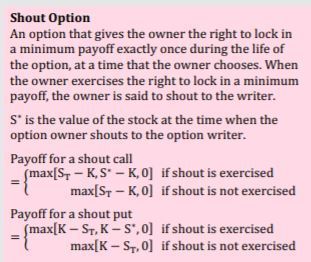
- 152Expected Return of a Single Asset
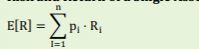
- 153Variance and stdev of a single asset
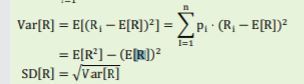
- 154Realized Return of an asset: 1. Realized 2. Annual Realized
- 155Annual: 1. Average Return 2. Variance of Return 3. Standard Error of Returns 4. 95% confidence interval of expected return
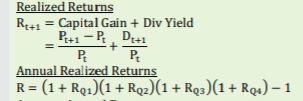
- 156Expected return of a portfolio
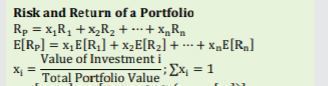
- 157Covariance between two stocks
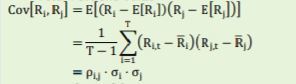
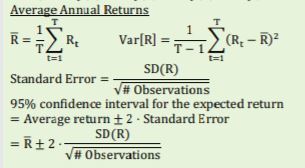
- 158Two stock portfolio: 1. Return of portfolio 2. Variance of portfolio
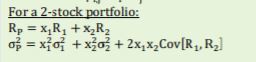
- 159Three Stock portfolio 1. Return of portfolio 2. Variance of portfolio
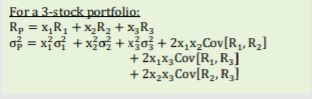
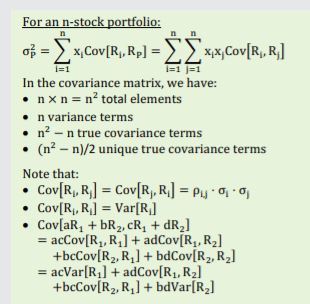
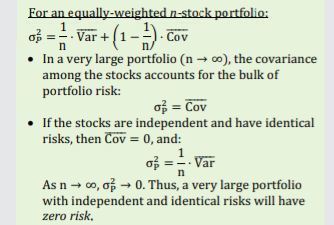
- 160N Stock Portfolio 1. Return of portfolio 2. Variance of portfolio
- 161Systematic RiskKnown as common, market, or non-diversifiable risk. Fluctuations in a stock's return that are due to market-wide news.
- 162Nonsystematic riskAlso known as firm-specific, independent, idiosyncratic, unique, or diversifiable risk. Fluctuations in a stock's return that are due to firm-specific news.
- 163Total RiskSystematic Risk + Unsystematic Risk
- 164DiversificationReduces a portfolio's total risk by averaging out nonsystematic fluctuations
- 165Why won't investors pay for nonsystematic fluctuationsInvestors can eliminate nonsystematic risk for free by diversifying their portfolios. Thus the risk premium for no systematic risk is zero.
- 166What is risk premium determined by?The risk premium of a security is determined by its systematic risk and does not depend on its nonsystematic risk.
- 167The risk premium of a security is determined by its systematic risk and does not depend on its nonsystematic risk.
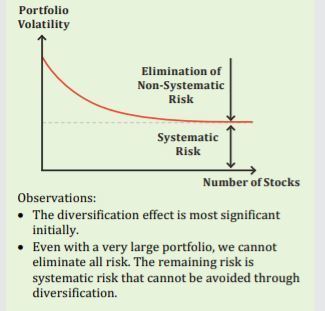
- 168Volatility# of stocks graph 1. Where is diversification effect most significant 2. Why cannot we no eliminate all risk
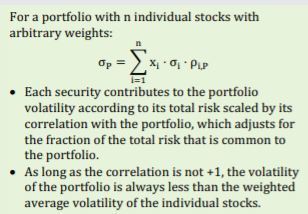
- 169How much does each security contribute to the portfolio volatility?
- 1704 assumptions of mean variance portfolio theory1. All investors are risk averse
2. The expected returns, variances, and covariances of all assets are known.
3. To determine optimal portfolios, investors only need to know the expected returns, variances and covariances of returns.
4. There are no transactions costs or taxes. - 171What makes an efficient portfolio?A portfolio is efficient if the portfolio offers the highest level of expected return for a given level of volatility(or the lowest level of volatility for a given level of return).
- 172Efficient Frontier
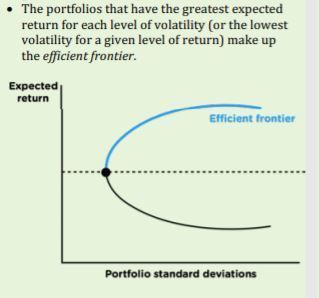
- 173The effect of correlation: 1. row = 1 2. row <1 3. row = -1
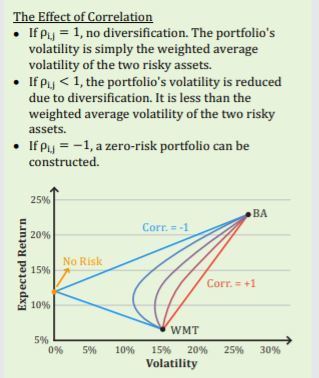
- 174Capital Allocation Line
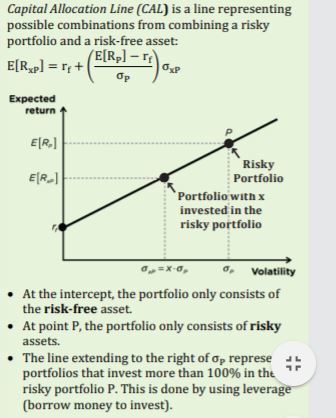
- 175Expected return on asset + risk free asset
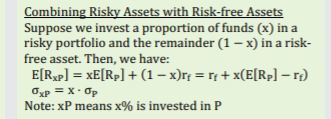
- 1764 aspects of the Tangent Portfolio1. The risky portfolio on the efficient frontier of risky assets that is tangent to the CAL
2. It is the optimal risky portfolio that will be selected by a rational investor regardless of risk preference
3. The Sharpe Ratio for a tangent portfolio will always be the highest, so the tangent portfolio is efficient
4. All combinations of the risk free asset and the tangent portfolio are efficient portfolios. - 177When it is optimal to add an investment to a portfolio
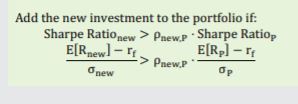
- 1783 steps to creating Capital Market Line
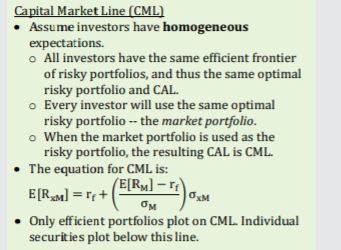
- 1793 aspects of homogeneous expectations
- 180Rank the 5 asset classes by expected return1. Small-Cap(market cap in bottom 20% of NYSE) 12.83%
2. Large-cap stocks(S&P 500 Index) 9.99%
3. World-Portfolio(International) stocks 8.83%
4. Corporate Bonds(AAA-Rated, avg. 20 yr. term) 3.45%
5. Treasury bills (one-month return) 2.93% - 181Rank the 5 asset classes by Volatility1. International Stocks 12.83%
2. Small-cap stocks 9.99%
3. Large-cap stocks 8.83%
4. Treasury bills 3.45%
5. AAA-rated corporate bonds 2.93% - 182Cov(x+y,z+w)cov(x,z)+cov(x,w)+cov(y,z)+cov(y,w)
- 183What do Perfectly Correlated Portfolios have in commonHave the same sharpe ratio. There y-intercept is the risk free rate
- 184Beta: DefinitionThe expected percent change in an asset's return given a 1% change in the market return.
- 1854 Key facts about Beta1. Measures the sensitivity of the asset's return to the market return
2. The beta for a stock on average is around 1
3. Cylical industries(tech, luxury, goods) tend to have higher betas.
4. Non-cyclical industries (utility, pharmaceutical) tend to have lower betas. - 186Cyclical IndustryTypes of industries which are more sensitive to economic shocks for example technology and luxury goods. Thus cyclical industries tend to have higher betas
- 187Non-cyclical industriesexample: utility and pharmaceutical industries tend to have lower betas. These industries are more stable and highly regulated and thus are less sensitive to fluctuations in the overall market.
- 188Interpreting Beta: 1. Beta = 1 2. Beta > 1 3. Beta < 1 4. Beta = 01. The asset has the same systematic risk as the market. The asset will tend to go up and down the same percentage as the market.
3. The asset has more systematic risk than the market. The asset will tend to go up and down more than the market on a percentage basis
4. The asset has less systematic risk than the market. The asset will tend to go up and down less than the market on a percentage basis.
5. The asset's return is uncorrelated with the market return. - 189Equation for Beta for an asset and beta for a portfolio and beta estimation
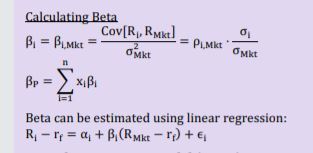
- 190CAPM Equation
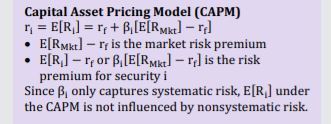
- 1913 Assumption of CAPM1. Investors can buy and sell all securities at competitive market prices. There are no taxes or transaction costs. Investors can borrow and lend at the risk-free rate
2. Investors hold only efficient portfolios of traded securities
3. Investors have homogeneous expectations regarding the volatilities, correlations, and expected returns of securities.
These assumptions lead to the fact that the market portfolio is the efficient portfolio. - 192Security Market Line(SML): Definition
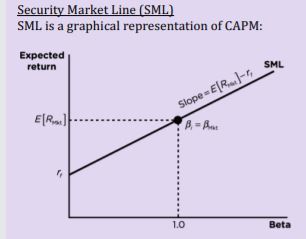
- 193CML vs SML 1. Type of Risk 2. Securities Held
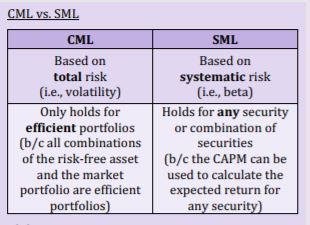
- 194AlphaThe difference between a security's expected return and the required return(as predicted by the CAPM)
- 195Alpha Equation

- 196SML Key factor about efficiencyIf the market portfolio is efficient than all securities are on the SML: the expected return equals the retired return and alpha is 0.
If the market portfolio is not efficient than all securities will not all lie on the SML and the expected return does not equal the required return and alpha is not equal to 0. - 197How to improve the market portfolio1. Buy stocks whose expected return is above the required return.
2. Sell stocks whose expected return is less than the required return. - 198Two methods to estimate the market risk premium1. Historical Risk Premium - Uses the historical average excess return of the market over the risk-free interest rate
2. Fundamental Approach - Uses the constant expected growth model to estimate the market portfolio's expected return - 199Fundamental Approach Equation

- 200Two methods to estimated debt cost of capital
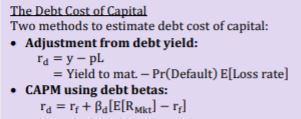
Informationen
- Beschreibung
- Karteikarten am Ohne Titel, erstellt von Russell Harmening am 21/09/2018.
- Erstellt von
- Russell Harmening
- Aufrufe
- 8
- Bewertung