
Karteikarten
Globalisation Flashcards
Karten in diesem Stapel (15)
- 1Globalisationthe process by which the world is becoming increasingly interconnected as a result of massively increased trade and cultural exchange.
- 2free tradeinternational trade without barriers or restrictions
- 3political globalisationamount of political co-operation that exists between countries
- 4social globalisationsharing of ideas and information between and through different countries
- 5advantages of FREE TRADEmore choice
cheaper alternatives
cheaper raw materials
can increase profit margins
increase consumer base
economies specialise what they're good at
political and cultural links - 6disadvantages of FREE TRADElow competitive businesses cannot compete and go bust
bad for the environment]harder to compete on global marker than domestic
dependency relationships - 7advantages of GLOBALISATIONcan create jobs and higher world output (jobs, income etc). Theories of absolute and comparative advantage explain this
consumers access wider range of products. Puts downward pressure on inflation. 'the china effect' in the UK.
Greater levels of FDI. Really good for LEDCs. Also B of P. Improve management, jobs, skills etc
improved communication/transport networks
access to cheaper raw materials/labour which raise productivity. More opportunity for EoS
Greater competition in markets. More efficient etc.
Higher world output and incomes lifted approx 1 million out of poverty. Most in China. - 8disadvantages of GLOBALISATIONnon-competitive firms cannot survive
heavy industry and pollution
resources may be exploited including labour. China in Africa, lots of resources
BoP may worsen due to more imports. Absolute advantage
high wage economies w lower productivity struggle with more unemployment. World Bank said the effects are uneven. More wage inequality and blue collar jobs under threat. Race to bottom with wages
specialisation can lead to more dependency
6 mill manufacturing jobs been lost in the US. 44% due to Chinese imports.
MNCs may mean worsened working conditions, depleted resources, repatriated profits
Elephant graph by world bank suggest richest grown richer and low earners in LEDCs have lost out - 9why might those on low incomes in ELDCs not benefit from globalisationLEDCs have large agricultural sectors/primary production. MNCs may own mines/mineral rights/oil etc which they exploit doesn't develop other sectors/improve living standards
poor infrastructure makes trade difficult particularly in agriculture
CAP in EU prevents free trade in agricultural goods. Creates surpluses which are sold for low prices in LEDCs.
Prices of agricultural goods are volatile but over time have fallen.
environmental damages from transporting goods across the world. - 10what is protectionismbarriers to free trade such as:
tariffs - tax
embargos - ban
quotas - limit
health and safety standards/rules and regs
subsidies
exchange rate policy (in some countries) - 11motives for protectionismprotect domestic industries. Donald Trump "America First". This may be because of jobs, because it is of 'strategic importance' or because of 'unfair competition.
Reduce deficit on current account on BoP.
Political motives relating to foreign policy
environmental/health and safety motives. EG ban on ivory and chlorinated chicken
Infant industry argument in LEDCs - 12Balance of paymentsOn the current account:
Trade in goods
balance on trade in services
Net Investment income
(net interest, profit, and dividend)
transfers
Financial Account:
FDI/Direct investment
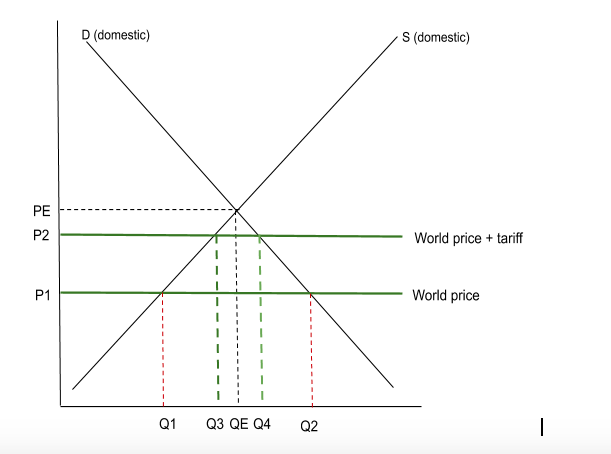
portfolio investment - 13Tariff diagram
- 14tariff explanationbefore the tariff the level of imports (assuming free trade) is Q1--->Q2 and after the tariff is imposed falls to Q3--->Q4
- 15Tariffs winners and loserscreate winners and loser.
Winners are domestic producers as the tariff raises their competitiveness
the govt are also winners as their tax revenue is raised.
Losers:
Foreign producers face lower demand - lower output- revenue - profits
Consumers have to pay more
domestic producers relying on imported raw materials which are subject to tariffs
economy - the protection of relatively inefficient industries leads to global misallocation of resources and prevents resources moving to more efficient use. Prevents job loss in short run but results in prevention of 'structural readjustment' in the long run.
Informationen
- Beschreibung
- Highers Economics (Macroeconomics) Karteikarten am Globalisation Flashcards, erstellt von anna boyd am 10/05/2019.
- Erstellt von
- anna boyd · Mai 2019
- Aktualisiert
- 17 Mai 2019
- Aufrufe
- 0
- Bewertung