
Globalisation
1,158 resources created by 1,020 users
This Globalisation page on GoConqr gathers community-made mind maps, flashcards, quizzes, notes and slides, from the balance of payments and exchange rates to multinational companies, the IMF and the World Bank. It's built for school students revising a topic, university students filling gaps, and teachers after ready-made material. There are over 1,000 resources here, including more than 30 quizzes, over 800 mind maps and more than 160 flashcards, pitched at secondary and university level. Pick a topic, try a quiz, then build your own.
Select topic
- Causes and History of Globalisation23
- Measuring Globalisation11
- The Global Economy39
- International Trade and Competitiveness66
- Economic Integration and Regionalisation19
- Balance of Payments and Exchange Rates35
- Foreign Direct Investment and Capital Flows9
- Transnational Corporations21
- International Economic Institutions32
- Emerging Markets and Regional Economies55
- Effects of Globalisation on Employment13
- Globalisation and Economic Development11
- Globalisation and the Environment12
- Effects of Globalisation70
Top Globalisation resources
-
Mind map The Balance of Payments and Exchange Rate
-
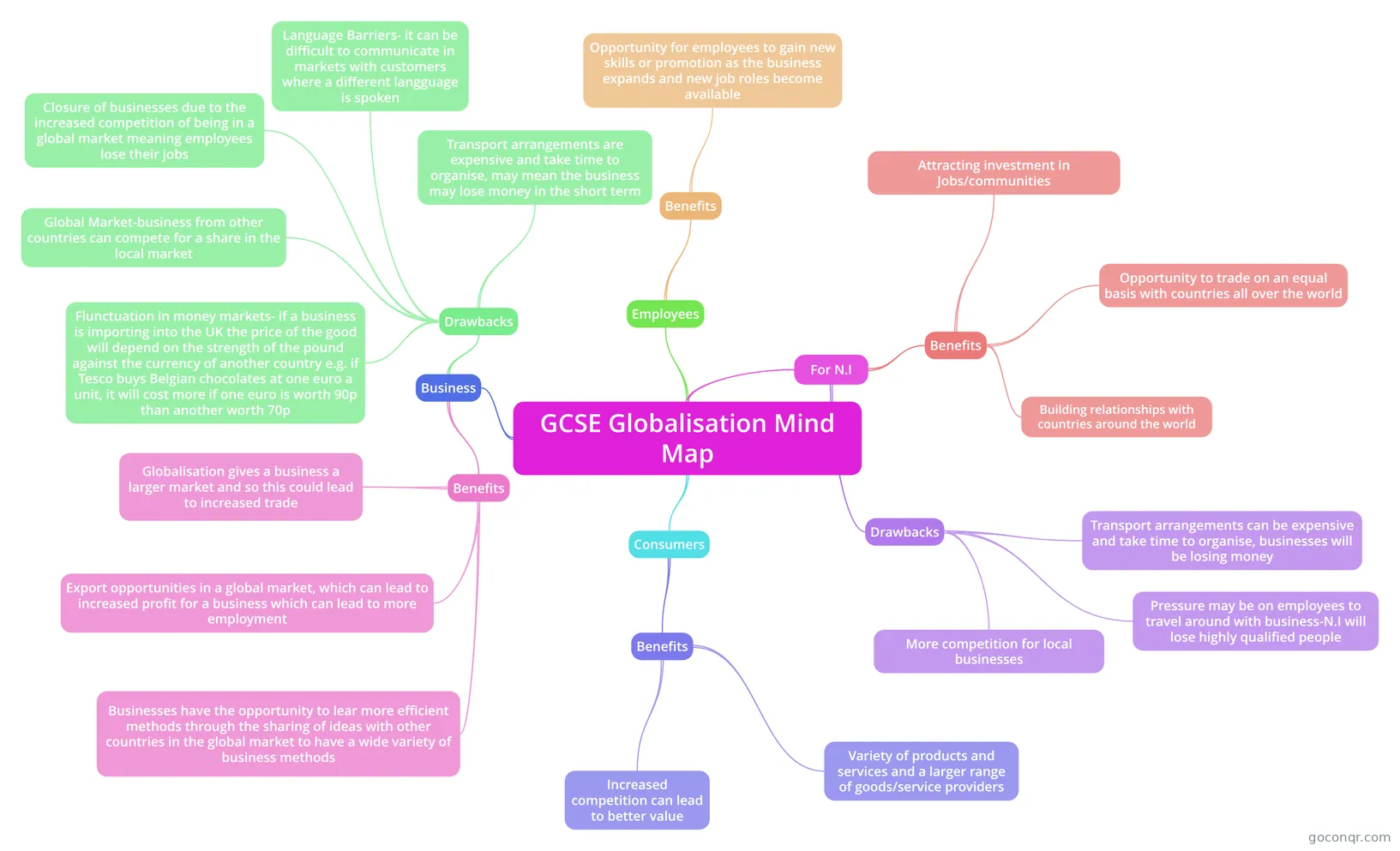 Mind map GCSE Globalisation Mind Map GCSE mindmap, LLW, Globalisation
-
Mind map Pros and Cons of Globalization Mindmap for Abitur English topic Globalization: Hopes/Chances/Opportunities vs. Dangers/Risks/Fears of Glob...
-
7 cardsScholars Micklthwait & Wooldridge
-
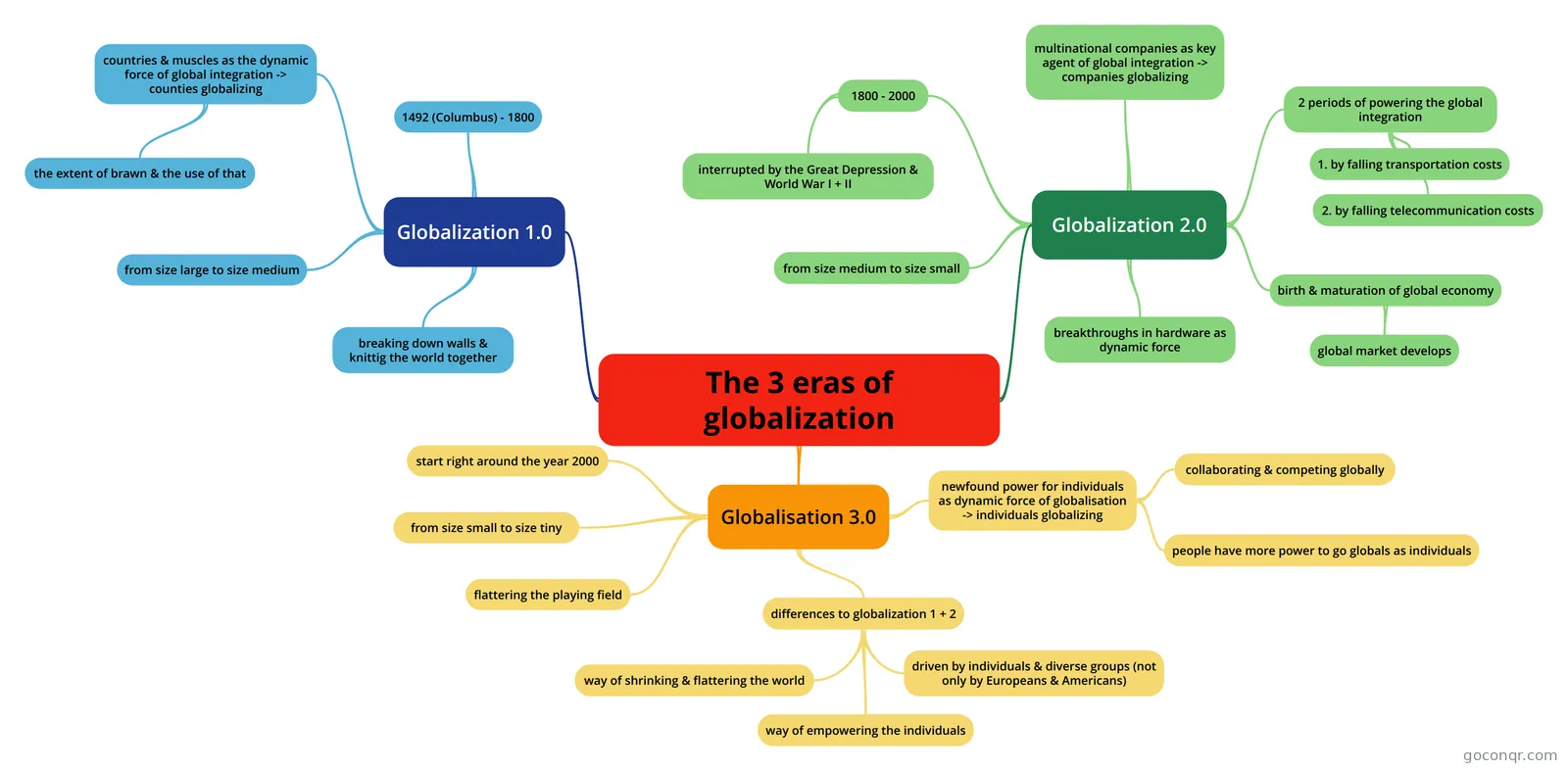 Mind map The 3 eras of globalization
-
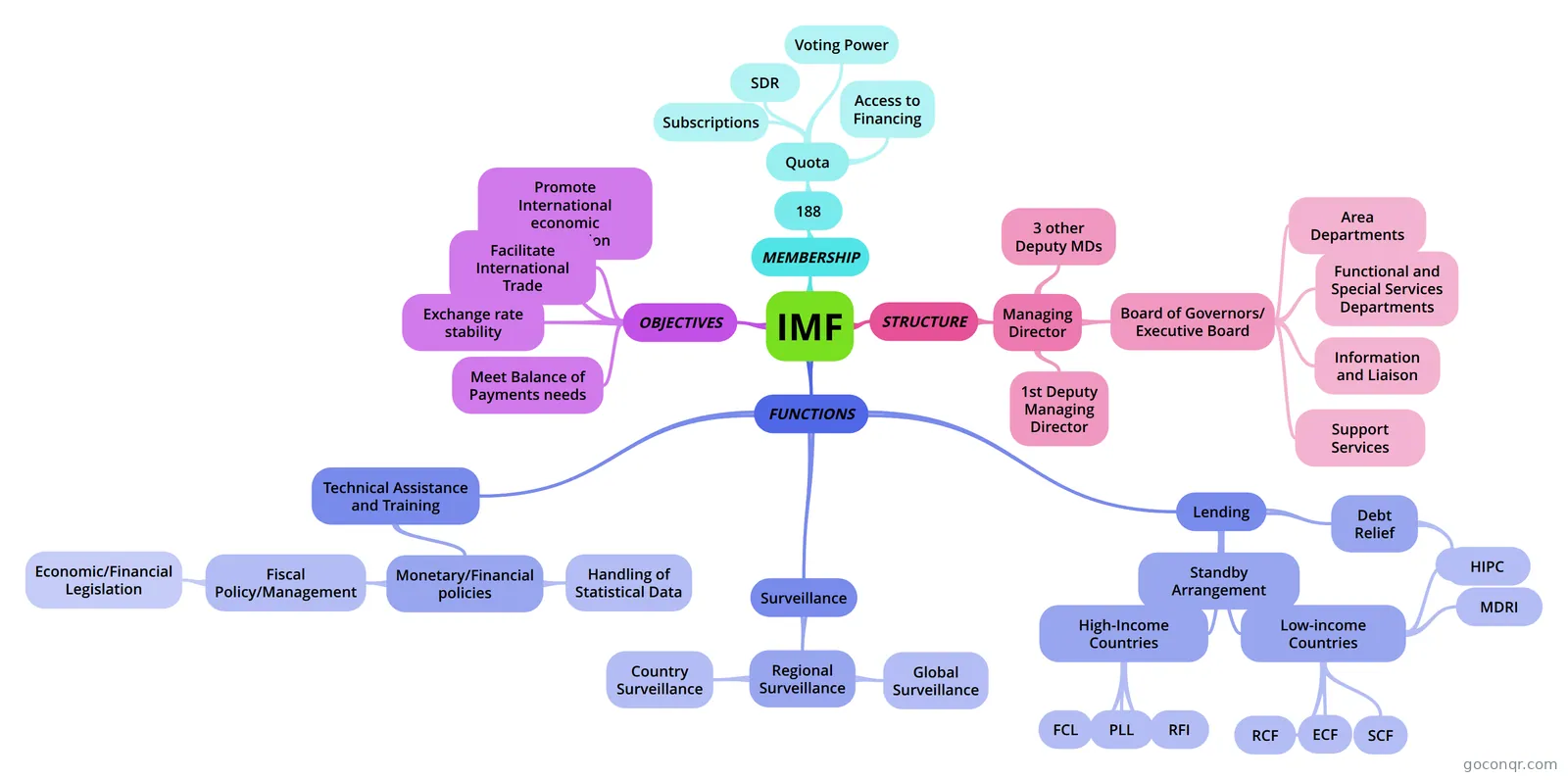 Mind map IMF
-
4 questionsMultinational & Trnansnational corporations Multinational & transnational corporations tend to disobey the environmental regulations because
-
Mind map International Organisations
Quizzes
See all 42 quizzesMind maps
See all 894 mind maps-
The Balance of Payments and Exchange Rate
-
GCSE Globalisation Mind Map GCSE mindmap, LLW, Globalisation
-
Pros and Cons of Globalization Mindmap for Abitur English topic Globalization: Hopes/Chances/Opportunities vs. Dangers/Risks/Fears of Glob...
-
The 3 eras of globalization
-
IMF
-
International Organisations
-
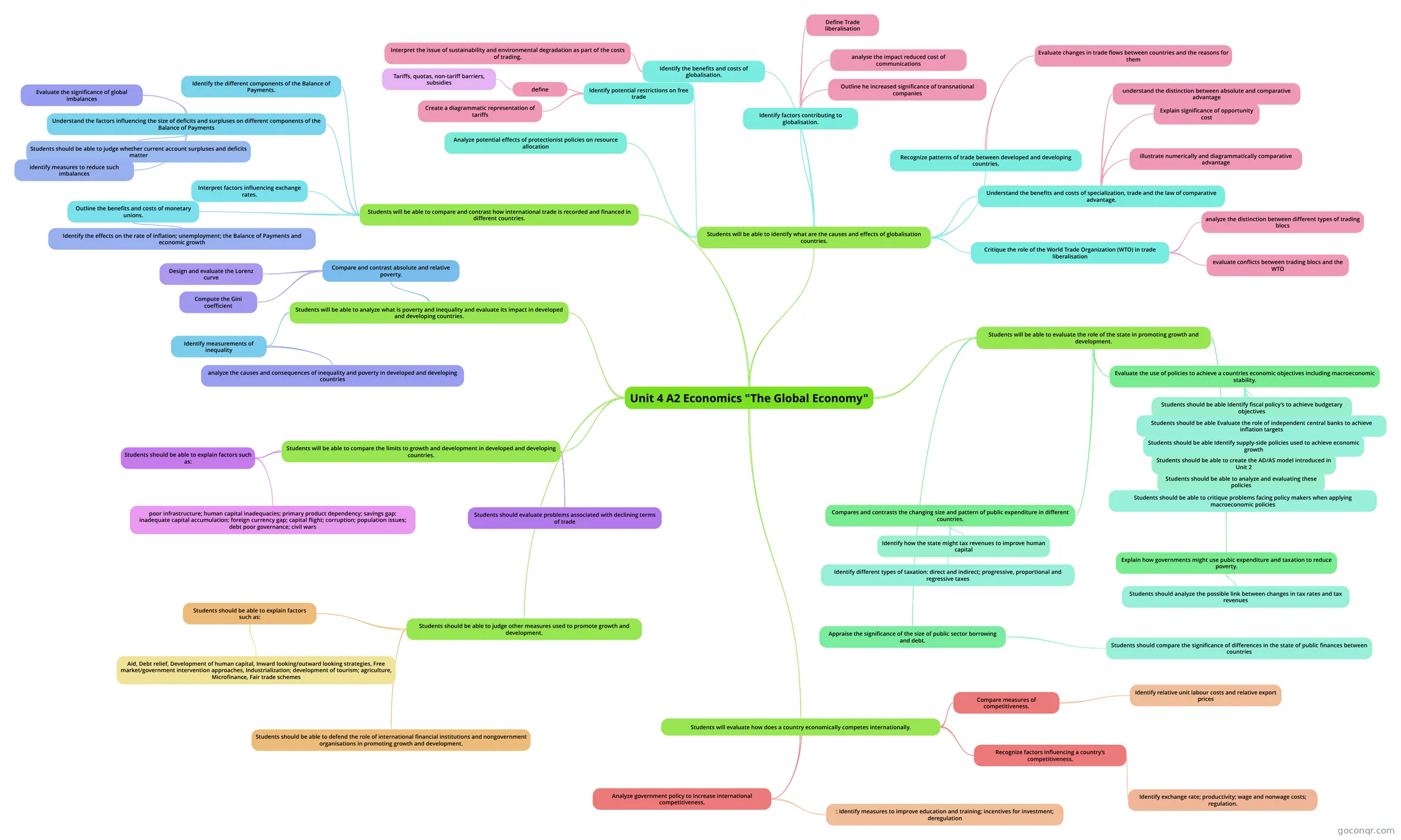 Unit 4 A2 Economics "The Global Economy"
-
GLOBAL INTEGRATION Social 10-1 Unit 3 Social Integration Mind Map
Flashcards
See all 166 flashcards-
7 cardsScholars Micklthwait & Wooldridge
-
102 cardsInternational Economics Timeline of Economic Globalization (5)
-
110 cardsInternational Economics Lectures 1 - 6 Components of the Global Economy
-
23 cardsMidterm 1
-
21 cardsThe Global Economy What is the Global Economy?
-
25 cardsSocial 10: Unit 3 Flashcards Use this to study important terms to know.
-
32 cardsUnit 3 KEY TERMS - economics and business
-
30 cardsNational and Global Economy
Notes
See all 37 notes-
Economic Development - DEBT CRISIS
-
Winners and Losers from Globalisation BENEFITS TO DEVELOPED AND DEVELOPING COUNTRIES OF GLOBALISATION: DISADVANTAGES OF GLOBALISATION:Impacts on natural environment: Environmental damage E.G. more cars purchased, more flights taken so increased global war...
-
International Institutions - IMF Graham Bird - 'IMF Lending to Developing Countries: issues and evidence', Chapter 1, Pages 1-12 International Monetary Fund (IMF) as originally established in order to encourage international co-operation to cope with...
Slides
Topics in Globalisation
More Economics topics
About Globalisation
GoConqr OriginalWhat this page covers
The resources here were made by GoConqr users and look at globalisation from several sides. Some deal with money and trade, such as The Balance of Payments and Exchange Rate, which covers the FOREX market, and the maps on purchasing power parity and the monetary model of exchange rates. Others look at institutions: the IMF map sets out membership, quotas, voting power and structure, and there are also maps on the World Bank and trading blocs.
Where to start
Begin with the big picture. Pros and Cons of Globalization sorts risks and opportunities by theme, including the environment, developing countries, culture and the industrial economy. GCSE Globalisation Mind Map looks at benefits for consumers. The 3 eras of globalization adds a historical thread, starting with Globalization 1.0.
- Read one overview map to get the main arguments.
- Move to a specific map, such as the balance of payments or the IMF.
- Test yourself with a quiz.
Using quizzes and maps together
Open a map first and note the headings you cannot explain. Then try a quiz such as Multinational & Trnansnational corporations, which asks about the influence of these companies, or Balance of Payments & Exchange rates. Go back to the map for anything you missed. Flashcard decks like Scholars, which lists thinkers from Adam Smith to Friedrich Hayek, and International Economics help with key terms.
Case studies and exams
Several resources are about named companies and events, including Nike and East Asian Crisis 1997. They are handy for examples. The resources mention exams such as A-level Economics, IB, A-level Business and GCSE Business Studies, as well as university lecture material, so check what fits your course.
Where it sits
This unit belongs to the strand The Global Economy in Economics. Choose a map that matches your next lesson, then add your own cards and notes as you go.
Frequently asked questions
Which resource should I open first?
Start with Pros and Cons of Globalization, a mind map that groups dangers and opportunities by theme. If you are revising for GCSE, the GCSE Globalisation Mind Map is a good alternative. Once you know the main arguments, move on to a more specific map or a quiz.
What do the mind maps cover?
They cover the balance of payments, exchange rates, the IMF, the World Bank, trading blocs, multinational companies, competitiveness policies and the costs of globalisation. There are also case maps on Nike and the East Asian Crisis 1997. Over 800 mind maps are listed, so there is plenty to compare.
Are the resources free to use?
Yes. Every resource on this page is free to open, study and take, with no account needed. They were made by GoConqr users, not by GoConqr. A free account also saves your quiz scores and lets you make your own quizzes, mind maps, flashcards and notes.
Which levels and exams do they suit?
The mix is about half secondary and half university. The resources mention A-level Economics, IB, A-level Business, A-level Geography, GCSE, GCSE Geography, GCSE Business Studies and Abitur. University students will find lecture notes and seminar quizzes.
Are there quizzes on this page?
Yes, more than 30. Examples include the quiz on multinational and transnational corporations, Balance of Payments & Exchange rates, Globalization - Phase 3 and International Business. Use them after reading a map to see which parts you still need to review.
What if I can't find the topic I need?
Try a nearby resource first, such as the maps on international economics or the global economy, which may cover it in passing. If it is still missing, you can make your own map, flashcards or notes with a free account.