
Karteikarten
Chapter 2 Flashcards
Karten in diesem Stapel (37)
- 1AcidIs a substance that releases hydrogen ions when it dissolves in water.

- 2AcidicIf the solution of H+ exceeds the concentration of OH-, the solution is acidic.

- 3AntioxidantFortunately our bodies produce many different molecules , collectively called antioxidants.

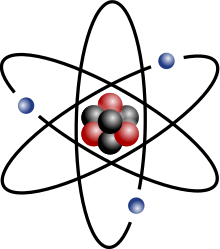
- 4AtomIs the smallest unit of an element, and each atom retains all the chemical properties of that element.
- 5Atomic NucleusProtons and neutrons cluster together in the center of the atom.

- 6Atomic NumberThe number of protons in the nucleus.

- 7BaseIs a substance that combines with hydrogen ions, reducing their number.
- 8BasicIf the conncentration of OH- is greater than the concentration of H+, the solution is basic.

- 9BufferIs a type of molecule that tends to maintain a solution at a constant pH by accepting or releasing H+ in response to small changes in H+ concentration.

- 10Chemical BondAre attractive forces that hold atoms together in molecules.

- 11CohesionThe tendency for molecules of a single type to stick together.

- 12Covalent BondAtoms with partially full outermost elecron shells can become stable by sharing electron with one another, filling both of their outer shells.

- 13DissolveDissolves some other substance.

- 14ElectronWhich each carry a single negative charge.

- 15Electron ShellElectrons occupy complex three dimensional regions.

- 16ElementIs a pure substance that cannot be broken down into other types of substances.
- 17Free RadicalAre so reactive that they can tear other molecules apart.

- 18Heat of VaporizationWhich is the amount of heat needed to cause a substance to evaporate.

- 19Hydrogen BondIs the attraction between a slightly positive hydrogen and a slightly negative oxygen or nitrogen located in a nearby molecule or in another part of the same molecule.

- 20HydrophilicThe electrical attraction for water molecules, ions and polar molecules.

- 21HydrophobicLarger molecules with nonpolar covalent bonds, such as fats and oils, do not dissolve in water and hence.

- 22Hydrophobic InteractionThe tendency of oil molecules to clump together in water.

- 23IonAn atom that has acquired an overall positive or negative charge is no longer called an atom; it has become an ion.

- 24Ionic BondThe electrical attraction between positively and negatively charged ions forms ionic bonds.

- 25IsotopeAtoms of the same element with different numbers of neutrons.

- 26Mass NumberThe mass number of an atom is the total number of the protons and neutrons in its nucleus.

- 27MoleculeMost forms of matter that we encounter in our daily lives consist of atoms of the same or different elements linked together.
- 28NeutronAtoms are composed of subatomic prticles: neutrons (n), which have no charge.

- 29Nonpolar Covalent BondWhich there is no charge of any part of the molecule.

- 30pH ScaleReflects the concentration of hydrogen ions in a solution.

- 31Polar Covalent BondUnequally shared electrons produce polar covalent bonds.

- 32Proton(p+), which each carry a single positive charge.
- 33RadioactiveMeaning that their nuclei spontaneously break apart, or decay.

- 34SolutionA solvent containing one or more dissolved substances.

- 35SolventIs a molecule that has the ability to dissolve other molecules, known as solutes.

- 36Specific HeatThe energy required to heat 1 garm of a substance by 1°C.

- 37Surface TensionThe cohesive forces between liquid molecules are responsible for the phenomenon.

Informationen
- Beschreibung
- Karteikarten am Chapter 2 Flashcards, erstellt von Roberto André Briere Pierri am 24/02/2021.
- Erstellt von
- Roberto André Briere Pierri
- Aufrufe
- 5
- Bewertung