
Karteikarten
Human Resource Development
Karten in diesem Stapel (74)
- 1Offline, instructor-led training designed to bring a learner up to production standards before assuming online responsibilitiesVestibule Training
- 2Study of the education of childrenPEDAGOGY
- 3Study of how adults learnANDRAGOGY
- 4Set of systematic and planned activities designed by an organization to provide its members with the necessary skills to meet current and future job demandsHUMAN RESOURCE DEVELOPMENT
- 5Development and integration of HR processes that attract, develop, engage, and retain the knowledge, skills, and abilities of employees that will meet current and future business needsTALENT MANAGEMENT
- 6This act requires that the use of literary or other original works without permission of the owner is prohibited,COPYRIGHT ACT OF 1976
- 7What are the two exceptions to the copyright act of 1976-work for hire
-employers who hire employees to create works - 8How long does copyrights protect original works?The life of the author plus 70 years
- 9How long are works for hire protected?95 years from the first year of publication or 120 years from the year of creation.
- 10This allows inventors exclusive rights to the benefits of an invention for a defined period of time.PATENTS
- 11These protect new, original, and ornamental designs for 14 years. This protects how things lookDESIGN PATENTS
- 12These patents are protected for 20 years and protect how things workUTILITY PATENT
- 13This type of patent protects the invention or discovery of asexually reproduced plants for 20 yearsPLANT PATENTS
- 14The sharing of values and beliefs and the behavior related to them is called what?ORGANIZATIONAL CULTURE
- 15Who developed the change process theory?KURT LEWIN
- 16How many stages of changes are there?3
- 17This is the first stage in the change process theory. It creates motivation by identifying and communicating the need for change. It creates the sense of urgency for the new outcomeUNFREEZING
- 18This is the second stage in the change theory process. This step involves examining and managing resistance to the new changesMOVING
- 19This is the 3rd step in the change process theory. In this stage, the change becomes the new norm. In this stage, the outcome is evaluated and adjusted to fit the new changeREFREEZING
- 20This type of thinking describes an individuals ability to recognize patterns and project how change will affect them.SYSTEMS THINKING
- 21This describes a high level of expertise in a field and the commitment to lifelong learningPERSONAL MASTERY
- 22This model refers to the deep seated beliefs that color perceptions can affect how individuals see the world around them and react to it.MENTAL MODELS
- 23This refers to the plan for the future that inspires commitment on the part of all individualsBUILDING A SHARED VISION
- 24This refers to the ability of a team to share and build on ideas without holding anything backTEAM LEARNING
- 25This process focuses on all resources and requires all employees at all levels to focus on providing products that meet customer needsTQM
Total Quality Management - 26This theory proposed that quality was based on the consumer. It also developed a 14 point plan that placed the burden of quality on managementW.EDWARDS DEMING
- 27This proponent of quality proposed that quality begins with defining customer needsJOSEPH JURAN
- 28This type of charts provides a graphical representation of the 80/20 rule. 80 percent of problems are caused by 20 percent of causes.PARETO CHART
- 29This graph shows the individual components of a problemSTRATIFICATION
- 30This shows the relationship between two sets of numbersSCATTER CHART
- 31This chart shows elements that are out of the acceptable range by setting parameters above and below the rangePROCESS CONTROL CHART
- 32His approach to total quality management focused on strategic planning as a means to providing a high level of qualityCROSBY
- 33This measure of quality focuses on measuring defects per millionSIX SIGMA
- 34How many steps are in Six Sigma and what is the acronym5
DMAIC - 35This step is Six Sigma focuses on incorporating improvements to the new processes and training employeesCONTROL
- 36This step is Six Sigma creates and implements solutions based on analysisIMPROVE
- 37This step is Six Sigma analyzes data to identify gaps between the goal and the actual performanceANAZLYZE
- 38This step is Six Sigma collects data defects and other measures is collected and then compared to the original to identify under-performanceMEASURE
- 39This step is Six Sigma focuses on defining the customer and issues important to them along with the process and project parametersDEFINE
- 40In these types of organizations, employees are involved in creating their own work processes and are empowered to take the actions needed to complete their workHIO's
High Involvement Orgnaizations - 41This process involves developing strategies to resolve issues and maintain or rebuild effective working relationshipsCONFLICT RESOLUTION
- 42This process aligns individuals with organization goals and measures the successful obtainment of those goals along with quality or quantity of performanceMBO
Management by objectives - 43This refers to how people deal with their feelings, perceive and interact with others.EI
Emotional Intelligence - 44This is used when an employee shows interest in growth opportunities. Employers may assign new responsibilities or tasks to challenge the employeeJOB ENRICHMENT
(Remember when you were given those HR tasks) - 45This happens when additional tasks are added to an employee WITHOUT increasing the level of responsibility or skillJOB ENLARGEMENT
- 46This type of training is provided to employees with specific information needed to do their jobsSKILLS TRAINING
(Training on how to use an ATS system when given HR tasks) - 47These types of individuals are provided with extensive training opportunities to prepare them for future roles. They may also be identified as future leadersHIPO's
High Potential Employees - 48This act occurs when younger people take an interest in helping older workers understand technology or the culture of the younger generationREVERSE MENTORING
- 49These folks focus on skills rather than career developmentCOACHES
- 50These types of programs are intended to increase the skills for managers who are responsible for achieving results through others.MANAGEMENT DEVELOPMENT PROGRAMS
- 51These types of programs seek out employees who show promising potential as leadersLEADERSHIP DEVELOPMENT
- 52The design and development of training programs follow what known model?ADDIE MODEL
- 53THE "A" in the ADDIE model stands for what?ANALYSIS OR NEEDS ASSESSMENT
- 54THE "D" in the ADDIE model stands for what?DESIGN
- 55To complete the design process, what must the trainer know?The TASKS required for the job.
Complete a TASK INVENTORY - 56These learners learn better when they can see it or read itVISUAL LEARNERS
- 57These learners retain information when they can hear itAUDITORY LEARNERS
- 58These learners learn best when they are able to have hands on experienceKINESTHETIC LEARNERS
- 59These statements describe the measurable outcome of the trainingTRAINING OBJECTIVES
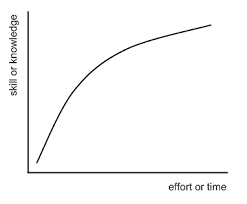
- 60This curve represents the rate of learning over timeLEARNING CURVE
- 61This type of curve shows rapid learning at the beginning and tapers as the learner becomes more familiar. ROUTINE TASKSNEGATIVE LEARNING CURVE
- 62This type of curve shows a slow start but increases as the learner masters the tasks. COMPLEX TASKSPOSITIVE LEARNING CURVE
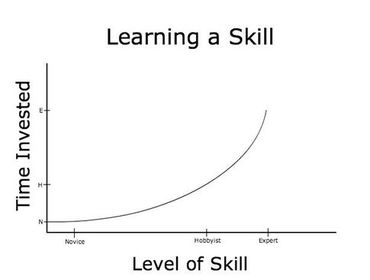
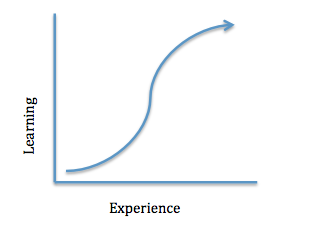
- 63Combo of neg/pos. Learners must understand how something works before they can become proficientS- SHAPED LEARNING CURVE
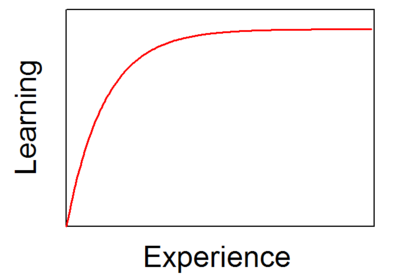
- 64This curve happens when an employee performs a task irregularly. Not enough to become proficientPLATEAU LEARNING CURVE
- 65These types of methods are instructor focused and requires little to no active participation from the learnerPASSIVE TRAINING METHODS
- 66What type of training methods are the following: LECTURE PRESENTATION CONFERENCEPASSIVE TRAINING METHODS
- 67This type of learning experience focuses on the learnerACTIVE TRAINING METHODS
- 68This type of training provides real time/life situationsEXPERIMENTAL TRAINING METHODS
- 69THE second "D" in the ADDIE model stands for what?DEVELOPMENT
- 70THE "I" in the ADDIE model stands for what?IMPLEMENTATION
- 71THE "E" in the ADDIE model stands for what?EVALUATION
- 72This process describes how well employees perform their jobs during a specific time framePERFORMANCE EVALUATION
- 73This type of review, all employees in the organization are reviewed at the same timeFOCAL REVIEW PERIOD
- 74—
Informationen
- Beschreibung
- Karteikarten am Human Resource Development , erstellt von Cari Hawthorne am 28/09/2015.
- Erstellt von
- Cari Hawthorne
- Aufrufe
- 0
- Bewertung