
Karteikarten
S&S Exam Study Notes
Karten in diesem Stapel (30)
- 1Indeginous Peoples World Views: ReligionSpirituality was discovered through the life of a First Nations person. Each person through the course of their life was challenged to find his/her/its path.
- 2European Peoples World Views: ReligionIn the 16th century religious belifes played a prominent role in the lives of Europeans, France's main religion was French Catholic church.
- 3Indeginous Peoples World Views: LandThere were no land owners with the Indeginous peoples, according to the First Nations people "Mother Earth can not be owned or given away."
- 4European Peoples World Views: LandIn Europe, land was a measure
of wealth and power. The goal of
countries and individuals was to
claim and control as much territory
as possible. When European explorers
reached new areas, they typically
planted their nation’s flag in the
ground and claimed all they saw
for their home country. - 5Indeginous Peoples World Views: Social SturctureIn First
Nations groups, many
people played a role in the
decisions that affected their
communities. Leaders often
negotiated a consensus as
a way of making decisions. - 6European Peoples World Views: Social StructureEurope had a
hierarchical class structure,
which means some people
in society were seen as more
important than other
people. In hierarchies, individuals from higher status. Groups can often
control the actions of those
from lower-status groups. - 7Indeginous Peoples World Views: Econominc DifferencesIn traditional First Nations
communities, people lived as others
in their community. When times were
good, everyone thrived. When times
were hard, all suffered. - 8European Peoples World Views: Economic DifferencesSome Europeans lived
in great luxury, while the vast majority
barely survived. Those lower in the
social hierarchy had few supports. For
example, people who got sick or lost
their jobs had to depend on family or
their church to help them. Those high
in the social hierarchy sometimes saw
the suffering of those below them as
proof of their inferiority. - 9Who Was Christopher Columbus (Spain)“In 1492 Columbus sailed the ocean blue”
Columbus thought he discovered a route to India; hence, he named the aboriginal people ‘Indians.’ Columbus actually landed in the Caribbean, Discovery still made Spain rich whom which lead to the conquest of the Aztecs, took huge quantities of gold. - 10Who Was John Cabot (Giovanni Caboto (Italy/England))In 1497 Cabot sailed for England
Made 1.5 voyages to the New World
Looking for passage to Far East. Instead he found cod, lots and lots of cod, so much cod that if you put and empty barrel into the sea and brought it back up it would be full of cod. Cabot named and claimed New Found Land. Discovery led to many fishermen coming to North America - 11Who Was Jacques Cartier (France)Cartier made three voyages for France in 1534, 1535, and 1541. He named and claimed areas of New France, explored the St. Lawrence River.
- 12Who Was Samuel du Champlain (France)Champlain first came to New France in 1603, his first of 23 voyages. Champlain increased interest in North America. Fur trade went from “part time” extra to full time big dollar venture for fashion. Champlain had came as a map maker for Pierre du Gua de Monts in 1604
- 13More Insight On The Fur TradeChamplain’s first boss Pierre du Gua de Monts had given amonopoly on North American furs. In exchange for the monopoly, De Monts promised
to establish a permanent settlement
bring over a certain number of settlers every year. Offering this monopoly was an advantage to the King of France, because it did not cost the king anything to expand empire - 14St. Croix and Port RoyalChamplain and de Monts tried to establish a settlement on Isle St. Croix in present day New Brunswick in 1604. They had received help from First Nations too.
They had made many errors such as:
Lacked fresh water and firewood
Poor nutrition – men suffered from scurvy making many people die. They moved across the Bay of Fundy to present day Nova Scotia the name was Port Royal where they did much better, but life was lonely/boring. “The Order of Good Cheer” had established good trade relations with local Mi’kmaq. The King took away de Mont’s monopoly because other merchants wanted access to the market. - 15Quebec City In 1608Permanent settlement was established on the former site of Stadacona.
It had easy access to the St. Lawrence,
it was fertile, with lots of surrounding farm land. The focus was to increase population of the settlement. - 16Coureurs de boisThe Coureurs de Bois or "runners of the woods" were unlicensed fur traders who lived among the natives to expand fur trade and solidify trade alliances.
Etienne Brulé was the original coureurs de bois. They learned their skills from Huron-Wendat, they learned: hunting, trapping, canoeing, winter survival, etc.
They lived an adventurous, but harsh life.
The church did not like them because they were a symbol of corrupt morals and free spiritedness. They Did not fit the ideal of a good settler – no roots, no commitment to church, too native
Companies did not like them because they were too hard to control – entrepreneurs
Created licensing scheme – voyageurs - 17The Comptetition Between The French vs EnglishThings heated up once the British smelled $$$ to be had in fur. Hudson’s Bay Company was granted Rupert’s Land in 1670. Ongoing violence between the two sides for almost 150 years.
- 18The Good Impacts On New France From The Fur TradePartnership – received iron wares and goods
Encouraged exploration of interior
Source of wealth – created Canada’s beaver aristocracy
Created a new culture through metissage or intermarriage - Métis - 19The Bad Impacts On New France From The Fur TradeSpread and intensified Huron-Wendat/Iroquois conflict
Changed the relationship of First Nations with nature – eroded values and created dependence
Slowed down the settlement of New France – focus was profit, not colonists - 20What Happened When The Europeans Were Trying To Go To AsiaPeople thought the Earth was round and didn’t know that North America was there and they thought they could go straight to eastern Asia.
- 21Why Did Explorations Happen When They DidA variety of factors all came together to make the time period (1450-1700) the “age of exploration.” There motivation were Oppurtunity for technological advancements, and for the 3 G's.
- 22The First G: GoldGold = wealth, not just gold – but there was plenty of gold to be had. Europe needed gold (and silver) to fuel the rising banking
system, so more gold meant more power.
The spices route to Far East (FE) controlled by Muslim and Italian traders Only source for silks, spices (nutmeg, pepper, cinnamon, andginger.) Huge mark-ups, huge profits possible (3000%) - 23The Second G: GloryIndividual kings wanted glory
for their kingdoms,
competition spread. With the rise of the printing press, the idea of gaining fame for one’s actions was more possible. Opportunity to improve one’s station in life to break out of your hierarchical class. - 24The Third And Final G: GodAs members of a universalizing religion, Europeans had always seen spreading Christianity as a good thing. Especially after the Reformation, competition will spring up (Catholic vs. Protestant.) Colonization will become a race to convert native peoples to a particular brand of Christianity.
- 25New Technology Gained-Better ships (caravel – triangle sails) allowed faster, safer travel
-Astrolabe (Muslim) allowed more accurate navigation (latitude)
-Magnetic compass (China) allowed more accurate navigation (direction)
-Bilge Pump (Europe) – allowed ships to sit higher in the water, increased safety - 26Push Factor - Population BoomBlack Death had devastated European population in 1350s (30 to 60% dead.) By the 1450s population coming back with a vengeance. More people needed more resources – food, wealth, and employment.
Increasing population was a ‘push’ factor - 27Obstacles For New France's Success: DefenceIntendant Jean Talon realized that if the colony was to prosper, it had to be secure. It was difficult to defend a colony that
had a small population living in a large
region. Talon’s changes in land use helped solve this problem. The king had tried to secure the colony by sending French soldiers from France to North America. In 1665, 1200 soldiers and about 80 officers joined the colony of 3200 settlers. Talon went a step further. He offered land grants to a number of the officers to keep them in the colony after their military service was over. In exchange for helping their
neighbours defend themselves, the former soldiers received farming advice. - 28Obstacles For New France's Success: PopulationNew France’s population
was growing too slowly. Part of
the problem was that the colony’s
population was mainly young men. As a solution, Talon asked the French government to send single girls to New
France. Talon wanted them to marry men in the colony. The girls would help the
population grow by having babies. This
would save the trouble and expense of
importing settlers from France. Jean-Baptiste Colbert, the minister in the French government in charge of colonies, responded by offering young, healthy women free transportation to
New France. In addition, the women
received a dowry of one ox, one cow,
two pigs, two chickens, and two barrels
of salt pork. A dowry is property a
woman brings to her marriage, usually
provided by her father. Because the
king’s treasury was providing their
dowry, the girls became known as
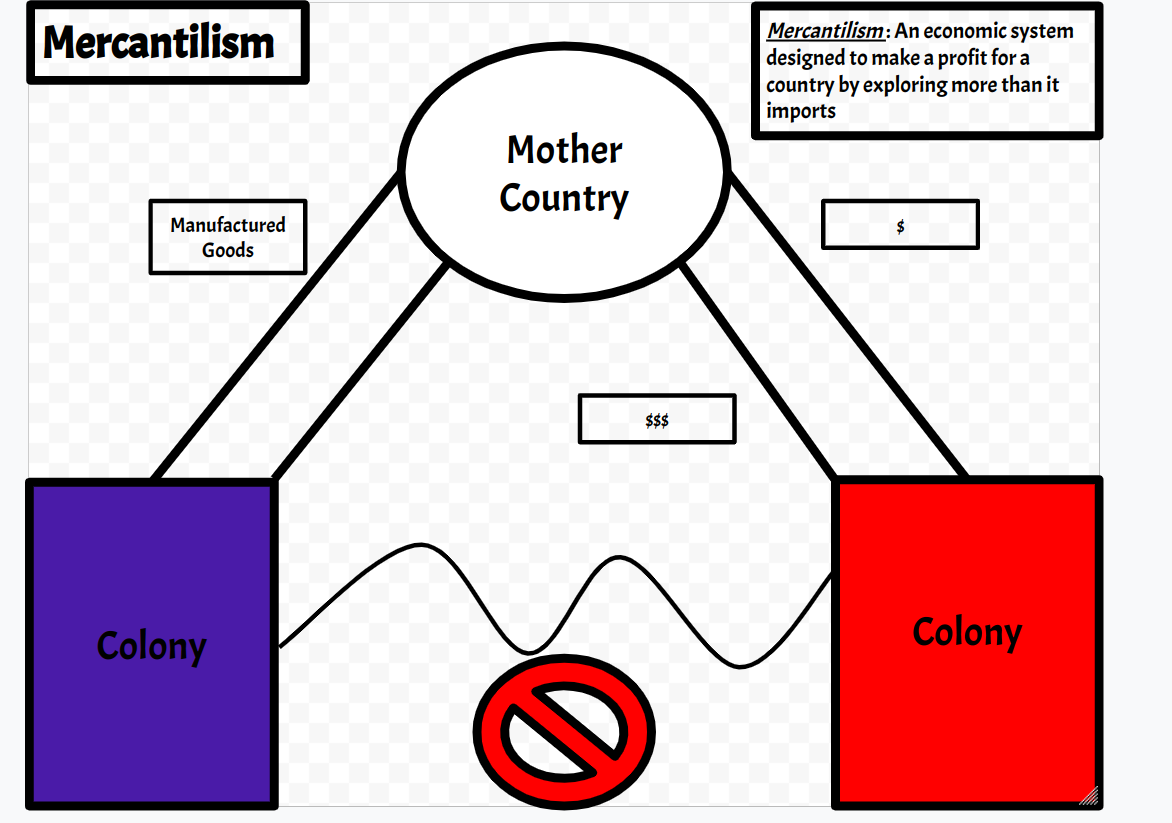
the filles du roi. - 29What Is MercantilismMercantilism is an economic system designed for a country to make porfit by exporting more than it imports.
- 30—