
Karteikarten
UML
Karten in diesem Stapel (23)
- 1UML has three main kinds of diagrams - what are those?Static diagrams
Dynamic diagrams
Physical diagrams - 2What are the diagram types we use in BDSA?Class diagrams
Activity diagrams
Use case diagrams
Sequence diagrams
State diagrams
Object diagrams
Collaboration diagrams - 3Define the Class diagramIt shows the object classes in the system and the associations between these classes
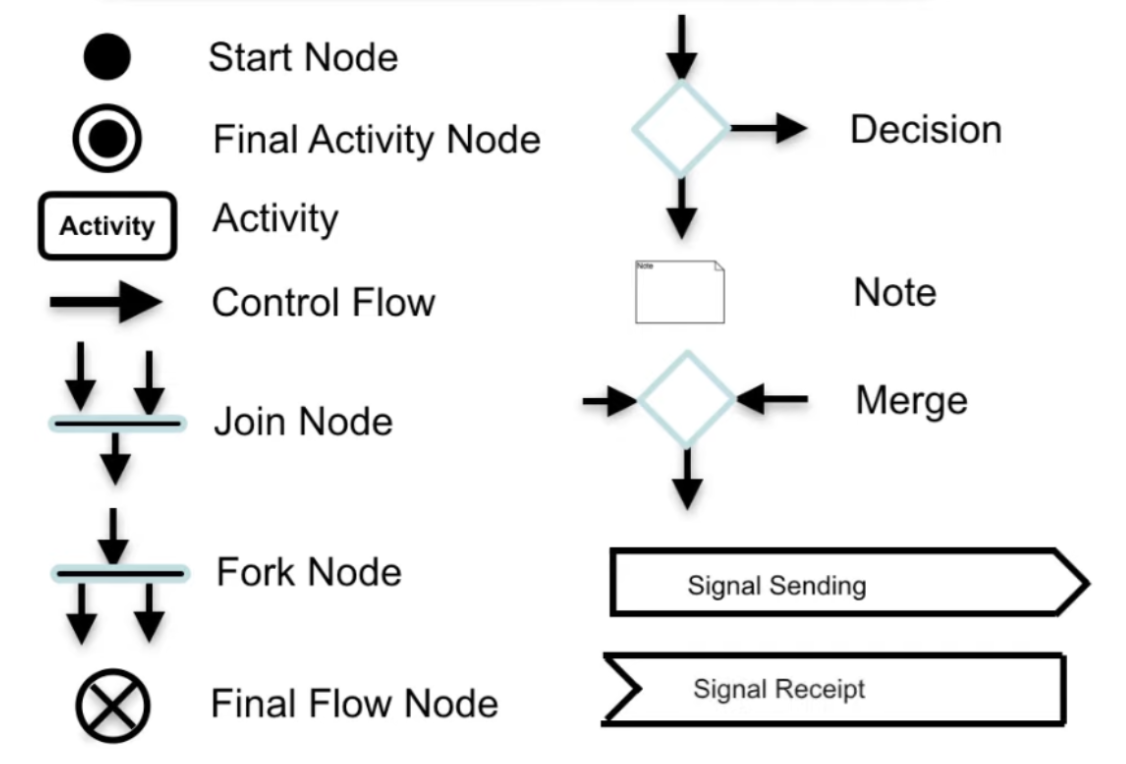
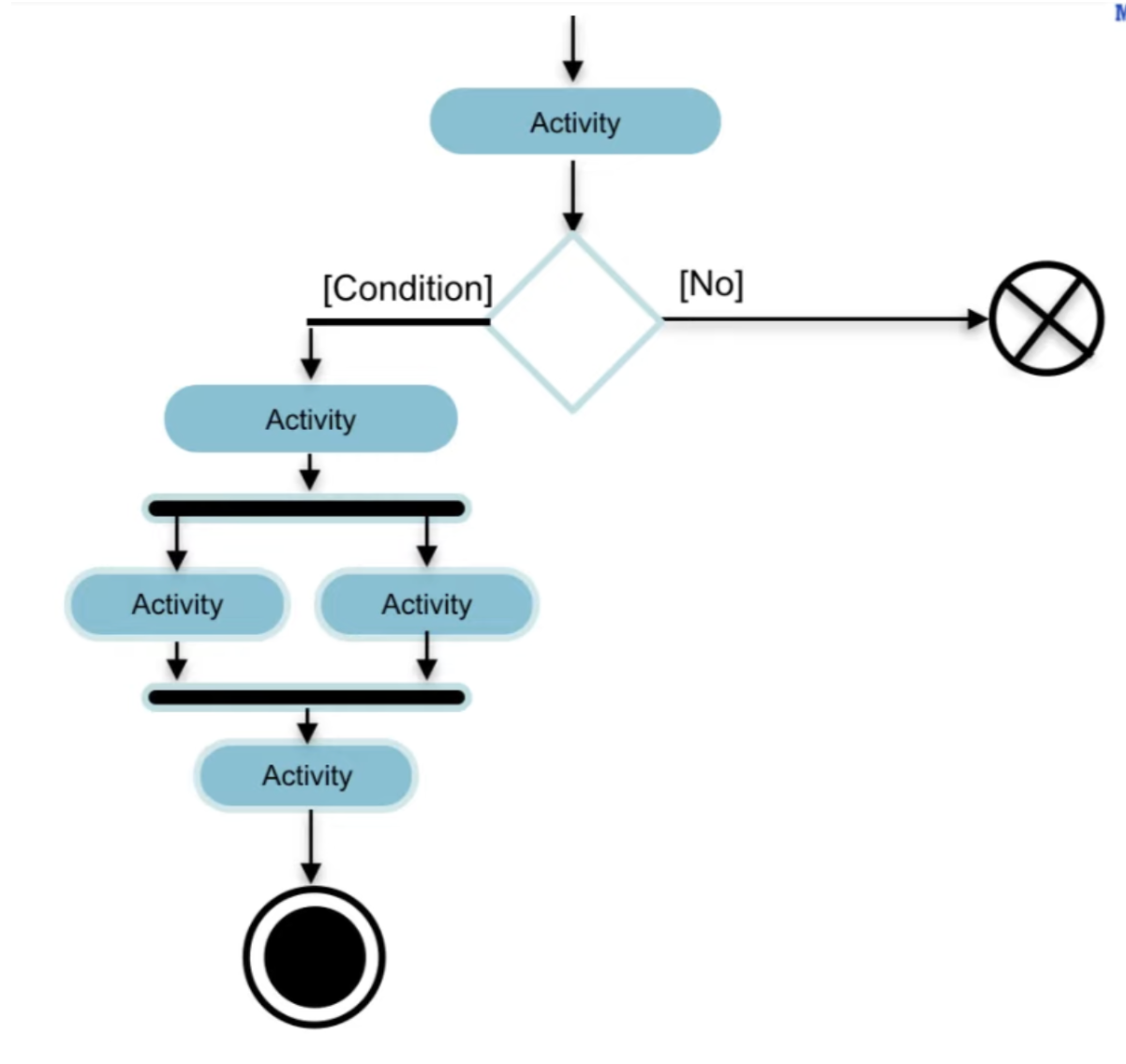
- 4Define the Activity diagramIt shows the activities involved in a process or in data processing.
It represents the flow of control among the activities in a system. - 5Define the Use case diagramIt shows the interactions between a system and its environment/actors
- 6Define the Sequence diagramIt shows interactions between actors and the system and between system components.
It shows details on how operations are carried out like what messages are sent and when. - 7Define the State diagramIt shows how the system reacts to internal and external events
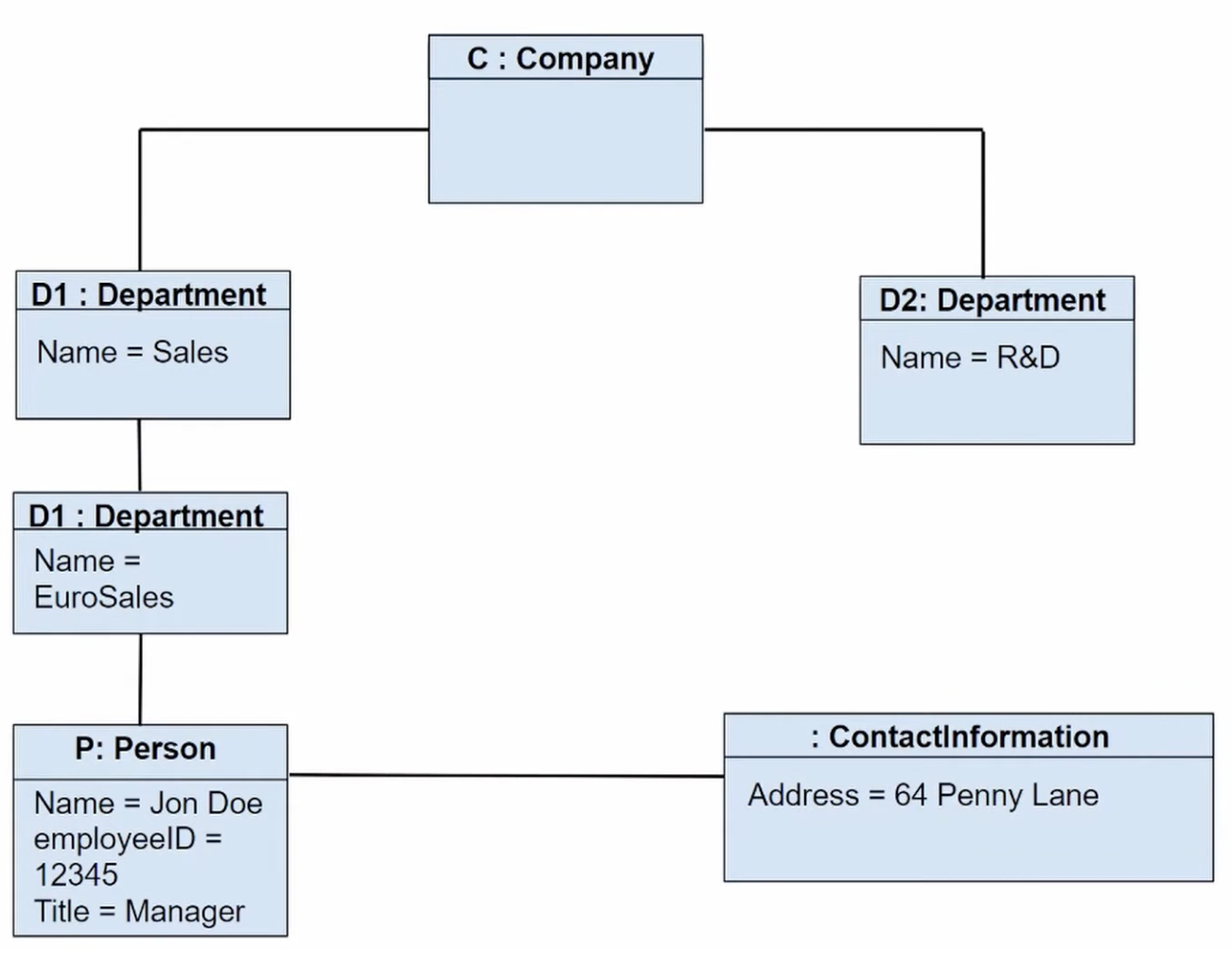
- 8Define the Object diagramIt shows a set of objects and relationships at a particular moment in the execution of the system (a snapshot of memory)
- 9Define the Collaboration diagramIt shows the interactions between objects or parts of a system in terms of sequenced messages
- 10How would you show that a class is abstract or an interface in a Class diagram?<>
InameOfClass
<>
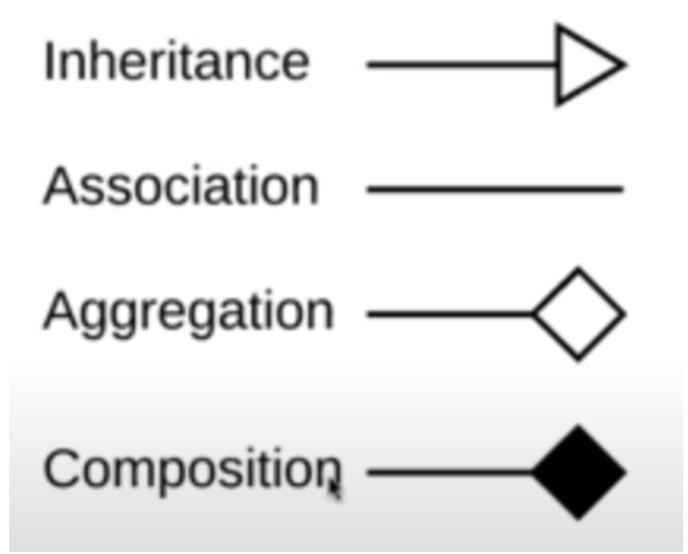
nameOfClass - 11What types of relationships do we have in a Class diagram and what do they indicate?Inheritance: A parent child relationship. The child inherits the parent's attributes and methods.
Association: There is no dependency between these classes, just a basic association where generally one has an attribute on the other class.
Aggregation: Is where a part can exist outside the whole, f.x. A person can be part of a football team, but also not - and vice versa. Conclusion the two classes can exist together and separate - they are not dependent on each other for existence (cardinality 0..1 and 0..*).
Composition: Is where a part can’t exist outside the whole, f.x. A buyer can have a purchase order, and the purchase order has one buyer. If the buyer were to cancel, the purchase order would not exist. The purchase order is dependent on the buyer (cardinality 0..1 and 1) - 12Class diagram - how do you draw the relationships: Inheritance, Association, Aggregation, Composition?
- 13Activity diagram - what symbols are there and what do they mean?
- 14What diagram is this?Activity diagram
- 15What diagram is this?Use case diagram
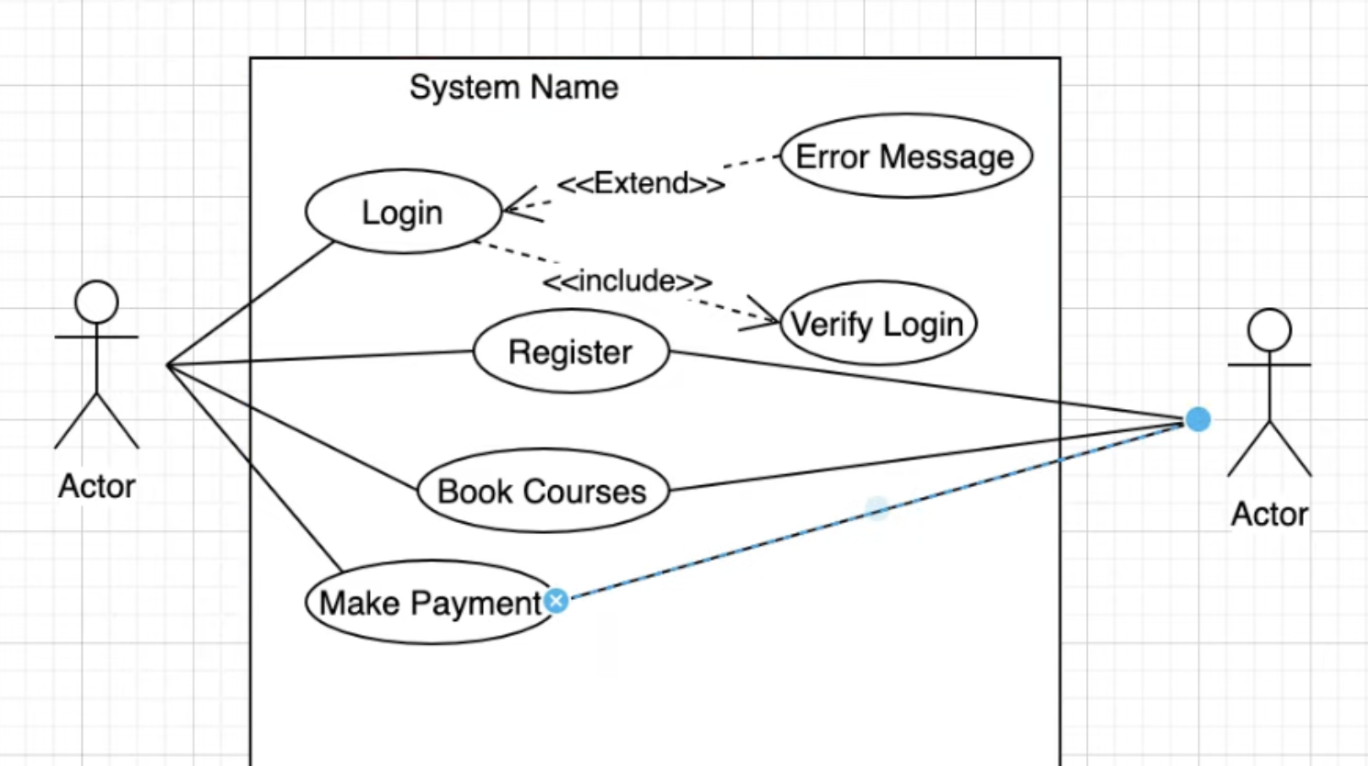
- 16Explain the elements in this use case diagramSystem: the project that you are developing is a system
Actors: performs a certain action on the system
Use cases: all the functionality that the system does
Relationship: the association between actors and use cases - 17What diagram is this?Collaboration diagram
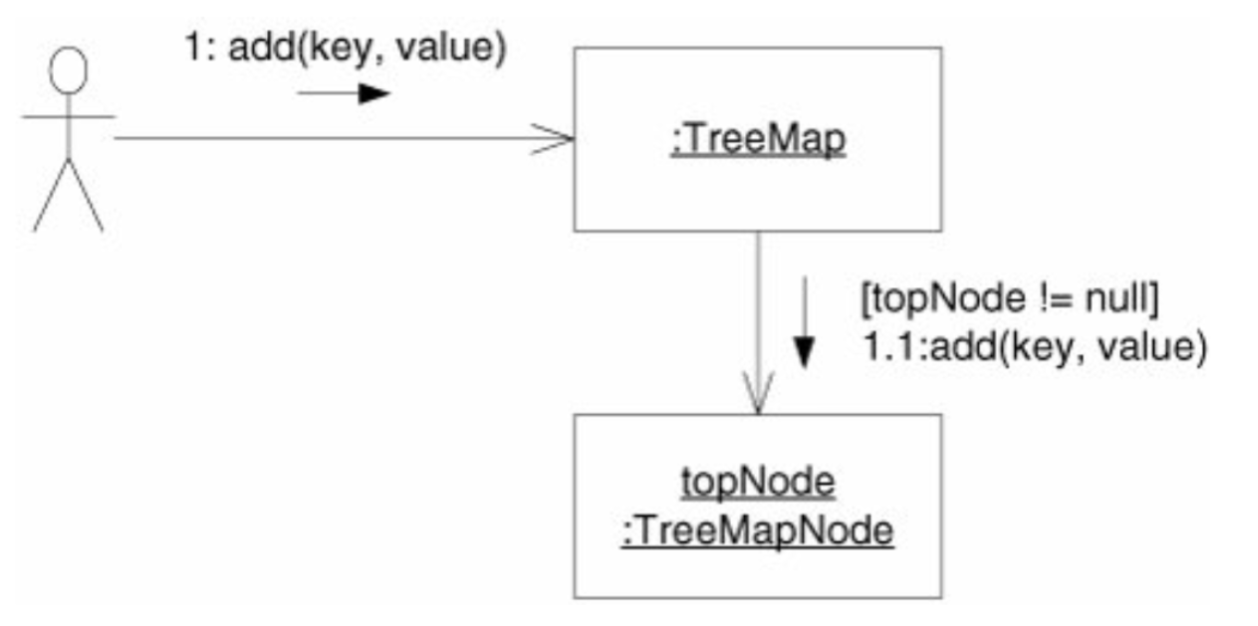
- 18What is the key feature by Collaboration diagram?
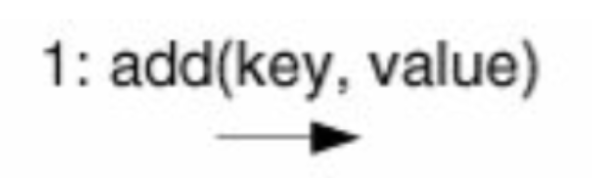
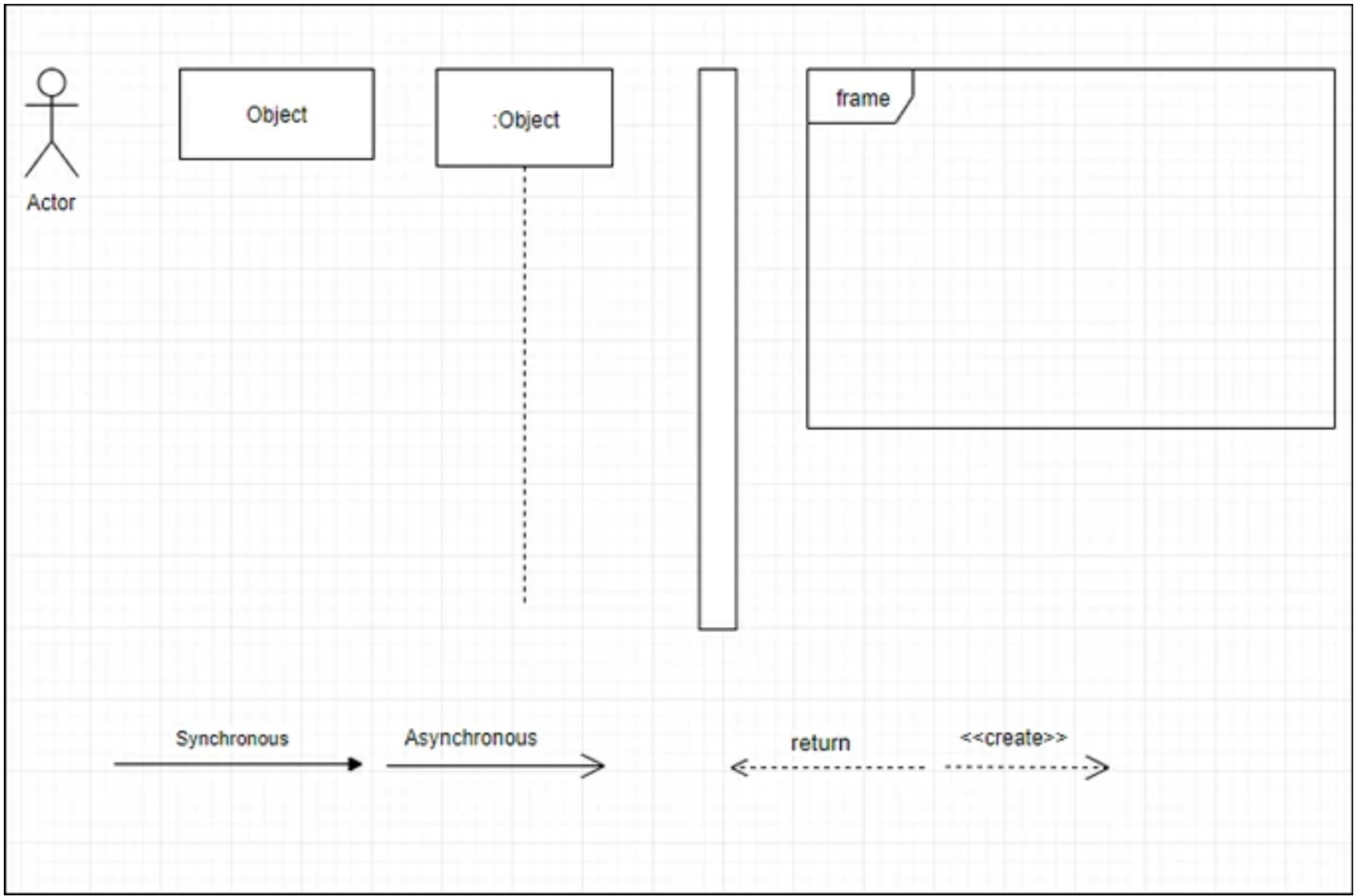
- 19How are the notations written for a Sequence diagram? (Actor, Object, Lifeline, Activation bar, Frame, Associations(synchronous, asynchronous, return, create), Alternative (there are more...))
- 20What diagram is this?Sequence diagram
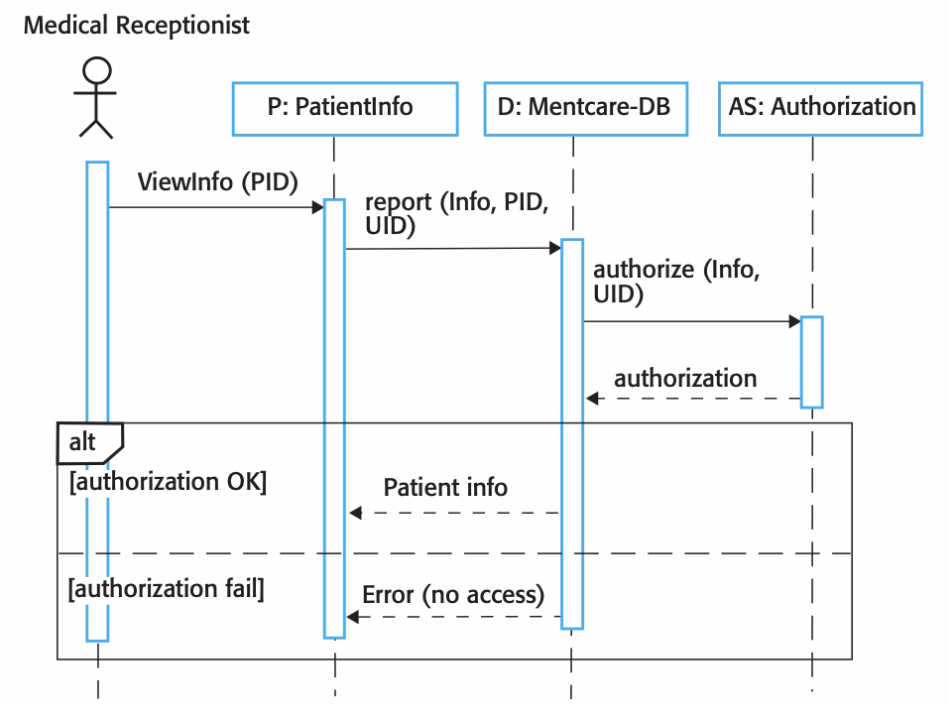
- 21What diagram is this?State diagram
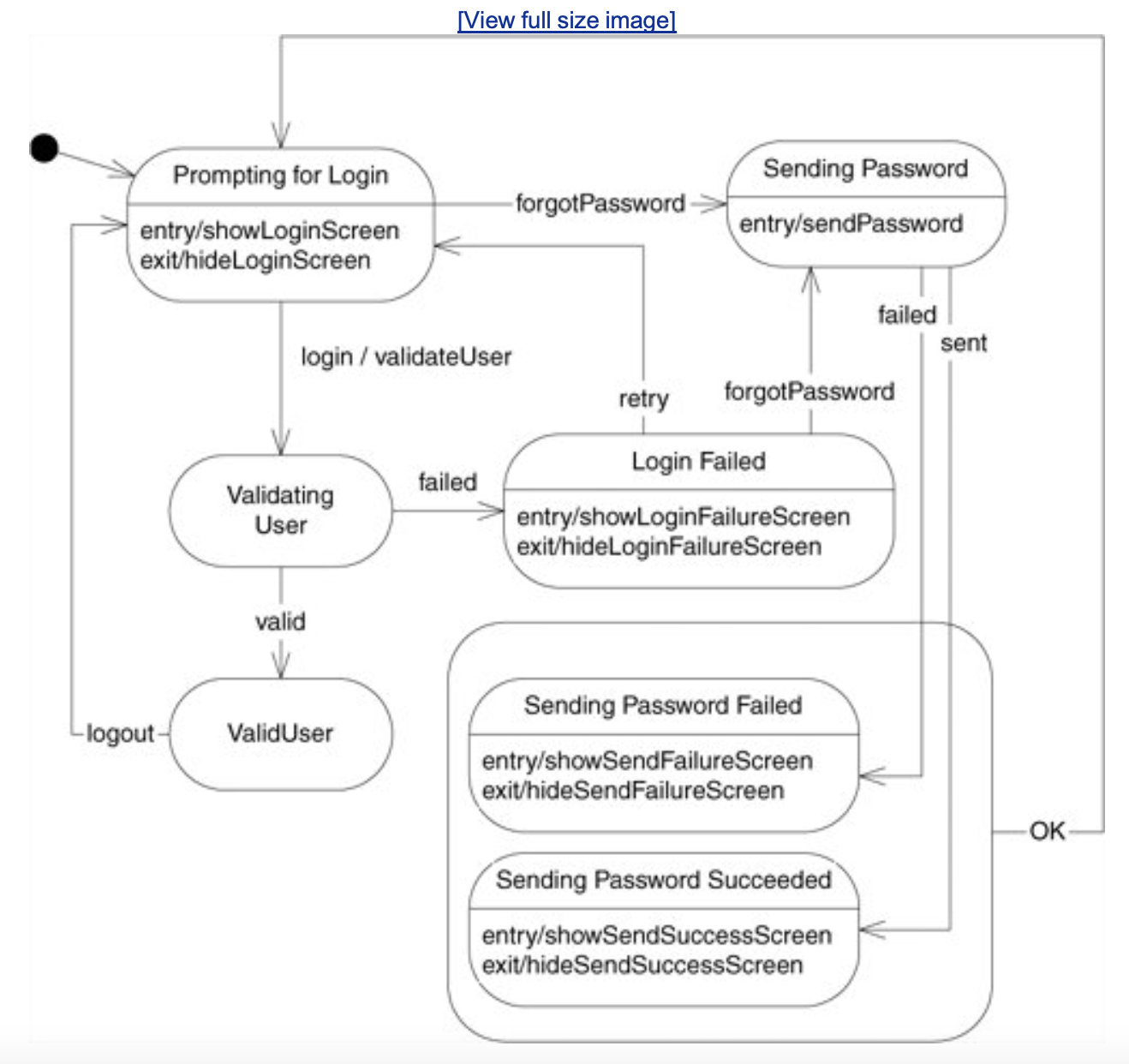
- 22State diagram - what is a superstate?When two states have the same resulting state. It's where a box is drawn around two states and points to another state.
- 23What diagram is this?Object diagram
Informationen
- Beschreibung
- 3rd semester BDSA Karteikarten am UML, erstellt von Turið Højgaard am 03/01/2023.
- Erstellt von
- Turið Højgaard
- Aufrufe
- 0
- Bewertung