
Software Engineering and Development Methodologies
1,371 resources created by 1,091 users
This Software Engineering and Development Methodologies page on GoConqr gathers community-made quizzes, mind maps, flashcards, slide sets and notes, from Scrum and the Unified Process to Test Driven Development, design patterns and Git. It's built for university students and professional candidates, school students, and teachers after ready-made material. There are over 1,300 resources here, including more than 100 quizzes and over 900 mind maps, used to practise design, testing, requirements and agile ideas. Pick a topic and try a quiz to spot your gaps.
Select topic
- Software Development Life Cycle170
- Software Development Life Cycle Models77
- Agile Development84
- Software Project Management9
- Requirements Engineering49
- Software Architecture and Modeling27
- Software Design and Implementation35
- Application Design and Development24
- Software Development Tools and IDEs39
- Version Control and Git20
- DevOps and Continuous Delivery27
- Software Testing54
- Software Quality Assurance46
- Software Maintenance11
Top Software Engineering and Development Methodologies resources
-
10 questionsHYBRIS PARTE 1 Changing SAP Hybris coniguration from the project.properties file of your platform project is considered ba...
-
50 questionsCET_TARDE - MTA Software Development Fundamentals 3 What are the three basic states that a Windows service can be in? (Choose three.)
-
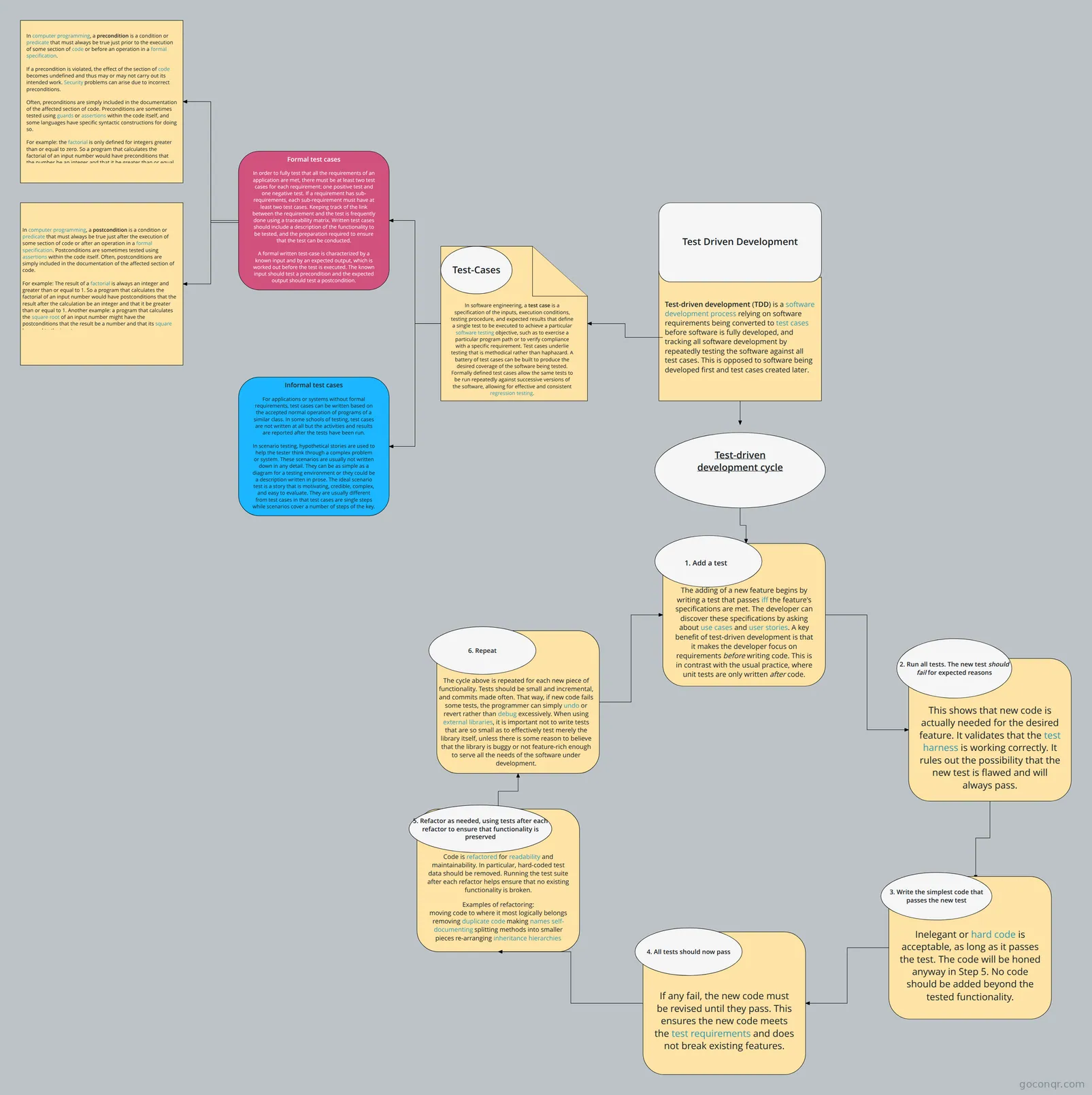 Flowchart Test Driven Development An overview of Test-Driven Development
-
30 questionsScrum Developer What is pair programming?
-
23 questionsSDLC Which is NOT listed as an RUP best practice?
-
10 questionsPO - Test1 1. Scrum Team uses the information of Scrum artifacts to make ongoing decisions. The soundness of these dec...
-
28 cardsSCRUM Glossary
-
30 questionsFirst (ADSE I) [Quiz 1] Software design broadly classified in to
Quizzes
See all 114 quizzes-
10 questionsHYBRIS PARTE 1 Changing SAP Hybris coniguration from the project.properties file of your platform project is considered ba...
-
50 questionsCET_TARDE - MTA Software Development Fundamentals 3 What are the three basic states that a Windows service can be in? (Choose three.)
-
30 questionsScrum Developer What is pair programming?
-
23 questionsSDLC Which is NOT listed as an RUP best practice?
-
10 questionsPO - Test1 1. Scrum Team uses the information of Scrum artifacts to make ongoing decisions. The soundness of these dec...
-
30 questionsFirst (ADSE I) [Quiz 1] Software design broadly classified in to
-
11 questionsChapter 8 SOLID What is Software Design Document
-
30 questionsFirst (ADSE I) [Quiz 3] What are the different quality standards?
Mind maps
See all 924 mind maps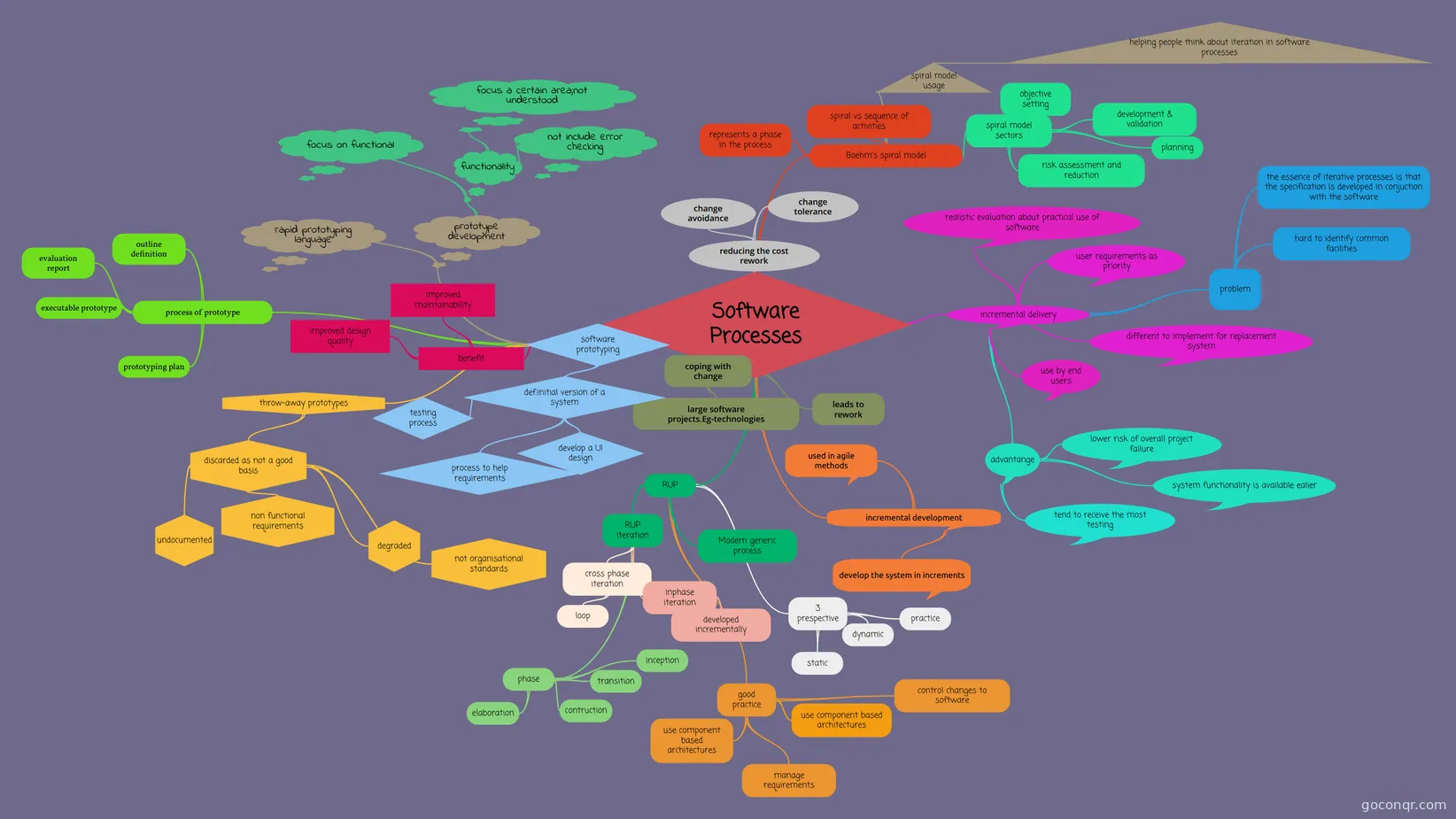
Flashcards
See all 220 flashcards-
28 cardsSCRUM Glossary
-
13 cardsQuestões do Scrum Who is responsible for registering the work estimates during a Sprint?
-
121 cardsTM354 Block 1 Units 1 & 2 What are the characteristics of a good software system?
-
80 cardsSoftware engi What is the definition of software engineering?
-
70 cardsSoftware engi What is the definition of software engineering?
-
76 cardsJava Software Development Units 12-14
-
42 cards15: Software Development What are the 4 stages in program development life cycle?
-
10 cardsComputing paper 1: 1.2.3 Programming methodologies: Waterfall Lifecycle
Flowcharts
See all 43 flowcharts
Notes
See all 52 notes-
Design Patters 1. Design Pattern is a reusable solution to commonly occurring problems within a given context of software design. 2. Design pattern is a template or description for how to solve a problem that can be used in ma...
-
Pears of Wisdom - Software Engineering Books Notes Notes from ... CHAPTER 1: Software Engineering Overview NO project can succeed without a plan Step 1: Figure out requirements Depends on who the customer is. Determine ...
-
Introduction to DevOps Social Coding Principles What is social coding? open source practice All repositories are public everyone is encoraged to contribute Anarchy controlled via pull requests Social coding solution DAOFI Pair Programming t...
-
ESE UML Diagram Unified Modeling Language-standard language for specifying, visualizing, constructing and documenting the artifacts of software system. Types Of UML Structural Diagram - represent the static asp...
-
Lecture 4 Objectives of reviews Detect error Identify new risks Deviations Exchange of knowledge Promote development methods Formal design review Peer review Expert opinion Participants Inspection MITD Walk...
-
Pears of Wisdom - Codermetrics Notes Introduction Software teams are successful because they have the right variety of developers. Some patterns for success and failure are different than what you'd assume. E.g., Successful teams have someon...
-
DevOps Philosophy Notes DevOps No consensus on a singular definition as to what DevOps is. It is a philosophy and set of practises - efficient development,deployment and operation of highest quality software possible. No one right way. A spe...
-
Software Testing Learning Objectives Week 1: You will learn the basics of testing, the "what" of tests. What tests are and how to build them, with some hands-on tutorials on building your first set of executable tests. Week 2: You wil...
Slides
See all 18 slidesTopics in Software Engineering and Development Methodologies
More Computing and ICT (programming, computer science, digital skills, educational technology) topics
About Software Engineering and Development Methodologies
GoConqr OriginalWhat the resources cover
The page mixes process models, agile practice, design, testing and tooling. Quizzes such as Scrum Developer, SDLC and The Waterfall Method test how teams organise work. The deck Questões do Scrum asks who records work estimates during a Sprint and how the Product Backlog is ordered. Slide sets on the Unified Process describe an iterative, incremental, architecture-centred framework.
Design, quality and testing
The quizzes called First (ADSE I) [Quiz 1] and First (ADSE I) [Quiz 3] cover two linked areas. The first asks how software design is classified, what the key design issues are and what makes up an architectural design. The second looks at quality standards, quality tools and finding the parts of a program that a set of test cases does not exercise. The flowchart Test Driven Development shows requirements being turned into test cases before the software is fully built.
Where to start
- Open a mind map such as Software Process Models or Software Processes to see how the pieces fit, including coping with change, prototyping and rework.
- Move to a focused map like eXtreme Programming, SCRUM or DSDM.
- Take a quiz on the same topic and note what you missed.
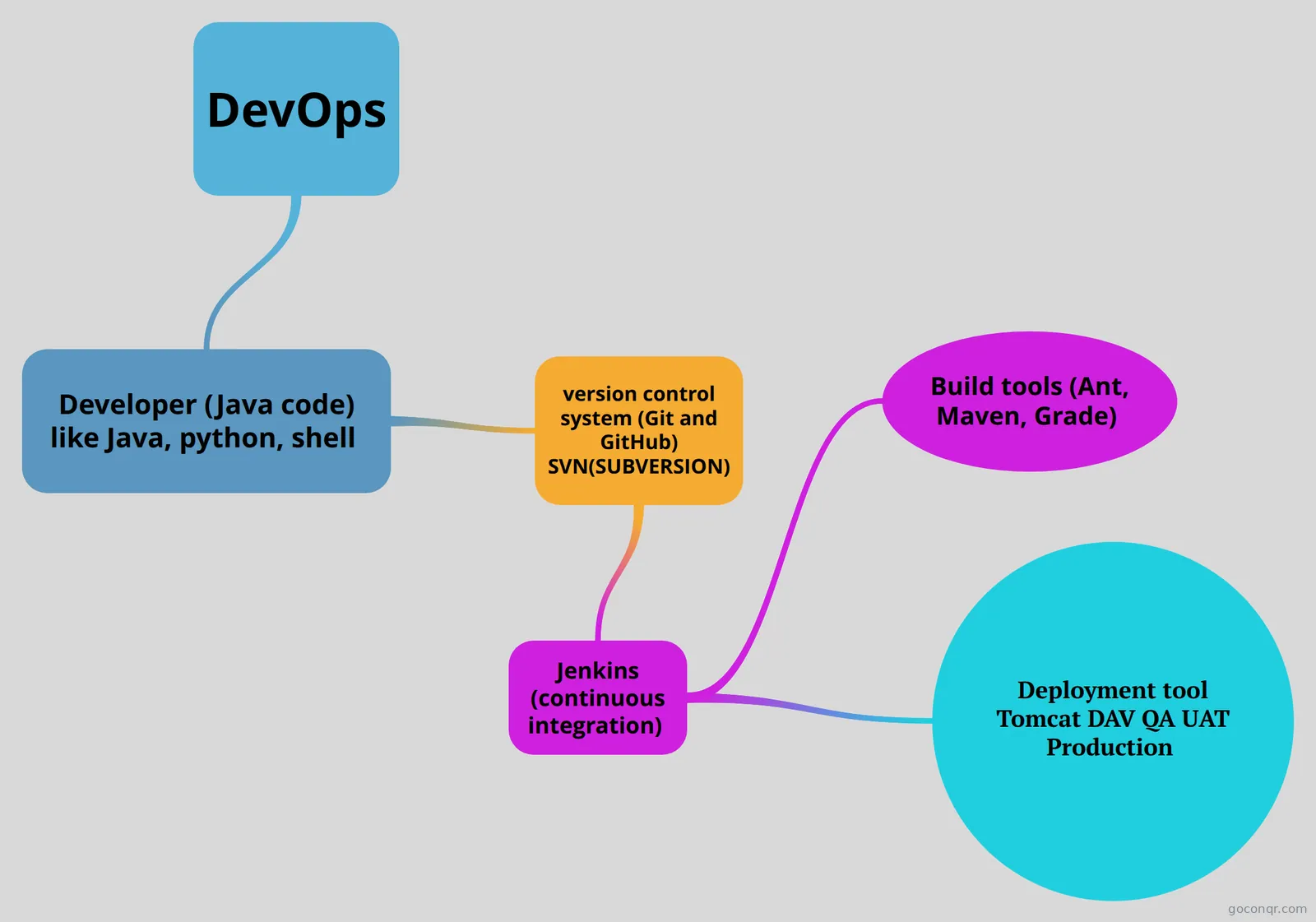
- Use flashcards, such as SCRUM Glossary or DevOps Glossary, to fix the terms.
Exam-style practice
Some quizzes follow certification and exam styles. CET_TARDE - MTA Software Development Fundamentals 3 asks about the three states of a Windows service. PSPO and Scrum Master Custom Test suit candidates preparing for Scrum certification. School students can look at OCR A Level Computer Science Paper 2 and the flashcards labelled 1.2.3 Software Development.
Where it sits
This unit belongs to the Software and Systems Development strand of Computing and ICT. It sits alongside the wider work of building and running software, so you can move between methods, requirements and testing as your course does.
Choose one topic, work through a map and a quiz together, then make your own flashcards for the terms that stick badly.
Frequently asked questions
Which resource should I open first?
Start with a mind map such as Software Process Models or Software Processes for an overview of how development is organised. Then try a quiz like SDLC or The Waterfall Method to see what you already know, and follow up with a focused topic.
What do the mind maps cover?
They cover process models and methods such as eXtreme Programming, SCRUM and DSDM, plus requirements elicitation and validation, design patterns, maintenance, quality frameworks, reliability engineering, software reuse and service-oriented architectures. There are over 900 mind maps, so you can pick the topic your course is on.
Are there resources for Scrum certification?
Yes. Quizzes such as PSPO, Scrum Master Custom Test, Scrum Developer and Scrum master certification sit alongside Scrum flashcards and the SCRUM Glossary. The PO - Test1 quiz also asks how a Scrum Team uses artefacts to make ongoing decisions.
Which exams and levels do these suit?
Most resources suit university students and professional candidates, with some for school students. The listed items mention GCSE Computer Science, A-level Computer Science, MTA 98-361, PMP, PSM and Cisco DevAsc, so you can look for material close to your course.
Are the resources free, and who made them?
Every resource here is free to open, study and take, with no account needed. They were made by GoConqr users, not by GoConqr itself. A free account saves your quiz scores and lets you create your own quizzes, maps, flashcards and notes.
What if my topic is missing?
Try a nearby topic first. Requirements, testing, Git, UML and agile each have several resources under different titles. If you still cannot find what you need, make your own mind map or flashcards and fill the gap yourself.