
Karteikarten
development gap flash cards - geography
Karten in diesem Stapel (64)
- 1what does development mean?process of change that improves the well being of a society in terms of STANDARD OF LIVING and QUALITY OF LIFE.
- 2what is STANDARD OF LIVING?a way we CAN MEASURE someones life (money, accommodation, education)
- 3what is QUALITY OF LIFE?a way we CANNOT MEASURE someones life (personal opinion)
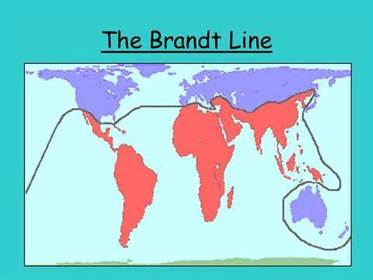
- 4what is the BRANDT LINE (north/south divide)?a line that divides the rich north and the poor south.
- 5why is the Brandt line out of date?doesn't show how quickly a country is developing - new methods can show this.
(India, China, brazil)
- 5 fold method is better - 6What is a LEDC?Less economically developed country (Gambia)
- 7What is an MEDC?More economically developed country
(UK) - 8What is a NIC?A newly industrialising country
(Brazil, India, China) - 9people per doctoraverage number of people per doctor
- 10infant mortality ratethe number of babies who die before their 1st birthday per 1000 live birth per year
- 11gross national product (GNP)the money a country produces on goods and services
- 12life expectancythe average age a person is expected to live to
- 13human development index (HDI)this measure includes life expectancy , education and income.
- 14birth ratenumber of births per year per 1000 people
- 15gross national income (GNI) per capitapeople's average income
- 16Death ratenumber of deaths per year per 1000
- 17access to safe waterpercentage of people with access to safe water
- 18literacy ratepercentage of adults who read and right
- 19trade balancecountries change in value of exports and imports - when the countries exports exceed its imports the trade balance is favourable
- 20trade surplusthe amount by which the costs of EXPORTS EXCEED THE COST OF IMPORTS
- 21trade deficitthe amount by which the cost of IMPORTS EXCEED THE COST OF EXPORTS
- 22exportssale of goods and services
- 23importspurchase of goods and services
- 24tradeexchange of goods and services
- 25trading groupsstructure managing purchases of affiliates, which may be retailers wholesalers.
(study of products)
(search for suppliers)
(negotiation of purchases) - 26fair tradewhen producers in DEVELOPING countries get paid more, but the products are more expensive for people in DEVELOPED countries to buy.
- 27recipienta person/country that receives or is awarded something
- 28world trade organisationinternational organisation in Geneva that MONITORS AND ENFORCES rules governing global trade
- 29quotasA fixed share that must be given or received or done.
- 30highly indebted poor countriesgroup of 38 DEVELOPING countries that are POORER than other countries and are eligible for special assistance from the INTERNATIONAL MONETARY FUND and WORLD BANK
- 31Aidhelp by a donor
- 32LONG-TERM aidaid given after a few months of a disaster happening (money)
- 33SHORT-TERM aidaid given straight after a disaster
(water, food) - 34Tied aidwhen DEVELOPED countries give aid to a DEVELOPING country but the aid must be spent in products from the developed country
- 35top-down aid projectaid which is performed by one person (unilateral)
- 36bottom-up aid projectscommunity level aid and addressing local needs (multilateral)
- 37donora person who donates something, especially money
- 38tariffsa list of fixed prices
- 39transnational co-operationslarge business with interests in many countries
- 40non-governmental organisationcorporations that are independent from any form of government but are legal
- 41why is using only ONE development indicator misleading?- A country could develop in that area extremely differently from other areas
- OR the country could be generally poor but the wealthy people are extremely wealthy so it sways results of HDI and GNI
- certain indicators are misleading (data not collected well) - 42what are 'FORMER COMMUNIST COUNTRIES?'countries that aren't poor but aren't rich - in the MIDDLE they are developing but not as much as NIC (Bulgaria)
- 43what are 'OIL EXPORTING COUNTRIES'?countries that are have a high HDI and are quite wealthy but the wealth belongs to a few people (Saudi Arabia)
- 44CASE STUDY - HAITI - earthquake impact on development - EFFECTS- Many professionals + workforce died
- Cranes collapsed
- $2.3 BILLION spent on clearing RUBBLE
- 4000 SCHOOLS DESTROYED
- closest airport to capital was closed
- increase in CRIME and UNEMPLOYMENT - 45what does 'GLOBAL INEQUALITIES' mean?when the level of development in different countries is UNEQUAL
- 465 ENVIRONMENTAL FACTORS that decide development?- POOR CLIMATE - less food to eat/sell
- NATURAL HAZARDS - high rebuild costs
- POOR FARMLAND - no food to eat/sell
- FEW RAW MATERIALS - cant sell or use
- LOW WATER SUPPLY - no food to eat/sell - 473 main POLITICAL FACTORS that slow development?- UNSTABLE GOVERNMENT - wont invest
- CORRUPT GOVERNMENT - bend laws
- WAR - money is spent on equipmet - 483 ECONOMIC factors that affect development?- BAD TRADE LINKS - less deals (tariffs/quotas)
- HIGH DEBT - money is used to pay debt
- PRIMARY PRODUCTS - little money gained - 493 SOCIAL factors that affect development?- DRINKING WATER - disease > cant work
- INEQUALITY OF WOMEN - less workers
- GOOD EDUCATION - more workers (future) > more pay > less taxes - 50CASE STUDY - how a development project has improved the quality of life in an area - MARUNDA - 2 water problems in LEDC?- WATER POLLUTION
- DISEASE SPREAD - 51MARUNDA - PROBLEMS- Women queued from 3am for water
- People paid 30 times regular price for water from private vendors (they carried water down alleys)
- people were stealing water by changing the pipe direction - 52MARUNDA - RESPONSES- Water tankers made bigger so they couldn't fit down narrow alleys
- 1 way water system installed
- Thames water gave clean water to 1600 homes. - 53how to reduce global inequalities?- TRADING GROUPS - (groups of countries that trade between themselves)
- FAIR TRADE - (more expensive products so primary producers get more pay)
- AID - (give money/services to a country)
- CONSERVATION SWAPS + DROP DEBT - 54ADVANTAGES and DISADVANTAGES of trading groups+ No tax or fixed tariffs
+ Building relationships
- Tax from countries not in your group
- quotas are put into place - 55FAIR TRADE - what is 'minimum price'?the lowest possible price that a fair trade product can be sold for
- 56ADVANTAGES and DISADVANTAGES of fairtrade products+ Raw producer gets more money for goods
- more expensive to buy
- some of the money paid goes to transports and not all to primary producers - 57ADVANTAGES and DISADVANTAGES of aid+ emergency aid can SAVE LIVES
+ can develop sanitation = better SOL
+ industrial aid can create JOBS
- recieving country pressured to pay debt
- may help employers more than employees
- sometimes doesn't help small farmers - 58what are 'CONSERVATION SWAPS' and 'DROP THE DEBT'?- CONSERVATION SWAPS - allowing some of the debt to be paid back by a method of conserving something in the recieving country
- DROP THE DEBT - cancelling debt that is unpayable for a poorer country - 59what is SUSTAINABLE DEVELOPMENT?meeting the needs of the future without compromising the needs of the present
- 60CASE STUDY - HABITAT FOR HUMANITY - where and what do they do?- MOZAMBIQUE
- they get the local community to help build housing (this is sustainable as it means the current people get good housing which is also good for the future and this gives people work) - 61HABITAT FOR HUMANITY - what does each family helped get?- 2 room house
- water purifier
- mosquito nets
- hygienic latrine
- HEALTH AND HYGIENE training - 62CASE STUDY - Why is there inequality in the EU?- Due to a east/west divide (eastern european countries were communist and this LIMITED ECONOMIC GROWTH)
- Early INDUSTRIALISATION means some countries are ahead of others in INDUSTRY. (primary, secondary, tertiary)
- Early EU members have better trade links - 631. how to SOLVE inequality in the EU? (CAP)- CAP (Common agricultural policy) gives money to EU farmers to produce excess crops for the rest of the EU.
- HOWEVER many farmers overproduced AND they were unable to understand complex EU funding (poor education) - 642. how to SOLVE inequality in the EU? (structural funds)- money is given to a region with a GDP per capita of LESS THAN 75%.
(this can help certain regions catch up to other regions' economic level)
Informationen
- Beschreibung
- GCSE Geography Flashcards on development gap flash cards - geography, created by Vishal Kapila on 18/11/2015.
- Erstellt von
- Vishal Kapila
- Aufrufe
- 78
- Bewertung