
Karteikarten
programming Techniques
Karten in diesem Stapel (5)
- 1ProceduresA procedure is a subroutine (a block of code) which can be run outside of the main program. A procedure is called from inside of the main program routine. It is very specialized and has a specific task to carry out. A procedure can either return no values or many values to a program such as an SQL select statement.
Procedures define parameters and take arguments as input, which is given when a procedure is called. Some languages define a procedure and a function as a different thing, when writing source code i.e. PROC and FUNC. - 2FunctionA function is a procedure which returns a single value to the main program as a result of its execution. A function must have a return type which is defined in its header e.g. int, and it must also have a return statement in the body of the subroutine e.g. return x.
A function could also return "nothing" to the main routine by stating its return type as void, however it is still returning "nothing" which is something, therefore still returning a value.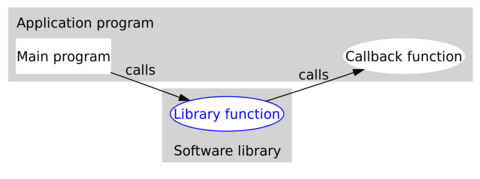
- 3VariableA variable is a data item, whose value can change during run time. A variable has a scope which defines which subroutines and other parts of the program has access to the variable.
If a variable is global this means that all of the subroutines within the program can use the variable. The variable is defined outside of any routine, including the main routine, and is marked as global. A global variable is bad practice as any subroutine can edit is directly, however it is open to security flaws from the outside environment.
A variable can also be local, which means that only the subroutine whose body it is defined in can access the variable and use it. A parameter is also a local variable for the routine that it is defined for.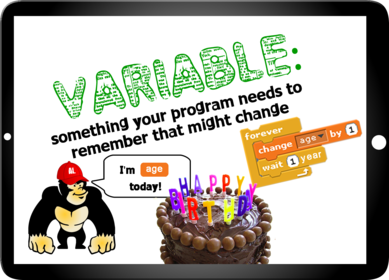
- 4Step wise RefinementStep wise refinement is the process of taking a large task and splitting it down into smaller more manageable chunks, known as modularisation. Each part does something more specific than the last. The idea being that the problem can be split up into small and specific enough tasks that are easy enough to program.
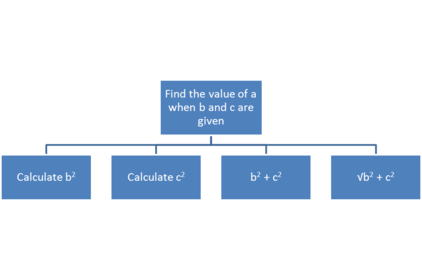
- 5TDMD - Top Down Modular DesignTDMD is the design principle that uses step wise refinement to get the problem into smaller tasks. TDMD then links up these individual modules together in a design approach, which allows the lead programmer to essentially call all of these modules from the main program and the program should work.
TDMD makes monitoring the progress of an application easier and the debugging easier as each subroutine can be monitored as an individual which is quicker than over viewing the whole program.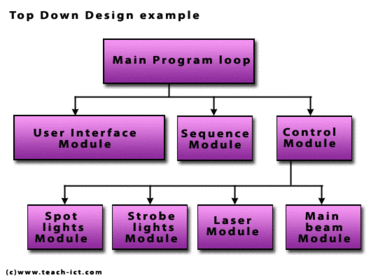
Informationen
- Beschreibung
- Karteikarten am programming Techniques, erstellt von Ben Liddle am 03/05/2016.
- Erstellt von
- Ben Liddle
- Aufrufe
- 3
- Bewertung