
Programming Fundamentals
2,992 resources created by 2,362 users
This Programming Fundamentals page on GoConqr gathers community-made quizzes, mind maps, flashcards and notes, from variables, loops and functions to exception handling, recursion and flowcharts. It's built for school students, university students and professional candidates revising a topic or filling gaps, and for teachers after ready-made material. There are over 2,900 resources here, including more than 170 quizzes, over 1,700 mind maps and more than 750 flashcard decks, shared by over 2,200 contributors. Try a quiz to find your gaps, then build your own revision set.
Select topic
- Algorithms and Flowcharts105
- Programming Languages131
- IDEs, Compilers and Interpreters165
- Python Programming99
- Programming Syntax65
- Variables, Constants and Data Types191
- Operators and Boolean Logic53
- Arrays and Data Structures43
- Control Structures89
- Functions and Procedures41
- Programming Paradigms35
- Robust Programming and Testing209
- Software Development13
- Game Programming Projects156
- Robot Programming Challenges16
Top Programming Fundamentals resources
-
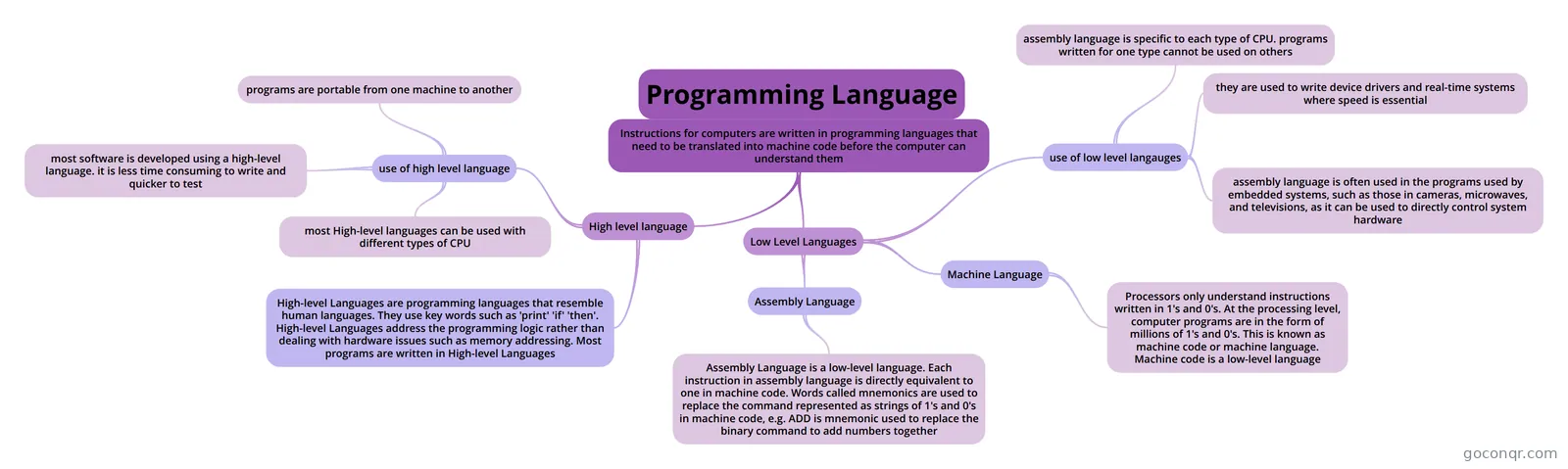 Mind map Programming Language
-
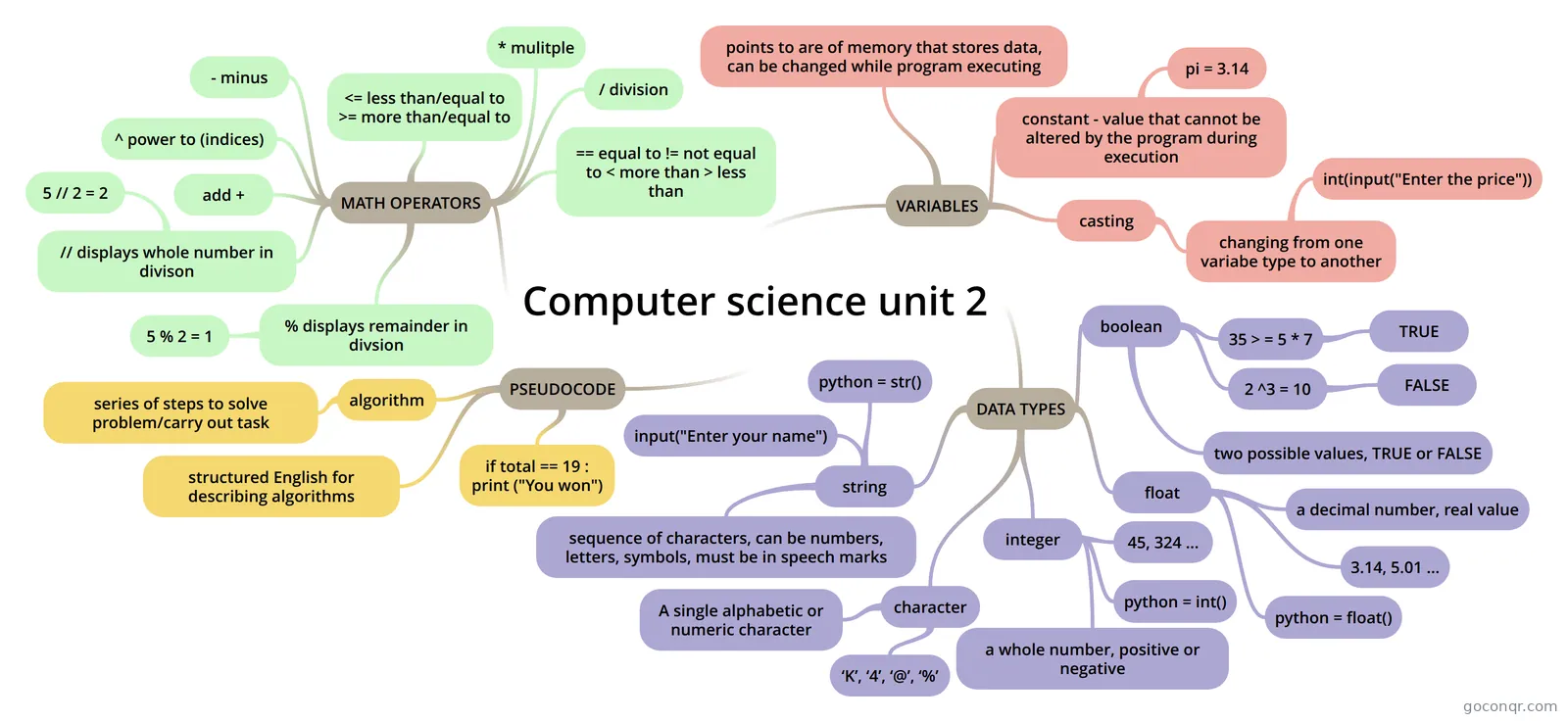 Mind map Computer science unit 2 Includes: variables (constants,casting, data types) math operators pseudocode
-
200 cardsProgramming Fundamentals Flashcards The process of formulating a problem, finding a solution, and expressing it.
-
59 cardsCSE 110 Chapter 04a Review 1) Which of the following loops executes the statements inside the loop before checking the condition? a) f...
-
68 questionsCSI-117 FINAL EXAM Which type of variable is visible to every module and the entire program?
-
64 cardsChapter 2 (Input, Processing, and Output) Flashcards to help understand the terminology of chapter 2 from the textbook, "Programming Logic and Design...
-
72 cardsVisual Basic - Chapter 1 Introduction to Programming and Visual Basic
-
58 cardsChapter 1 (Intro to Computers and Programming) Help memorize the vocabulary content of chapter 1 of the textbook, "Programming Logic and Design, 5th Editi...
Quizzes
See all 200 quizzes-
68 questionsCSI-117 FINAL EXAM Which type of variable is visible to every module and the entire program?
-
48 questionsC# Chapter 1
-
10 questionsThe BBC Microbit What technology on the BBC Microbit enables you to connect to a mobile phone without using a USB cable?
-
26 questionsVisual Basic Chapter 1 (Introduction to Programming and Visual Basic) Short Answer
-
10 questionsIntroduction to programming What is a programming language?
-
8 questionsDebugging What does SCIBS stand for?
-
11 questions2) JavaScript - Programming Fundamentals (Checkpoints 11-17) What is (6 * 4 + 7) % 3?
-
30 questionsSnap Exam Match the block with the right panel
Mind maps
See all 1,769 mind maps-
Programming Language
-
Computer science unit 2 Includes: variables (constants,casting, data types) math operators pseudocode
-
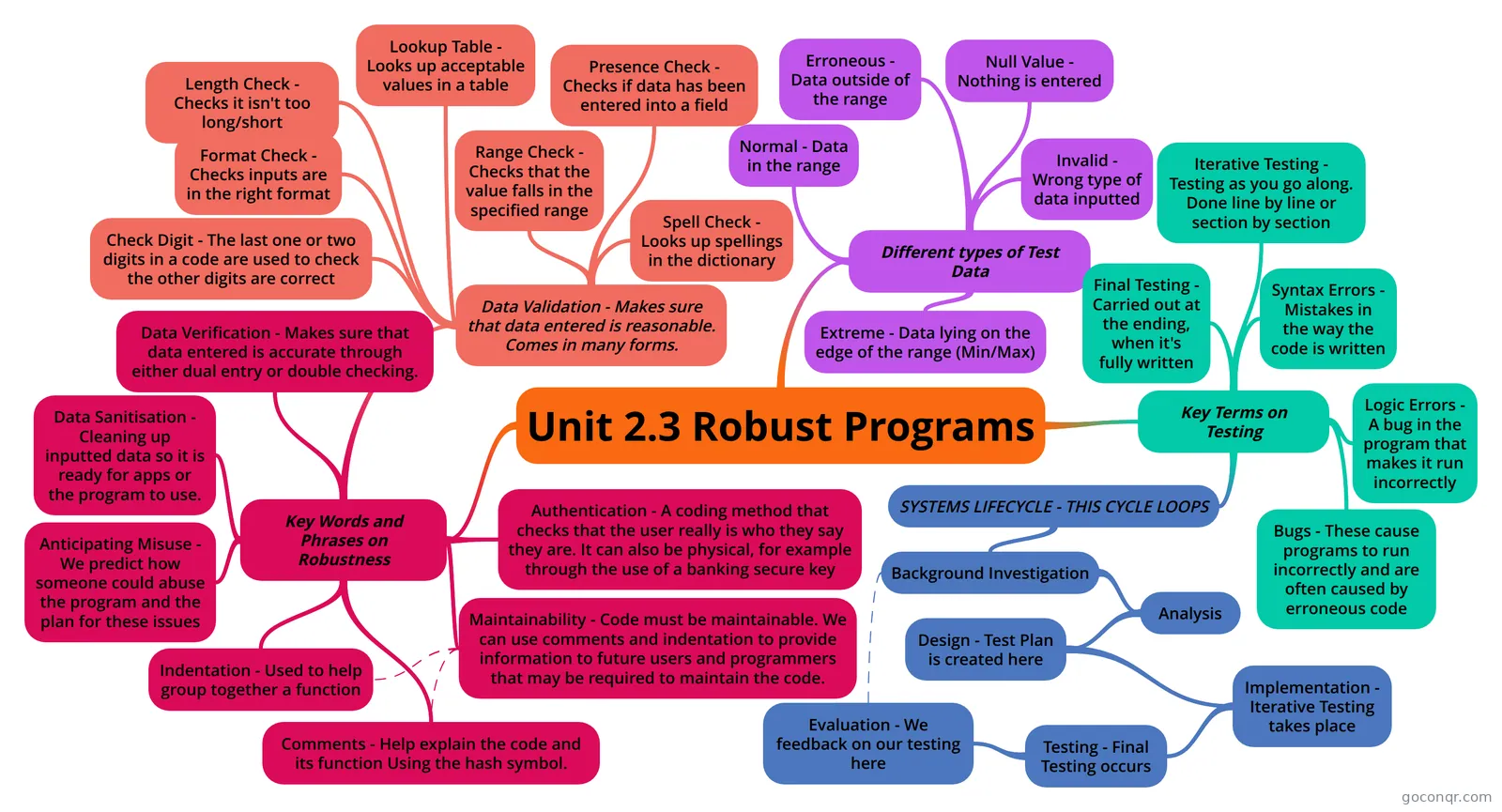 Unit 2.3 Robust Programs My Unit 2.3 Mind Map for OCR GCSE Computing
-
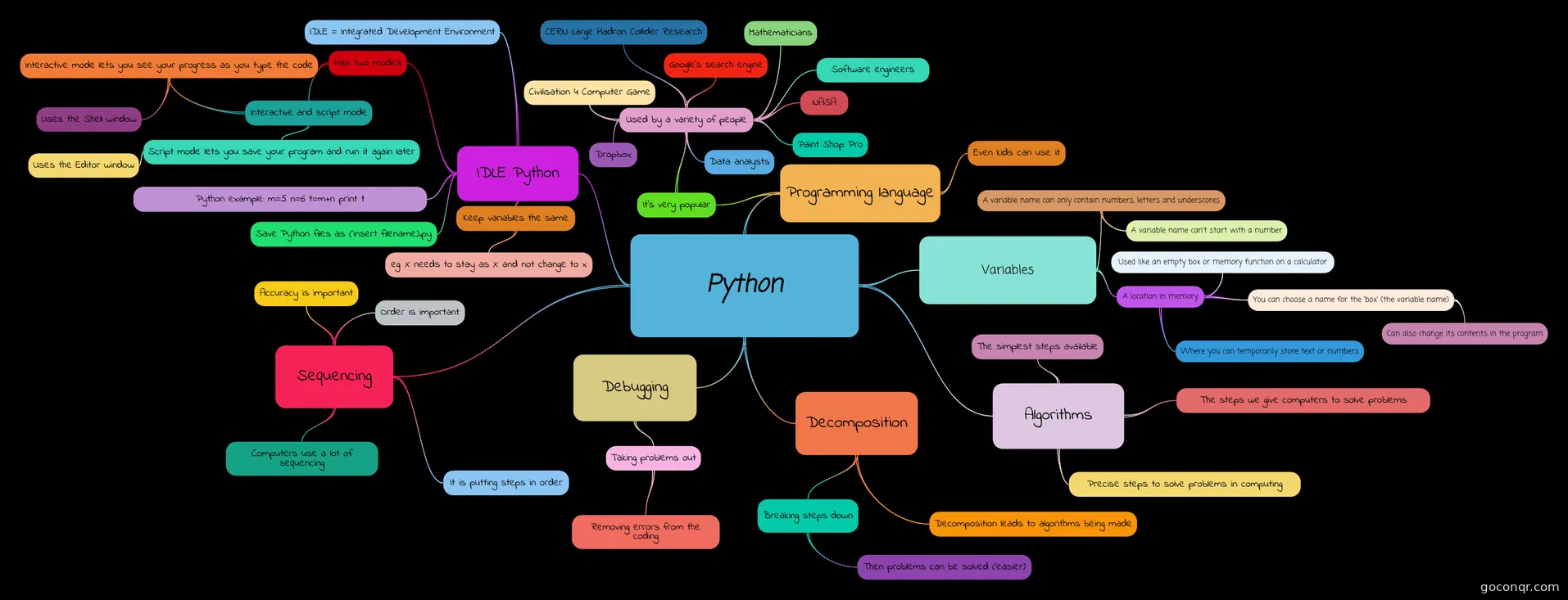 Python Mind-map on programming language Python
-
RAPTOR
-
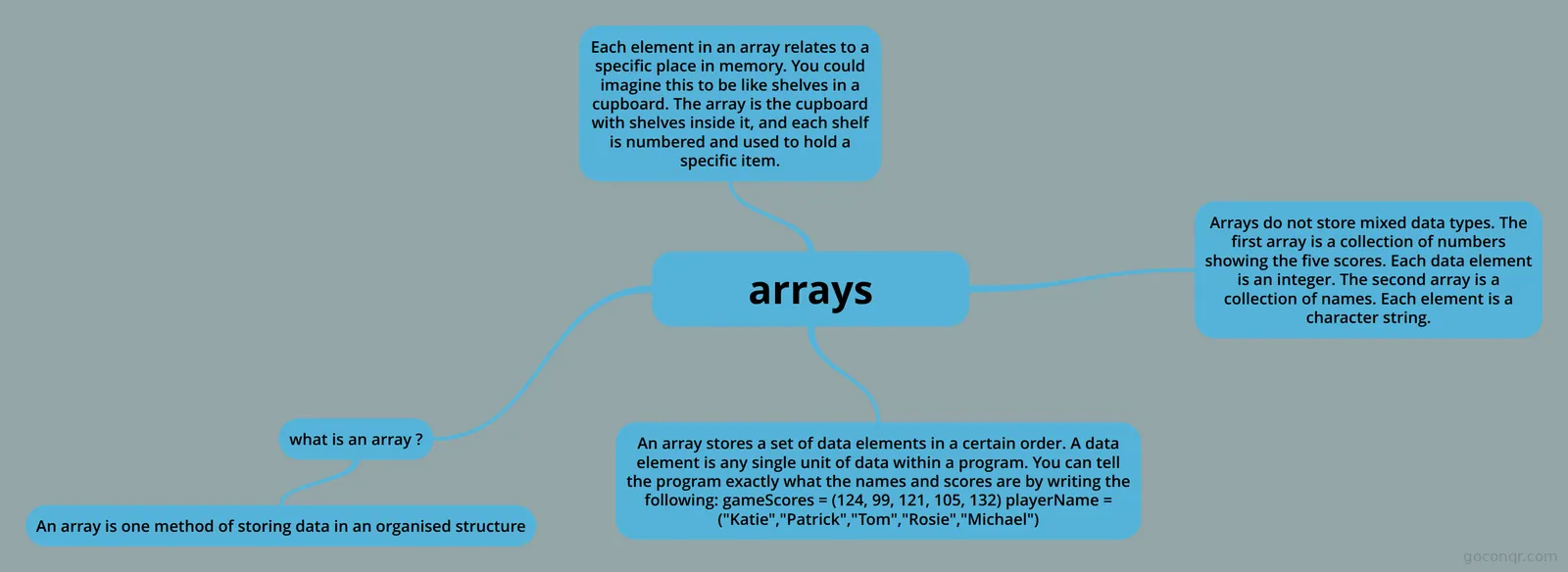 arrays ah yeet
-
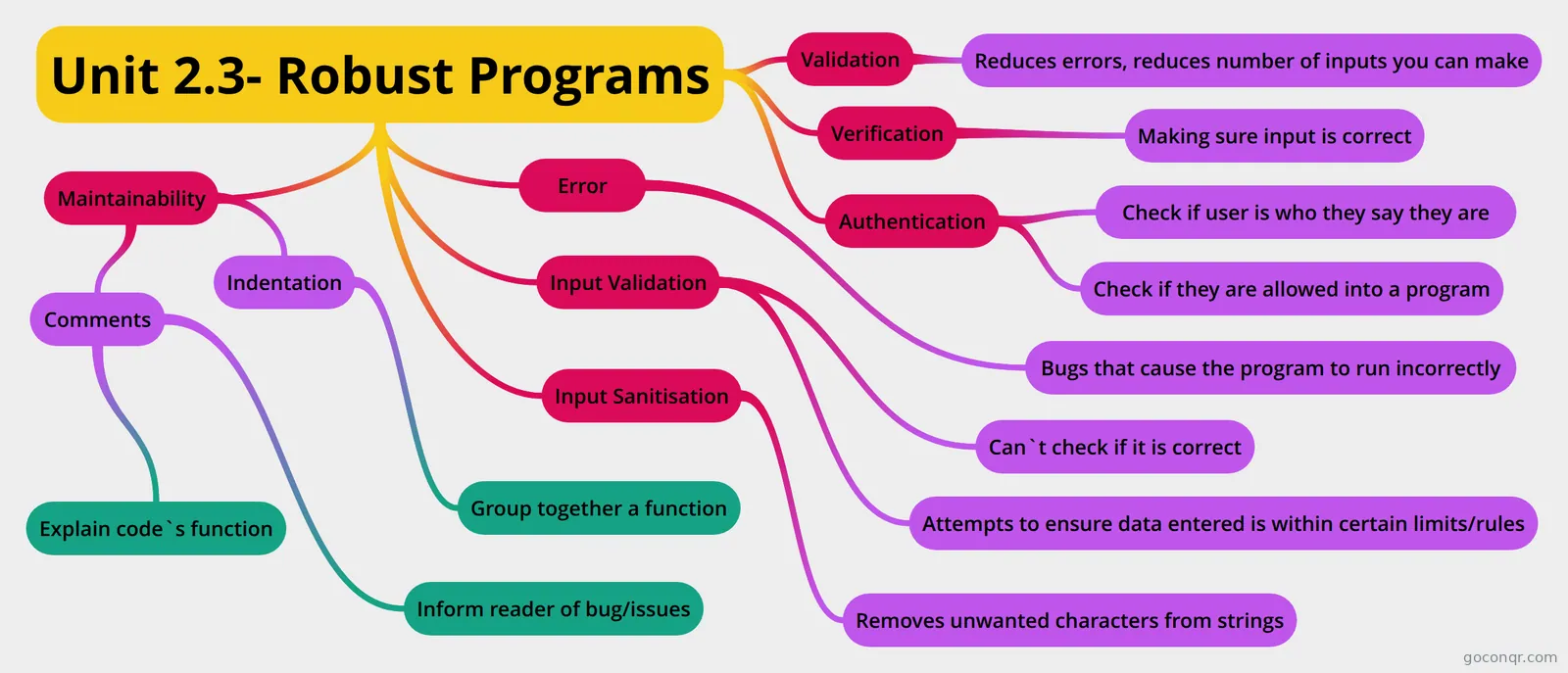 Unit 2.3- Robust Programs
-
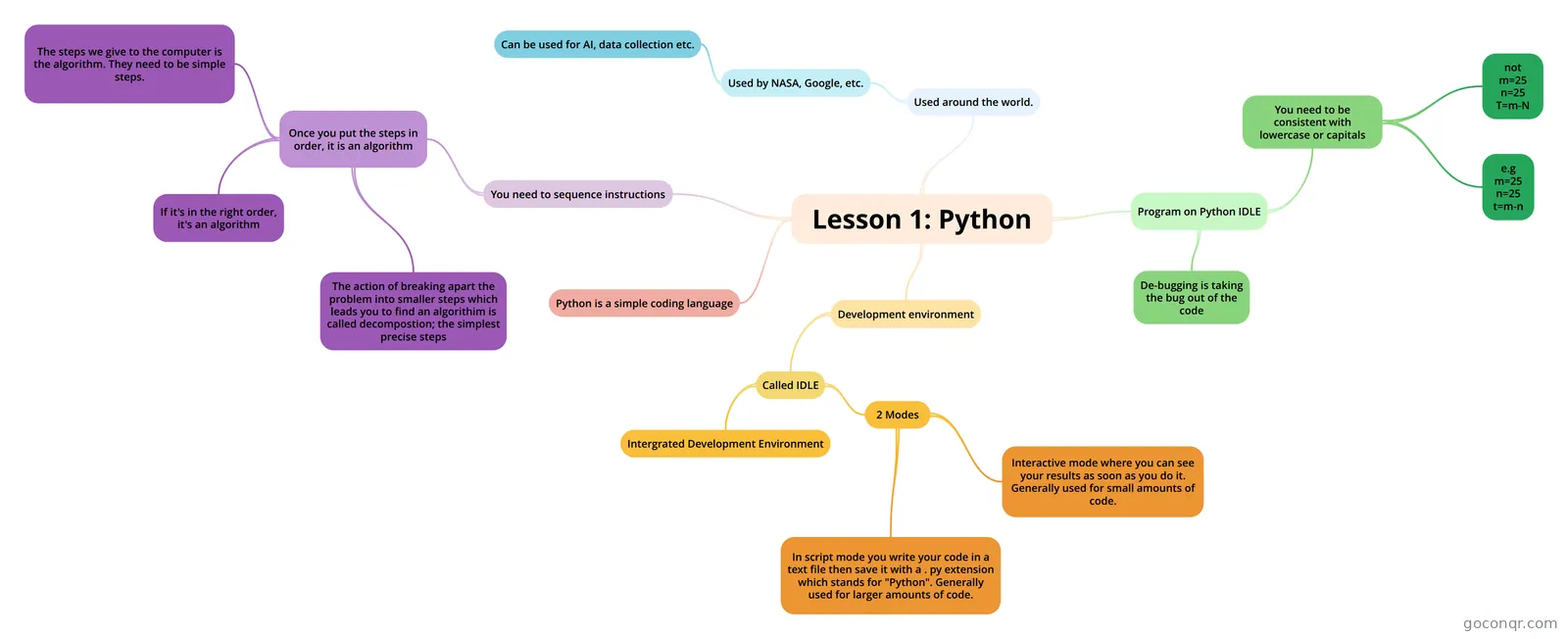 Lesson 1: Python
Flashcards
See all 765 flashcards-
200 cardsProgramming Fundamentals Flashcards The process of formulating a problem, finding a solution, and expressing it.
-
59 cardsCSE 110 Chapter 04a Review 1) Which of the following loops executes the statements inside the loop before checking the condition? a) f...
-
64 cardsChapter 2 (Input, Processing, and Output) Flashcards to help understand the terminology of chapter 2 from the textbook, "Programming Logic and Design...
-
72 cardsVisual Basic - Chapter 1 Introduction to Programming and Visual Basic
-
58 cardsChapter 1 (Intro to Computers and Programming) Help memorize the vocabulary content of chapter 1 of the textbook, "Programming Logic and Design, 5th Editi...
-
13 cardsException handling Why do we need to error trap in program code?
-
28 cardsChapter 6 (Functions) This is a prewritten function that is built into a programming language.
-
20 cardsflowchart
Flowcharts
See all 121 flowcharts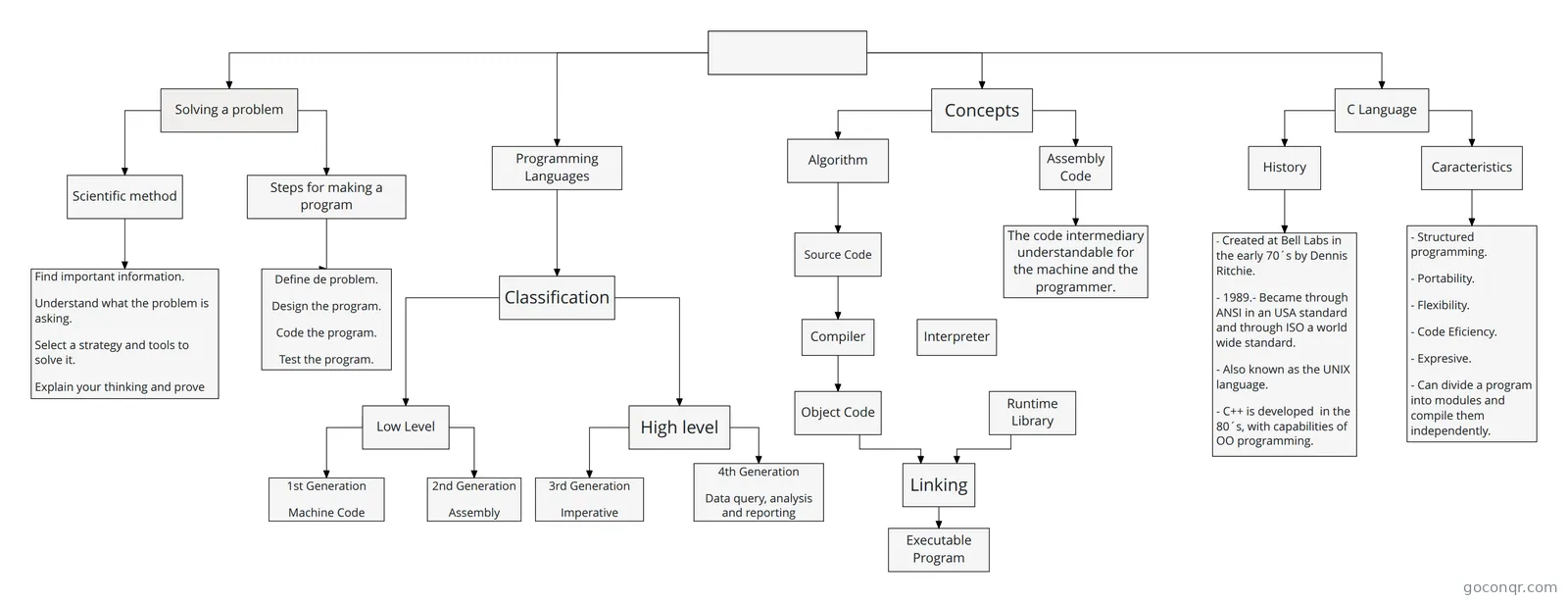
Notes
See all 112 notes-
Introduction to Computer Programming Chp. 2 Study Guide Introduction to Computer Programming Chp. 2 Study Guide1. Suppose a Scanner object is created as follows:Scanner input = new Scanner(System.in);What method do you use to read an int value? A. input.nextInt(); B. input...
-
GO INTERFACE'S
-
Flvs foundations of programming dba 2 Programmer, Code, Program, Command, Computer programmers, What programmers do, Software, Interface, What jobs programmers do Programmer: A person who writes instructions for a computer Code: Instruc...
-
starting my journey
-
Python PYTHON OUTPUT – print() print() is used to display output on the screen. Syntax: print(value) Examples: print("Hello World") print(3.14) print(2 + 3) print("Hello", "World") Anything inside single (' ') or doubl...
-
Java Niotes JAVA: Features of Java: Simple: Java is easy to learn. It does not include concepts of pointers and operator overloading that were available in C++. Object Oriented: You can model everything into an object which...
-
2.2 - Problem Solving and Programming 2.2.1 - Programming Techniques Constants and Variables Basics: Values of constants never change whilst the program is being run: There is no chance that a programmer will accidentally change its value in a long...
-
Core Concepts - created from Mind Map Programming Language Concepts Code Styles General Principles Least astonishment Formatting Conventions Naming conventions Other conventions Document any deviations Adhere Principle of Least Astonishment adhere to the ...
Slides
See all 25 slidesTopics in Programming Fundamentals
More Computing and ICT (programming, computer science, digital skills, educational technology) topics
About Programming Fundamentals
GoConqr OriginalWhat this unit covers
The resources here cover the building blocks of programming. You will find flashcards on the process of formulating a problem, finding a solution and expressing it, plus decks on selection statements, loops, methods, data structures and recursion. Languages vary: Python, Java, C#, Visual Basic, JavaScript and Scratch all appear, so pick the ones that match your course.
Where to start
Begin with Programming Fundamentals Flashcards. It sets out the basic vocabulary, such as what a programming language is and why readable ones like Python exist. Then move to the mind map Programming Language, which explains why instructions must be translated into machine code and separates low level from high level languages.
- Vocabulary and the program development life cycle.
- Data types, variables, arrays and records.
- Selection and repetition, including loops.
- Functions, procedures and methods.
- Errors, debugging, testing and robust programs.
Using quizzes and maps together
Read a map first, then test yourself. The Unit 2.3- Robust Programs mind map covers verification, validation, input sanitisation, authentication and maintainability. Afterwards, try the Debugging quiz or the Exception Handling quiz to see what stuck. The Exception handling flashcards ask why we error trap and what the main types of error are, which makes a good follow-up.
For something more visual, the RAPTOR mind map describes a flowchart-based environment where each symbol is an instruction. The BBC Microbit quiz is a short, practical check on hardware and wireless links.
Who it suits and where it sits
This unit sits in the Programming strand of Computing and ICT. Most resources are at school level, and some mention GCSE Computer Science, A-level Computer Science, OCR A-level Computing, IGCSE Computer Science or AP Computer Science Principles. A smaller share is aimed at university students, with chapter reviews and exam-style quizzes such as the CSI-117 final exam. Teachers can pick ready-made decks and quizzes for classes.
Next step
Choose one topic from the list above, open a resource and work through it. When you spot a gap, make your own notes or cards to fill it.
Frequently asked questions
Which resource should I open first?
Start with Programming Fundamentals Flashcards. It covers the basic terms, including what it means to formulate a problem, find a solution and express it. After that, the Programming Language mind map shows how code is translated into machine code, which gives you a solid base for loops and functions.
What do the mind maps cover?
They cover topics such as robust programs, defensive design, debugging, testing, programming techniques, maintainable programs and common facilities of programming languages. There are also maps on Python, arrays, programming constructs and RAPTOR, a visual flowchart-based environment. Many are short, so they work well for a quick recap.
Are the resources free to use?
Yes. Every resource on this page is free to open, study and take, with no account needed. They were made by GoConqr users, not by GoConqr itself. A free account also saves your quiz scores and lets you make your own quizzes, mind maps, flashcards and notes.
Which exams and levels do these resources suit?
Most are at school level, and some mention GCSE Computer Science, A-level Computer Science, OCR A-level Computing, IGCSE Computer Science, GCE AS or AP Computer Science Principles. A smaller share suits university students, such as chapter reviews and final exam quizzes. Check each title to match your course.
Can I find resources on a specific language?
Yes. The page lists material on Python, Java, C#, Visual Basic, JavaScript, Scratch and Matlab, for example the Python mind maps and the notes called Javascript Basics. Language-neutral topics like pseudocode, flowcharts and data types are there too, so you can mix both.
What if the topic I need is missing?
Try a nearby title first, since topics like loops, errors and functions appear in several decks, quizzes and maps. If you still cannot find it, you can create your own notes, flashcards or mind map, then use them to revise alongside what is listed here.