
Karteikarten
Talent Development
Karten in diesem Stapel (19)
- 1Define Talent ID according to UK Sport:Both an art and science, involving a complex blend of scientific knowledge and assessment alongside coaching art. It is designed to proactively seek out those who posses the raw material for World class success, and respond positively to an intense training and competition environment.
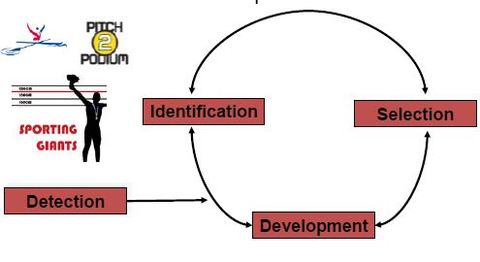
- 2What is the Talent Identification and Development pathway?
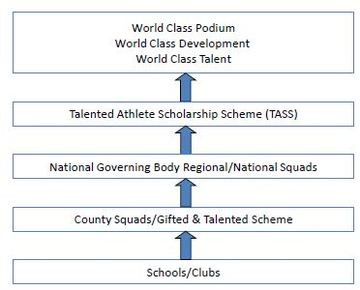
- 3What is the UK amateur sport structure?
- 4What are the problems with Early Talent ID programs?Fail to acknowledge the contribution of physical maturity and previous experiences. Psychological factors are not always considered. Performance at a young age is a poor indicator of future success.
- 5Due to the problems with Early Talent ID programs, what is likely to happen?Exclude talented children or Mis-invest resources.
- 6According to Abbott and Collins 2004 what should Talent ID programs look at?Performance Dispositions + Individuals capacity to develop= Talent ID
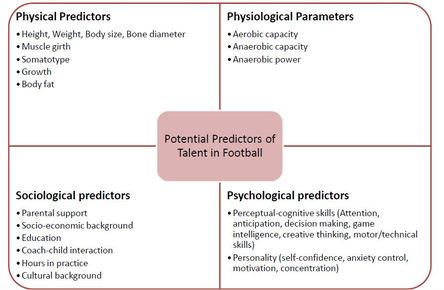
- 7In Williams and Reilly 2000 what 4 aspects act as potential predictors of Talent in football?Physical Predictors, Physiological Parameters, Sociological Predictors, Psychological Predictors.
- 8In regard to Williams and Reilly 2000 what aspects fit in to there 4 potential predictors of talent in football?
- 9What are the 4 Stages of Sport Participation?Stage 1: The Sampling Years (5-12). Stage 2: The Specializing Years (13-15). Stage 3: The Investment Years (16+). Stage 4: The Maintenance Years (16+).
- 10What are the key aspects of The Sampling Years?Introduced to organised sport. Participates in a wide range of sport. Fundamental skills are acquired and worked upon. Emphasis on enjoyment. Identify a special gift.
- 11What are the key aspects of The Specializing Years?Narrow focus and participate in fewer activities. Development of sport specific skills. Fun and enjoyment an important element. Emotional and financial support available. Siblings as role models.
- 12What are the key aspects of The Investment Years?Devote to a single sport. Primary focus of life is training/competing. Development of skills and strategies for competition. Financial and emotional support necessary. Uneven distribution of resources of other family members.
- 13What are the key aspects of The Maintenance Years?Achieved the highest level of sport. Pressure from outside sources to respond. Innovation. Focus shift from quantity to quality training.
- 14What are the Recreational Years?They are an alternative for children who do not follow elite sport. Do not invest necessary resources and do not just focus on one sport.
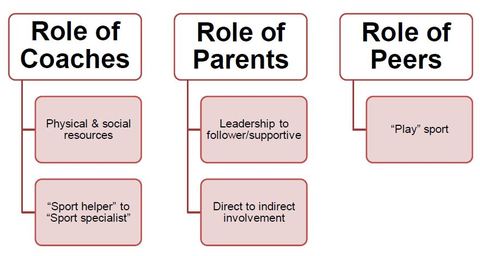
- 15According to Cote 1999 what Social Influences affect career progression?
- 16What are the 3 Traditional Views of Talent?That talent comes from Divine Intervention (gift from God), Natural Causes (born, can never be taught), Genetic Predisposition (DNA- muscular physique, Acute Vision, Fast Reactions etc).
- 17What are the flaws to the Traditional views of talent?Bigger doesn't always mean better (gymnastics), Talented athletes don't always excel at a range of sports.
- 18Name some factors in Sporting Excellence?Genetic Predisposition, Anthropometric, Cognitive and Meta-cognitive skills, Psychomotor abilities, Social environmental factors.
- 19What is the modern day viewpoint on talent?Multi-dimensional and dynamic, and it can emerge over time.
Informationen
- Beschreibung
- Pscyhology Karteikarten am Talent Development, erstellt von Mark Arsenal am 27/04/2013.
- Erstellt von
- Mark Arsenal
- Aufrufe
- 53
- Tags
- Bewertung
Mehr zu Talent Identification and Athlete Development