
Religious Experience
Folien in diesem Satz (7)
-
- There are a variety of religious experiences, for some it is being in the direct presence of God.
- In some instances religious experiences will prove God's existence. However, in many instances they will point to God's existence.
- They don't necessarily point to the God of classical theism, but they do point to a divine entity.
-
The five categories for miracles.
- Miracles- violation of the laws of nature. Humans can't perform violations which therefore points to a divine.
- Numinous- nature.
- Conversion- an innate feeling from within of wanting to change.
- Prayer- heard, then answered.
- Mystical- direct, first hand contact with God (empirical evidence).
-
Why are religious experiences significant?
- We gather information and therefore get answers to ultimate questions
- Reveals God exists
- We can learn about God
- Gives a sense of oneness/a connection
- Sceptic's respond by saying that people who have these experiences have psychological disorders.
- These could be as a result of Trauma which may present a need for God's existence and therefore a religious experience.
- Religious experiences are not real, just projections of the brain.
-
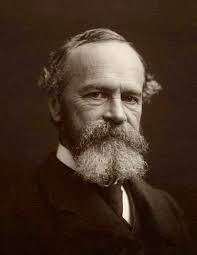
- William James was a harvard lecturer of psychology and philosophy; he wrote a book on 'varieties of religious experience'.
- He said that religious experience is first hand religion and falls at the heart of all worldly religion.
- Second hand religion is constructed by humans and includes things such as hymns and actions. All of which are built on religious experience, without this there would be no religion.
- A religious experience that particularly interested William James was mystical experiences.
- He wanted to look at the psychology of a mystical experience, he asked these questions:
- -Does anything happen to the brain?
- -Is there anything physical that happens?
- William James said 'yes' to both these questions.
-
James' criteria for Mystical experiences
- P-Passive: not induced by drugs or alcohol
- I-Ineffable: can't articulate immediately after
- N-Noetic: knowledge must always be given
- T-Transient: brief, and doesn't last
-
Critics of religious experience
- William James responded by saying that people with faulty minds have better instruments for receiving religious experiences because their brains thinks differently. Making them perhaps more open minded.
- He then gave a further criteria...
- P-Pluaral
- E-Empiricism
- P-Pragmatism
- Critics claim that people who have these apparent religious experience have psychological disorders,
- There is a need born out of human frailty. The need is for a comforting God.
-
Evaluating corporate religious experience
- Strengths
- +) Everyone can experience them.
- +) The ways in which the holy spirit manifests itself is the SAME for each person, therefore there must be a common source.
- +) Experience is received by sane, educated, rational people, BUT they behave in a way which will open them up to ridicule/isolation. If not genuine, then why would they?
- Negatives
- -) Social conditioning-Freud, people's behavior changes to fit their environment. Tongues and laughter are expected. You conform out of fear of isolation.
- -) Learnt behavior/opperant conditioning-Skinner, there is an expectation that the holy spirit will be induced when certain behaviors are performed.
- -) Karl Marx
- -) Swinburne, principle of testimony and credulity
Informationen
- Beschreibung
- A-Level Philosophy and Ethics Folienset am Religious Experience, erstellt von alexandramchugh9 am 14/01/2016.
- Erstellt von
- alexandramchugh9
- Aufrufe
- 314
- Bewertung