
Philosophy of Religion
689 resources created by 539 users
This Philosophy of Religion page on GoConqr gathers community-made mind maps, flashcards, quizzes, slides and notes on the problem of evil, religious experience, religious language, miracles and the existence of God. It's built for school students revising a topic and teachers after ready-made material, with GCSE and A-level Religious Studies in view. There are over 680 resources here, including more than 440 mind maps, more than 180 flashcards and more than 10 quizzes. Pick a topic, try a quiz to find your gaps, then build your own revision sets.
Select topic
- Nature and Attributes of God58
- Belief and Disbelief in God77
- Arguments for the Existence of God62
- Cosmological Argument8
- Design Argument12
- Religious Experience56
- Revelation15
- Miracles20
- Prayer9
- Problem of Evil and Theodicies149
- Religion and Science7
- Life After Death and the Soul23
- Religious Language26
- Religious Pluralism and Exclusivism5
Top Philosophy of Religion resources
-
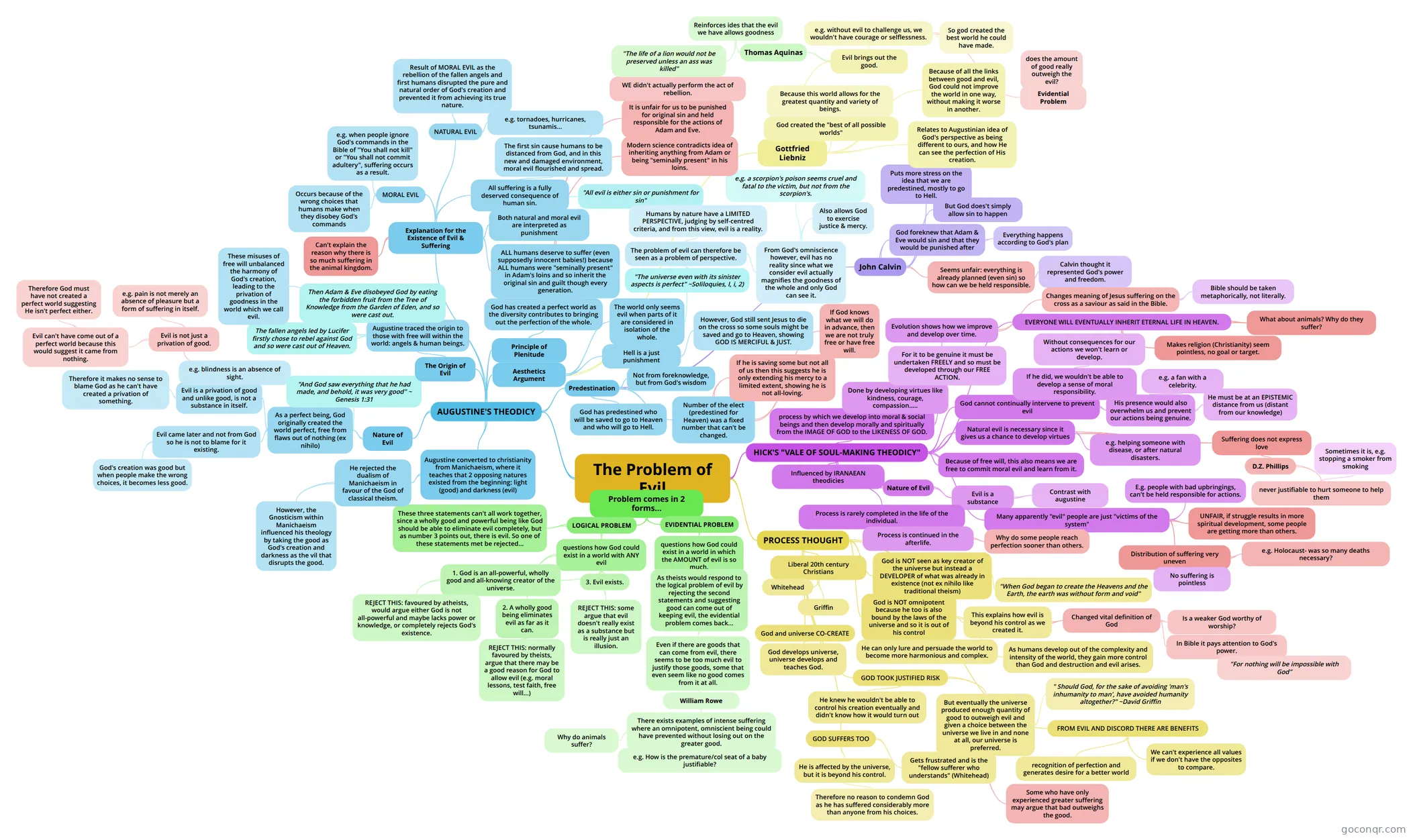 Mind map The Problem of Evil A2 Problem of Evil mind map (AQA)
-
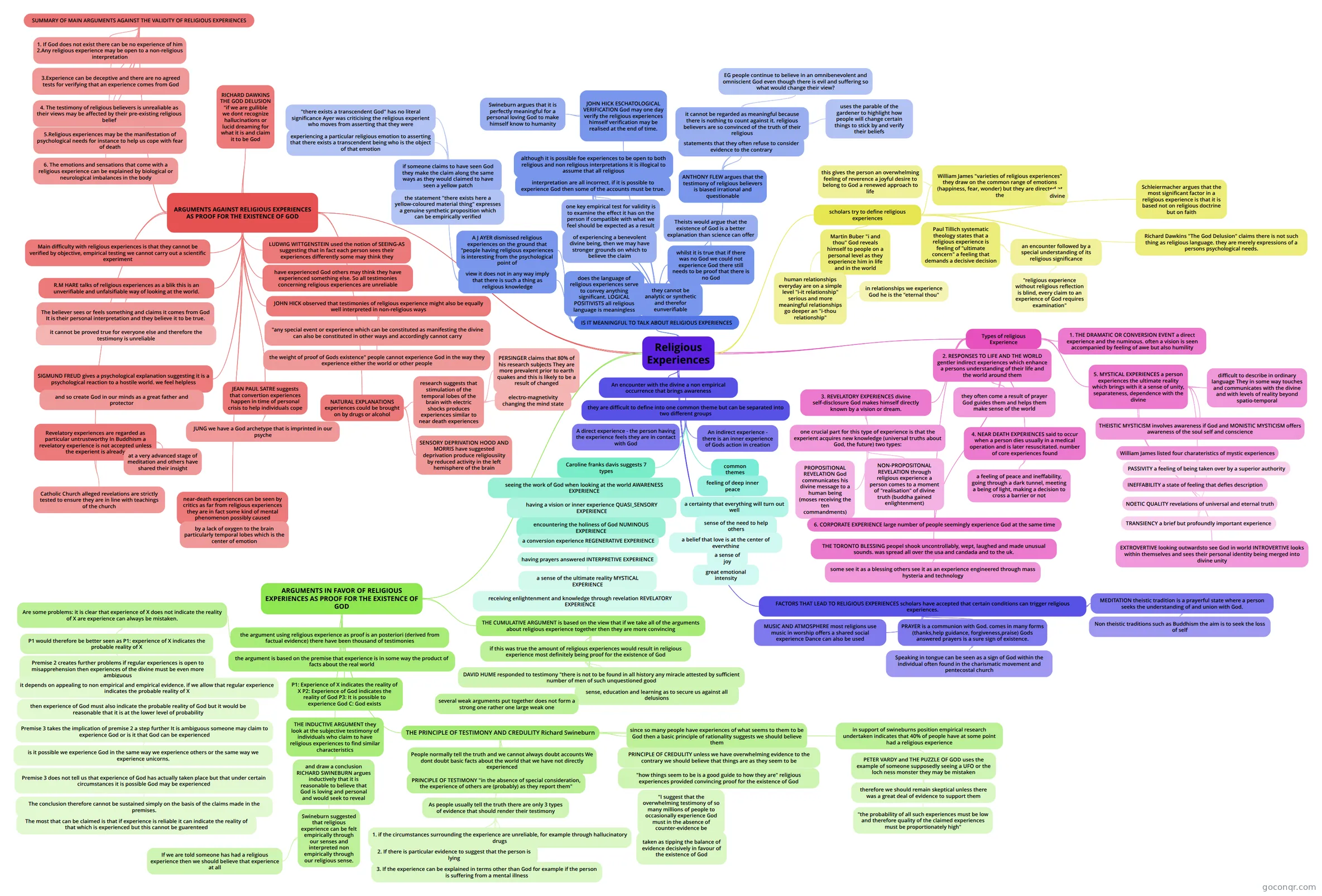 Mind map Religious Experiences
-
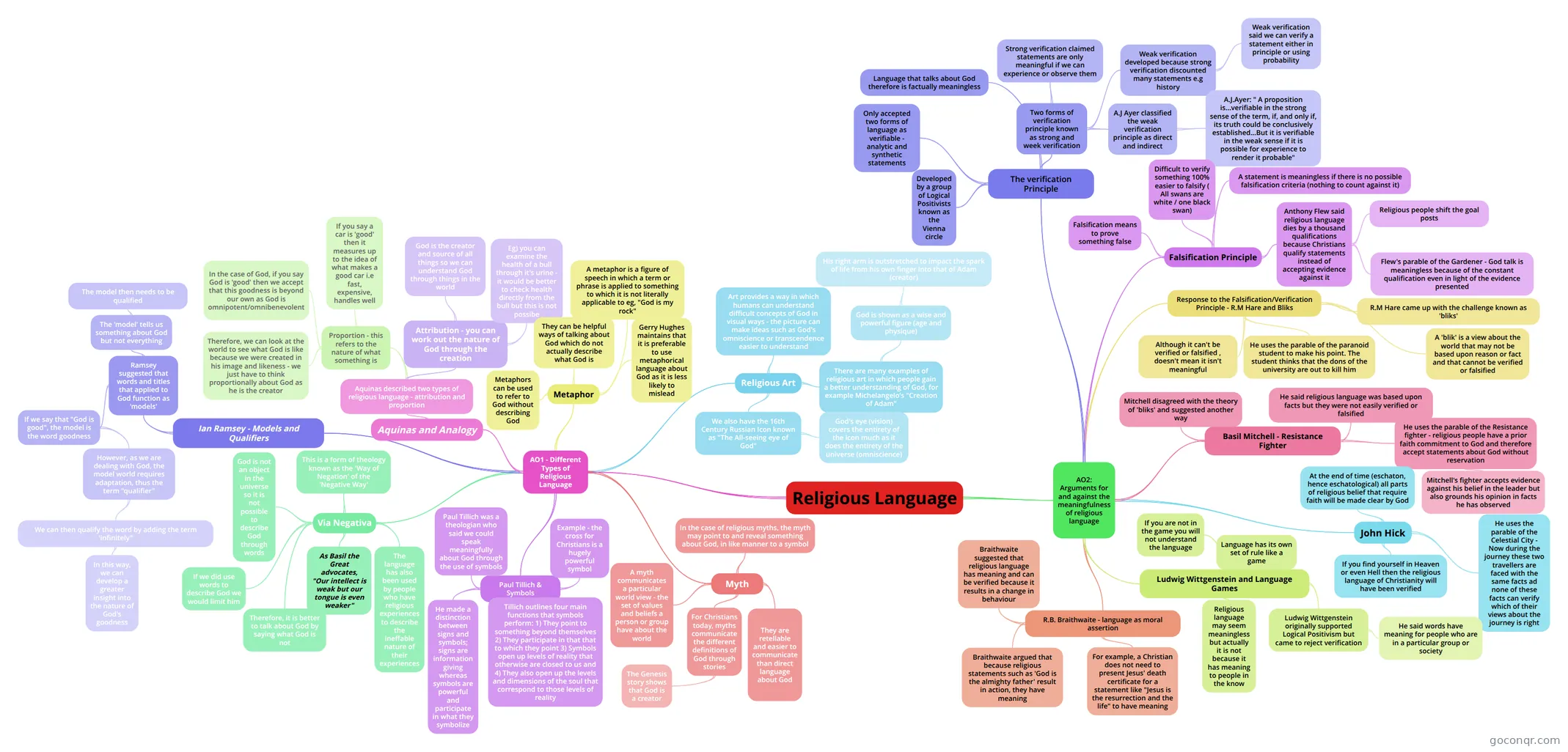 Mind map Religious Language AO1- Different types of religious language AO2 - Arguments for and against the meaningfulness of religious ...
-
15 questionsReligious Experience Edexcel A Level Tick FOUR criticisms of religious experience.
-
44 cardsExistence of God and Revelation quotes Genesis quote on God being a creative designer
-
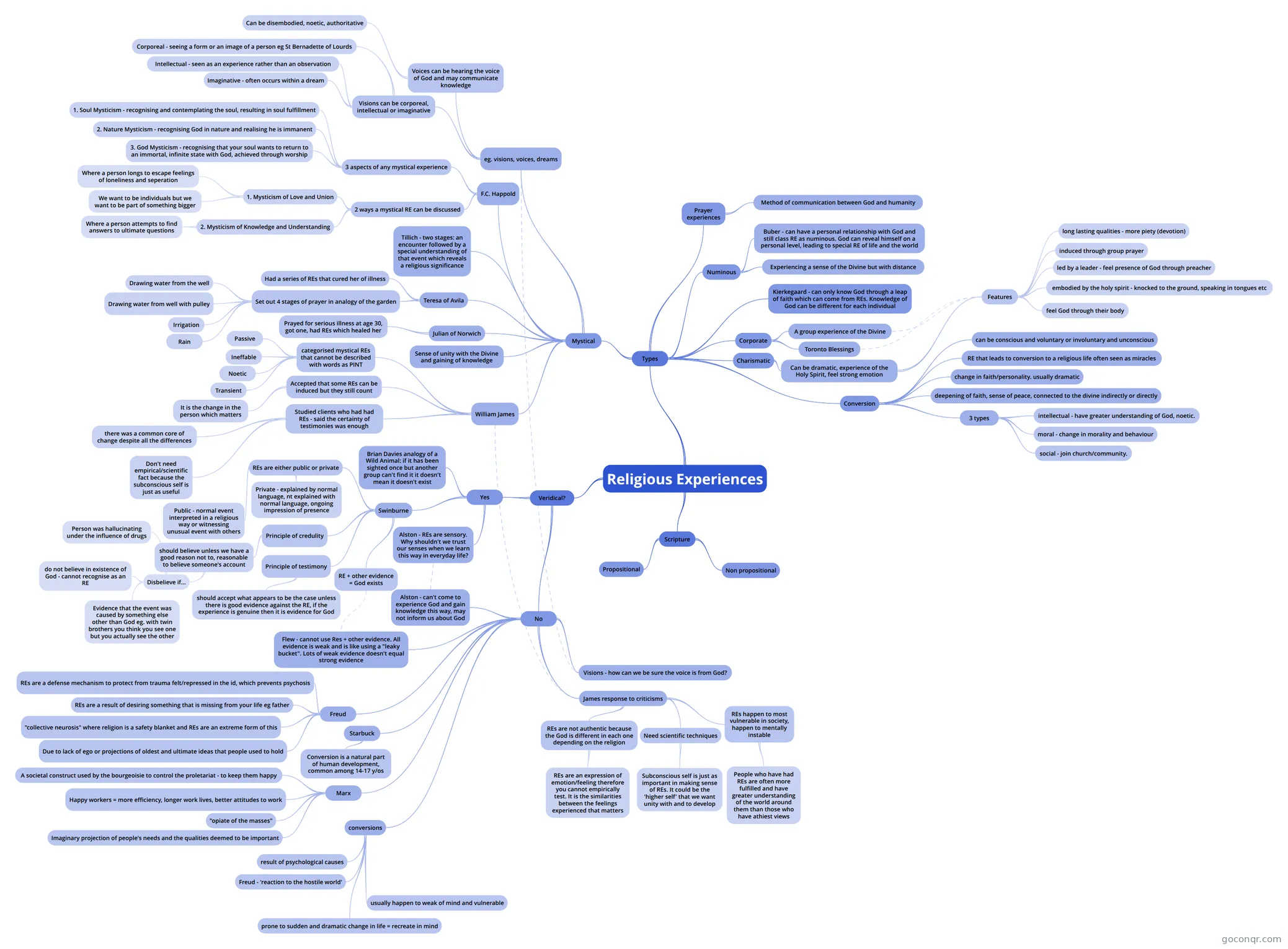 Mind map Religious Experiences
-
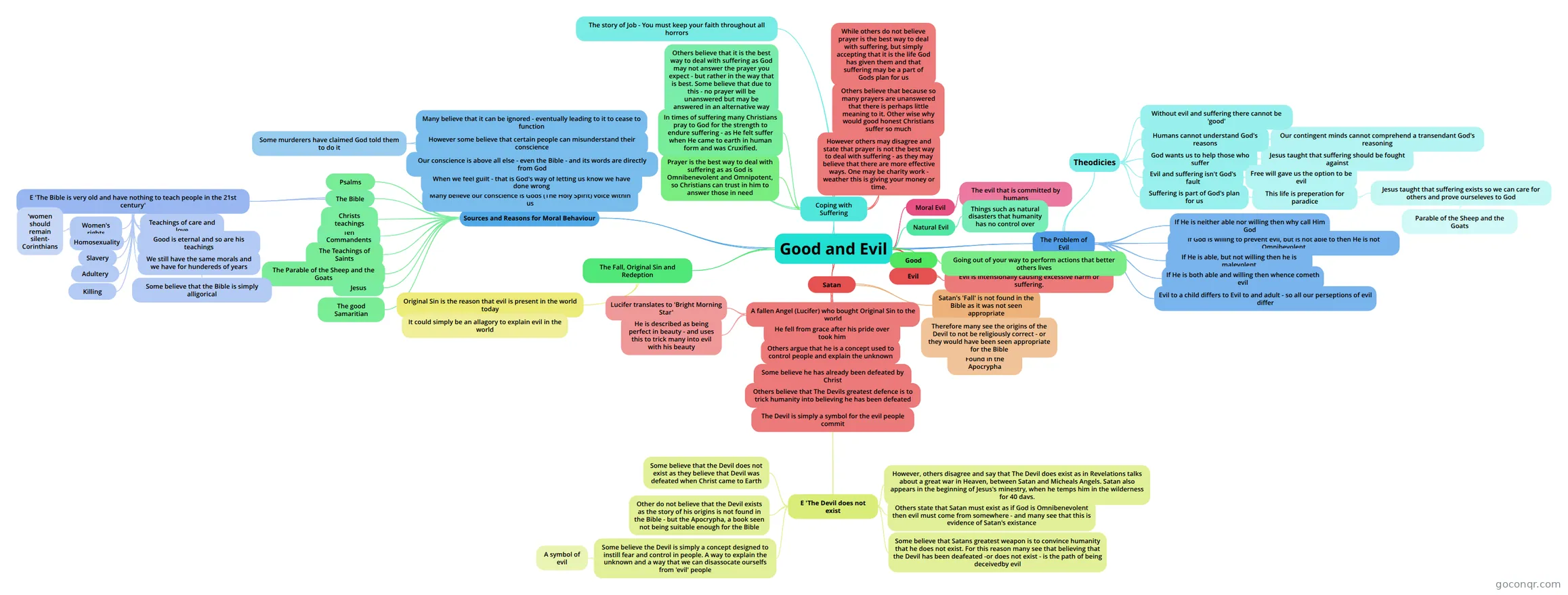 Mind map Good and Evil
-
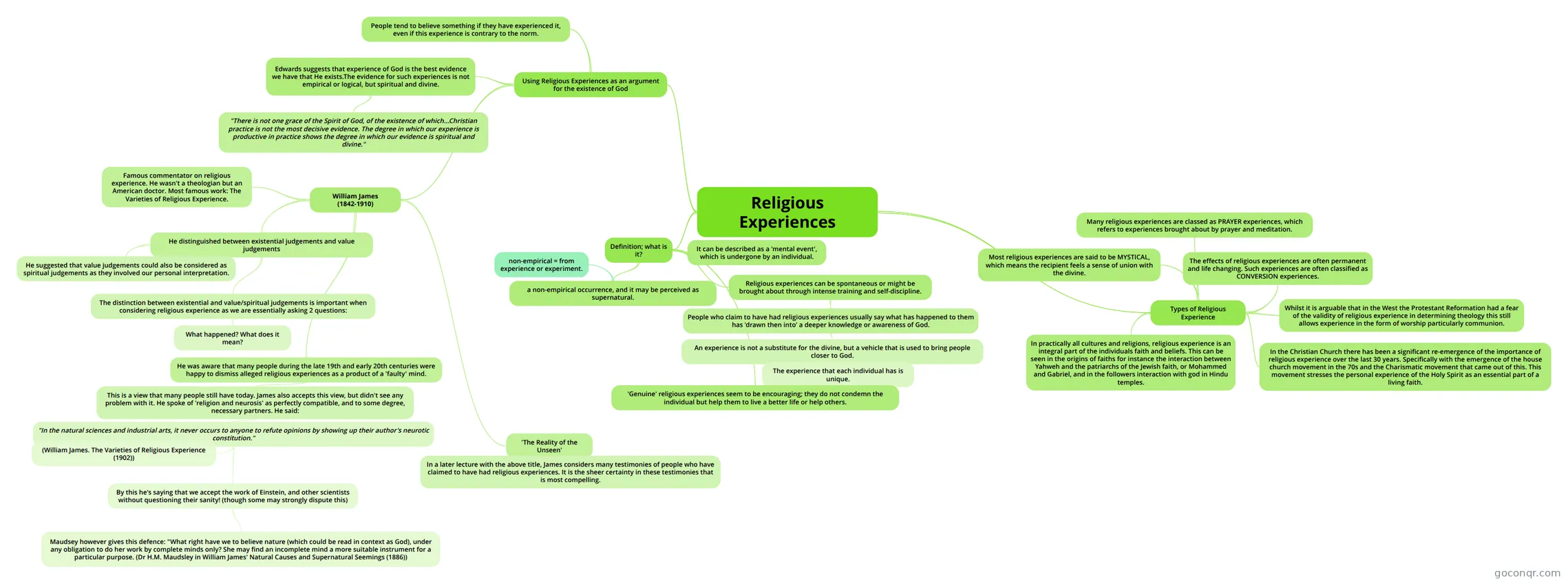 Mind map Religious Experiences need to finish this!!
Quizzes
See all 20 quizzes-
15 questionsReligious Experience Edexcel A Level Tick FOUR criticisms of religious experience.
-
6 questionsPROBLEM OF EVIL Paper 1.2 Good and Evil
-
15 questionsThe Existence of God Which are strengths of the cosmological argument?
-
26 questionsMiracles Who defined a miracle as 'an occurrence of a non-repeatable counter instance to a law of nature'?
-
22 questionsReligious Experience (A2) Quiz What type of argument is religious experience based on?
-
11 questionsRevelation in Sacred Writings Revelation is a form of...
-
25 questionsDeity; Not including Miracles What is premise?
-
11 questionsQUIZ
Mind maps
See all 442 mind maps-
The Problem of Evil A2 Problem of Evil mind map (AQA)
-
Religious Experiences
-
Religious Language AO1- Different types of religious language AO2 - Arguments for and against the meaningfulness of religious ...
-
Religious Experiences
-
Good and Evil
-
Religious Experiences need to finish this!!
-
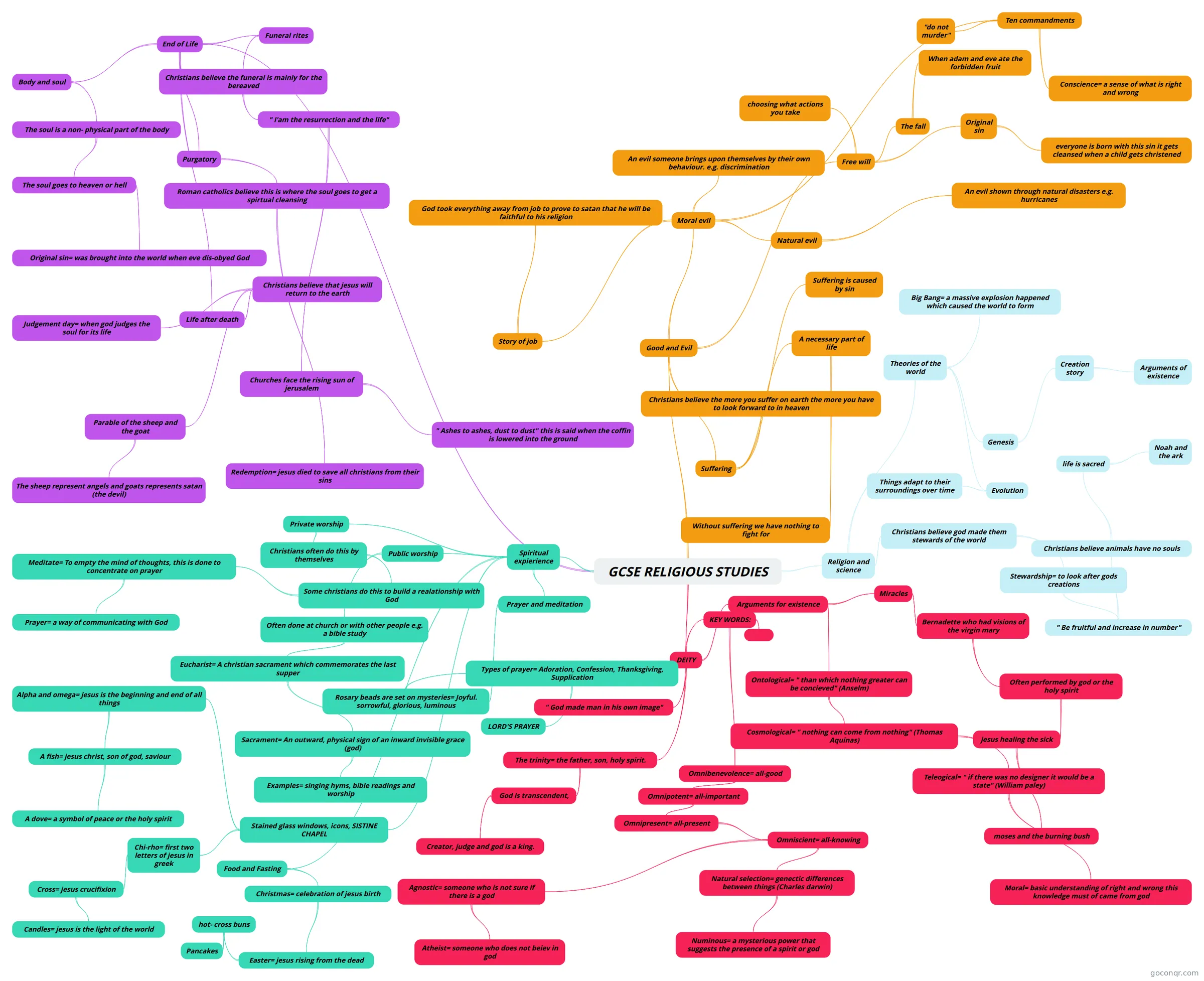 GCSE RELIGIOUS STUDIES the 5 main topics of philosophy
-
The problems of evil and suffering
Flashcards
See all 182 flashcards-
44 cardsExistence of God and Revelation quotes Genesis quote on God being a creative designer
-
33 cardsRMPS- Does God exist? What is God?
-
29 cardsThe Problem of Evil: Key Words RS OCR
-
35 cardsPhilosophy Key Words Unit 1
-
49 cardsReligious Language (A level)
-
41 cards3. God and the World
-
26 cardsReligious Experiences What is Schleiermacher's characterisation of religious experience?
-
12 cardsSymbolic Language New Spec OCR A level - on symbolic language
Notes
See all 36 notes-
re Describe what one religious tradition teaches about the existence of evil Christianity · The idea of free will i.e. humans have the choice to do good or evil · Belief in a devil/Satan that tempts people to do wrong · ...
-
Origins Exemplars To what extent do you agree that religious and scientific views on the origins of the universe are compatible (20 marks) Scientists use the scientific method to gain knowledge about the origins of the universe. The sc...
-
Religious Language Religious Language Verification: Verification, developed by Ayer and the logical positivists , is a set of criteria that determined whether a proposition was meaningful or not. The criteria states that if a propositio...
-
Ideas of God God of Classical Theism Judaism, Christianity and Islam hold belief that God is one God can reveal himself and is indivisible God manifests himself in creation, salvation and revelation God is ...
-
Religious Language Religious Language Cognitive - statements about God that can be known to be either true or false Non-cognitive - statements about God aren't subject to truth or falsity Univocal - idea that words have same meaning at ...
-
'There is reliable evidence for believing in life after death.' Assess this view 'There is reliable evidence for believing in life after death.' Assess this view There is reliable evidence for believing in life after death.' Assess this viewThere is lots of reliable evidence for life carrying on a...
-
God the Creator - created from Mind Map For Plato and Aristotle, the form of the good or the prime mover (philosophical God) does not interact with the world; by their very nature they are incapable of emotion and unaffected by anything else. They are not i...
-
RS - Philosophy, Unit B601 (Belief about Deity) Unit B601 : Philosophy 1 Belief about Deity I can explain why atheists and agnostics might not believe in God.I know the terms omnipresent, omnipotent and omniscient.I can explain St. Thomas Aquinas' First Cause theor...
Slides
Topics in Philosophy of Religion
More Religion and theology topics
About Philosophy of Religion
GoConqr OriginalWhat this unit page covers
The resources here were made by GoConqr users and sit in the Philosophy of Religion strand of Religion and theology. They gather around a few big themes: the nature of God, arguments for God's existence, evil and suffering, religious experience, religious language, miracles and life after death. Several resources mention GCSE Religious Studies, GCSE Religious Education, OCR AS Religious Studies and A-level Religious Studies, including OCR A-level.
Where to start
Begin with the mind map The Problem of Evil. It separates the logical problem from the evidential problem, so you see the shape of the topic before the detail. Then move to the Evaluation of Augustine's Theodicy mind map, which sets out points from Brian Davies and Plantinga for and against Augustine.
If you are on a GCSE course, the GCSE RELIGIOUS STUDIES mind map is a good first stop. It lists key words such as omnibenevolence and the idea of God as transcendent, creator and judge.
Using maps, flashcards and quizzes together
- Read a mind map to get the outline of a topic.
- Go through a flashcard deck such as The Problem of Evil: Key Words, which covers terms like theodicy, moral evil, natural evil and privatio boni.
- Learn the sources with Existence of God and Revelation quotes, which gathers lines from Genesis, Psalms and the Quran alongside Aquinas.
- Test yourself with a quiz, such as Religious Experience Edexcel A Level or PROBLEM OF EVIL Paper 1.2 Good and Evil.
Wrong answers show you which map or deck to go back to.
Other topics to explore
Mind maps on Religious Language cover Aquinas and analogy, including attribution and proportion. Several Religious Experiences maps look at types such as mystical, numinous, corporate and conversion experiences, with figures like William James, Teresa of Avila and Julian of Norwich. There are also resources on miracles, the human situation and life after death. Teachers can use the slide sets, such as Divine Attributes of God, as ready-made starting points for lessons.
Make it your own
Choose one topic, work through its map, deck and quiz, then build your own versions to fill any gaps you find.
Frequently asked questions
Which resource should I open first?
Start with the The Problem of Evil mind map. It splits the topic into the logical and evidential problems, which gives you a clear frame. After that, the Evaluation of Augustine's Theodicy mind map shows how thinkers such as Brian Davies and Plantinga respond.
Which exams do these resources suit?
The listed resources mention GCSE Religious Studies, GCSE Religious Education, OCR AS Religious Studies, A-level Religious Studies and OCR A-level Religious Studies. Check the title and content of each one against your own course before relying on it.
Are the resources free to use?
Yes. Every resource listed here is free to open, study and take, with no account needed. They were made by GoConqr users, not by GoConqr. A free account also saves your quiz scores and lets you make your own quizzes, mind maps, flashcards and notes.
What do the religious experience resources cover?
The Religious Experiences mind maps cover definitions and types, including scriptural, mystical, numinous, corporate, charismatic and conversion experiences, plus prayer experiences. They name William James, Teresa of Avila and Julian of Norwich. The Religious Experience Edexcel A Level quiz tests Swinburne and Schleiermacher.
What can I use to learn key terms?
Try the flashcard deck The Problem of Evil: Key Words for terms like theodicy and moral evil. Existence of God Keywords and Belief in God Key Words are also listed. Use them after a mind map so the vocabulary has context.
What if the topic I need is missing?
Look through the related titles on the page first, since topics such as miracles, life after death and the human situation appear under several names. If nothing fits, you can build your own mind map, flashcards or quiz for that topic.